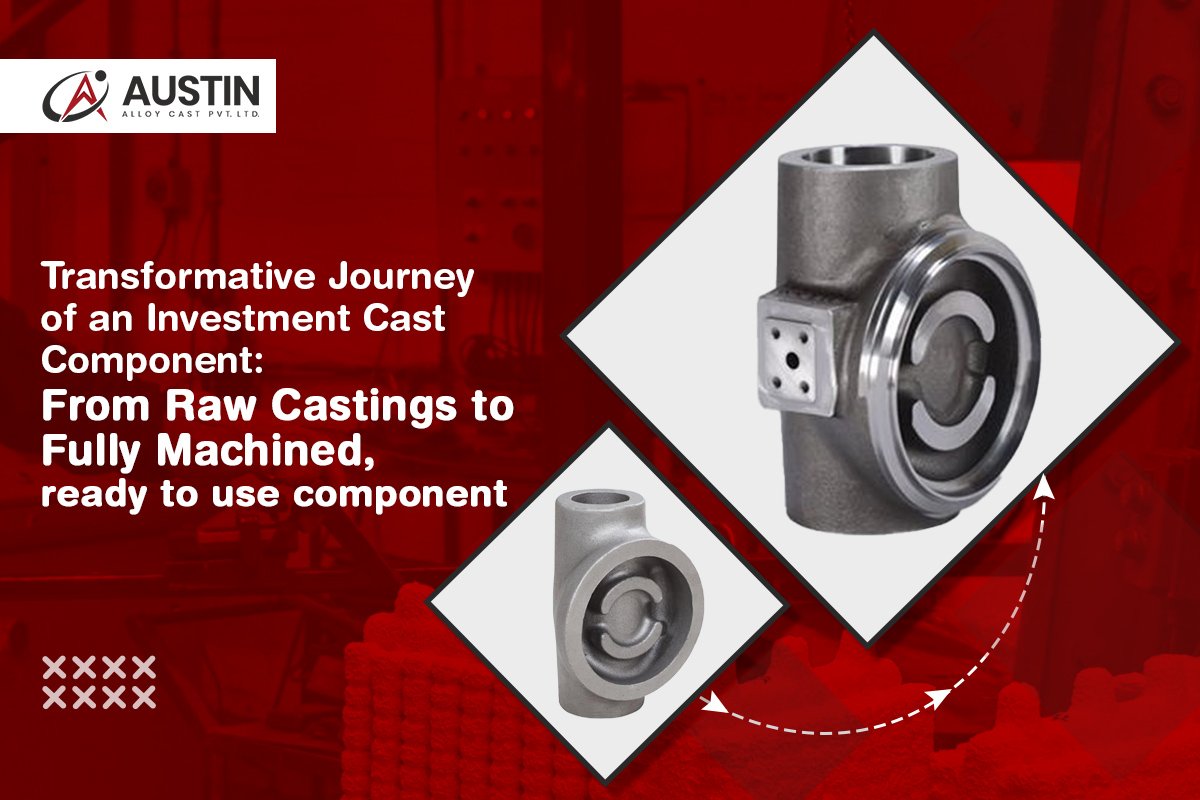
Transformative Journey of an Investment Cast Component: From Raw Castings to Fully Machined, ready to use component.

Each engineering component has a story to tell, demonstrating the intentions behind its design, the discipline behind its manufacture and the unlimited drive to achieve precision. Investment casting presents a compelling story for a component’s growth from raw casting, which is structurally intact and able to be close to produced form, to having all its features engineered by means of the machining process.

In Austin Alloy, we have developed additional strength within our machining ecosystem. The machining ecosystem allows us to ensure every component manufactured within Austin Alloy is produced to meet the highest degree of accuracy, consistency, and ready to assemble. Herein lies the story of this transformation.

As Global Customers shifted and demanded turnkey/machining ready components, the leadership team of Austin Alloy decided to take a strategic leap in order to develop Austin Alloy as a strategic partner, while still meeting the stringent international quality standards of our International global customers.  Austin Alloy made this strategic decision through extensive investment in In  house Machining capabilities.

Austin Alloy Cast has built a 15,000 square foot dedicated machining shop engineered to meet all of the immediate needs of our customers and anticipate all future needs related to the expansion of our business.

Our Process of Converting a Raw Casting into a Finished Product

Machining of an investment casting cannot simply be classified as mechanical; rather, it is a very sophisticated process of transforming raw materials into a finished product. The end result of the machining process has its own unique shape and features, but it is still only part of the complete process of creating a finished product.

Machine Workflow for our Products:

  • Ensuring that the finished product meets the customer’s specifications.
  • Removing only the material necessary to achieve the finished geometry of the part, i.e. preserving the integrity of the casting.
  • Providing the highest quality of surfaces including mirror like finishes as needed.
  • Machining critical features such as interface surfaces and other mating features to ensure proper fit, alignment, and functionality.

Through integrated methods, we manufacture parts in a machined and assembled state, providing added value to our customers by reducing their costs and lead times while creating finished products ready to be received and used.

Manufacturing Companies Face Challenges With Complex Part Designs

All Manufacturing companies face difficult part designs that take their machining knowledge to the limit. Austin Alloy Cast has developed a reputation for taking on difficult projects and succeeding with these projects.

We have achieved the following:

  • Complex Parts – Developed a custom mirror finish on Complex Surfaces
  • Precision Bores – Machined Precision Bores to High Degree of Accuracy
  • Multi Operation Machining – Precision Machined Multi Operation Parts with Tight Tolerances to High Accuracy
  • Surface Related Components – Machined Surface Critical Components with Fine Finishing Required.
  • Machining of components from Iron Castings, Bar stock & Forging.

Each of our successes gives evidence of our experience and capability. The machining team is a vital part of our success on these complex projects, providing us with over 15 years of experience with complex projects, which enables us to provide flawless results.

In house Machining at Austin Alloy offers following advantages:

  • Faster Turnaround on Urgent Needs
  • Complete Control over the Quality of Machining
  • Less Reliance on Outside Vendors
  • Ability to Change Machining Processes Easier
  • Improved Repeatability and Process Consistency

Austin’s in house systems have been developed to meet the highest standards of Robustness, Flexibility, and Precision which are the three core principles by which Austin Alloy Cast operates.

Austin’s Machining Resources: A Closer Look

Austin Alloy Cast operates a well equipped machining shop capable of handling a wide range of component sizes, geometries and finishing requirements. Our machining infrastructure enables smooth transition from casting to precision finished component while maintaining dimensional accuracy and repeatability.

Austin Alloy’s Machining Capabilities:

  • CNC Turning Centers

Austin Alloy Cast operates advanced horizontal CNC turning centers, sourced from trusted manufacturers like LMW, ACE and Jyoti. These machines are used for high precision turning of shafts, round components, bores and other rotational features, ensuring excellent dimensional accuracy, consistency and surface quality in finished parts.

  • Vertical Milling Centers (VMC):

Austin Alloy Cast uses modern Vertical Milling Centers, from renowened brands like Doosan, all equipped with Siemens control systems. These machines are used for accurate milling, drilling, tapping and contour machining of complex faces and multi surface components, ensuring precise geometry and consistent quality.

  • Horizontal Milling Centers (HMC):

Our Horizontal Milling Centers, are ideal for machining heavy and complex castings. They provide excellent rigidity and stability, making them well suited for components that require multiple machining operations with high accuracy.

  • Vertical Turning Lathe (VTL):

Austin Alloy Cast operates Vertical Turning Lathes for machining large diameter and high weight cast components. These machines deliver superior concentricity, surface control and dimensional consistency for oversized and heavy duty parts.

  • Boring & Tapping Machines:

Our precision boring and tapping machines are used for accurate hole finishing, threading and alignment of critical features. These operations ensure proper fit, function and assembly of components where precision holes and threads are essential.

  • Coordinate Measuring Machine (CMM):

For dimensional verification, we use a ZEISS Coordinate Measuring Machine, this ensures high precision inspection of dimensions, geometry and tolerances, confirming that every machined component meets customer drawing requirements.

Metflow Partnership: Building the Capacity for Large Scale Machining
  • Austin Alloy Cast works closely with its sister firm Metflow Cast, located just 7 km from our casting facility.
  • Metflow’s machining capabilities supports our large component requirements with large machining centers, including Vertical Turning Lathes (VTL) and Horizontal Milling Centers (HMC).
  • These machines are well suited for oversized, high mass and large diameter cast components that fall outside standard machining limits.
  • VTL capabilities at Metflow enable accurate machining of large diameters with excellent concentricity and surface control.
  • High rigidity machine setups help minimize vibration, ensuring stable machining and consistent dimensional accuracy.
  • Due to the close proximity, we seamlessly rely on Metflow for VTL and large scale machining operations, enabling faster turnaround and smooth coordination for customer projects.
Strong Vendor Network for Complex & Critical Machining

Although most of our machining capabilities are sourced through our own machining facility, there are some machining projects that require very specialized processes, tools or equipment, such as deep hole drilling, advanced grinding, super finishing, multi axis robotic machining etc. For complex high precision machining, we have established and fostered a network of trusted machining vendors who can fulfill these needs.

Through our vendor partners, we can reach our customers for work requiring:

  • Ultra Critical Tolerance Levels
  • Highly Specialized Machining Setups
  • Non Standard Machining Operations
  • Complex Assemblies Requiring Hybrid Machining processes

This network allows us to scale rapidly, maintain flexibility, and deliver projects with uncompromised quality even under tight timelines.

Quality Control: What are the Primary Quality Control Functions for All Machined Parts

Machining is the process of manufacturing parts that have been manufactured based upon specifications. There are many ways to do machining, however, machining itself has a number of functions including:

  • Dimensional Inspection with Measuring Instruments and Gauges;
  • Sampling Checks on Big Batches;
  • Evaluating Surface Roughness;
  • Verifying Fit and Functionality on Demand.

These processes are what allow each machined part to meet customer specifications, engineering requirements, and all governing specifications set forth by the Industry.

Final Product: High Performance, Ready to Use Component.

The transformation of a raw casting into a machined part that meets specifications is significant. Through these processes you have now a high precision, ready to use component with the following characteristics:

  • Accurate Geometry;
  • No Defects were found on any of the Machined Surfaces;
  • Tolerances Indicated on Drawings are Met;
  • Excellent Surface Finish;
  • Consistent Quality in Every Batch Produced;
  • Fully Ready for Use or Assembly from the Point of Manufacturing.
Final Thoughts

The skill, accuracy and engineering effort that goes into every machined investment casting are represented in the finished product. Austin Alloy Cast considers itself to be more than just a supplier of castings; they provide total manufacturing excellence from beginning to end so that all products that leave their facility perform well, last long, and are capable of functioning as intended in everyday use.
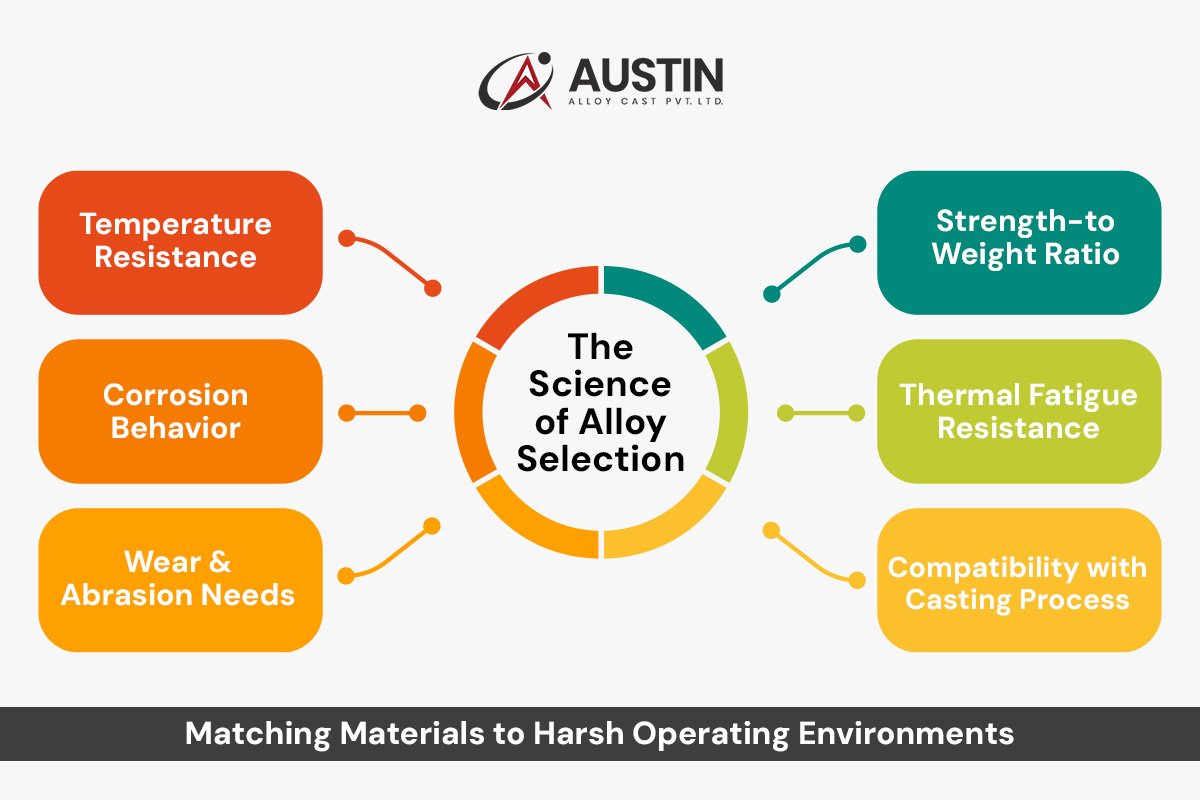
The Science of Alloy Selection: Matching Materials to Harsh Operating Environments

The composition of the material will determine the performance of the component. In industries that use parts which are subject to high temperatures, corrosive environments, mechanical abuse from constant wear and tear, or extreme duty cycles, the only way to provide an engineered component with a good performance level is by using an alloy based on a thorough scientific study to identify the appropriate alloy for the component. An alloy selection is not simply guesswork; the alloy choice is derived from a thorough scientific evaluation of the following performance requirements: expected performance requirements, potential operating conditions, casting behaviors, and expected long term reliability.

Austin Alloy Cast has developed a strategic methodology to identify the correct alloy for an engineered component based on years of metallurgical knowledge and practical experience. The alloy selection process also integrates the full understanding of how a given material will react to extreme environmental conditions when selecting an alloy. The balance of this article discusses these factors and provides insight into selecting the correct alloy for the engineered component you require.

Resistance to Temperature

The most basic inquiry regarding any application that puts metal through extreme conditions is whether the material will remain resistant to deformation, softening from heat, or losing strength.

When metals are heated to higher temperatures, their ability to be used as a structural member also decreases significantly; however, different types of alloys react to this increase in heat quite differently than one another. Carbon steels tend to lose structural integrity at much lower temperatures than stainless steels and nickel based alloys, which provide structural integrity under significantly higher temperatures than carbon steels are capable of withstanding, and thus when selecting alloys for equipment to operate in furnaces, exhaust systems, turbines and in equipment in petrochemical industries, it is extremely important to select the appropriate alloy as some alloys may soften, deform or creep under stress.

For the selection of alloys that have stable microstructures at high temperatures i.e., the use of austenitic stainless steels or nickel based superalloys gives the assurance that components remain dimensionally accurate and maintain their load bearing capacity after prolonged exposure to elevated heat. At Austin Alloy Cast, we assist our customers by recommending alloys that are stable in service by assessing and evaluating thermal stability curves, creep characteristics and compatibilities for heat treatment processes.

Physical and Chemical Ability

Corrosion is one of the highest level threats facing metals. It can happen from exposure to almost any medium including, but not limited to chemicals, moisture, salt water, oil and gas, and gases such as acidic fumes.

Corrosion causes metal loss over time, but it can also affect the strength of the metal, pollute products produced from it, and cause significant costs through failures. The addition of alloying elements such as chromium, nickel, molybdenum, and copper to a base metal improves the resistance of that alloy to corrosion by allowing stable passive layers to develop or improving the ability of the alloy to withstand pitting and crevice corrosion.

The use of alloys in the oil and gas, water treatment, marine engineering, and chemical processing industries must be evaluated carefully between their corrosion resistance and cost. The selection of alloys used by Austin Alloy Cast is made using a detailed chart of corrosion compatibility, along with the company’s experience with various alloy applications, to ensure the correct choice for corrosion resistance without sacrificing good overall quality and durability of the castings.

Wear Resistance and Abrasion Strength

A substance must be designed to endure the challenges of temperature and high friction uses. Various elements can affect a materials resistance to wear such as the toughness of the base alloy the microstructure of the cast pieces, the carbide content in the castings and the materials behavior, during heat treatment. When abrasion serves as the cause of failure for components, like pumps parts used in mining valve elements or rotating machinery a well engineered alloy can greatly extend the service life of the component before it needs to be replaced.

The materials listed below deliver performance, for such applications:

  • Hard steels,
  • High chromium irons,
  • Cobalt based alloys,
  • certain grades of nickel.

The reason these alloys perform so well is that they combine the High Hardness, Stable Carbide, and Superior Abrasive Resistance properties that make up the basis of wear resistance.

In designing a component, each engineer must factor the wear characteristics of the application whether they are going to be sliding, impact, erosion, or any combination thereof. In evaluating the wear characteristics of an application, Austin Alloy Cast will provide recommendations on the best alloys available and their optimal hardness, toughness, and microstructural stability to ensure that the castings will retain their surface integrity during continuous friction and particulate attack.

Strength to Weight Ratio

In many current industries performance is not only a measure of longer lasting durability or having a longer lifespan but also a measure of how well you are using your resources with a focus on making products as light in weight as possible while maintaining maximum effectiveness. Therefore, when looking at industries such as automotive, defense and energy, the strength and weight ratio has become a major factor in deciding which materials to use for applications where the overall performance is key i.e. every gram counts.

Several types of alloys e.g. high strength steel, aluminium bronze, titanium based, nickel alloys have been developed that provide considerable amounts of strength without adding excessive amounts of bulk to the product. Some examples of applications where an optimal strength to weight ratio could benefit are actuator, brackets, housing and rotating components.

Alloy recommendations made by Austin Alloy Cast not only take into account mechanical performance, but also take into account post manufacturing advantages associated with utilizing lightweight alloys instead of traditional heavier alloys that are generally less safe for users.

Resistance to Thermal Fatigue

Thermally Fatigue Resistant materials are required for components which undergo repeated cycles of heating and cooling. These thermal cycles cause internal stresses to accumulate and ultimately create conditions for thermal fatigue cracking if the material’s alloy is not stable.

Thermal Fatigue Resistant materials are necessary for applications like:

  1. Heat exchangers
  2. Turbocharger housings
  3. Furnace fixtures
  4. Power generation systems

Components produced for these applications must allow for adequate ductility, oxidation resistance, and resistance to microstructure degradation over time. Austenitic stainless steels, nickel based alloys and cobalt based systems are commonly used for their high resistance to thermal shock.

At Austin Alloy Cast, our use of simulation software and metallurgical testing helps us find the alloys that will remain structurally and mechanically sound after thousands of temperature cycles.

The Casting Process Compatibility

The most suitable alloy is not useful unless it is able to cast economically and consistently. In selecting an alloy, compatibility with the casting process should be considered in:

  • Fluidity in the molten state
  • Shrinkage characteristics
  • Solidification patterns
  • Tendency to develop porosity or hot tears
  • Machinability after casting

Alloys behave differently when they are in the casting process. Some alloys require rapid solidification in order to not crack; while other alloys require more refined gating systems to allow for proper casting of the final product. Essentially, at Austin Alloy Cast, we specialize in Process Metallurgy, so that the selected alloys will perform as required, as well as flow, fill & solidify, in a predictable manner. This allows for dimensional accuracy with high integrity while casting.

The Importance of Alloy Selection

The choice of an alloy is much more than selecting an available metal, it is also a design choice that affects the lifespan of each component. Selecting the proper alloy reduces downtime, improves safety, increases component performance, and decreases the total cost to own the component.

Austin Alloy Cast offers decades of combined experience in the foundry industry, metallurgical knowledge and casting simulation technology to identify the appropriate alloy to suit the conditions in which it will be used. By analysing the temperature stress, corrosion potential, wear patterns, thermal fatigue properties and compatibility of castings, we verify that each component is manufactured to perform under the most adverse environmental conditions.

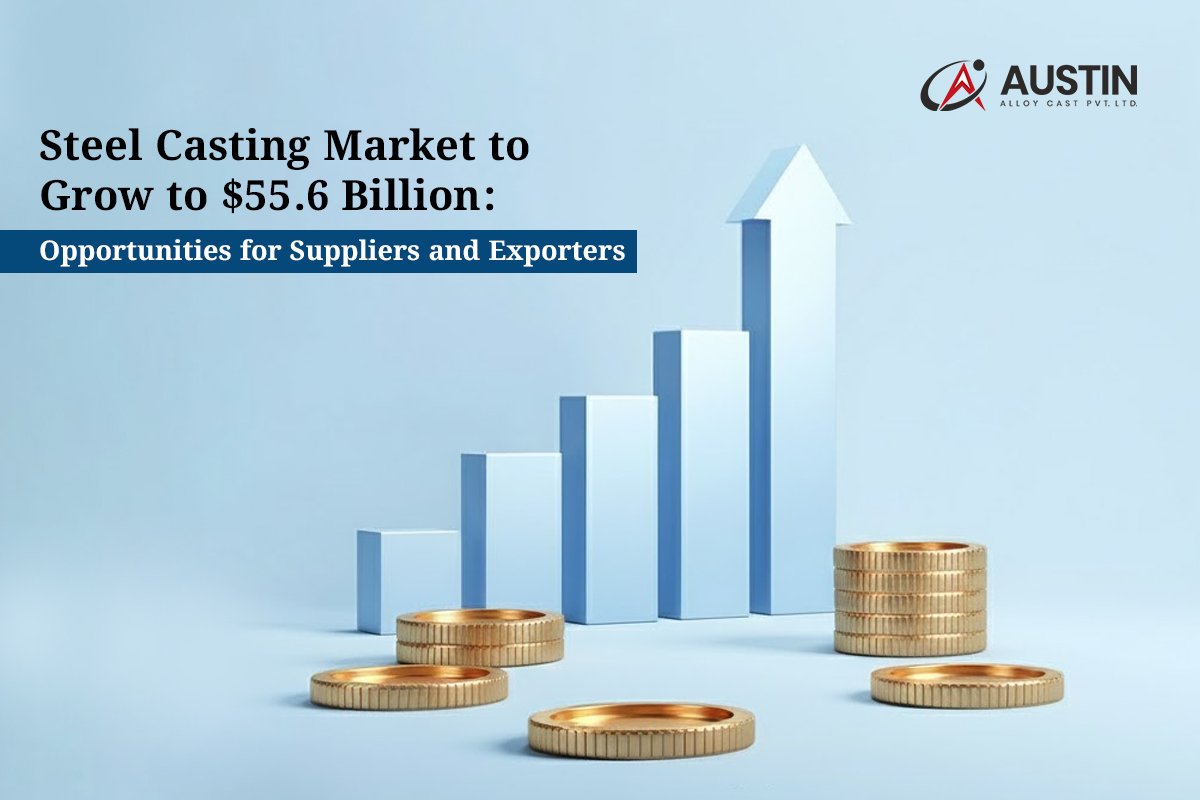
Steel Casting Market to Grow to $55.6 Billion: Opportunities for Suppliers and Exporters

The worldwide steel casting industry is embarking on a phase of growth with forecasts suggesting the market will hit $55.6 billion in the near future. This rise is driven by a growing need for high quality and precisely engineered steel parts, across numerous industrial fields.

Industry analysis, incorporating the reports on investment casting and steel casting markets reveals strong demand from sectors such, as heavy engineering, energy systems, automotive, construction machinery, railways and mining. For suppliers and exporters particularly those possessing production skills this changing environment offers substantial prospects.

Industry Reports Signal Strong Future for Steel & Investment Castings

Austin Alloy Cast, leveraging its capabilities and metallurgical proficiency is strategically placed to meet this growing worldwide need.

  • Industry Reports Signal Strong Future for Steel & Investment Castings
  • Recent analyses of the investment casting and steel casting markets reveal:
  • Rapid adoption of complex, near net shape cast components
  • Higher usage of alloy steels, duplex steels, nickel alloys and high strength grades
  • Increased investment in machined, ready to assemble cast products
  • Rising outsourcing and supplier diversification among global OEMs

These documents verify that steel castings remain crucial in scenarios where robustness, resistance, to corrosion pressure endurance and extended reliability are indispensable.

Reasons Behind Increasing Demand: Expansion, in Key Heavy Industries

The anticipated market value of $55.6 billion is primarily fueled by the growth of key sectors:

1.Construction & Infrastructure

High strength steel castings are essential, for structural elements, crane components, heavy earthmoving machinery and foundation frameworks.

2. Mining & Material Handling

Durable castings designed for crushers, conveyor equipment and drilling machines remain in worldwide demand.

3. Railways & Transportation

Cast steel is extensively used in bogies, couplers, brake parts, housings and underframe assemblies.

4. Oil & Gas & Petrochemicals

Steel castings that are corrosion resistant and capable of withstanding pressure are required for valves, pumps, drilling machinery and parts of refineries.

5. Defence & Marine Engineering

Robust frameworks parts and propulsion mechanisms rely on accurately crafted steel castings.

6. Renewable Energy

Cast steel components are being increasingly chosen for wind turbines, hydroelectric installations and solar power facilities due, to their dependability and durability.

For foundries possessing the expertise and quality frameworks this expansion, across industries presents a significant opportunity.

OEM Outsourcing Trends Creating New Export Pathways

Worldwide OEMs are gradually boosting their delegation of casting manufacturing to cost production areas. Increasing labor expenses and manufacturing limitations, in nations are hastening this transition.

This is creating export prospects, for foundries capable of providing:

  • Repeatable quality
  • Competitive pricing
  • Technically complex castings
  • Materials suitable for harsh service environments

Austin Alloy Cast’s expertise, in precision casting, oversight and global documentation equips it perfectly to meet this growing export requirement.

End to End Capabilities Now the Top Requirement for Global Buyers

Modern international purchasers no longer desire supply chains. Rather they favor foundries of providing comprehensive solutions all in one location including:

  • Pattern making
  • Steel casting production
  • Heat treatment
  • CNC machining
  • Testing and NDT
  • Final inspection

This unified approach minimizes wait times streamlines supply chains and guarantees quality primary factors driving buyers to favor comprehensive suppliers. Austin Alloy Cast’s internal processes align seamlessly with this industry trend.

Export Readiness: Certifications, Documentation & Consistency

With the tightening of sourcing regulations vendors are required to prove:

  • ISO compliant quality systems
  • Traceable chemical and mechanical test reports
  • NDT validation (UT, RT, MPI, DPI)
  • Dimensionally accurate inspection reports
  • Export packaging and documentation
  • Consistent metallurgical performance across batches

Foundries capable of fulfilling these requirements are becoming favored long term collaborators, for OEMs throughout Europe, the Middle East and North America.

Technology, Automation & Alloy Expertise: The Future of Casting Suppliers

Contemporary purchasers are progressively choosing suppliers for their capabilities instead of mere capacity. Foundries focusing on:

  • Simulation based casting design
  • Automated moulding
  • Advanced melting and refining
  • Heat treatment automation
  • CNC machining centers
  • Metallurgical process control

are best positioned to win high value international orders.

Austin Alloy Cast’s emphasis on alloy steels, duplex variants, nickel based alloys and heat resistant substances further boosts its standing, in the market.

The anticipated expansion of the steel casting market to $55.6 billion represents a prospect for suppliers and exporters globally. Fueled by heavy industry sectors and bolstered by outsourcing patterns the need, for dependable premium steel castings keeps increasing.

Foundries that embrace technology, strengthen metallurgical excellence, and offer end to end manufacturing will be the clear winners. With its integrated production capabilities, advanced alloy expertise, and commitment to global quality standards, Austin Alloy Cast is ideally positioned to serve this growing market and support OEMs across international industries.

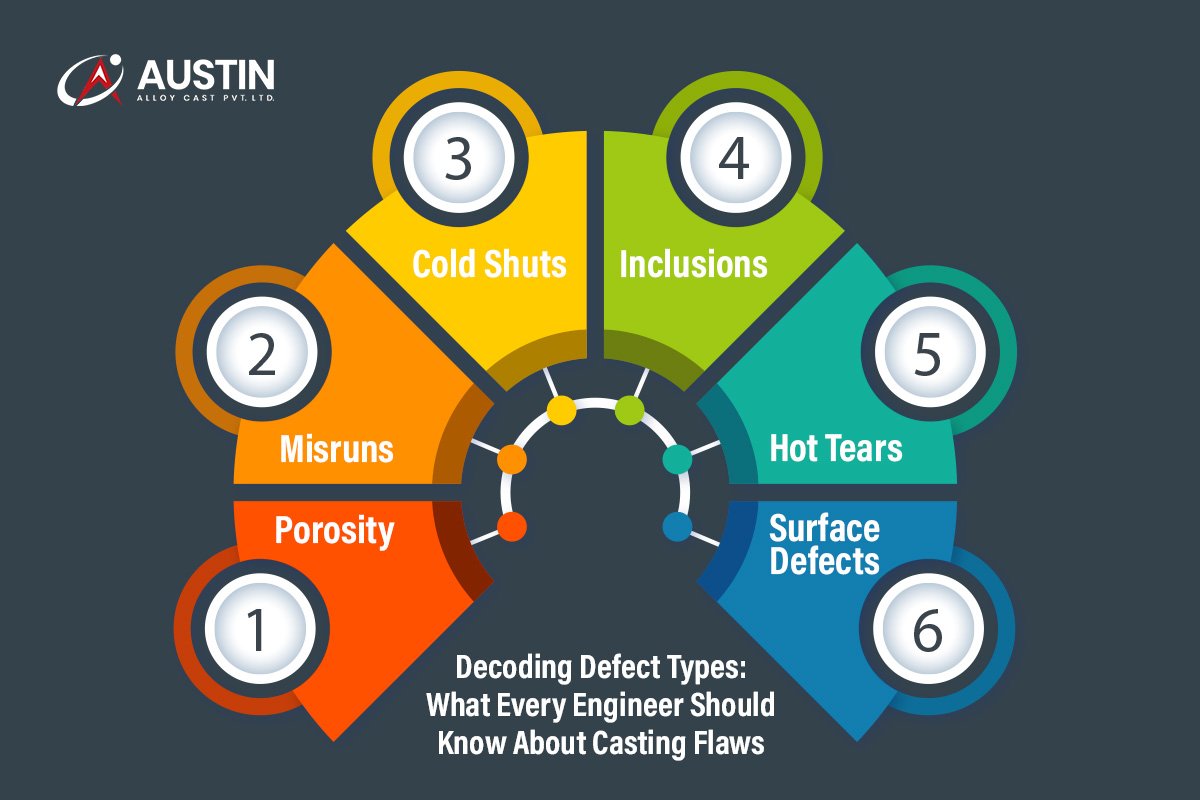
Decoding Defect Types: What Every Engineer Should Know About Casting Flaws

Casting continues to be among the effective manufacturing methods for creating intricate, robust and nearly finished components. However, even the sophisticated foundries must accept a core reality: metal casting is an exercise in managing variables. If any factor such as temperature, mold integrity, metal cleanliness or filling behaviour becomes unregulated flaws may arise. For engineers grasping these imperfections is crucial not for problem solving but also for designing components that are conducive, to casting and establishing achievable quality benchmarks.

At Austin Alloy Cast our experience in sectors has consistently demonstrated one fact: detecting defect patterns early drastically cuts down on rework enhances yield and boosts the dependability of essential parts. This article outlines the frequent casting defects engineers should be aware of the reasons, behind them and the approaches skilled foundries use to address them.

Porosity

Porosity is among the common internal casting flaws frequently concealed below the surface. It usually results from gases being trapped or shrinkage during the solidification process. Gas porosity happens when dissolved gases hydrogen leave the molten metal but become trapped before they can completely escape. Shrinkage porosity develops when sections, within the casting solidify unevenly leading to voids caused by material supply.

Porosity is important to engineers because it influences a parts strength, its ability to withstand pressure and its fatigue durability. At Austin Alloy Cast we manage porosity through process controls like degassing, refined gating along with sophisticated simulations that forecast shrinkage areas prior, to tooling creation. This guarantees components that’re more compact, robust and capable of fulfilling rigorous performance standards.

Misruns

A misrun happens when the liquid metal does not fully occupy the mold cavity. This leads to a component, with areas slender edges lacking material or details that seem only partly shaped.

This issue frequently arises from:

  • Low metal pouring temperature
  • Slow or turbulent filling
  • Restrictive gating design
  • Premature solidification due to thin sections

Misruns hold importance in precision projects as the geometry directly affects both fit and function. Engineers can mitigate misruns by maintaining wall thickness steering clear of excessively thin sections and analysing flow simulations early during the design stage. Utilizing casting simulation software and high quality alloys Austin Alloy Cast reduces misruns by fine tuning flow trajectories and rigorously managing pouring conditions.

Cold Shuts

Cold shuts occur when two flows of molten metal converge but do not merge into one body. This results in a line or joint that forms a fragile area, under mechanical or heat stress.

Cold shuts generally happen because of:

  • Low metal fluidity
  • Inadequate gating design
  • Slow mold filling
  • Corrosion occurring on the metal exterior where currents converge

In parts like pump impellers, turbo housings or structural brackets cold shuts are intolerable. They weaken tensile strength. Jeopardize durability, over time. Austin Alloy Cast avoids shuts by maintaining accurate temperature control ensuring ideal fluidity and optimizing gating designs to encourage smooth laminar metal flow.

Inclusions

Inclusions refer to materials slag, sand, oxide films or debris captured inside the metal as it solidifies. They disturb the homogeneity of the casting serving as stress points that can cause cracks or early failure during use.

Inclusions generally arise from:

  • Improper molten metal filtration
  • Sand erosion from the mold
  • Impure alloy feedstock
  • Oxidation during pouring

Engineers’ ought to recognize that inclusions are frequently microscopic and might not be visible during examination. For this reason, Austin Alloy Cast depends extensively on NDT methods, ceramic filters, antiturbulence gating and high purity alloys to produce flawless castings, for mission critical parts.

Hot Tears

Hot tears sometimes called cracks develop when the casting cools unevenly or faces limited shrinkage during solidification. When the metal is partly solid and partly liquid minor stresses may lead to cracking.

Frequent reasons consist of:

  • Inflexible mold structure that limits shrinkage
  • Sharp internal corners
  • Sudden changes in section thickness
  • High thermal gradients

Hot tears are critical flaws and frequently cause a casting to be rejected outright. Engineers are crucial, in creating parts featuring transitions ample radii and consistent wall thickness. At Austin Alloy Cast our experts utilize solidification simulations to foresee areas experiencing thermal stress and adjust mold configurations to allow the metal to contract freely.

Surface Defects

Surface imperfections represent the noticeable type of casting defects and include rough textures, laps, scabs, veining and surface porosity. These problems mainly result from Mold related issues or changes, in temperature during the pouring process.

Common reasons consist of:

  • Improper mold preparation
  • Sand collapse or erosion
  • Incorrect pouring temperature
  • Moisture in the mold
  • Poor coating application

Although certain superficial imperfections can be eliminated through machining or shot blasting some indicate underlying process problems requiring attention. At Austin Alloy Cast maintaining mold conditioning, regulated preheating and accurate temperature tracking contribute to achieving a consistent surface finish on every casting.

Why Understanding Defects Matters

For engineers understanding these categories goes beyond quality assurance; it involves enhancing the whole product lifecycle. When design and foundry teams work together from the start defects become foreseeable, avoidable and significantly cheaper to manage.

At Austin Alloy Cast, comprehensive defect analysis frameworks, metallurgical expertise, and advanced simulation ensure that potential issues are addressed before they reach production. Whether manufacturing for heavy engineering, automotive, oil & gas, or specialized industrial systems, our focus remains on delivering castings with repeatable quality and long term performance.

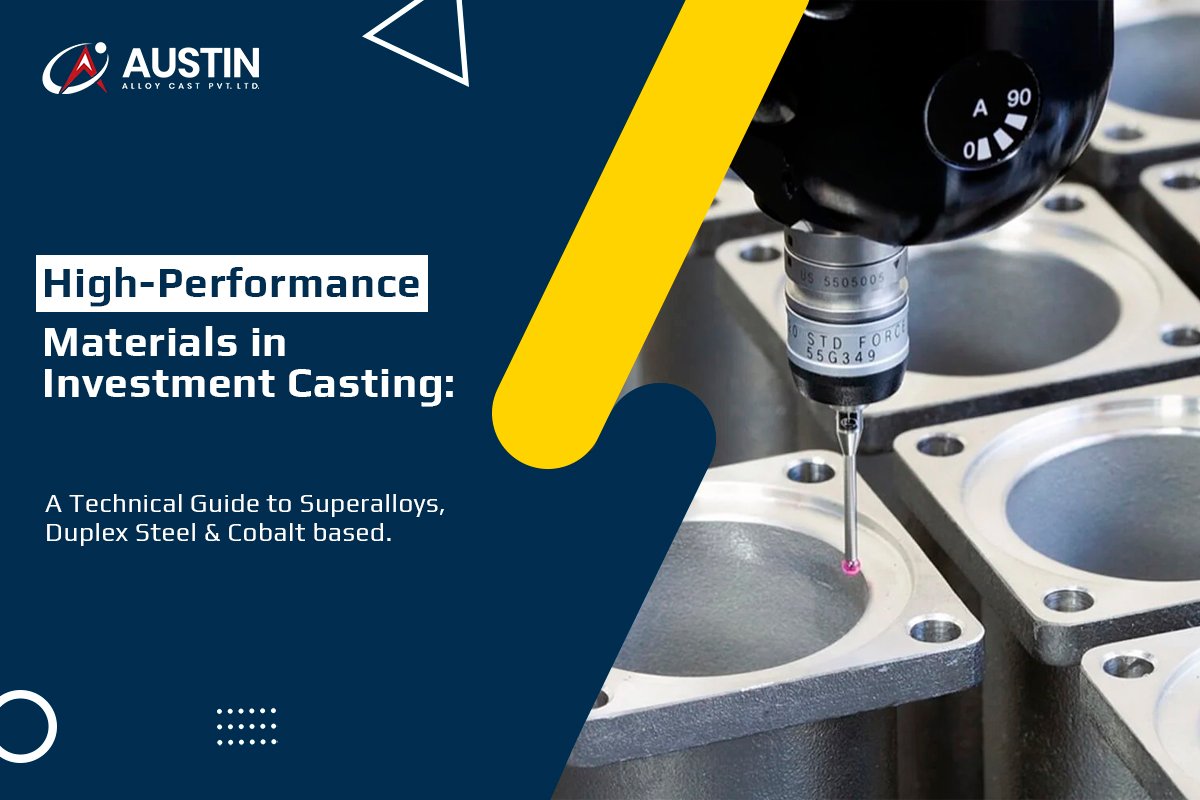
High Performance Materials in Investment Casting: A Technical Guide to Superalloys, Duplex Steel, Cobalt-Based Alloys & Monel

Heavy engineering industries such as Power Generation, Marine, Chemical and Oil & Gas demand components with extreme performance capabilities. When choosing a material, the type of material and the type of manufacture method will determine how well the part can perform at the extreme conditions. At Austin Alloy Cast, we believe that using the right high performance alloy and manufacturing technology is the foundation for providing safe, reliable, and long lasting products to our customers.

Information about Austin Alloy Cast, including Precision, Scale, and Trust.

Established in 2012 and operational from 2015, Austin Alloy Cast Pvt. Ltd. is located in Bharudi, next to Rajkot, Gujarat (Western India).

At Austin Alloy Cast, we operate one of the largest investment casting plants in India, backed by a team with more than 20 years of experience.

Over the years, we have also built strong expertise in casting exotic and difficult to handle materials such as Nickel based Alloys, Duplex, Monel, and Stellite. These alloys demand precise melting practices, strict temperature control, and deep metallurgical knowledge that our team has refined through years of hands on experience. This allows us to consistently deliver components where conventional foundries struggle, especially in high temperature, high corrosion, and high wear applications.

Our USPs:
  • Casting Capability — We can cast from a few grams to 200 kg parts.
  • Production Capability — Where up to approximately 1800 metric tons annually will accommodate both prototype and mass volume production.
  • Comprehensive service under one roof — We have casting capabilities plus integrated Machine Shop as well as all kinds of NDT testing in house including Radiography Test.
  • Quality Control —Our process is designed to have the strictest of process control parameters.
  • Global standard compliance — Our castings meet international standards (ASTM, DIN, ISO), and we hold approvals for critical industries including marine, oil & gas and general engineering.

We have provided our clients with complete end to end service capabilities through the integration of advanced infrastructure, engineering expertise and skilled personnel, from Design; Consultation and Prototype Development to Finished Components ready for installation.

The Importance of Investing in High Performance Alloys

Typical steels or more common types of metal usually don’t hold up when put into the vicinity of high temperatures starting with turbines up to the corrosive and erosive effects of water and chemicals to the extent of using steels for large mechanical systems which have much heavier loads placed on them than both chemical and water applications. Superalloys, duplex alloys, cobalt alloys and heat resistant steels fill the gap of what traditional alloys have failed at.

With the proper alloy, the following characteristics are maintained:

  • Resistance against extreme heat and thermal cycling
  • Resistance against corrosion, abrasions, and erosions
  • Strength and toughness maintained while applying mechanical forces
  • Will operate and perform reliably over the long term with little to no corrosion and a fictitious lifespan

At Austin Alloy Cast, we have a complete line of materials; Carbon Steels, Stainless Steels, Alloy Steels, Duplex and Super Duplex grades, Tool Steels, Nickel Alloys, Cobalt Alloys, Monel and Heat Resisting Steels allowing you the freedom to select a material that’s best suited for your application.

Superalloys; Strength & Stability Under Extreme Heat

For applications involving high temperatures and thermal stresses such as turbines, furnace parts, power plant components and aerospace hardware nickel based superalloys and other heat resistant alloys are the materials of choice.

These alloys:

  • Maintain strength at elevated temperatures
  • Resist creep and deformation under sustained heat
  • Offer oxidation and thermal fatigue resistance

At Austin Alloy Cast, our foundry is fully equipped to cast these superalloys in air-melt condition via the lost wax investment casting process, ensuring fine surface finish, dimensional accuracy, and minimal defects.

Once cast, components are subjected to strict heat treatment, inspection, and quality control guaranteeing performance even in the most demanding thermal environments.

In fact, Nickel based alloys like Inconel 625 are regularly poured at our foundry. We have the capabilities to execute large order in such exotic materials.

Duplex & Super Duplex Steels; Balancing Strength with Corrosion Resistance

For industries like marine, offshore, chemical processing, and petrochemical components often face harsh corrosion, saltwater exposure, acidic media, or chloride rich environments. Simple stainless steel may not suffice here.

Duplex and Super Duplex steels are alloys made with Austenitic and Ferritic phases, and represent the perfect marriage of strength and corrosion resistance due to their:

  • High tension and toughness
  • Resistance to Pitting, Crevice and Stress Corrosion
  • Reliability under cyclic loads and corrosive environments

We’re able to use these alloys in pump housings, valve bodies, subsea components, offshore equipment and chemical processing hardware.

We regularly cast components of duplex grades at our facility, closely monitoring the microstructure to ensure compliance with stringent industry regulations.

Tool and Cobalt Alloys; Designed for Wear, Erosion, and Hardness.

Wherever wear resistance, galling resistance, or sustaining hardness is critical due to an application’s requirement for a combination of high stress TEMPERATURE conditions, Cobalt Based Alloys are outstanding choices.

Cobalt Based Alloys, along with their excellent wear resistance, are also ideal for the following applications:

  • Valve seats, trims and cores
  • Pump components including sleeves, bushings, etc. subject to significant wear
  • Die, Tool, and Wear Plate Applications for Hot Working Application
  • Any component that will be subjected to abrasive/erosive MEDIA.

Cobalt Base Alloys may prove difficult to machine or forge; therefore, investment casting would be a preferred method. At Austin Alloy Cast, we utilize our ability to cast cobalt based alloys to cast complex geometries and intricate parts with a minimum amount of finishing and consistent mechanical properties.

Heat resistant steels/alloys Dealing with thermal cycles and environmental strain

Many industries use heat resistant materials via periodic thermal cycles, oxidising atmospheres, or extended periods of exposing to HIGH TEMPERATURES. For those conditions, heat resistant steels or Specialty Alloy Steels provide you with the durability you need.

These materials withstand the following:

  • Scaling and Oxidation
  • Thermal fatigue and distortion
  • Loss of Mechanical Strength over multiple cycles.

Through precise control in melting, casting, and post casting heat treatment, Austin Alloy Cast ensures that heat resistant steel castings meet design specifications and withstand long term exposure to thermal stress.

Metallurgy, Process Control, and Quality are Important

High performance castings require more than just choosing a good alloy. At Austin Alloy Cast we focus on:

  • Accurate chemistry and composition of the melt,
  • Proper handling of the wax pattern, including controlled shell building,
  • Controlled temperature and time for pouring and solidification,
  • Proven heat treatment cycles that meet the requirements of each alloy,
  • Thorough inspections and tests, including radiographic, dye penetrant, magnetic particle, ultrasonic, microstructure examination and dimensional measuring.

This structured process ensures that the castings supplied to customers are free from any defects, correctly sized, and possess consistent mechanical and chemical characteristics in extreme service environments.

Conclusion

In today’s industrial economy, the requirements for industrial land applications offshore drilling, power generation, chemical processing, heavy equipment, and marine are extremely demanding of component performance. Conventional materials simply cannot meet the required performance criteria. In this regard, high performance alloys and precision investment casting are essential.

Austin Alloy Cast utilizes decades of metallurgical experience and expertise combined with modern facilities, international quality control standards, and an unwavering commitment to customer satisfaction. No matter if you require nickel based superalloys, duplex/super duplex steels, cobalt based alloys, or heat resistant steels, we will provide you with components manufactured to the highest integrity levels of accuracy and consistency to perform in the most severe environments.

If you are a component designer whose applications are subjected to high stress, high corrosive wear intensive environments, contact Austin Alloy Cast today and partner with us. We don’t merely manufacture metal components, we engineer reliability, performance, and confidence.

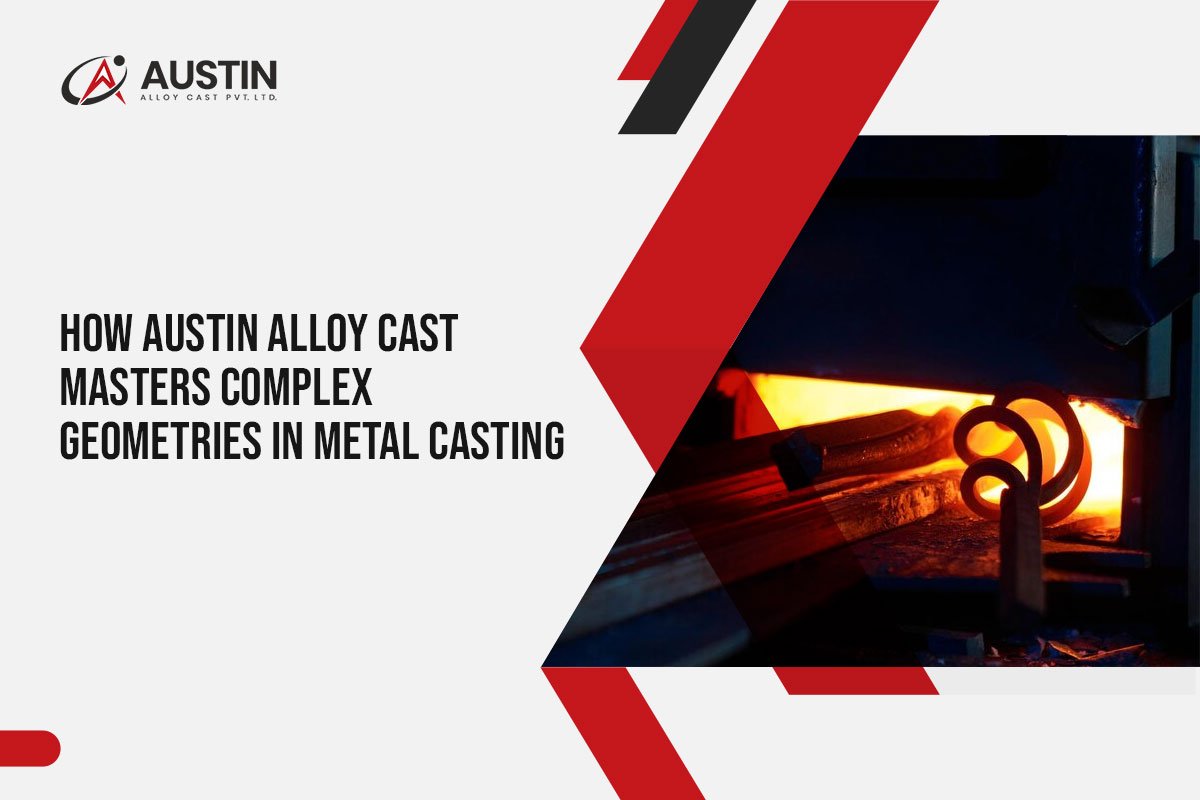
How Austin Alloy Cast Masters Complex Geometries in Metal Casting

In the changing environment of today’s manufacturing industry, the capacity to manufacture complex and engineered precision metal components will be a critical differentiator. Austin Alloy Cast is the prominent investment casting manufacturers trusted for their high level of technical capability, experienced foundry knowledge, and commitment to quality. The company’s ability to deliver complex metals casting geometries has created a global customer base across many industries, including automotive, energy, defense, and marine.

Recognizing the Issue: Why Complex Geometries Matter

Modern engineering designs call for components that are lighter, stronger, and more efficient all while holding tight tolerances in complex shapes. Some of these geometries may be thin walls, internal hollows, undercuts, and integrated features that are unsuitable for conventional manufacturing.

Investment casting or the lost wax process is ideal for these designs. While machining and fabrication often require multiple steps to achieve the shape, investment casting produces near net shape parts directly from a wax pattern. This decreases machining, reduces material waste, and yields consistency in dimensions and geometry even with complexity.

Austin Alloy Cast uses process control, advancements in technology, and metallurgic knowledge to recreate such complex components with superior consistency and quality.

Austin Alloy Cast: The Benefits of Engineering Complexity

As a premier investment casting company, Austin Alloy Cast has developed its processes to produce an unparalleled quality product. What makes the company successful in producing complex metal geometries is its operation of integrating modern technology, skilled craftworkers, and a disciplined quality control process.

Your Austin Alloy Cast experiences this by way of,

1.Advanced 3D Modelling and Simulation

Every successful casting starts with an accurate design. Austin Alloy Cast employs 3D CAD modelling, and solidification simulation software to formulate how molten metal will behave to flow, filling and solidifying in the mold. By modeling to simulate casting behavior, the engineers can detect and eliminate potential defects i.e. porosity, shrinkage, and distortion before the mold is made.

This potential validation measures that the delivered product will meet structural intergrity and dimensional accuracy for environmentally produced components that will experience high imposed loads.

2. Precision Wax Pattern Development

The investment casting process relies on the accuracy of the wax pattern which is an exact representation of the final part; whether complex or fragile, Austin Alloy Cast has automated wax injection and assembly systems that promote consistency in shape development. In most cases, the patterns are assembled into some multiple piece grouping called “treeing” to allow for multiple part casting and proven results in shortened operational times. Austin Alloy Cast has talented staff who assist with the overall inspection process that leads to patterns meeting requirement tolerances as even small mistakes matter in final castings achieving high levels of accuracy.

3. Quality Ceramic Shell Construction

It is vital that a durable and dimensionally accurate ceramic shell is created for both the complexity of the geometry being cast as well as the complex shapes. Austin Alloy Cast thoughtfully controls slurry coating, ensuring that the shell is constructed in a way that promotes adhesion of the layers to the wax model.

The shells are built in thin layers in a controlled environment and layering attaching in the drying of each of the layers. This creates a strong shell that holds better to high temperatures, providing the quality surface detail of the wax pattern being used for the investment process.

4. Metal Pouring Management and Alloy Capability

The reputation of the company relies not only on its control processes but also its metallurgy competency. Austin Alloy Cast is capable of producing parts in just about any alloy, specifically stainless steel casting, carbon steel and high temperature alloys.

A very strictly controlled, melting and pouring process including induction furnaces, temperature monitoring, and vacuum equipment ensures that molten metal fills every area of a sophisticated mold, which makes it easier to produce dense, quality castings with ideal engineering characteristics.

5. Machining and Finishing Precision

After the metal solidifies and the shell is taken off, castings have to go through a series of finishing processes, including shot blast, heat treatment, and CNC machining, which ensures that all the dimensional and surface finish requirements are met.

The machining division at Austin Alloy Cast is fully equipped with the latest tooling manufactured to micrometer specs. This leads to fully machined castings capable of being assembled or used in their final state, with reduced customer side processing time and overall lead time.

6. Rigorous Quality Control and Testing

With intricate metal geometries, controlling internal and external quality is critical. Some of the non destructive testing methods that Austin Alloy Cast utilizes include radiography, ultrasonic testing, magnetic particle inspection, and dye penetrant testing.

CMM inspection is also done to ensure dimensions are accurate; the company makes sure that every feature conforms to the 3D design model. It also implements ISO 9001, 14001, and 45001 for added emphasis on quality, safety, and environmental obligation.

Real World Applications: From Design to Delivery

The ability of Austin Alloy Cast to master complicated geometries has converted the company into a dependable partner for a number of industries.

  • Automotive: Lightweight complex parts in fuel systems, turbochargers, and transmissions.
  • Oil & Gas: Corrosion resistant stainless castings for valving, pumping, and flow control applications.
  • Energy & Marine: Components designed to be durable and longer lasting in challenging environments.

In every case, the collaboration that Austin Alloy Cast has with customers during design and prototype development help to guarantee that the resulting product meets above and beyond the technical and economic expectations.

Innovation, Quality and Partnership

At its core, Austin Alloy Cast Pvt. Ltd. is more than just an investment casting manufacturer. It is a technical partner that brings engineering know how, cost effectiveness and metallurgical knowledge to help customers determine the right material and process for their application.

Austin Alloy Cast Pvt. Ltd. will continue to make investments in new technologies, automation and improvements, to push forward with an ever evolving industry. This process will ensure Austin Alloy Cast continues to remain well positioned to be a leader in innovation and a trusted supplier for manufacturers of complex metal components, with customers expecting precision and reliability to meet performance requirements.

Conclusion

When mastering complex geometries in metal casting, it truly is a choice of art and science experience, technology and diligence are only a few of the facts to the process. Austin Alloy Cast has a commitment to precision, process efficiency and partnered with its customers. In a short time, the organisation has been able to establish recognition across Canada as a trusted investment casting manufacturer that is capable of producing complex geometries into high performance stainless steel castings and other alloy components.

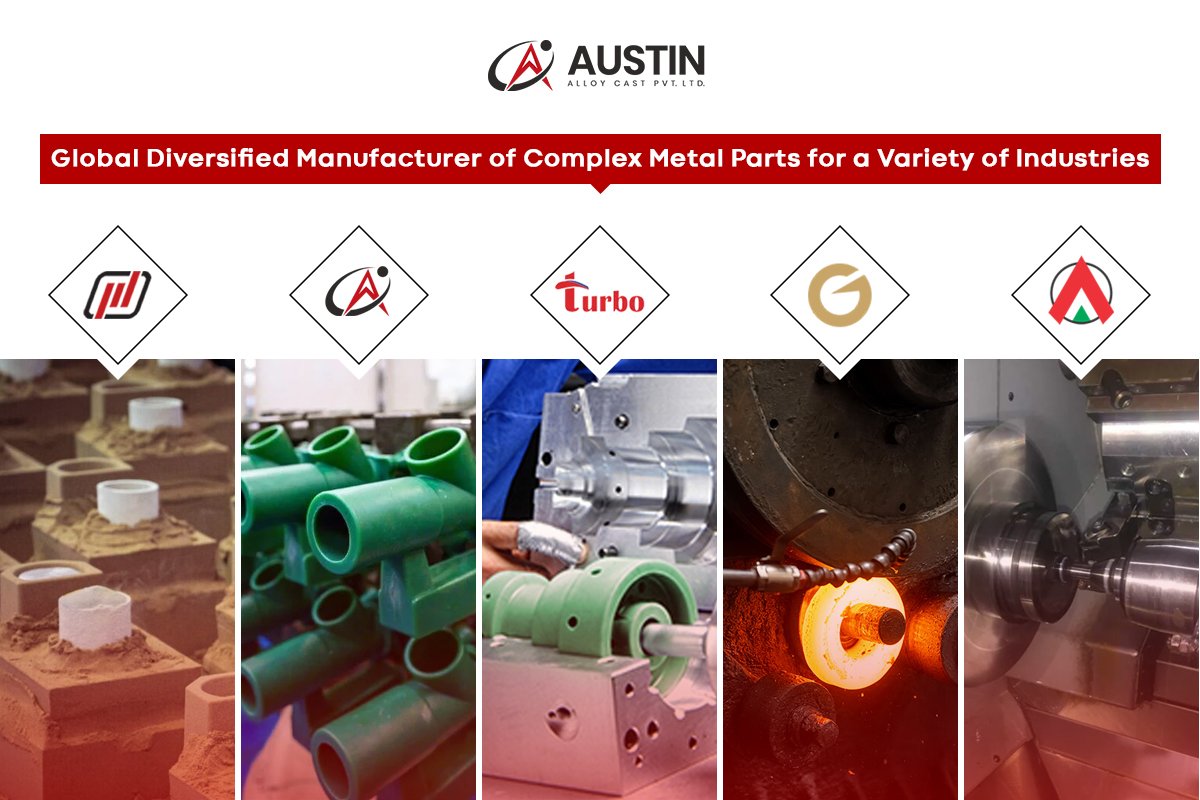
Global Diversified Manufacturer of Complex Metal Parts for a Variety of Industries

In today’s rapidly evolving industrial landscape, companies across the world are searching for reliable manufacturing partners who can deliver precision components, engineering expertise, and global support under one umbrella. Austin Alloy Cast, part of the Emporia Group, stands out as a diversified, globally trusted manufacturer of complex metal parts serving a wide spectrum of industries including automotive, oil & gas, pumps, valves, agriculture, energy, and general engineering, aerospace, electronics.

With a legacy built on engineering excellence and customer first service, Austin Alloy Cast has earned its reputation as a world class investment casting manufacturer specializing in stainless steel castings, alloy steel castings, and highly engineered metal assemblies.

Emporia Group: A Unified Strength of Metal & Non Metal Divisions

As a division of the Emporia Group’s industrial powerhouse, the Metal Processing Division is a group of specialized manufacturing companies, focused on expertise in castings, forgings, or machining. These companies have teamed up to form one of the most diversified and vertically integrated metal component ecosystems in India, focusing on supplying various global industries.

Here is a summary of all the companies within the Metal Division:

METFLOW CAST PVT. LTD. 

Steel Sand Castings

Metflow Cast is one of the Emporia Group’s core strengths in heavy and medium weight steel sand castings. With the capability to produce castings up to 750 kg per piece, Metflow is equipped to handle large, structurally demanding components that require robust metallurgical integrity.

The facility is designed for flexibility across a wide range of steel alloys, making it an ideal partner for industries such as:

  • Valve and pump manufacturing
  • Agriculture and off highway equipment
  • Construction machinery
  • General engineering applications

Its infrastructure is specifically optimized for high quality molding, controlled pouring processes, and post casting treatments ensuring reliable and consistent results even for complex geometries and demanding dimensional requirements.

AUSTIN ALLOY CAST PVT. LTD.

Steel Investment Castings

Austin Alloy Cast is the great precision engineering under the Emporia Group. As one of India’s largest single site manufacturers of steel investment castings, the company is capable to produce to complex near net shape components up to 200 kg per piece.

With expertise in stainless steel, duplex, alloy steel, and high performance metals, Austin Alloy Cast serves the needs of industries requiring high levels of accuracy, surface finish, and engineering materials performance which can include applications in:

As a leading investment casting manufacturer, we deliver near net shape solutions for industries such as:

  • Automotive
  • Pumps & valves
  • Marine
  • Oil & gas
  • Industrial machinery
  • Defence & heavy engineering

With advanced process control, in house NDT, machining, and heat treatment tie ups, Austin Alloy Cast ensures consistent dimensional accuracy, metallurgical reliability, and superior surface finish.

TURBO CAST (INDIA) PVT. LTD.

Aluminum Investment Castings

Turbo Cast operates one of India’s most sophisticated facilities devoted solely to aluminum investment castings. It is the only foundry in India devoted exclusively to aluminum investment castings for aerospace, defense, electronic, and medical use.

The facility is Nadcap accredited for multiple special processes a universally accepted standard for high precision aerospace fabrication and is capable of producing aluminum investment castings up to 25 kg. Turbo Cast provides an unparalleled ability to produce extremely lightweight, high strength components with aerospace grade precision.

Its advanced process controls, alloy handling capabilities, and rigorous inspection systems enable it to meet the demanding certification and reliability standards of mission critical industries.

GALAXY TECHNOFORGE (I) PVT. LTD.

Seamless Rolled Rings

Galaxy Technoforge is the forging division of the Emporia Group with a specialty in seamless rolled rings and profile ring forgings. These rings are critical components for:

  • Automotive
  • Heavy engineering
  • Power transmission
  • Railway and aerospace sub systems

The company produces ring forgings in numerous diameters and cross sections for use in performance critical applications such as bearings, gears, flanges and rotating machinery. Its processes control forge grain flow, giving improved strength and mechanical properties.

With state of the art, sophisticated forming equipment and heat treatment facilities, Galaxy Technoforge meets the needs of both the automotive and non automotive sectors with reliable, high precision forged components.

Ayushi Engineering Pvt Ltd

Machined Components

Ayushi Engineering provides precision machining solutions for castings, forgings, and bar stock components. With multi process machining capabilities including CNC turning, milling, pressure die casting machining, and shell mould machining, the company supports a wide variety of industries.

Ayushi stands out due to:

  • Flexible production from prototypes to mass production
  • World class measurement & testing infrastructure
  • Ability to handle multi material components
  • Strong supply chain collaboration with Group foundries

The company plays a critical role in delivering fully finished, ready to assemble components within the Emporia Group.

Non-Metals Division – Consumer, Industrial & Healthcare Excellence

Apart from metals, Emporia Group has a significant footprint within sectors that support consumer markets, industrial supply chains and healthcare production.

Austin Foods & Beverages Pvt Ltd – Food Processing

This division supports the consumer food sector by contributing processed foods and beverages that meet high production and hygienic standards that the Group also adheres to. This also represents the Groups’ diversification beyond engineering and into one of the fastest growing segments of FMCG. At Austin, we run highly automated canning lines to support our Global clientele.

Tilara Polyplast Pvt Ltd – Plastic Manufacturing

Tilara Polyplast produces Polycarbonate & Acrylic Sheets. Its advanced extrusion machines and processing control technology deliver high quality extruded plastic sheets. It has range of products which includes Polycarbonate Solid Sheets, Polycarbonate Multiwall Sheets, Acrylic Sheets, and General-Purpose Polystyrene Sheets (GPPS).

Alec Enterprise Pvt Ltd – Industrial Chemicals & Solvents

Alec Enterprise serves as the Group’s chemical trading division, trading industrial chemicals for consumption in manufacturing, engineering, agriculture and processing applications. Due to Alec Enterprise’s products serving as the extension of many upstream and downstream production supply chains, it serves as a key enabler for regional industries.

SNJ Lifecare Pvt Ltd – Pharmaceuticals

SNJ Lifecare’s importance in the healthcare market is based on its role as an API Active Pharmaceutical Ingredient. Their commitment to manufacturing pharmaceutical products in audited production facilities and regulated environments provides safe and reliable product, elevating the healthcare ecosystem.

Streamlining Supply Chains with Multiple Capabilities

Global OEMs and industrial manufacturers are attempting to simplify procurement, reduce vendor complexity and enhance supply chain stability. Austin Alloy Cast supports this initiative with its multiple metal part manufacturing capabilities. Our capabilities allow you to consolidate processes and suppliers into a single source you can trust.

Austin Alloy Cast provides investment casting, sand casting, forging, machining, finishing, and assembly preparation in a single group. This eliminates the need for multiple suppliers for each individual process. The benefits of this include:

  • Reduced Procurement Time
  • Reduced Administration and Logistics Costs
  • Consistency in Metallurgical Quality in all Parts
  • Reduced Risk of Part to Part Variation
  • Improved Responsiveness to Design Modifications
  • Shortened New Product Development (NPD) Time

In addition, our metallurgical and process engineering team sponsors the right manufacturing method for you based on the geometry of the part, performance requirements, and cost per part efficiencies, even when this means developing a hybrid solution from investment casting, sand casting, or forging.

International Expertise and Global Services

Austin Alloy Cast has developed a worldwide ecosystem to provide dependable and consistent performance to clients on multiple continents.

Manufacturing Facilities – Western India

Our modern manufacturing hubs in Western India serve to support the group’s manufacturing backbone. Utilizing modern induction furnaces, automated shelling lines, CNC machining centers, dedicated inspection laboratories, heat treatment facilities, and testing capabilities, the facility offers the speed and precision which is demanded and expected from concept to finished product.

Regional Office – Singapore

Our regional office in Singapore continues to enhance communication with customers across Southeast Asia, East Asia, and the Pacific region. This office creates a global bridge offering speed, technical engagement, and customer engagement.

Warehousing Facility – United States

Austin Alloy Cast has a logistics and stocking presence in the United States assuring short lead times and inventory available to North American customers. Customers can rely on just in time (JIT) delivery for OEM and/or resellers and facilitating smoother supply chain planning.

Representative Network

We have well established representative network spanning across Europe, North America, APAC regions. Hence, covering the major sales markets. We work with these techno-commercial agents to maximise customer satisfaction by minimising time zone, linguistic & Cultural differences.

Global Customer Base

With local representatives in major global markets, customers can access fast technical support, commercial support, and shorter response times. Austin Alloy Cast and the Emporia Group currently service customers in over 20 countries and provide added insulation to our brand as a truly global metal component manufacturer.

Conclusion: Your International Partner for Precision Metal Components

As industries evolve and supply chains adapt, Austin Alloy Cast continues to shine as a trusted manufacturing partner, ready for the future, and connected globally. With the strengths of the Emporia Group as our foundation and driving force of engineering superiority, we deliver value through,

  • Precision investment casting
  • Stainless steel and alloy steel casting
  • Sand casting
  • Rolled ring forgings
  • Full scale machining solutions
  • Global logistics and technical support

Austin Alloy Cast consolidates supply chains, unites processes, and provides real “one stop” sourcing, allowing customers to run more efficiently, innovate faster, and achieve more performance in every application.

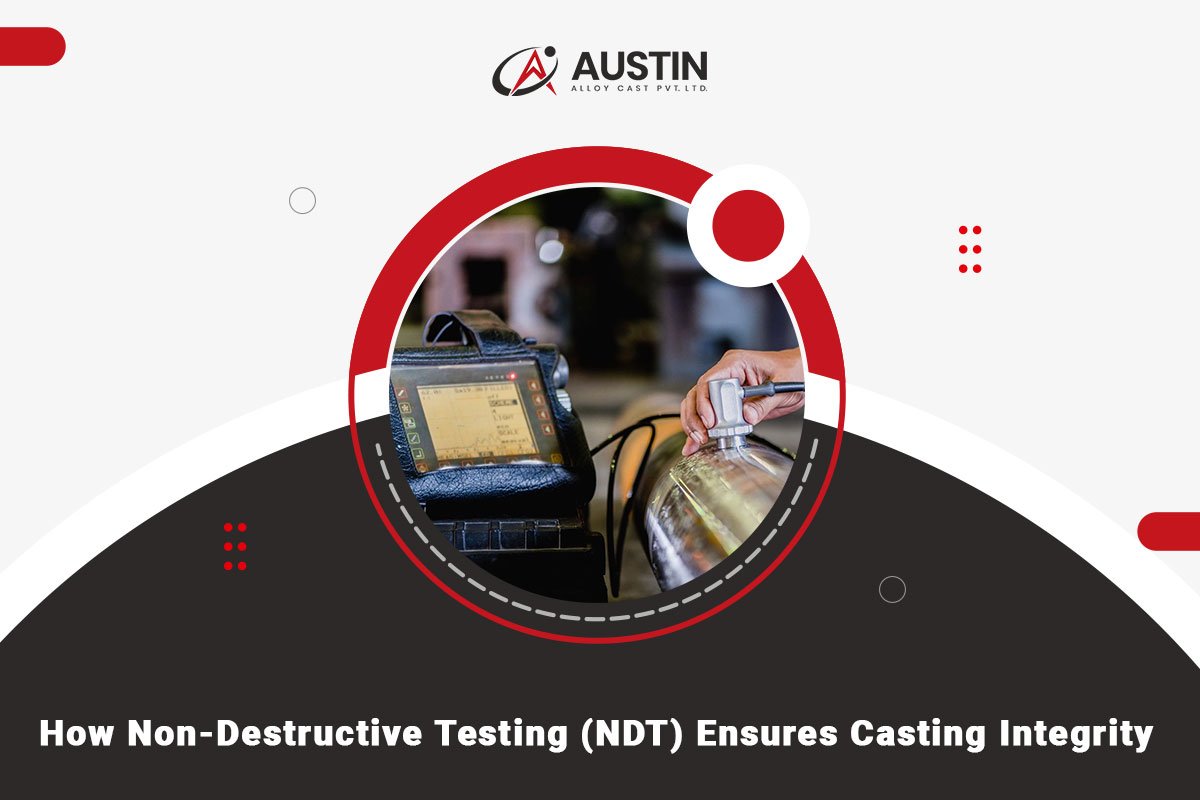
How Non-Destructive Testing (NDT) Ensures Casting Integrity

In the realm of precision metal manufacturing, where quality and reliability equal success, Non Destructive Testing (NDT) is crucial to ensuring each component is manufactured according to specifications. As investment casting manufacturer; Austin Alloy Cast Pvt. Ltd., Non Destructive Testing is more than a final check for quality; it is a commitment to quality, safety, and customer satisfaction.

Whether the component is made from stainless steel castings in marine applications or high strength alloy components supplied to energy and engineering customers, casting integrity is paramount. A single defect, even a microscopic one, can reduce casting performance or worse, fail catastrophically. Non Destructive Testing ensures that every casting leaves the foundry with precision and reliability, both uncompromised.

The Importance of Casting Integrity

All castings experience dynamics stresses pumps, valves, turbines, automotive systems; all of them will face dynamic stresses during operation.  Any hidden porosity, micro cracks, or inclusions may reduce the casting structural integrity ultimately leading to fatigue failure or leakage.  Fogging is insufficient to identify these hidden internal or surface defects.

At Austin Alloy Cast Pvt. Ltd. we strive to achieve “zero defect” castings, our team employs an organized and structured inspection strategy in combination with advanced Non Destructive Testing practices around the production cycle.  This ensures every investment casting or stainless steel castings not only ach0ieves dimensional accuracy but passes maximum metallurgical integrity standards.

What is Non Destructive Testing?

Non Destructive Testing (NDT) is a family of scientific methods employed to evaluate materials, components, or assemblies to detect defects or changes in material properties in a manner which does not harm or change the item being tested. In contrast to destructive testing methods such as cutting or breaking a sample, the item can be tested and place into service.

With respect to foundry applications, Non Destructive Testing inspects foundry castings for defects such as cracking, shrinkage, porosity, inclusions, or surface defects to provide assurance of mechanical integrity and reliability.

NDT Methods Commonly Implemented at Austin Alloy Cast
1. Visual Inspection (VI)

Visual inspection is the initial step in any quality assurance program. At Austin Alloy Cast, a certified inspector examines the castings for surface defects, blowholes, or flash. Inspectors use bright light, magnifying glasses, and surface profile gauges to discover some of the smallest defects on surface before succession to advanced testing.

2. Dye Penetrant Testing (DPT)

Dye penetrant testing is a very effective method for assessing surfaces on non magnetic materials such as austenitic stainless steel castings. DPT works using these steps:

  • A penetrant, in liquid form, is applied to the surface.
  • The penetrant can infiltrate surface breaking defects like cracks or pinholes.
  • Once excess penetrant is wiped away, a developer is applied to the surface and it draws the penetrant out to indicate flaws on the surface.

DPT is relatively simplistic, yet it is very effective capable of revealing hairline cracks and other flaws that the naked eye is unable to see.

3. Magnetic Particle Testing (MPT)

The MPT method is used mainly on ferromagnetic alloys but it’s really effective on nonmagnetic alloys. In order to perform the MPT, the component to be inspected is magnetized and fine magnetic particles are applied to the magnetized surface. If a surface or near surface defect is present, it will disrupt the magnetic field in some way which will lead to the collection of the magnetic particles and create a visible indication of the defect.

At Austin Alloy Cast Pvt. Ltd., Magnetic Particle Testing is regularly used on carbon steel and low alloy castings to detect defects like laps, seams, and cracks before machining.

4. Radiographic Testing (RT)

Radiographic Testing, or X ray inspection, is a very reliable method of NDT performed to disclose internal defects. In this technique, X rays or gamma rays are passed through the casting material, and the pattern of radiation on the radiographic film or digital image will indicate whether or not internal defects are present. Commonly detected defects include gas porosity, shrinkage cavities, and the presence of inclusions.

Utilizing the latest state of the art, high resolution radiography systems, Austin Alloy Cast examines the internal integrity of intricate investment castings where high precision and safety are demanded in aerospace, marine, and energy applications.

5. Ultrasonic Testing (UT)

Principle: Ultrasonic Testing (UT) transmits high frequency sound waves into the casting and then analyzes the reflected waves to reveal internal discontinuities and/or changes in material thickness. UT is particularly helpful for large and thick components, where radiography is not practical.

This is the means by which Austin Alloy Cast can ensure that any stainless steel casting or alloy component has no subsurface discontinuities, giving our customer complete confidence in the performance of their product in critical applications.

Integrating Non Destructive Testing into the Manufacturing Process

At Austin Alloy Cast Pvt. Ltd., NDT is not a separate activity but is an integrated part of each and every manufacturing stage:

  • Post Moulding: Initial inspection can locate casting flaws prior to machining.
  • Heat Treatment: Metallurgical properties and integrity should not be affected.
  • Pre Dispatch: A final quality check is done for every component to ensure that the processed components meet the client’s specifications.

This quality loop significantly reduces rework, enhances production efficiency, and builds long term trust with clients in multiple sectors: oil & gas, marine, railway, and defense.

Austin Alloy Cast is distinguished in being continually committed to quality and innovation in the investment castings it manufactures. The NDT team undergoes training and certification to international standards, ensuring consistently high levels of quality traceable in every inspection.

We are certified to meet the requirements of ISO 9001, ISO 14001, and ISO 45001, further indicating our commitment to quality, environmental responsibility, and safety in the workplace. Backed by an extended network of investment casting and sand casting facilities, Austin Alloy Cast offers a total casting solution with a one stop shop.

The Destination: Guaranteed Quality, Guaranteed Confidence

In today’s manufacturing world, expectations are that precision is not optional; precision is expected. NDT ensures that each and every casting is not only visually perfect but structurally sound and ready for its intended use.

At Austin Alloy Cast, we believe quality assurance starts with verification and closes with validation. When assessment is combined with plasma NDT, we ensure castings that meet and excel every customer’s requirements.

Too, whether specialty stainless steel castings are for high performance and corrosive environments, or metal castings as part of complex, multi staged investment castings for assemblies, Austin Alloy Cast can assure quality, reliability, and value.

Conclusion

Non Destructive Testing is beyond a process; it’s the backbone of casting integrity. It ensures that every piece forged in molten metal meets the highest standards of precision and safety. The pursuit of excellence at Austin Alloy Cast is reinforced by a disciplined NDT regime; guarantees the reliability of every component manufactured by us. When you choose Austin Alloy Cast, you choose quality that’s tested, proven, and trusted.

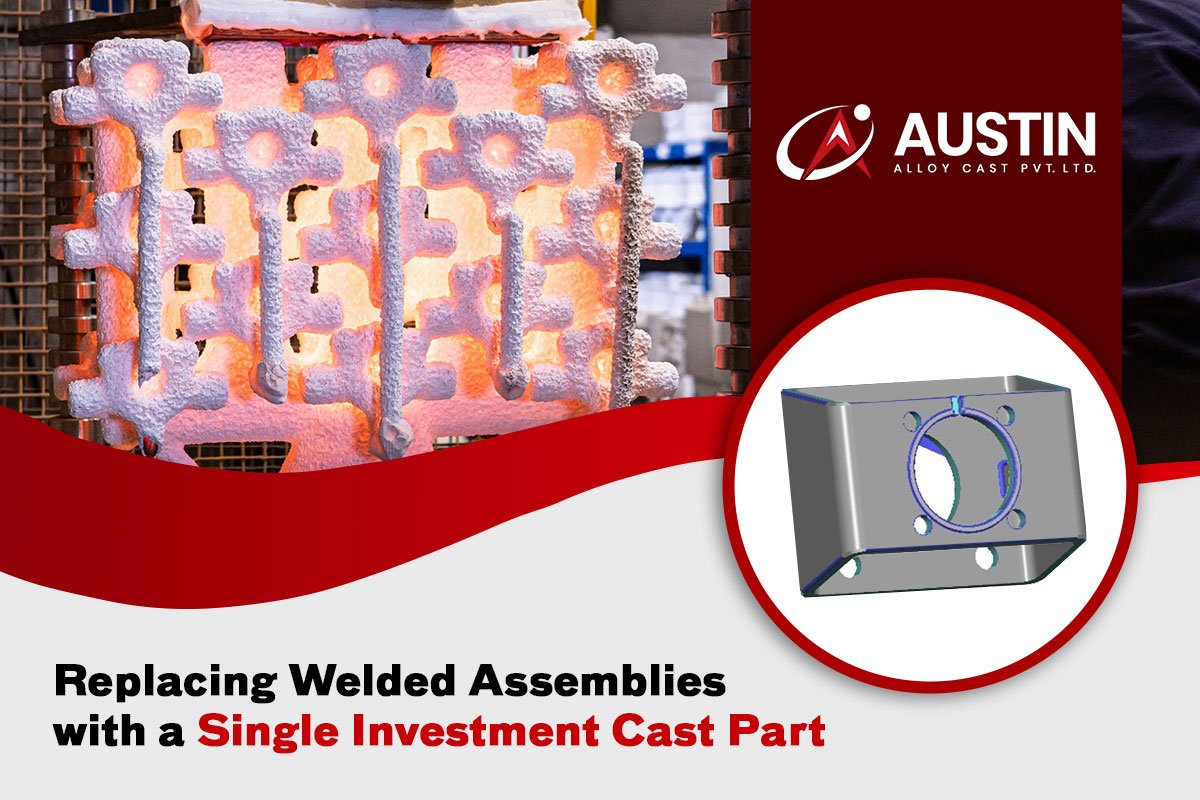
Replacing Welded Assemblies with a Single Investment Cast Part

In the current competitive manufacturing environment, design engineers and procurement groups feel pressure to lower costs, enhance product reliability, and shorten production cycles… without sacrificing quality. At Austin Alloy Cast, a leading investment casting manufacturer whose primary focus is stainless steel casting, we regularly partner with customers to achieve these goals by replacing the conventional welded assembly process with one singular, Robust, cast component.

This case study illustrates how our transformation not only simplified our customer’s manufacturing, but also decreased their cost by nearly 60%, improved product performance, and increased efficiency overall.

Background: The Challenge of a Welded Assembly

Austin Alloy Cast was approached by their client, a well-known Valve manufacturer, because of ongoing issues with one of their critical components a welded stainless steel housing assembly made of multiple components that were assembled together using complicated welding processes.

While the welded design seemed reasonable at first, it started to deteriorate rapidly with significant disadvantages related to:

  • Costly fabrication with multiple subcomponents, welding labour and the potential of rework. In most developed countries, there is shortage of skilled Labours.
  • Difficulties in distortion and alignment as a result of weld heat input.
  • Varied mechanical properties in and around the weld areas.
  • Long manufacturing cycle times due to post weld machining, inspection and testing.
  • Poor surface finish that required expedited machining to meet functional needs.

The customer wanted to keep the same functional design while improving strength and consistency at a lower cost and Austin Alloy Cast had the right answer with investment casting.

Solution: Replace ‘Welded Assemblies’ with a Singular Investment Cast Component.

Following a thorough feasibility study the engineering team recommended changing the welded housing assembly into a one piece, investment cast component made of a WCB/CF8M material.

The advantages of this solution included:

  1. Design Simplification:

The component structure can now be created as one, nearly net shape cast product without any welded joints or assembly operations. Additionally, complex internal passageways and contours that need to be welded can now be produced directly during the investment casting process, as investment castings possess an inherent ability to reproduce complex geometries.

  1. Better Mechanical Properties:

Welded parts often present heat affected zones (HAZ) with different microstructures and residual stresses, but investment cast parts are uniform and have isotropic mechanical properties throughout. The investment casting process offers better fatigue life, greater load capability, and superior resistance to corrosion and cracking.

  1. Better Surface Finish and Dimensional Tolerance:

It follows that investment castings will provide a quality surface finish and tight tolerances. This provided significant machining time savings, as the part will have near net-shape finish.

  1. Lost-wax process offers great repeatability:

Overall production lead time has been significantly reduced. The requirement for numerous welding, alignment, inspection, and subsequent heat treatment steps have all but disappeared, allowing for a much quicker and consistent production flow.

  1. Economic Benefit:

Perhaps most impressive was the cost reduction of nearly 60% of the prior welded assembly. This was realized through material optimization, followed by the absence of multiple manufacturing steps, as well as reduced manpower and inspection time.

How Austin Alloy Cast Made It Happen:

At Austin Alloy Cast, any undertaking begins with a structured, engineering based process.

  1. Design for Casting (DFC):

We worked closely with the customer’s design engineers in order to design the part geometry for casting. The fillet radii, draft angles, and wall thickness were optimized for proper metal flow and sound castings.

  1. Tooling and Wax Pattern Development:

Investment casting tooling was developed to accurately match the redesigned model. Wax patterns were manufactured and assembled into trees, minimizing dimensional instability.

  1. Shell Building and Pouring:

Utilizing a controlled ceramic shell process, a durable mold was created. Molten stainless steel was poured with strict metallurgical controls to achieve a uniform grain structure and density.

  1. Heat Treatment and Finishing Processes:

To improve mechanical properties and corrosion resistance, the castings underwent solution annealing. Operational CNC machining was kept to a minimum to achieve final tolerances. Surface finishing, along with non destructive testing (NDT) assessed the parts for integrity.

  1. Inspection and Validation Processes:

To ensure that each part would fit properly and was dimensionally correct, it was stamped upon validation using a CMM Coordinate Measuring Machine. NDT methods, including dye penetrant and radiography, helped confirm the absence of internal defects and surface defects.

Results: Tangible Gains in Every Metric

The switch from a multi piece welded assembly to a single stainless steel investment cast part resulted in meaningful and substantial improvements in all factors related to both production and performance. The most significant benefit was the significant cost savings a reduction of around 60% all due to not having to perform the several steps of fabrication: cutting, aligning, welding, grinding, and heat treatment. The part could be cast as a single component, so a highly skilled welder, a jig, fixture, and multiple inspections were not required; thus, the labor costs were much lower and the overhead directly associated with these inspections dropped to zero.

In addition, the lead time for manufacturing was less for the same reason. The investment casting process created a predictable and repeatable flow of work that eliminated the need to plan for countless fabrication processes or wait on inspection criteria. Instead, Austin Alloy Cast was able to deliver finished castings in short lead times, increasing customer turns and supply chain efficiency.

From a technical perspective, the new investment cast design exhibited better mechanical integrity and reliability. The previous welded joints were typical weak points that sometimes formed microcracking or stress concentrations with cyclic loads and thermal shifts. The investment cast component had consistent mechanical properties and performance throughout the entire component, with no weld weak points due to cracking, hardness variations, or strength.

The resulting part had better tensile and fatigue resistance and improved corrosion resistance, as well as less dimensional changes during operation. Additionally, the investment cast surface finish and dimensions from an assembly standpoint were improved over welded assembly. Also, the investment cast parts near net shape quality minimizes fabrication and tooling time, and material savings enable consistent and predictable performance/consistency.

In conclusion

This case study has shown how Austin Alloy Cast a trusted investment casting manufacturer facilitates the transition from complex welded assemblies to cost effective high strength stainless steel castings.

By leveraging our knowledge in investment casting and stainless steel castings we help industries achieve optimized designs, reduced costs, better reliability, and faster turnaround.

Whether automotive, pump, or process equipment our focus is to continue to provide precision, performance, and perfection by leveraging world class investment casting solutions. We play a role of a technical consultant for your Metal components requirements. Turns out, that is the greatest value addition we provided to our customers.

Stainless Steel Casting: The Unsung Hero in Corrosive Environments

Wherever moisture, chemicals, and extreme temperatures are a constant presence, resistance to corrosion is needed not just as a desirable property, but often as a lifeline. Be it offshore oil rigs, marine propulsion systems, or even chemical processing units, whatever is used inside needs to be able to bear the corrosion and the test of time. Stainless steel castings are the unsung hero in this environment because they combine strength, durability, and the ability to withstand very harsh surroundings.

At Austin Alloy Cast, we deal in the supply of world class stainless steel castings through the chamfer investment casting and sand casting processes. Being an investment casting manufacturer in India, we have the required experience in designing, engineering, development, and manufacturing of complex and high performance components for these applications.

The Science of Stainless Steel Castings

Many people are familiar with the high resistance of stainless steel to oxidation and corrosion due to the chromium alloying element, which creates a passive layer on its surface, namely chromium oxide. The formed layer acts like an invisible shield that protects the metal beneath it from attack by moisture, acids, and chemicals.

Various grades of stainless steel, such as austenitic, martensitic, and duplex, are selected according to application and exposure to the environment. Each produces different mechanical and corrosion resistant properties, which are required by industry.

While stainless steel provides corrosion resistance, it gives design flexibility and higher mechanical integrity when fabricated as castings. We at Austin Alloy Cast cast stainless steels with full control on the metallurgical parameters to ensure that the microstructure and batch to batch consistency meet the requirements.

Investment Casting: Where Precision and Performance Collide

For parts of complex geometries, thin walls, and stringent tolerances, the process of choice is investment casting, also known as the lost wax process.

Near net shape items produced in stainless steel are manufactured by Austin Alloy Cast using advanced methods in investment casting. The process provides ideal surface finishes and tolerances, reducing secondary machining while minimizing total manufacturing costs.

To make sure of repeatable quality within a variety of grades, including CF8M, CF3M, and duplex stainless, the investment casting process significantly contributes to serving rigorous requirements of the marine industry, food processing, pharmaceutical, and oil and gas industries, while also addressing commerce and hygiene and corrosion resistant needs.

Sand Casting for Large Heavy Duty Stainless Components

For larger heavy duty components where shape detail is not regarded as critical, sand casting provides the flexibility and cost effectiveness required. Austin Alloy Cast is reasonably unique in Western India as one of the only foundry groups that have sand and investment casting facilities in the same foundry.

Our sand casting facility has the latest modern moulding systems, induction furnaces, incorporated with complete quality testing facilities. From pump casings to more complex valve bodies and impellers, to complex housing, our stainless steel sand castings are designed to provide high strength with corrosion resistance in aggressive service environments.

Why Stainless Steel Castings Are Superior in Corrosive Environments

Corrosion is the gradual destruction of metals by chemical or electrochemical interaction with an environment. In industries that deal with oil and gas, desalination, or marine transportation, corrosion leads to extended and unwanted downtime, high maintenance costs, and safety hazards.

Stainless steel castings provide resistance to indirect attack by corrosion due to their inherent ability to resist:

  • Acidic or alkaline chemical attack
  • Saltwater corrosion, especially in marine applications
  • Oxidation, especially at high temperatures
  • Pitting and crevice corrosion under stagnant or low flow conditions

At Austin Alloy Cast, we design our stainless steel castings with the best alloy compositions available so that the performance of each component is adequate for even the worst conditions. We also maximize corrosion resistance and mechanical integrity by controlling other factors such as heat treatment, cooling time, and surface finish in every cast.

Quality, Testing and Certification

At Austin Alloy Cast, we test every stainless steel casting for dimensional accuracy, structural soundness, and metallurgical specification.

Our testing capabilities include:

  • Non destructive Testing NDT: We carry out dye penetrant, magnetic particle, radiography, and ultrasonic tests for the detection of surface and subsurface defects.
  • Mechanical Testing: We run tensile tests, impact tests, and hardness tests to ascertain strength and toughness.
  • Chemical Analysis: We perform spectrographic analysis to verify alloy composition for each casting.
  • Dimensional Inspection: With our CMM and other precision inspection measuring tools, we can ensure that all components are manufactured to each client’s unique design tolerances.

We are certified according to internationally recognized quality standards: ISO 9001, ISO 14001 and ISO 45001. We support quality, safety, and sustainability in all processes.

Applications Across Verticals

Their versatility has made stainless steel castings indispensable to industries as varied as:

  • Oil & Gas: A valve body, manifolds, and impellers that possess properties resistant to sour gas and brine exposure.
  • Marine: Propeller components, housings, and fittings manufactured for saltwater applications.
  • Food & Beverage: sanitary grade castings resisting high moisture and frequent cleaning.
  • Chemical Processing: Pumps & reactors resistant to acidic/caustic exposures.
  • Power Generation: Products like turbine housings and boiler fittings operating under high temperature conditions.

Austin Alloy Cast serves all of these industries, providing custom stainless steel products engineered for reliability and durability in corrosive environments.

Sustainability in Stainless Steel Casting

Beyond performance, stainless steel is intrinsically sustainable. It is completely recyclable, and its long service life reduces material waste to a minimum. We implement environmentally responsible practices in all the stages of production at Austin Alloy Cast Pvt. Ltd., which includes energy efficient melting, scrap recycling, and resource optimization.

Our sustainable practice reduces not only our ecological footprint but also assures global clients that their environmental goals are in tandem with us towards a greener industrial future.

Closing Remarks

Stainless steel castings are the true unsung heroes of modern engineering, quietly ensuring performance, safety, and reliability in some of the most corrosive environments on the planet. With decades of foundry experience, state of the art technology, and rigorous quality control, Austin Alloy Cast Pvt. Ltd. continues to supply the best in world class cast components.

Whether it be precision investment castings or rugged sand castings, our team will act as your technical partner in selecting the most economical, high performance solution for your application.

When you work with Austin Alloy Cast, you are not just sourcing castings, but investing in reliability, innovation, and excellence in castings, however challenging or harsh the environment.