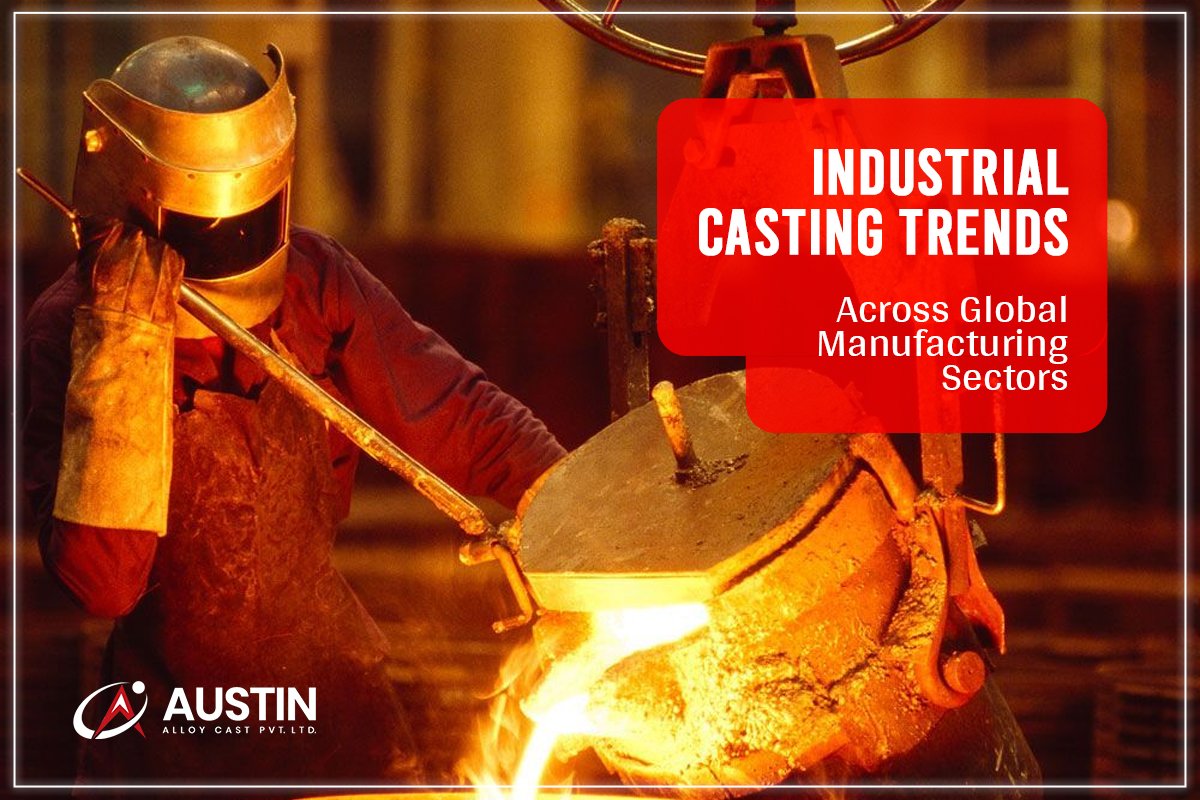
Industrial Casting Trends Across Global Manufacturing Sectors

Industrial Casting

Industrial casting remains a backbone of modern manufacturing, forming critical components for everything from heavy machinery and power generation to aerospace, automotive, and infrastructure. As global industries pursue efficiency, sustainability, and performance, the way industrial casting is designed, produced, and integrated into supply chains is evolving rapidly. At Austin Alloy Cast, these shifts are not just observed, they are actively shaped through innovation in materials, processes, and digital integration.

Growth and diversification of the industrial casting market

Global industrial casting and metal casting markets are on a clear growth trajectory, underpinned by rising demand for durable, high strength components. The metal casting market is projected to expand from around USD 161 billion in 2025 to over USD 260 billion by 2035, driven by industrial machinery, infrastructure projects, and advanced manufacturing sectors. Within this, industrial application castings account for a large share, as construction equipment, agricultural machinery, and industrial automation systems rely heavily on robust cast parts such as housings, frames, and structural components.

At the same time, specialty processes such as investment casting and precision casting are gaining traction, especially in aerospace, energy, and medical grade equipment manufacturing. These segments demand near net shape geometries, tight tolerances, and advanced alloys, pushing foundries toward higher value, lower volume, and more technically complex work.

Lightweighting and advanced alloys

One of the most visible trends across Industrial Casting is the push toward lightweight yet high performance components. Automotive, and new energy vehicle sectors, in particular, are using aluminium and high strength alloys to reduce weight without sacrificing structural integrity. In parallel, manufacturers are adopting nickel, cobalt, and titanium based superalloys for high temperature and high stress environments, such as turbine blades, exhaust systems, and energy sector components.

At Austin Alloy Cast, this means constant evaluation of new alloy compositions and casting techniques that combine strength, corrosion resistance, and dimensional stability. The result is industrial castings that are lighter, longer lasting, and better suited to the performance demands of modern machinery and equipment.

Digitalization, automation, and smart foundries

The second major trend reshaping industrial casting is the widespread adoption of digital tools and automation. AI driven process optimization, real time monitoring, and predictive maintenance systems are now common in leading foundries, enabling tighter control over melt chemistry, pouring temperatures, and solidification behavior. Robotics and automated handling systems reduce human error, improve repeatability, and enhance safety in high temperature environments.

Simulation software and digital twins are also transforming design for casting, allowing engineers to predict shrinkage, defects, and stress patterns before a single mold is poured. At Austin Alloy Cast, such technologies are leveraged to optimize gating, feeding, and heat treatment strategies, improving yield rates, reducing scrap, and shortening lead times for industrial sector customers.

Sustainability and green manufacturing

Sustainability is no longer a side project but a core requirement in industrial casting. Foundries are investing in energy efficient melting technologies, low emission binders, and closed loop recycling of scrap and sand. The use of recycled aluminium and other secondary metals is growing, helping manufacturers reduce both carbon footprint and raw material costs.

In many regions, regulatory pressure and ESG expectations are accelerating this shift. At Austin Alloy Cast, eco conscious practices are integrated into the value chain, from responsible material sourcing and energy conscious melting practices to optimized casting designs that minimize excess material and machining. This supports customers who must meet increasingly stringent environmental and safety standards across global markets.

Global value chains and regional specialization

Globally, the industrial casting landscape is becoming more regionally stratified, with Asia Pacific emerging as a dominant hub due to its deep foundry infrastructure and concentrated automotive and industrial equipment manufacturing. At the same time, North American and European markets are focusing on high value, complex castings that support aerospace, defense, and energy transition projects.

This creates a strong demand for global supply chain partners capable of delivering precision cast components that meet stringent international standards. Austin Alloy Cast positions itself as such a partner, offering industrial grade casting solutions that combine material expertise, process control, and global ready quality systems to serve OEMs across multiple sectors.

What this means for industrial manufacturers

For industrial manufacturers, these trends translate into several practical implications:

  • Greater emphasis on material selection tailored to service life, temperature, and load conditions.
  • Shorter lead times and higher first time quality rates through digital process control and simulation.
  • Stronger sustainability credentials via energy efficient casting and increased use of recycled materials.

Austin Alloy Cast works with OEMs and industrial equipment builders to align casting strategies with these global trends, ensuring that every component whether in a pump, valve, gearbox, or power generation unit delivers the performance, reliability, and efficiency required in today’s competitive markets.
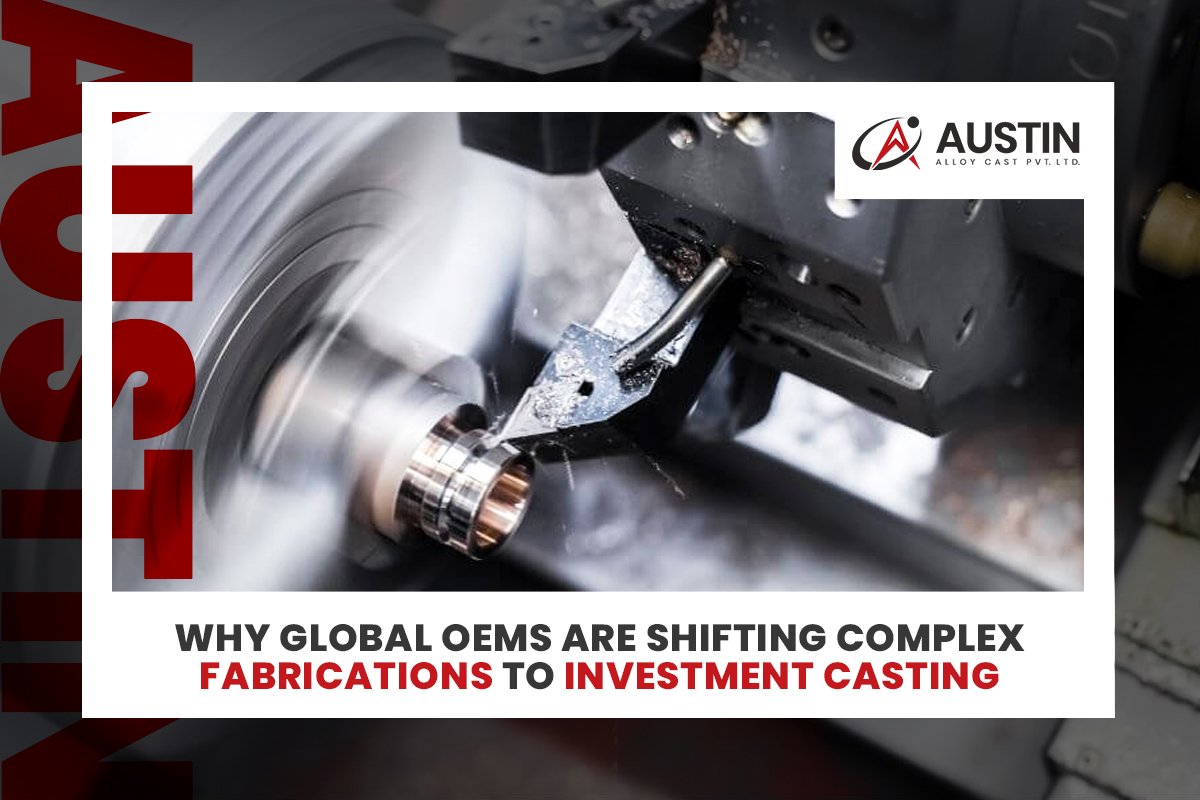
Why Global OEMs Are Shifting Complex Fabrications to Investment Casting

In today’s rapidly evolving manufacturing landscape, global Original Equipment Manufacturers (OEMs) are redefining how they produce complex components. Traditional fabrication methods, while reliable, are increasingly challenged by the demands for higher precision, lighter weight, optimized performance, reduced lead times, and cost efficiency. As a result, a significant industry trend has emerged: OEMs worldwide are shifting complex fabrications to investment casting.

At Austin Alloy Cast Pvt. Ltd., we’ve witnessed firsthand how this transition is reshaping entire supply chains. With decades of casting expertise, advanced technical capabilities, and global partnerships, we understand why investment casting has become the preferred solution for complex metal parts in industries like automotive, aerospace, oil & gas, energy, heavy engineering, and industrial machinery.

In this article, we explore the key reasons behind this shift, and how investment casting is enabling OEMs to achieve breakthrough performance in complex components.

1. Precision Engineering for Complex Geometries

One of the most compelling reasons OEMs are adopting investment casting is its ability to produce highly intricate shapes with tight tolerances, often without the need for extensive machining. Traditional fabrication methods like machining, welding, or forging can struggle with complex internal features, thin walls, or fine surface details.

Investment casting offers:

  • Near net shape production
  • Complex internal cavities and undercuts
  • Dimensional accuracy within close tolerances
  • Excellent surface finish with minimal secondary processing

This makes it ideal for components such as turbine blades, impellers, pump housings, and valve bodies that require both geometric complexity and functional precision.

At Austin Alloy Cast, investment casting allows us to manufacture intricate alloy steel parts that conform precisely to design specifications, improving performance while reducing waste and machining time.

2. Superior Mechanical Properties and Material Versatility

Global OEMs operate in demanding environments where performance cannot be compromised. Components must withstand high temperatures, corrosive environments, dynamic loading, and mechanical stress.

Investment casting supports a broad spectrum of materials, including:

  • Carbon steels
  • Stainless steels
  • High temperature alloys
  • Heat resistant alloys
  • Specialty alloys for wear and corrosion resistance

Unlike some fabrication methods where mechanical properties may be affected by heat distortion, welds, or structural inconsistencies, investment castings deliver uniform material integrity throughout the component. This is especially important for parts used in aerospace, power generation, and oil & gas applications where reliability is paramount.

Austin Alloy Cast’s metallurgical expertise ensures that advanced alloys are precisely controlled to deliver consistent strength, toughness, and durability meeting the most rigorous industry standards.

3. Enhanced Surface Quality and Reduced Post Processing

Surface finish and dimensional accuracy are vital for performance, aesthetics, and assembly. Investment casting typically offers superior surface quality compared to conventional fabrication methods, significantly reducing the need for secondary finishing processes like grinding or polishing.

Benefits include:

  • Smoother surfaces right out of the mold
  • Reduced material removal and machining
  • Lower production costs
  • Faster turnaround times

For OEMs operating high volume production lines, these advantages translate into real savings both in time and manufacturing costs.

4. Cost Effectiveness and Material Efficiency

While precision fabrication is essential, cost control remains a central concern for global OEMs. Surprisingly to many engineers, investment casting can be one of the most cost effective solutions for complex parts.

Why?

  • Near net shape casting minimizes raw material waste.
  • Less machining means lower labor, tooling, and machine time.
  • Fewer assembly steps reduce operational costs.
  • Integrated designs eliminate the need for multiple components.

The economic benefits are magnified when production volumes scale up. By delivering consistent quality and reducing secondary operations, investment casting can significantly improve the cost performance ratio of high value components.

5. Faster Lead Times and Scalability

In a competitive market, speed matters. OEMs often require rapid prototyping, quick revisions, and scalable production capacity to meet fluctuating demands.

Investment casting supports:

  • Rapid tooling development
  • Flexible design modifications
  • Consistent batch production
  • Efficiency in ramping up volumes

Traditional fabrication might require new tooling, specialized welding procedures, or lengthy machining setups for each design iteration. In contrast, investment casting uses a repeatable mold process that accelerates both early development and full scale production.

Austin Alloy Cast’s integrated workflow from pattern creation through casting, heat treatment, machining, and inspection enables fast turnarounds with reliable quality.

6. Sustainability and Waste Reduction

Environmental responsibility is no longer optional; it’s a business imperative. Manufacturers worldwide are under pressure to reduce waste and improve sustainability in their production processes.

Investment casting supports these sustainability goals by:

  • Reducing material waste through near net shape production
  • Minimizing energy consumption in secondary processes
  • Improving yield with fewer rejections
  • Reducing emissions from machining and fabrication steps

OEMs increasingly recognize that greener manufacturing not only reduces operating costs but also strengthens corporate sustainability profiles.

7. Integrated Quality Assurance and Traceability

Global OEMs must ensure that every part meets exacting standards for safety and performance. Investment casting aligns well with stringent quality systems and traceability requirements.

Key quality advantages include:

  • Compliance with international quality standards (ISO, ASME, API)
  • In process inspection with non destructive testing (NDT)
  • Controlled metallurgical analysis and certification
  • Traceability across material batches

This level of quality control provides peace of mind for OEMs in highly regulated industries such as aerospace, defence, and energy.

At Austin Alloy Cast, our quality infrastructure complete with advanced inspection systems and documented compliance processes ensures that every casting meets customer requirements and global specifications.

8. Innovation and Engineering Collaboration

Finally, the shift toward investment casting reflects a broader trend: the need for engineering collaboration and innovation. OEMs today want manufacturing partners who can contribute to design optimization, material selection, and performance improvement.

Investment casting supports:

  • Early design feedback and manufacturability analysis
  • Simulation based process planning
  • Material engineering expertise
  • End to end production collaboration

Rather than simply fulfilling orders, foundries like Austin Alloy Cast work with OEMs to innovate solutions that reduce weight, improve performance, and enhance product life cycles.

Conclusion: Investment Casting as a Strategic Advantage

The manufacturing world is changing, and with it, the strategies that lead to competitive success. For global OEMs, investment casting is no longer just an alternative fabrication method; it has become a strategic choice that delivers precision, performance, and profitability for complex components.

Manufacturers looking to:

  • Improve design flexibility
  • Reduce costs and lead times
  • Enhance material performance
  • Achieve consistent quality and compliance
  • Support sustainable and scalable production

…are increasingly turning to investment casting as their preferred solution.

With a proven track record in delivering advanced alloy castings and integrated manufacturing solutions, Austin Alloy Cast Pvt. Ltd. continues to support OEMs worldwide in navigating these challenges. Through technical excellence, materials expertise, and production discipline, we help OEMs unlock the full benefits of investment casting transforming complex fabrications into high performance, precision engineered components.