17 Sep 2026

BLOG
Choosing the Right Steel Casting Grade for High Stress Applications: An Austin Perspective
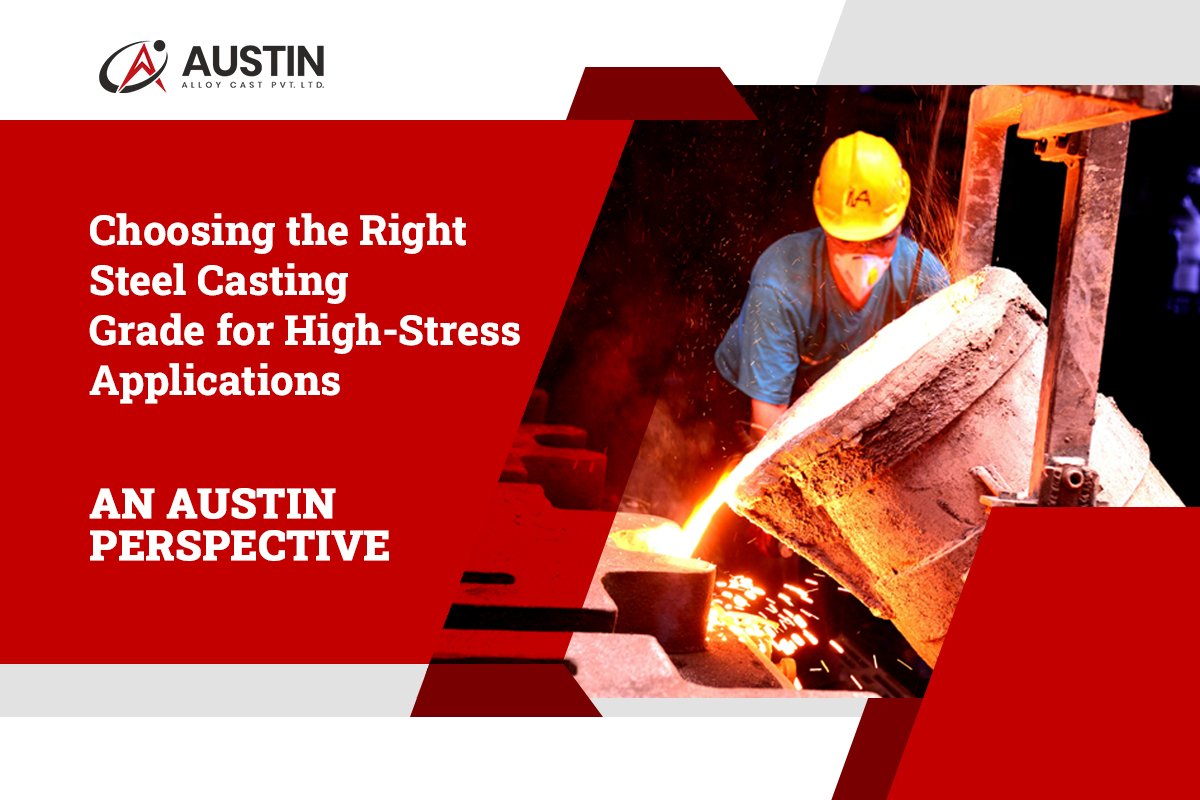
In high stress industrial environments from heavy duty machinery and material handling equipment to mining, power generation, and oil & gas systems steel casting grade selection can mean the difference between years of reliable service and early component failure. At Austin Alloy Cast, choosing the right steel casting grade is viewed not as a routine specification exercise but as a strategic engineering decision that shapes wear life, fatigue resistance, and overall equipment availability. This article outlines the key considerations for selecting steel casting grades in high stress applications, from basic mechanical properties to real world service conditions.
Why steel grade matters in high stress castings
High stress components such as gear housings, pump casings, crusher parts, and structural frames are subject to repeated mechanical loads, impact forces, and sometimes abrasive or corrosive exposure. Simply specifying “cast steel” is insufficient; the exact steel casting grade determines how the material responds to stress, strain, and temperature cycles. The wrong grade can lead to cracking, brittle fracture, or accelerated wear, even if the casting geometry and process quality are excellent.
Austin Alloy Cast emphasizes that steel casting grade selection must align with the component’s loading profile, environment, and expected service life. For high stress applications, engineers need more than generic strength data; they require a clear understanding of toughness, fatigue resistance, and stability under operating temperatures.
Key mechanical properties to consider
When evaluating steel casting grades for high stress use, several core mechanical properties are critical:
- Tensile and yield strength: High tensile and yield strength help components resist deformation and permanent damage under load.
- Impact toughness and ductility: In shock loaded or low temperature environments, good impact toughness prevents brittle fracture.
- Hardness and wear resistance: For components exposed to abrasion or sliding contact, higher hardness and controlled wear resistance improve longevity.
- Fatigue strength: Components subjected to cyclic loading benefit from alloys with good fatigue resistance and controlled microstructure.
Austin Alloy Cast commonly works with carbon steels, alloy steels, and low alloy steels tailored to balance these properties. For example, a medium carbon alloy steel may be chosen for a gear housing that must combine strength with some impact resistance, while a higher alloy steel may be specified for crushing or mining components where wear and fatigue are dominant concerns.
Matching steel grade to service environment
Ambient conditions and operating environment heavily influence the choice of steel casting grade. High stress applications often occur in:
- Very high or low temperatures
- Moisture rich or mildly corrosive atmospheres
- Dust laden or abrasive operating zones
For components that operate at elevated temperatures, steel casting grades must maintain strength and dimensional stability without excessive softening or creep. In low temperature environments, fracture toughness requirements grow, and low alloy steels with controlled chemistry and proper heat treatment are usually preferred. When corrosion or mild chemical exposure is present, stainless or corrosion resistant alloyed grades may be considered, even if the primary requirement is mechanical strength.
From an Austin perspective, the service environment is studied holistically: temperature profiles, media exposure, duty cycles, and potential stress concentrators such as sharp corners or holes are all factored into the steel grade recommendation.
Heat treatment and microstructural control
The same steel casting grade can perform very differently depending on heat treatment and microstructure. For high stress castings, common practices such as normalizing, quenching, and tempering are used to refine grain structure, relieve residual stresses, and optimize hardness and toughness. Controlled cooling and post cast heat treatment cycles are essential to ensure uniform properties throughout the section and to avoid localized weak zones.
Austin Alloy Cast emphasizes that heat treatment specifications should be viewed as an integral part of the steel grade selection process. A well chosen grade, combined with a suitable heat treatment, can deliver superior fatigue life, reduced susceptibility to crack initiation, and better response to machining and finishing operations.
Standards, codes, and traceability
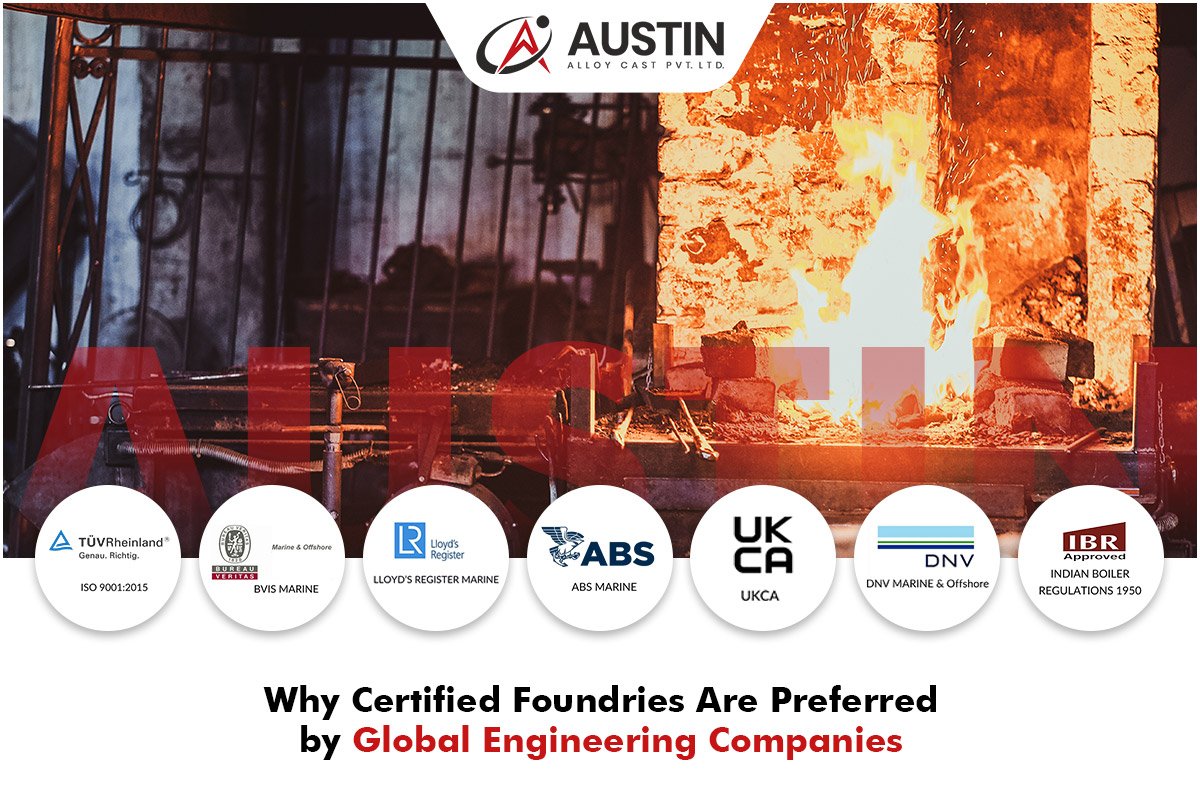
Industrial high stress components are often governed by material standards such as ASTM, ISO, and EN specifications for cast steel. These standards define chemical composition ranges, mechanical property minimums, and testing requirements, providing a clear framework for selecting appropriate steel casting grades. Compliance with relevant codes also ensures that OEMs and end users can confidently integrate cast parts into larger systems without unexpected material performance issues.
From an Austin perspective, traceability is equally important. Every batch of steel casting is documented with heat lot records, material test reports, and process control data, enabling full traceability from ladle to finished component. This level of documentation is especially valuable for high stress applications in critical service, where maintenance, inspection, and failure analysis processes rely on accurate material history.
How Austin Alloy Cast supports smarter steel grade selection
For OEMs and industrial manufacturers, selecting the right steel casting grade for high stress applications is not a one size fits all decision. It requires collaboration between design engineers, foundry specialists, and metallurgists. Austin Alloy Cast partners with customers to evaluate load profiles, service conditions, and existing field failure data, then recommends steel casting grades that balance performance, manufacturability, and cost.
By aligning steel grade with geometry, process controls, and heat treatment strategy, Austin Alloy Cast helps ensure that every high stress casting behaves as intended, delivering reliability, reduced downtime, and a longer service life. In the world of demanding industrial applications, the right steel casting grade is not just a specification; it is a foundation for long term operational success.
To have a glimpse at our world class facility and products, visit us at www.austinalloycast.com.
For any queries or details contact us at info@austinalloycast.com.
Recent Posts