17 Sep 2026

BLOG
Certification vs Reality: How Austin Ensures Compliance on the Shop Floor
A certificate is a snapshot. It tells you a system was audited and found compliant on a given day. What it doesn’t show you is whether that same discipline holds up on the shop floor, batch after batch, when production pressure is high and deadlines are tight. For OEM buyers, that gap between paper and practice is exactly where casting quality either holds or breaks down.
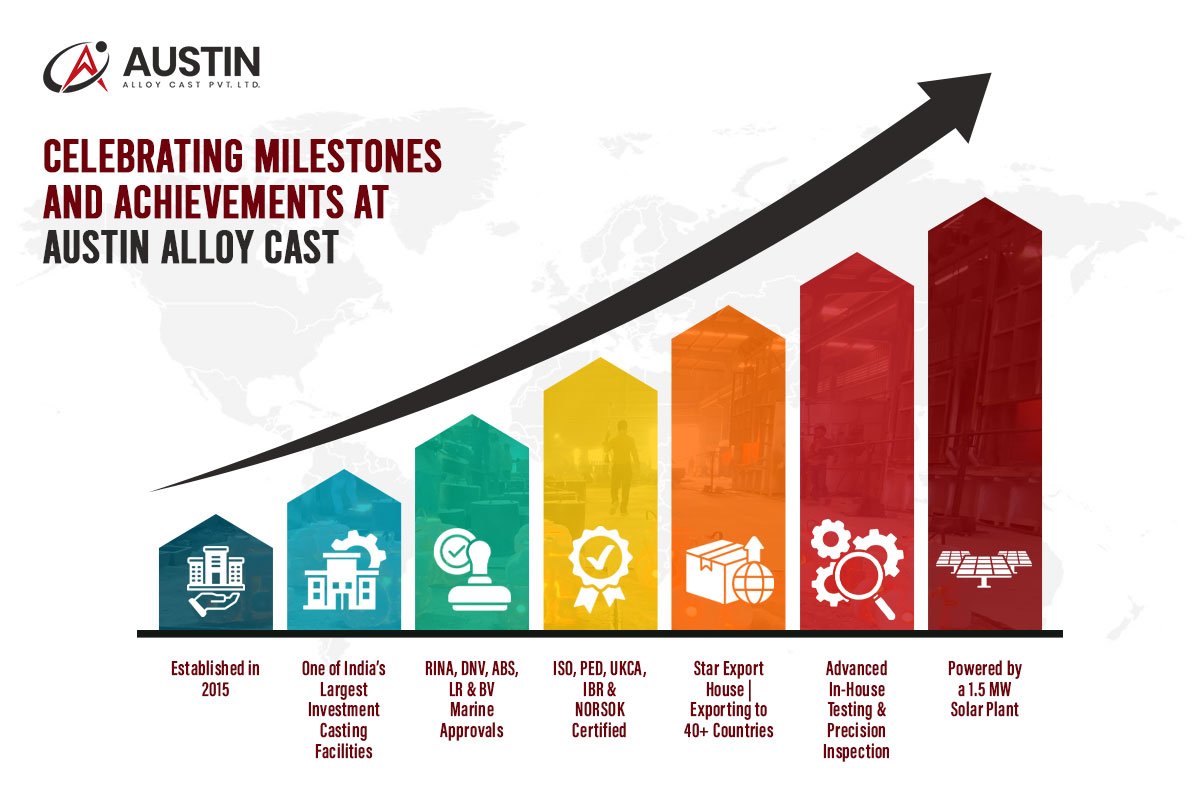
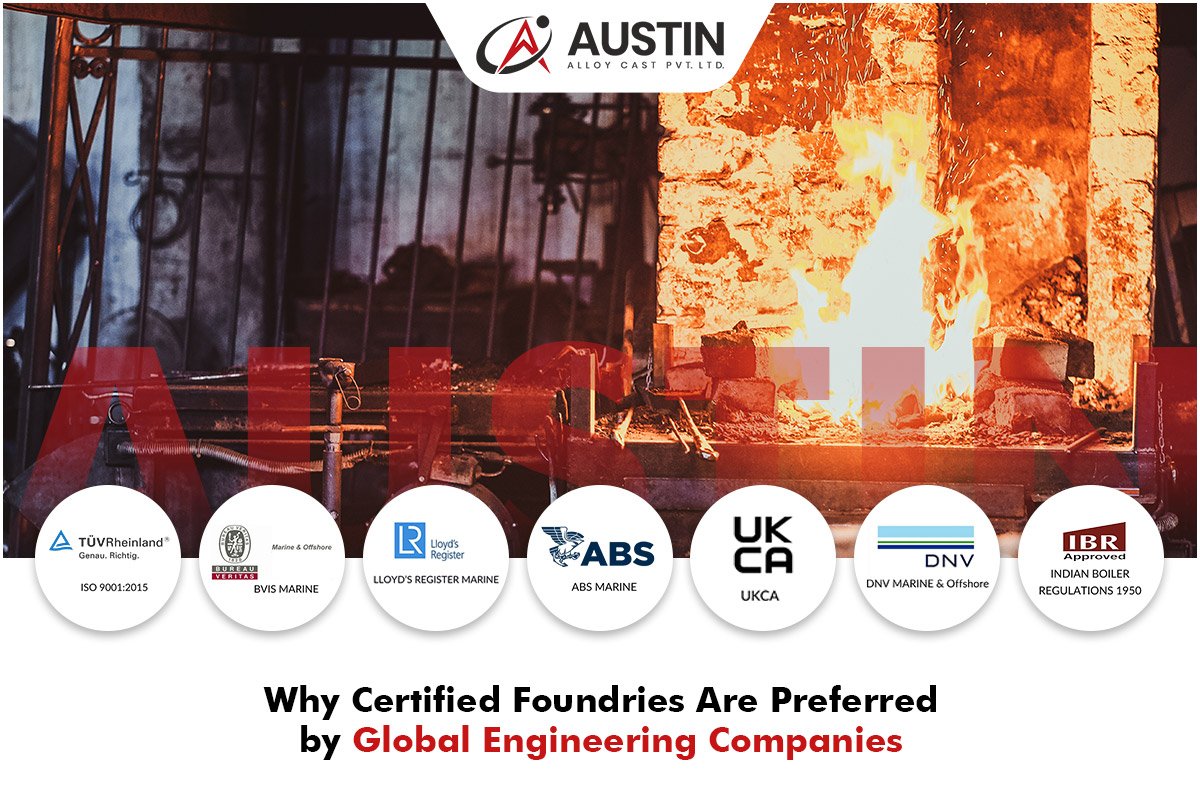
At Austin Alloy Cast, our certifications are ISO 9001:2015, ISO 14001:2015, ISO 45001:2018, PED 2014/68/EU, UKCA, IBR 1950, NORSOK M-630 Ed. 6, and marine approvals from DNV, ABS, Lloyd’s Register, BV, and RINA aren’t the end goal. They’re the audited proof of a shop floor system we run every day, regardless of whether an auditor is on site. Here’s what that actually looks like in practice.
Where Compliance Starts: Before the First Pour
ISO 9001:2015 requires contract review before production begins, and that’s not a paperwork formality at Austin every order starts with a documented review of feasibility, tolerances, and material requirements. That means the shop floor isn’t interpreting a customer’s drawing on the fly; the process parameters for wax injection, shell building, pouring, and heat treatment are defined and agreed before metal is melted.
This matters because most casting defects don’t originate at the pour they originate from an assumption made two steps earlier. A documented contract review closes that gap before it becomes a shop floor problem.
Chemistry and Metallurgy: Verified, Not Assumed
Certification standards for pressure equipment and marine applications, like NORSOK M-630 and PED 2014/68/EU, place heavy weight on material traceability and chemical accuracy. On our shop floor, this is backed by a spectrometer covering Fe and Ni based alloys across 35 elements, including nitrogen, and validated against CRM (certified reference material) samples for different steel families.
That’s the reality check behind the certificate: chemistry isn’t confirmed against a general tolerance band, it’s checked element by element, with reference standards that catch drift before it reaches a customer.
NDT: The Part of Certification You Can’t Fake
This is where “certification vs reality” gets tested hardest, because non-destructive testing is where hidden defects either get caught or get shipped. Austin runs:
- 100% Dye Penetrant Testing for surface crack detection, per EN 1371-1 and ASME Section V Article 6 & 24
- 100% magnetic particle testing for ferromagnetic components, under EN 1369 and ASME Section V Article 7 & 25.
- Radiographic (X-ray) testing with Ir-192 and Co-60 sources, operated in separate in-house facilities in accordance with EN 12681 and ASME Section V Article 2 & 22.
- Ultrasonic testing capability for additional volumetric inspection where specified.
The word that matters here is “100%” not sampled, not spot checked. Every applicable casting goes through dye penetrant and magnetic particle inspection, not a statistical subset. That’s the difference between a lab technically capable of meeting a standard and a shop floor that actually applies it to every part, every day.
Dimensional Accuracy: Where Tolerance Meets the CMM
A certificate can confirm a quality system exists; it can’t confirm a part fits. That verification happens on the shop floor through CMM (coordinate measuring machine) inspection at ±0.005mm precision, checking castings and machined components against CAD models before they ship. Our machining division runs CNC & VMC equipment from Jyoti, chosen specifically to hold that level of accuracy consistently across production runs, not just on a qualification sample.
Weld Repairs: Controlled, Not Concealed
Complex castings often need weld repair, and this is a point where “certified” foundries can quietly differ in practice. Austin’s WPS (Welding Procedure Specification) approvals mean any repair is carried out within qualified methods and limits, and welded zones are folded back into the same NDT plan as the rest of the casting. Nothing gets touched up and shipped without being re inspected under the same standards the original casting passed.
Marine Grade Standards as a Shop Floor Stress Test
Marine classification approvals are a useful proof point precisely because they’re hard to earn on paper alone. Austin holds approvals from DNV, ABS, Lloyd’s Register, and BV, and is RINA marine approved notably, the only pure play investment casting company in India with RINA accreditation, and only the sixth foundry group in the country to hold it at all. Earning that approval means demonstrating, under audit, that materials, process control, and inspection routines hold up to classification society scrutiny, not just general engineering tolerances. That’s a shop floor being tested against one of the more demanding real world benchmarks in the industry, not just a document being filed.
Environmental and Safety Systems, Running in the Background
ISO 14001:2015 and ISO 45001:2018 rarely get discussed in terms of casting quality, but they shape shop floor stability. Our operations partially run on 1.5 MW of solar power as part of environmental controls under ISO 14001, and workplace risk is systematically assessed under ISO 45001 both of which support a more stable, experienced workforce rather than one disrupted by preventable safety incidents or environmental non compliance.
What This Means for OEM Buyers
Certifications tell you a system was designed to be audited. What determines whether that system protects your program is whether the same rigor holds on an ordinary production day, not just an audit day. At Austin Alloy Cast, that’s the standard we hold ourselves to 100% NDT coverage where applicable, chemistry checked against certified references, dimensional verification at micron level precision, and repair work brought back into the same inspection loop as the original casting.
If you’re qualifying a casting supplier for a program where compliance isn’t optional, it’s worth asking not just which certificates a foundry holds, but how those standards translate into daily shop floor practice.
To have a glimpse at our world class facility and products, visit us at www.austinalloycast.com.
For any queries or details contact us at info@austinalloycast.com.
Recent Posts