Why Heat Treatment Is Critical in Precision Casting

Accuracy is critical in the metal manufacturing process. At Austin Alloy Cast, we have first hand experience with even the slightest imperfection in a casting can impact performance, durability, and efficiency. Precision casting, commonly referred to as investment casting, is known for its ability to create complex shapes within tight tolerances, but generating a near net shape, is only part of the equation. Heat treating is the thing that will fully realize the capability of a component.

Heat treating is not just the final step of the production process; it is an entire process that has internal structure change the metals so that they can be subjected to demanding environments. In aerospace, automotive, energy, and heavy machinery, heat treating is the great differentiator between a part that exists, and a part that works.

Heat Treatment and Casting

When a metal is poured into a mold and solidifies, it may not have the ideal microstructure to provide strength, hardness, or toughness. Therefore, heat treatment is employed. When cast alloys are heated and cooled at controlled rates, the microstructure can be optimized internally, with internal stresses relieved, and the mechanical properties altered.

At Austin Alloy Cast, we view heat treatment as part of the precision casting process and not a separate step. In combination with precision casting, heat treatment will be used to manufacture a consistent, durable, and customer specific final product.

Important Advantages of Heat Treatment in Precision Casting
  • Increased Mechanical Strength

Heat treatment is necessary for many alloys especially stainless steels and superalloys to achieve their design strength. Proper heat treatment will ensure that the casting is able to resist high applied stress and load.

  • Increased Hardness and Resistance to Abrasion

Many components in industries such as automotive, mining, and defense experience extreme friction and wear. Heat treatment will increase surface hardness while not affecting toughness to maximize service life of the part.

  • Stress Relief

Castings will develop internal stresses during cooling and solidification. Without heat treatment, these internal stresses can lead to cracking, warping, or premature failure of the part. Heat treatment allows us to relieve this energy and stabilize the material in advance of heat treatment for dimensional stability.

  • Microstructure Control and Refinement

One critical mechanical property is grain size and distribution. Processes like annealing and normalizing allow us to develop a smooth and stable microstructure that also promotes enhanced strength and ductility.

Common heat treatment processes for a precision casting
  • Annealing: Softens the metal, makes the machining easier, and increases ductility.
  • Normalizing: Refines the grain structure and balances strength and toughness.
  • Quenching and tempering: Results in high hardness from the rapid cooling, and then tempered to a lower hardness to reduce brittleness.
  • Solution treatment and aging: To improve corrosion resistance and high temperature strength.

In Austin Alloy Cast, the philosophy for heat treatment will vary depending on the alloy composition and the requirements for performance of the final part. Each batch will receive the desired mechanical and metallurgical properties through strict quality checks.

Heating regulating and industry demands

From jet engine blades to automotive transmission components, precision castings are subjected to extreme service demands.  If the proper heating treatment is not applied, these critical components may fail under stress, corrosion, or fatigue.  Hence the industry not only trust expertise for the casting but also requires expertise regarding the metallurgy.

Austin Alloy Cast has built its reputation based not only on providing intricately cast components but components that are cast with a metallurgical advantage, our team understands that the end user is not just purchasing a casting, they are trusting us with safety, performance, and reliability.

Innovation in casting entails more than the geometries or tolerances. For us at Austin Alloy Cast, the heat treatment is the bridge between your design intent and your actual application. We’ve invested in state of the art furnaces, temperature monitoring systems, and controlled cooling, allowing us precision and repeatability each time.

Even more so, we work closely with customers to develop heat treatment schedules that meet their needs. Whatever the component does; survive a corrosive marine environment, endure high stresses in aerospace applications, or run in a fabrication shop at a heavy duty size and duty cycle, heat treatment is the key to unlocking the performance of the part.

Final Thoughts

Precision casting alone delivers accuracy, but heat treatment transforms that accuracy into performance. It is the unsung hero of the casting process, ensuring that the metal’s internal structure aligns with the functional demands of its environment.

At Austin Alloy Cast, we believe that precision doesn’t end once the mold breaks open. It continues in every furnace cycle, every transformation of grain structure, and every layer of reliability we embed into the part. That’s why heat treatment will always remain a critical pillar of what we do; because our customers deserve not only perfectly cast components but also components engineered for excellence.

Casting Nickel Alloys: Challenges and Breakthroughs in Precision Casting Work

Nickel alloys are some of the most powerful, versatile, and demanded high performance alloy castings made today. Found in so much of what we use and need, the favorable properties of nickel alloys for heat, corrosion, and mechanical wear resistance make them a useful material to have in demanding environments such as aerospace, marine, chemical processing/oil and gas, and energy applications. More than anything, the properties of nickel alloys give these materials a strong degree of marketability, unfortunately, they also present some unique challenges in the manufacturing process that require precision, skill, and technology in the casting process to master.

In this blog, we will look at the properties of nickel alloys, challenges in the alloy casting process, some of the new innovations in precision casting that are changing the landscape of what products can be accomplished with nickel alloy castings, and how the need for nickel based castings will continue to grow. Austin Alloy Cast, as a specialist in precision castings, is helping to shine a light on the trusted niche applications for these materials across global industries.

Nickel Alloy Property Characteristics

Nickel is a metal accessible in capacities of strength, toughness, and extreme environment resistance. It possess enhanced properties when combined with chromium, molybdenum, or iron. A few of the key properties are: –

  • Corrosion Resistance – Nickel alloys are effective to extreme chemical exposure, saltwater environment, and in acidic environments
  • Super Heat Resistance – Nickel alloys are not only good in very high temperature but will maintain their strength and stability during the temperature variations of turbine applications in aerospace and the parts in furnace applications.
  • Mechanical Strength – Nickel alloys are durable and exhibit long service life even in high performance applications.
  • Versatile in Applications – Nickel alloys are incredibly versatile in terms of application and useful in high pressure and/or corrosive environments. They are effective in applications including chemical processing equipment to hardware components of jet engines.

These special properties allow nickel alloy castings to be the select choice where conventional steels or conventional iron alloys cannot be used.

Many Challenges with Nickel Alloys

Nickel castings can be very useful in service, but the difficulties involved in both melting them and casting them are well documented. Other commonly used alloys will create challenges, but nickel alloys have significant challenges for melting, pouring, and machining, because of their complex properties. Here are a few of the most important challenges in nickel alloy casting:

  • High melting points – Nickel alloys will typically require very high furnace temperatures, which needs special equipment and involves higher costs in energy.
  • Tendency to oxidize – Nickel alloys will tend to produce oxides while melting, which would deteriorate the quality of casting, unless controlled atmosphere and fluxes are used.
  • Machining difficulties – Nickel alloys are more difficult to machine than most steel so which leads to erosion of the tool and take a longer time. Accurate machining can only be done with advanced tools and cooling systems.
  • Shrinkage and defects – Nickel alloys can have shrinkage at the solidification stage, cracking, or porosity if not controlled while casting.
Breakthrough Methods and Solutions

Recent decades have witnessed significant breakthroughs in nickel alloy casting technology, which have reduced the conventional challenges to a minimum. Some of the significant breakthroughs are:

  • Vacuum investment casting – By utilizing vacuum-controlled environments, oxidation is minimized, and defect free nickel alloy castings are ensured.
  • Directional solidification and single crystal technology – particularly in aerospace use, these methods enhance creep resistance and high temperature performance.
  • Better mold materials – New ceramics and thermal resistant coatings on molds decrease reactivity with molten nickel alloys.
  • Computer simulations – To predict solidification, optimize gating systems, and reduce defects, modern foundries use casting simulation software.
  • Better machining solutions – Carbide inserts, high speed machining tools, and coolant technologies have improved machining of nickel alloys.

All these innovations mean that industries can count on consistent quality even when dealing with such challenging materials.

Uses for Nickel Alloy Castings

Nickel alloy castings are used in a variety of applications in many different industries because the performance properties are unique:

  • Aerospace – Turbine blades, housings, and combustion chambers for jet engines.
  • Oil & Gas – Valves, pumps, and fittings carrying corrosive fluid.
  • Marine – Propellers, pump housings, and components submerged in salt water high salt and corrosion resistance.
  • Chemical Processing – Heat exchangers, reactors, and piping systems requiring acid and corrosive chemical resistance.
  • Power Generation – Components meant to deal with the heat and radiation from a nuclear reactor or gas turbine.

A principal argument for selecting high performance alloy castings via nickel alloys is that they resist both heat and corrosion damage. Whereas stainless steels will corrode in the end, nickel alloys will retain their strength and usability within harsh chemical media. In addition, nickel alloys in elevated temperature application environments, i.e., gas turbines, retain their strength without deforming or losing mechanical qualities.

This dual resistance enhances the service longevity of industrial drivers and reduce downtime, maintenance, and replacement rates. This allows OEMs greater operational efficiencies, and lower long-term operational costs.

Future Demand in Advanced Industries

World demand for nickel alloy castings is on the verge of increasing exponentially. As aerospace businesses expand, renewable energy ventures, chemical facilities, and marine prospecting increase, the demand for materials with strength, corrosion resistance, and heat tolerance is higher than ever.

  • Aerospace developments – New turbine engines that are more efficient depend greatly on nickel-based alloys.
  • Green energy – Offshore wind turbines and hydrogen facilities need corrosion- and mechanically resistant materials.
  • Medical equipment – Nickel alloys are now used more widely in high-precision medical devices and implants.
  • Nuclear and defence industries – Advanced reactor and defence uses need nickel alloys for reliability and safety.

Austin Alloy Cast continues to lead the way in providing these essential solutions, keeping industries equipped with safe high performance alloy casting solutions.

Conclusion

Nickel casting is not an easy technical operation. It is a science that has to balance precision, complex equipment and many years of experience. While the challenges in nickel alloy casting are large, the advances in vacuum casting, simulation and machining have transformed the industry allowing the production of quality parts defect free.

For industries that require strength, corrosion and heat resistance, and high performance properties in extreme conditions, nickel alloy castings are still the gold standard. As global demand continues to slowly rise, foundries such as Austin Alloy Cast are leading the way to the future of precision engineering.

Investment Casting vs. Fabrication: A Better Solution for Paper Industry Components

In the rapidly changing world of industrial production, there is one debate that comes up again and again casting vs fabrication. Both processes have been utilized for decades to produce critical machinery parts, but in industries like paper and pulp, in which machinery is subjected to repeated stress and exposure to water, heat, and chemical treatments, the type of process used can have a direct effect on performance, efficiency, and long term expense.

Here, we look at why investment casting solutions are the way of the future for paper industry cast components, supplanting conventional fabrication techniques. Austin Alloy Cast are already proving how the shift brings actual value to OEMs and end consumers in the paper market.

Understanding the Difference Between Fabrication & Casting

Fabrication tends to include cutting, welding, and construction of raw materials like steel plates or rolled sections into a needed form. Although this is very flexible for small quantities or simple geometries, it has a number of disadvantages when working with complicated shapes or parts that are exposed to high wear and tear.

Investment casting the molten metal is cast into an exact mold. Investment casting is often referred to as lost wax casting when producing the part. This creates the opportunity for manufacturers to make sophisticated designs with high dimensional accuracy. For the paper market, which uses many components such as housings, impellers, and wear parts, near net shape capability is a big benefit.

Weaknesses of Manufactured Parts in Paper Industry Uses

Manufactured parts tend to have difficulty functioning in paper mill plants’ rigorous environments. Some typical weaknesses are:

  • Weld Weaknesses: Welded joints tend to be the initial failure points by way of fatigue, vibration, or corrosion. On high speed paper machines, small weld cracks can lead to catastrophic failure.
  • Material Inconsistency: Fabrication often involves the joining of disparate materials, which can form planes of weakness where properties do not agree.
  • Dimensional Variability: Maintaining close tolerances in fabrication is troublesome. Welding misalignments or warping can create uneven wear or energy losses.
  • Maintenance Costs: The constant repair, rewelding, or replacement of fabricated components raises maintenance costs. For an industry where uptime and never down operation are essential, fabricated components tend to be an expensive trade off.
How Investment Casting Enhances Precision

Precision is among the most determinant aspects of casting vs fabrication. Investment casting solutions for paper industry enable engineers to recreate intricately detailed geometries with low machining demands. In papermaking, precision translates into:

  • Optimized Flow Channels: For parts such as impellers or housings, smooth finishes and precise profiles enhance fluid dynamics, saving energy.
  • Uniform Wall Thickness: Unlike manufacturing, casting provides even thickness, reducing stress concentration areas.
  • Less Secondary Machining: Since the cast component is near net shape, OEMs save time and money on secondary processes.

Accuracy isn’t about tolerance; it’s about making sure each component functions precisely the way it was designed to under the tough conditions of pulp and paper making.

Strength & Durability Advantages of Investment Casting

Strength is where investment casting really excels over fabrication. Cast components provide:

  • Integral Strength: Castings are monolithic, with the material pouring as a single, homogeneous body. This negates typical weak spots.
  • Better Alloy Options: Investment casting enables the utilization of highly specialized alloys like stainless steels and duplex steels that offer corrosion resistance to chemicals used in paper processing.
  • Wear Resistance: Cast components of the paper industry are subjected to continuous mechanical stress, abrasive slurries, and fibrous material. Longer wear life, lower downtime are provided by investment cast parts.

Investment casting eliminates structural weaknesses that are inherent in welding, creating a better solution for the aggressive operating conditions of the paper mill.

The Case for Long Term Cost Savings

At first glance, fabrication may appear to be cheaper than cast, especially for low volume or simple parts. However, OEMs and plant owners are learning quickly about the long term cost savings from investment casting solutions:

  • Lower Maintenance & Replacement Costs: Longer wear life means fewer parts that need to be replaced.
  • Energy Efficiency: Precision engineered cast parts use more energy efficient and less energy overall, thereby reducing its ultimate energy consumption.
  • Less Downtime: Less breakdowns and part failures mean greater productivity for the plant.
  • Increased Lifecycle Value: Although up front costs are a bit higher, investment casting gives you better return on investment over the lifecycle of the equipment.

For an industry that relies on operational production lines to maintain profits, these savings can mean a lot.

Why OEMs of the Paper Industry Are Turning towards Investment Casting

Worldwide OEMs that cater to the paper and pulp industry are gradually moving out of fabricated parts and toward paper industry cast parts. Some of the primary reasons behind this are:

  • Improved Equipment Reliability: Cast components are in line with the industry’s need for trouble free operations.
  • Design Freedom: Investment casting enables OEMs to come up with innovative designs without being limited by weld or assembly restrictions.
  • International Quality Standards: Cast parts can be produced to international standards such as ASTM or ISO to comply with export markets.
  • Scalability: For OEMs that are running in larger quantities, casting is economical in comparison with repeated manufacturing.

Austin Alloy Cast and other companies have been leaders in providing castings precision engineered to paper industry OEMs to assist them in moving away from traditional manufacturing towards superior casting solutions.

Conclusion: Casting vs. Fabrication; The Uncontested Champion in Paper Industry Parts

When considering casting versus fabrication particularly in destructive conditions like the paper industry, investment casting is the undisputed champion. Investment casting clearly has many advantages, including better precision, greater longevity, lower lifecycle costs and better performance.

For OEMs and paper mills that are looking for long term efficiency and reliability, cast components for the paper industry are not just an upgrade, they are a necessity. And with reliable company Austin Alloy Cast leading the way, the adoption of advanced casting technologies in the industry will accelerate in the coming years.

Top Cast Parts Used in Crushers, Pumps, and Conveyors in the Mining Industry

When it comes to equipment performance and component longevity, mining is one of the most demanding industries. There is heavy reliance on cast components for mining processes, from crushing the rock to transporting the ore with pumps and conveyors. Mining cast components inherently need to endure challenging conditions. Austin Alloy Cast is a specialist in the mining cast component industry and we deliver durability, accuracy and strength through designs developed to handle today’s mining challenges.

Difficult Conditions in Mining

The exacting environment of mining operations presents one of the most extreme environments for operating machinery and equipment with regards to the tolerances that equipment must endure. In addition to wear and tear on the castings, mining operations are also subject to a high degree of:

• Abrasive rock and mineral handling resulting in continual wear.
• Heavy impact during both crushing and grinding of ore.
• Corrosive environment from chemical exposure, water, and changing mineral characteristics.
• Persistently high loading, where production time is lost due to downtime.

To tackle these situations, castings and consumables must be both very precise and extremely durable. High quality cast components utilized in the mining industry is a vital aspect of sustaining profitable labour 24/7, minimizing maintenance impacts, and extending the sterilization of critical machines.

Heavy Duty Equipment Requiring Cast Components

Crushers, pumps, and conveyors used in mining equipment cannot function without heavy duty castings. Each of these units depends significantly on specialized parts:

Crushers: Need wear resisting liners, hammers, and housings.
Pumps: Rely on heavy impellers, casings, and bearing supports.
Conveyors: Utilize heavy rollers, pulley housings, and support brackets.
These high stress applications necessitate the need to invest in trustworthy crusher casting parts and pump & conveyor castings that ensure prolonged performance. Austin Alloy Cast has come up with solutions that meet these high stress environments, and our customers in the mining sector can rely on their equipment for consistent performance.

Examples of Cast Parts Utilized in Mining

Among the most important components of mining casts are:
Hammers & Crusher Liners: Key to crushing ore into smaller fragments. Alloy steel castings ensure they can resist high impact and abrasive forces.
Pump Housings & Impellers: Constructed to pump slurries, water, and chemicals with efficiency without quick wear and tear.
Conveyor Components: Including rollers, pulley housings, and brackets that are utilized for long distance ore transport.
All these cast components are specifically designed to be equal to the performance requirements of the mining industry. With crusher castings constructed for resistance to impact and pump & conveyor castings designed for wear resilience, Austin promotes optimal performance in all mining applications.

Alloy steel castings’ advantages in mining

When performing cast mining parts, material selection is essential. Alloy steel castings are popular in mining, because they offer a unique balance of strength, hardness and toughness. Alloy steels can be accurately designed with specific chemical compositions to be resistant to: impact, wear and corrosion compared to normal materials. As a result, they offer the best performing materials for all cast parts of conveyor systems, slurry pumps, and crushers.

Another major benefit of alloy steel castings is the versatility. There are several grades of alloy steel depending on operational needs grades of alloy steel can be utilized when high hardness is required, grades of alloy steel with increased ductility can be utilized, or grades of alloy steel that are heat resistant can be used. As an example, “high manganese” steel castings are utilized in crushers for frequent impact loading, “chromium alloyed” steels are selected for pump castings because of their good erosion and corrosion resistance.

Durability and Wear Resistance: The Most Important Requirements

Mining operators understand that downtime is costly. A lost hour of production can equal thousands, at times millions, in lost revenues. Because of this, mining cast parts need to have top priority for durability and wear resistance above all else.

Wear resistance allows crushers to continue crushing rocks without constant liner and hammer replacement. Durability allows pumps to transport abrasive slurries for extended cycles without erosion. And strength allows conveyors to run continuously without roller or housing failure. At Austin Alloy Cast, we engineer our castings with sophisticated metallurgical methods, precise control, and rigorous quality control to ensure that our parts prolong equipment life and minimize downtime for our customers.

The Rising Worldwide Demand for Cast Mining Parts

While worldwide demand for natural resources, metals, and minerals is on the increase, mining operations are expanding on a scale never seen before. Rising demand in developing economies for iron ore, copper, coal, rare earth minerals, and other minerals of strategic importance is driving demand upward. That increased mining activity leads, in turn, to an equally high level of demand for reliable machines and tough cast parts for mining industry.
With an increase in mines being opened in remote and unfriendly territories, the part played by trustworthy castings is more crucial than ever before. Equipment breakdowns in these areas are more challenging to repair due to poor accessibility, and therefore, it is imperative to utilize crusher casting parts, slurry pump castings, and pump & conveyor castings that are engineered for durability. Producers such as Austin Alloy Cast lead this demand, providing castings which not only conform to international specifications but also provide improved reliability in some of the worst mining conditions on the planet.

Conclusion

The mining industry depends on durability, efficiency, and continuous operation and all of those factors greatly depend on quality castings. There are crushers which require hammers, liners, and jaw plates, and pumps that depend on strong impellers and casings to keep operation constant, and there are conveyors that push mountains of material every day. Mining cast parts are the silent foundation of the industry, operating behind the scenes. Alloy steel castings provide an unparalleled combination of strength, wear protection and corrosion resistance, and that is why it is the best material for this industry.

At Austin Alloy Cast, we are proud to be able to support the mining industry with superior quality crusher cast parts, performance precision pump & conveyor castings, and other parts that help to extend life of machinery and minimize downtime. With the ever increasing demand of mining in the world today, we are committed to quality and innovation that will ensure our continued reliability for mining operations around the globe.

The Importance of Non-Destructive Testing in Investment Castings

Quality and consistency are essential in investment casting since precision parts are utilized in high stakes applications across aerospace, defense, automotive, oil & gas, marine, and heavy engineering. A mishap with a casting, regardless of how minor, can result in significant downtime, dangerous risks, and system failure. Because of this, non-destructive testing (NDT) has been embraced by quality control processes in foundries such as Austin Alloy Cast.

Unlike destructive testing, that damages and destroys the sample in question to test its material properties, NDT allows the manufacturer to test the integrity of castings without any level of destruction. NDT offers the opportunity to assess quality, not only providing monetary savings but also ensuring that all components shipped can be guaranteed to meet the same performance standards.

Examples include turbine blades, pump parts, and medical implants. Investment castings have complex designs, thin sections, and close tolerances, all of which can sometimes lead to hidden defects such as porosity, shrinkage, inclusions, and cracks and lack to fusion. Detection of defects early using NDT for casting ensures that only clean castings go to the customer, and ultimately saves time, money, and reputation in the future.

Common Non Destructive Testing Methods in Investment Casting

Austin Alloy Cast employs a variety of cutting-edge non-destructive testing for Investment Casting :

  • Radiographic testing (RT), also referred to as X-ray testing, provides a trustworthy image of the casting’s internal structure and can reveal whether there are any inclusions, shrinkage cavities, or There is hidden porosity in the casting that is not visible from the outside.
  • Ultrasonic Testing (UT): This technique identifies major flaws in crucial aerospace and defense castings where greater integrity is needed by using high frequency sound waves to find subsurface discontinuities.
  • Magnetic Particle Inspection (MPI) is an NDT technique that finds surface and penetrating flaws in ferrous materials. During MPI, cracks and other discontinuities will be detected using magnetic fields and iron particles.
  • Dye Penetrant Inspection (DPI): A liquid penetrant agent is used to disclose defects and is utilized to identify surface-breaking defects.

The distinctions between bonded and non bonded areas appear visually different when viewed in UV or regular light.

Visual and Dimensional Inspections: Although these inspections are very basic, they are crucial for identifying overall casting accuracy because components are assessed in accordance with drawing specifications prior to the application of complex testing procedures.

With the greatest reliance on guarantees of the dependability of every investment casting, Austin is guaranteeing a multifaceted quality assurance program.

Advantages of NDT in Investment Castings

Non Destructive Testing brings many benefits to the investment casting process:

  • Assurance of Safety and Reliability – NDT assures total safety for industries such as aerospace and transportation, where the products can not fail.
  • Cost Effectiveness – Early detection of defects means we avoid cost for rework, materials lost as waste, and no field failures costs.
  • Builds Customer Confidence – When Austin provides castings that have been accurately tested, customers place their trust in Austin for long-term relationships.
  • Compliance with Industry Standards – NDT is one tool to help comply with stringent industry certifications associated with global markets.
  • Better Production Efficiency – by applying credible testing techniques, defected parts may be sorted out, prior to final machining and assembly.

Quality at Austin Alloy Cast is not a promise, it is a way of life. Our casting plant brings to bear the most modern principles of Non Destructive Testing at every stage of production. From sampling with free radiography to extensive inspections, we address process control and defect free casting at every level. This commitment to NDT allows us to not only deliver precision engineered castings, but also reinforce the vision of providing trusted componentry for global industry.

Through investment in state of the art testing equipment, highly skilled inspectors, and ongoing training, Austin has established itself as a reliable leader in the investment casting industry. Our capability to deliver fully machined, flawless castings of international standards is an indicator of the robustness of our NDT based quality assurance system.

Conclusion

In today’s competitive manufacturing environment, the importance of precision, reliability and safety constantly drives Non Destructive Testing in investment castings. Austin Alloy Cast is again leading the way, this time by bringing together NDT technologies with the best foundry expertise. Austin and its customers can now rely on defect-free, high-performance castings and Austin is a trusted friend to industries around the world.

How Indian Investment Casting Manufacturers Are Adopting Advanced Technologies

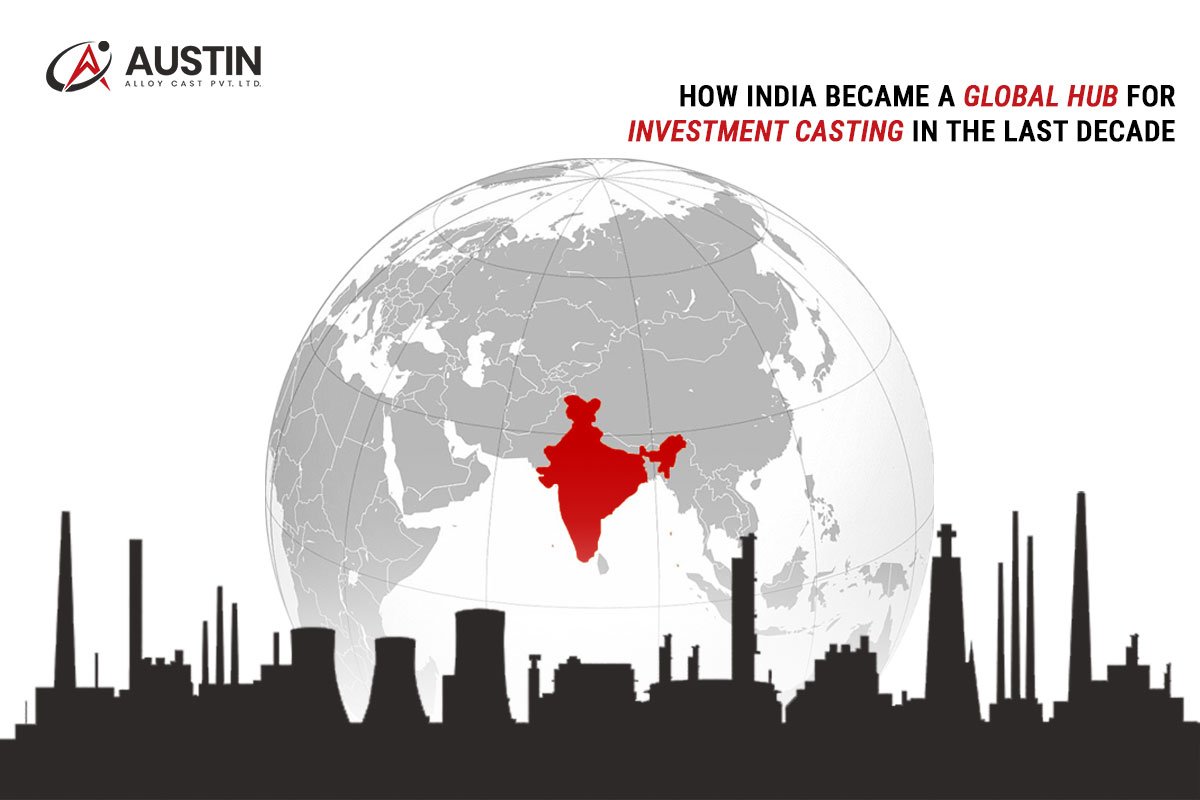
The Indian investment casting sector is at the forefront of a technological revolution that could change the landscape of manufacturing excellence and global competitiveness. As the second largest producer of casting in the world, with more than 12 million tonnes of casting produced every year, the foundry sector is committed to embracing Industry 4.0 technologies, automation, and digital transformation initiatives that have positioned India as a leader in advanced manufacturing. This transformation is not just the installation of the latest equipment on the shop floor, but rather a complete reimagining of how precision casting operations leverage technology, data, and human experience to attain previously unattainable levels of effectiveness, quality, and customer value.

The manufacturing situation around the world is shifting at a rapid pace, and Indian investment casting manufacturers are no different. With a growing world wide demand for precision engineered components, Indian foundries and their management have been compelled to invest in new technology and innovations to keep pace with the market. The investment casting industry in India has evolved from conventional setups, to highly automated, digitally enabled companies, with capabilities to produce world class castings. Organizations like Austin Alloy Cast Pvt. Ltd. have helped raise the bar of quality, innovation and technological adoption.

Over the last two decades, the Indian Manufacturing sector has undergone an unmatched transformation. Investment casting, a craft formerly called the lost wax process, has risen up as one of the most innovative and competitive sectors. Investment casting has been the backbone of precision component production, serving high value industries such as automotive, aerospace, oil & gas, defense, and heavy machinery. Today, Indian investment casting manufacturers are not only matching global demand; they are surpassing the level of innovation and competitiveness demonstrated in world markets by continuously fostering advanced technologies engaged in production systems.

The convergence of artificial intelligence, the Internet of Things (IoT), robotics, and advanced materials science brings possibilities of accuracy, consistency and innovation that were unfathomable only 10 years ago. There are companies across India’s foundry clusters from Rajkot and Coimbatore to Pune and Chennai, that are making huge investments into these technologies because their customers ask for it and they face competitive pressure, while they realize that technological leadership equates to success in the market.

3D Printing and Rapid Prototyping: The Game Changers

3D printing wax patterns is one of the most significant advancements in investment casting. Manufacturers now have the ability to create complex patterns entirely through 3D printing rather than wax injection dies. This has decreased tooling expenses significantly, decreased lead time from weeks to days, and increased development iterations.

Foundries in India have adopted 3D printing and are seeing the benefits of shorter lead times, increased design flexibility, and the flexibility to serve clients with low volume specialized work, which is often a requirement internationally. Austin and other leading edge casting producers are also using 3D printing service providers to prototype components for assurance as well as for the final production of complex parts where tooling costs would not be justified.

Simulation and Digital Twin Technology

With modern casting simulation software, foundries can develop a digital twin of the entire casting process. This means metallurgists can predict filling sequences, cooling and solidification rates, and even the locations of potential hot spots within the casting using sophisticated simulation software. For industries where zero defect casting is paramount defense, medical device development, or aerospace the predictability from this modeling provides confidence and trust in Indian suppliers.

Digital twin technology develops digital twins that represent a physical foundry’s operations, which can be visualized, simulated, optimized, or analyzed without impacting the live production process. These digital representations combine real time data from the state of operations with computational models to project performance, simulate scenarios, and optimize operations. Foundries can use digital twins to assess new products, optimize layouts, and train operators without impacting the production process or wasting materials.

Companies like Austin are embracing digital tools like inspection methods in order to guarantee defect free castings, right from the sampling stage, as an example. Austin even offers free radiography testing for all castings in sampling to validate the results of the simulation as well as the simulation accuracy; offering even more trust to customers around the globe.

Automation and Robotics in Foundries

Another milestone in India’s investment casting makers are the use of robotic shell making lines and automated pouring systems. Robotic arms are now replacing the manual dipping and coating and offer not only consistency and uniform layer thickness but also replicability. Automated pouring systems can be controlled with temperature sensors implementing precision control that improves the metallurgical quality.

The use of robotics in Indian investment casting operations advances precision, consistency, and safety and solves existing problems while also creating new opportunities. Robotic applications cover the entire casting process, from pattern handling and mold coating to finishing operations and quality inspection, and offer advantages that go far beyond just replacing labor.

These advancements eliminate or lessen the dependency on manual labor make it also solving the issues with high temperatures when pouring metal. Austin says that automation while allowing a company to scale productions, importantly, and not lose their ability to comply with international standards.

Sustainable and Eco Friendly Practices

Technology adoption in Indian investment casting is not only about efficiency; it’s about sustainability as well. Foundries are implementing energy efficient induction furnaces, recyclable shell materials, and water treatment systems to help reduce their impact on the environment. Suppliers are enhancing their products and aligning with international environmental standards, especially as global customers move to products made using green manufacturing processes.

Integrating renewable energy, part of which includes solar energy, wind energy, and energy storage systems, not only reduces carbon footprints, but offers long term cost advantages. Austin Alloy Cast has realized noteworthy potential savings through utilizing solar power for 50 60% of its production, and, in doing so, demonstrates the real world advantages of adopting renewable energy. All of these investments are putting stable energy costs into place, while allowing for corporate sustainability initiatives and meeting customer environmental requests.

Austin Alloy Cast Pvt. Ltd. has made improvements in its various processes that minimizes waste, optimize energy use, and carry out operations to meet the environmental obligations and requirements in the modern global marketplace. This focus allows Austin to compete with global suppliers, where complying with environmental standards can be as important as the cost and quality of a product.

Conclusion: Leading the Global Transformation

The investment casting manufacturers in India were able to land from a low cost supplier to a precision partner on the world stage with advanced technology. After performing Industry 4.0 practices, processes using automation, 3D printed technology, and supporting simulations in casting process control, Indian foundries now have the ability to compete with the best in the world.

Buyers would benefit aligning with quality, defect free castings with manufacturers like Austin Alloy Cast Pvt.Ltd as a partner. Austin consistently produces casting projects with accuracy and dependability for long term performance by fusing traditional casting techniques with modern innovation.

The Science behind Defect-Free Castings: How We Ensure Quality Every Time

Precision and reliability are paramount in modern engineering. Regardless of whether it is defect free castings for critical components in the oil & gas industry, heavy equipment, or marine applications, the need for defect free castings has never been more important.

At Austin Alloy Cast Pvt. Ltd. we are proud to produce castings with a constant emphasis on excellence, while meeting and exceeding global quality standards. We use a scientific approach to casting production and we assure you that every component is not manufactured but instead engineered for precision and reliability.

To achieve defect free internal and external castings we offer extensive in house destructive and non destructive testing (NDT) methods, all of which provide comprehensive information about the structural integrity of every casting prior to the next operation.

  • Destructive Testing – We can determine an in depth understanding of material performance by examining tensile strength, impact resistance, hardness, and microstructure while also confirming the metallurgical soundness of each batch.
  • Non Destructive Testing (NDT) – non destructive testing in castings is any tester like ultrasonic, dye penetrant, magnetic particle inspection, etc. are used to find surface or subsurface discontinuities without damaging the part.
  • Free Radiography Testing at Sampling – To improve our confidence in our process, Austin also provides radiographic inspection at the sampling phase, free of charge. Thus, satisfactory internal soundness is confirmed before commencing full production runs.
Process Control at Every Stage

Defect free castings are not a coincidence but a matter of proper process control at each step in the process. Every stage, from the purchase of raw materials to the ultimate delivery, is handled efficiently.

  • Pattern and Wax Model Control: The first thing we control it is essential to produce wax models that are dimensionally correct and defect free to be able to even begin the casting process.
  • Shell Building and Mold Control: The quality of ceramic shells is checked for any cracks or weakness as we use melted metal.
  • Melting and Pouring Control: Metallurgical controls continue with pouring, we continually check controls such as accuracy of temperature and alloys in each pour. No tolerance for heat inclusions, shrinkage or porosity.
  • Solidification Control: Finally we keep the properties of the casting on track by monitoring the cooling rates and feeding systems also using scientific method principles. Attaining uniform results means controlling internal stresses.

Ultimately, with all of these checks put in place, every casting moves on it only when it has passed through critical check points with strict parameters. This is what assures they each consistently accurate, reliable and repeatable changed remains in this area.

Fully Machined Supply

A significant number of customers require not just near net shape castings but fully prepared for direct use. To meet that requirement, we provide fully machined supply; we provide parts that have been machined using the precision of CNC machining to exact tolerances.

This eliminates the customer’s need to outsource additional post process which will save both time and cost. Fully machined, castings go through final inspection to ensure dimensional accuracy, surface finish, and ability to assemble. This approach ensures that potential errors during the third party process are avoided, delivering exact components and enabling the delivery of ready to fit components.

Consistency distinguishes true defect free castings from a single perfect part. A part that is flawless on its own is not enough industries such as defense, marine, automotive, and oil and gas require repeatability in large quantities. With the combination of advanced testing, rigid process controls, and precision machining, we provide the same exceptional quality, consistently.

Conclusion

Defect free castings are a result of science, discipline, and dedication to detail. With robust testing facilities, radiography support, strict process control, and fully machined supply, Austin Alloy Cast Pvt. Ltd. has earned its reputation for components that perform under the most rigorous conditions.

When quality cannot be compromised, the science behind our castings ensures that every product stands as a guarantee of strength, precision, and trust.

Common Alloys Used in Lost Wax Casting and Their Applications

Lost wax casting, or investment casting, is a precision manufacturing process used to produce finished metal components with complex details, precise tolerances, and high surface finishes. The second reason why this process is still being used so broadly across industries is due to its versatility with a vast range of metal alloys since each one is chosen based on the final application’s requirements.

In Austin Alloy Cast Pvt. Ltd., a reputed name in precision castings, the selection of the alloy is an essential aspect of engineering. Depending on the requirement of the end application, if corrosion resistance, high strength, or heat stability is required, Austin employs the requisite alloy to deliver maximum performance under real conditions. The following is a complete overview of most popular alloys used in lost wax casting and where each is best employed.

Nickel Based Alloy

Excellent resistance to heat, oxidation, and corrosion is a characteristic of alloys based on nickel. These qualities make them perfect for parts operating in harsh conditions, such as high temperatures, high pressures, and chemically reactive settings.

Applications include parts for power generation, gas turbines, valves, and chemical processing. At Austin, nickel-based alloys are frequently utilized for oil and gas industry components, especially in subsea and offshore machinery where failure is not an option. Long service life due to their durability reduces maintenance and expensive unscheduled downtime.

Stainless Steel Alloys

Stainless Steel Alloys Because of its strength, resistance to corrosion, and attractive surface finish, stainless steel is the most adaptable alloy for investment castings. Additionally, it comes in a variety of grades, such as duplex, martensitic, and austenitic, each of which was created for a particular performance application.

Austin Alloy Cast Pvt. Ltd. frequently chooses stainless steel castings for robotic systems, industrial automation, marine components, medical equipment, and food processing machines. The synergy of cleanliness, strength, and resistance to environmental conditions renders stainless steel a preferred alloy in performance and cleanliness requiring industries.

Carbon Steel Alloys

Compared to stainless or nickel alloys, carbon steel provides superior wear resistance and strength for a significantly lower cost. Carbon steel is typically used for structural parts, support brackets, gears, and other parts expected to receive high mechanical loads and abusive use.

In Austin style companies, carbon steel continues to be a material of preference for mining and earth moving machinery, and construction grade castings. Since carbon steel can be heat treated and made harder and stronger, Austin can supply parts that are durable and made for severe operating conditions such as impact and abrasive wear.

Applications Across Key Industries

Lost wax cast components made of these alloys find application in many industries:

Industrial Machinery & Robotics:

Precision and material behavior reproducibility is needed for materials like arms, joints, and bases. Alloys made of nickel and stainless steel offer equivalent strength and resistance to corrosion.

Oil and Gas Industry:

Nickel and duplex stainless steel valves, pumps, impellers, and flanges need to be exposed to harsh corrosive and high pressure environments.

Earth-Moving Equipment:

Carbon steel parts are a must in this use because of their resistance to impact and high load carrying capability. Investment casting offers accurate dimensional precision and replicability, which is critical in heavy equipment.

Each application demands a careful match between alloy properties and operational requirements. At Austin Alloy Cast, experienced engineers and metallurgists collaborate to ensure the best material is selected, leading to better performance, longer service life, and reduced total cost of ownership for clients.

Conclusion

Lost wax casting has a strong materials science foundation. From corrosion resistant stainless steels to ultra hard carbon steels and high performance nickel alloys, the metal selected directly affects the strength, life, and safety of the component.

Austin Alloy Cast Pvt. Ltd. is still a reliable partner to industries that need customized casting solutions. With the harmony of alloy expertise and the most advanced casting technology, Austin addresses the evolving demands of industries like oil & gas, automation, heavy machinery, and others, offering components that satisfy the highest standard of quality and performance demands.

Applications of Nickel Alloy Castings in the Oil & Gas Industry

Oil and gas is the pillar of global energy production and demands components that operate under extreme conditions like high pressure, corrosive environments, and high temperatures. Austin Alloy Cast Pvt. Ltd. excels at supplying precision-cast Nickel Alloy Castings to fulfil the unique demands of this mission-critical sector. With our state-of-the-art facilities and investment casting solutions, we provide reliable, high-performance components specifically made for the oil and gas sector.

Why Nickel Alloy Castings Are Essential for Oil & Gas?

Nickel-based alloys have excellent properties of corrosion resistance, to radiate heat, and mechanical strength. All these characteristics render them ideal for the harsh operating conditions that characterize oil and gas production, exploration, and refining. Right Boring from upstream drilling to downstream refining, Nickel Alloy Castings provide excellent performance and durability, cutting maintenance expenses and downtime. In Austin Alloy Cast, we apply our expertise in casting alloys such as Inconel, Monel, and Hastelloy in producing parts that perform superior to these harsh conditions.

1. Isolation and Flow Control Valves

Valves are an important component of oil and gas processes, managing the flow of fluids in high pressure and corrosive conditions. Nickel Alloy Castings are employed to produce ball valves, gate valves, and butterfly valves and check valves due to their corrosion resistance from aggressive media such as sour gas, seawater and acid chemicals. For instance, ball valves constructed of nickel based alloys such as Inconel or Monel ensure long term reliability in pipeline flow control in refineries, offshore platforms etc.

Types of Valves:

  • Butterfly Valve

A butterfly valve regulates the flow of fluid with the help of a revolving disc. Turning the disc either blocks, partially opens, or permits full flow.
Use: Perfect for big pipes and systems that need to be shut off quickly.
Common in: Chemical processing, HVAC, and water treatment.

  • Ball Valve

A circular ball with a small opening through it is called a ball valve. Fluid flows when it is aligned with the pipe; flow stops when it is turned 90 degrees.
Use: Secure sealing, swiftly shut down.
Common in: water supply, chemicals, and oil and gas.

  • Pressure relief Valve

In order to prevent damage or explosion, this valve automatically releases pressure from a system when it reaches a pre-determined limit.
Use: The excessive pressure protection safety device.
Common in pipelines, compressors, and boilers.

  • Check Valve

Check valves ends backflow and enable only one direction to flow. It doesn’t require human control to function.
Use: Prevents equipment and pumps from witnessing reverse flow.
Common in: The industrial pumps, fuel platforms, and waterlines.

  • Plug Valve

A plug valve manages flow through the help of a conical or cylindrical plug. The plug can be turned to control flow or entirely block it.
Use: Low-pressure systems with basic on/off control.
An example: Chemical industries, oil pipelines, and gas lines.

  • Globe Valve

A globe valve reduces flow with a movable disc. With a higher pressure drop, it gives accurate flow control.
Use: Control flow instead of merely cutting it off.
Common in process plants, cooling systems, and steam lines.

  • Gate Valve

A gate valve opens or closes the path by means of a sliding gate, also known as a wedge. When fully open, it offers very little flow resistance.
Use: Operations that are fully open or closed.
Used in: Oil pipelines, fire safety, and water supply.

  • Diaphragm Valve

A reusable diaphragm taps down to prevent flow in a diaphragm valve. Perfect during working with filthy or aggressive fluids.
Use: hygienic and leak-proof flow control.
Used in: the waste water, medications, and food manufacturing.

2. Impellers and Pumps for Fluid Handling

Impellers and pumps are critical for the transportation of fluid in oil and gas processes, ranging from injection of chemicals to production of crude. These units are positioned in high temperature, high salinity or abrasive particle environments, which require Nickel Alloy Castings to be the material of choice. Use of Nickel alloys such as Hastelloy resists pitting and crevice corrosion which is vital in offshore and subsea processes where seawater is in contact with equipment.

3. Down hole Tools and Parts

Down hole equipment employed in upstream oil and gas exploration, such as drill bits, stabilizers and casing components must be able to endure such high pressure, temperature and corrosive chemicals such as hydrogen sulfide (H2S). Nickel Alloy Castings are ideal for these uses due to high strength and resistance to stress corrosion cracking. For instance Inconel alloys find wide application in down hole equipment due to their structural stability at temperatures above 1000°C.

4. Pipeline Fittings and Flanges

Oil and gas pipelines transport an array of fluids, such as crude, natural gas and corrosive chemicals at pressures. Fittings, flanges and connectors for such pipes are constructed from Nickel Alloy Castings that do not get weakened by such severe conditions. Nickel based alloys such as Monel 400 are particularly discovered to be immensely helpful in sea and offshore situations due to their corrosion resistance in seawater conditions.

5. Heat Exchangers and Pressure Vessels

Pressure vessels and heat exchangers are the backbone of processing and refining in oil and gas. They have to operate at high pressure and high temp and withstand aggressive chemicals. Nickel Alloy Castings, especially those made from Inconel 625 and Hastelloy C276 are used to maintain strength at high temp and resist oxidation. Nickel Alloy Castings in Oil & Gas play a critical role in ensuring high performance and corrosion resistance in harsh environments such as offshore drilling, pipelines, and high-pressure processing systems.

Future Use

As the oil and gas industry grows there will be more demand for high performance products like Nickel Alloy Castings. Technology like additive manufacturing and high heat treatment is improving the accuracy and efficiency of nickel alloy components. Sustainability is driving innovation to develop recyclable nickel alloys that will reduce the environmental impact of the casting process. At Austin Alloy Cast we are ahead of the curve, we can provide our customers with the latest solutions to meet the changing needs of the industry.

Conclusion

Nickel Alloy Castings are not negotiable in the oil and gas industry, offering greater corrosion resistance, high-temperature thermal stability, and mechanical strength. From valves and pumps to pipeline fittings and down hole tools, these castings deliver assured performance under extreme conditions. Austin Alloy Cast combines cutting-edge investment casting technology, rigorously enforced quality control, and long experience with nickel-based alloys to create products well beyond industry norms.

Top 5 Industries Benefiting from Lost Wax Investment Casting

Lost wax investment Casting is a 5000 years process. It began as a way to manufacture precision components like sculpture, and continues to be a fundamental manufacturing process for industries worldwide. Precision casting, also known as the Lost wax process or micro fusion/ Feingues, is a wax pattern build-up process, ceramic shell enclosing, burning out wax, and filling the remaining space with metal. The process is as accurate as any, having higher resolution and surface finish smoothness, and finds the best applications in making minute pieces of parts with close tolerances. We employ these processes at Austin Alloy Cast and supply to industry leaders worldwide from one of the largest single location manufacturing facilities. It is put into practice here to provide cost-effective yet world-class solutions that live up to the expectations of all sorts of businesses. Here are the top five most conducive industries because of lost wax investment casting and how this adaptable process caters to their unique requirements. 

Rail Industry: Accurate to the Life-Critical Mission : 

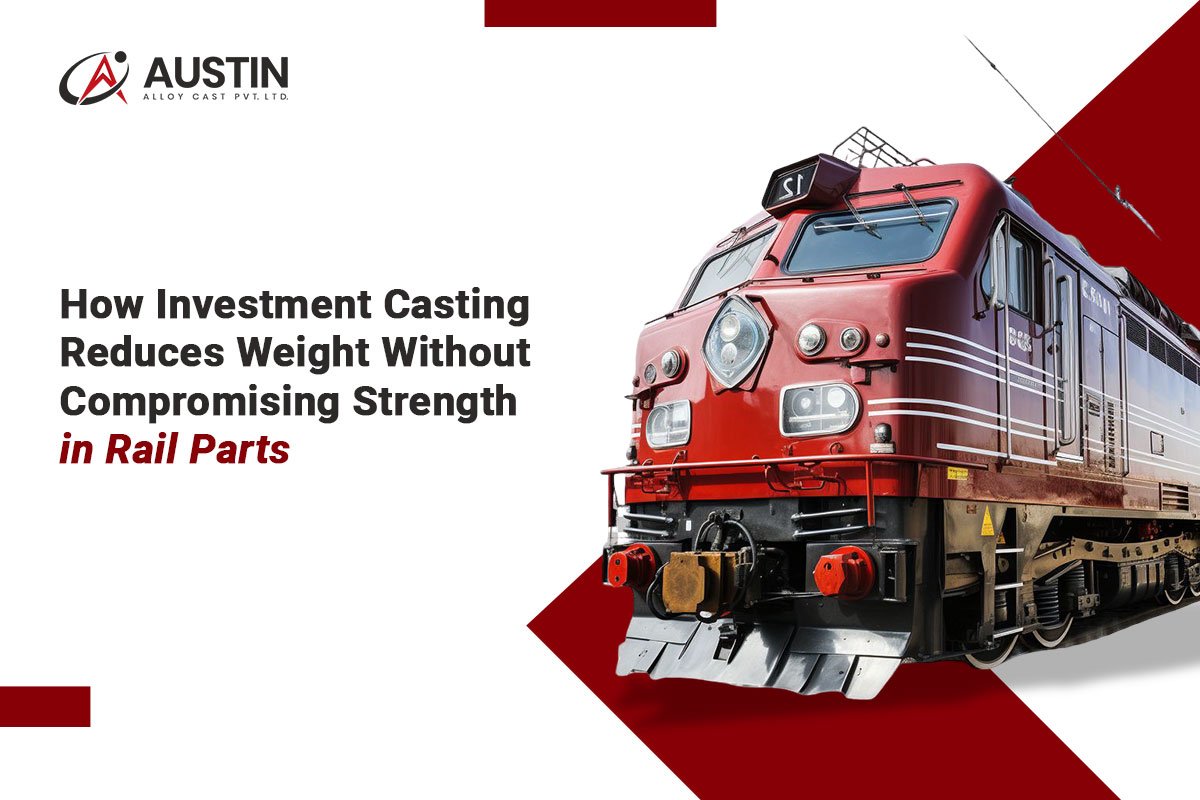
The rail industry requires components that are precise, durable, and capable of withstanding heavy loads, vibration, and long-term operational stress. Lost wax investment casting is widely used to manufacture parts such as brake system components, coupler parts, suspension brackets, and structural fittings. These components often demand complex geometries and must exhibit excellent mechanical strength, wear resistance, and dimensional stability. Materials like carbon steel, stainless steel, and alloy steels are commonly used due to their toughness and resistance to environmental factors. Austin Alloy Cast’s expertise in precision casting enables rail equipment manufacturers to minimize post-casting machining by delivering near-net-shape parts, reducing material waste and overall production time while ensuring consistent performance in demanding rail environments. 

Marine Industry : Precision Making a Difference to Life-Saving Applications : 

Lost wax investment casting plays a crucial role in manufacturing precision components for the marine industry, including impellers, pump housings, valve components, and propeller blades. This process allows for the production of intricate, corrosion-resistant parts essential for enduring harsh marine environments. Materials like stainless steel, particularly 300-series alloys such as 304 and 316, are favoured for their superior resistance to saltwater corrosion, structural integrity, and long-term durability in maritime applications. Austin Alloy Cast’s advanced Indian facility ensures that marine equipment manufacturers receive high-quality, industry-compliant castings. The near-net-shape capability of investment casting reduces material waste and machining time, making it an ideal solution for cost-effective production of complex and high-performance marine components. 

Food Processing: Performance and Efficiency : 

The food processing industry relies on lost wax investment casting to produce components that meet the highest standards of hygiene, durability, and operational efficiency. Parts such as valve bodies, spray nozzles, impellers, and equipment fittings benefit from the process’s ability to form complex, sanitary-grade geometries with exceptional dimensional accuracy. Stainless steel alloys, particularly 304 and 316, are routinely used for their corrosion resistance, non-reactivity with food products, and compliance with food safety regulations. As food processing systems evolve with increasing automation and precision requirements, investment casting continues to be a key manufacturing method to deliver components that support cleanability, reliability, and long-term performance in demanding food-grade environments. 

Oil and Gas Industry: Resisting Hostile Environments : 

The oil and gas industry is working in perhaps the most hostile environments, with requirements being for materials that will function in corrosive environment, temperature, and pressure. Lost wax investment casting is typically used to cast pieces such as pump casings, valve trims, and tubing that have such demanding requirements. 

The flexibility of the process to cast any quantity of alloys, ranging from stainless steel to nickel-based super alloys, guarantees parts to be long-life and corrosion-resistance. Austin Alloy Cast’s full spectrum of services from casting to post-processing and machining meets the oil and gas industry’s need for quality, reliable parts. Smooth surface finish offered by investment casting also reduces wear and friction, thereby extending the life of high-stress components. Since worldwide energy demands determine long-term equipment needs, investment casting remains an always viable solution for this sector.  

General Engineering: Versatility to Accommodate a Wide Variety of Uses : 

With the exception of specialty uses, general engineering is in the sights of a wide variety of uses that take advantage of the versatility of lost wax investment casting. From grinding blades and mixing plates in industrial equipment components to electronics and robotics precision components, the process is precise and versatile. 

The capability to cast ferrous and non-ferrous alloys such as stainless steel, bronze, and aluminium enables the manufacture of custom parts to mechanical specifications. Austin Alloy Cast advanced casting capabilities and full logistics support system facilitate quick turnaround of castings for many applications in engineering, prototype production, and high-volume production.  

To be concluded : 

Austin Alloy Cast adds to these advantages with its material specification expertise, state-of-the-art mould construction, and rigorous quality control to provide customers with parts to precise specifications. Conclusion Lost wax investment casting is a revolutionary process that unlocks opportunities for industries that need precision and reliability. From rail and marine to automotive, oil and gas, and general engineering, the process offers components of unparalleled quality and performance. Austin Alloy Cast, with its cutting-edge facilities and commitment to excellence, is at the forefront of delivering custom casting solutions that enable these industries to thrive.