The global manufacturing landscape has an unparalleled challenge to find equitable solutions for high rates of industrial growth and providing an operating environment that respects the planet. The foundry industry is the most challenging. Austin Alloy Cast, as a Sustainable casting manufacturer, understands that environmental responsibility and manufacturing excellence are not mutually exclusive disciplines, but they are a supported basis for long term success. Our holistic approach to sustainable manufacturing includes adopting renewable energy, minimizing waste, conserving resources, and optimizing manufacturing processes. All the while, Austin Alloy Cast provides a manufacturing model that complies with global sustainability agenda while providing the quality and economic competitiveness the customer expects.
The global manufacturing industry is going through a major transition in the pursuit of sustainability, as applied and measured to productivity and cost. Foundries, among the heaviest consumers of energy, are now evaluating their energy use for its effect on sustainability. In India, advanced thinking manufacturers are reimagining the way castings are produced, creating a benchmark for responsible production globally. Austin Alloy Cast is one company from India that has emerged as an example of foundry innovation, quality, and sustainability.
The sustainability journey of Austin Alloy Cast reflects our understanding that environmental leadership generates competitive differentiation in operational efficiencies, expense savings, customer value, and employee buy in. Our holistic approach considers every operational aspect of our business, from energy source and usage, waste management, and water consumption, allowing us to create a full sustainability program with tangible environmental and economic benefits.
Why Sustainability Matters in Foundries
Casting processes investment and sand casting can consume vast amounts of energy, use and waste raw materials, and cause harm to the environment. Casting processes must be managed carefully to avoid the following negative environmental impacts:
- Greenhouse gas emissions from melting and pouring operations.
- Water pollution from slurry and shell disposal.
- Energy, consumed by inefficient furnaces.
- Excessive use and depletion of raw materials.
Structural adjustment is affecting global customers who now must have green manufacturing partners who provide not only precision and dependability, but can also provide documentation toward acquiescence of International eco standards. Sustainability in foundries is now a business requirement, instead of an option.
For European countries, compliance with the EU’s Carbon Border Adjustment Mechanism (CBAM) has become a significant requirement for exporters. CBAM compliance will require exporters to demonstrate that their manufacturing practices are derived from sustainable, low emission processes to avoid incurring carbon related tariffs when exporting to Europe. By embracing sustainable practices, Austin Alloy Cast helps to ensure that it is compliant with international trade obligations and reinforce its export position in Europe
Eco-Friendly Casting Practices
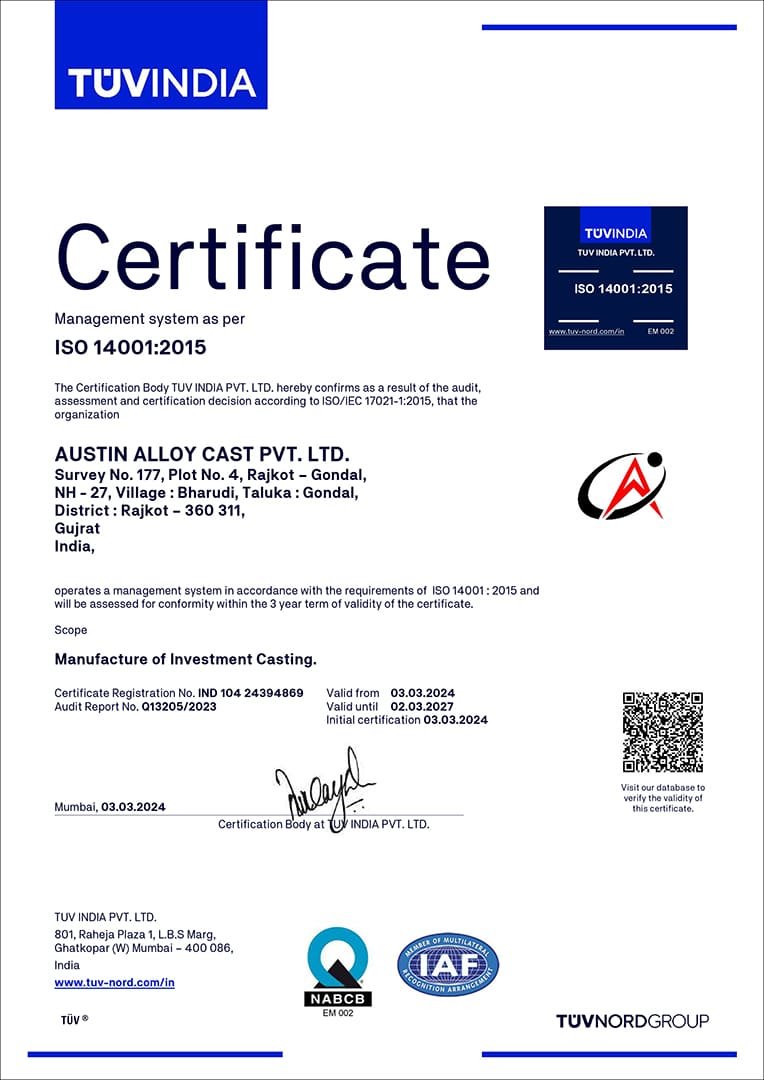
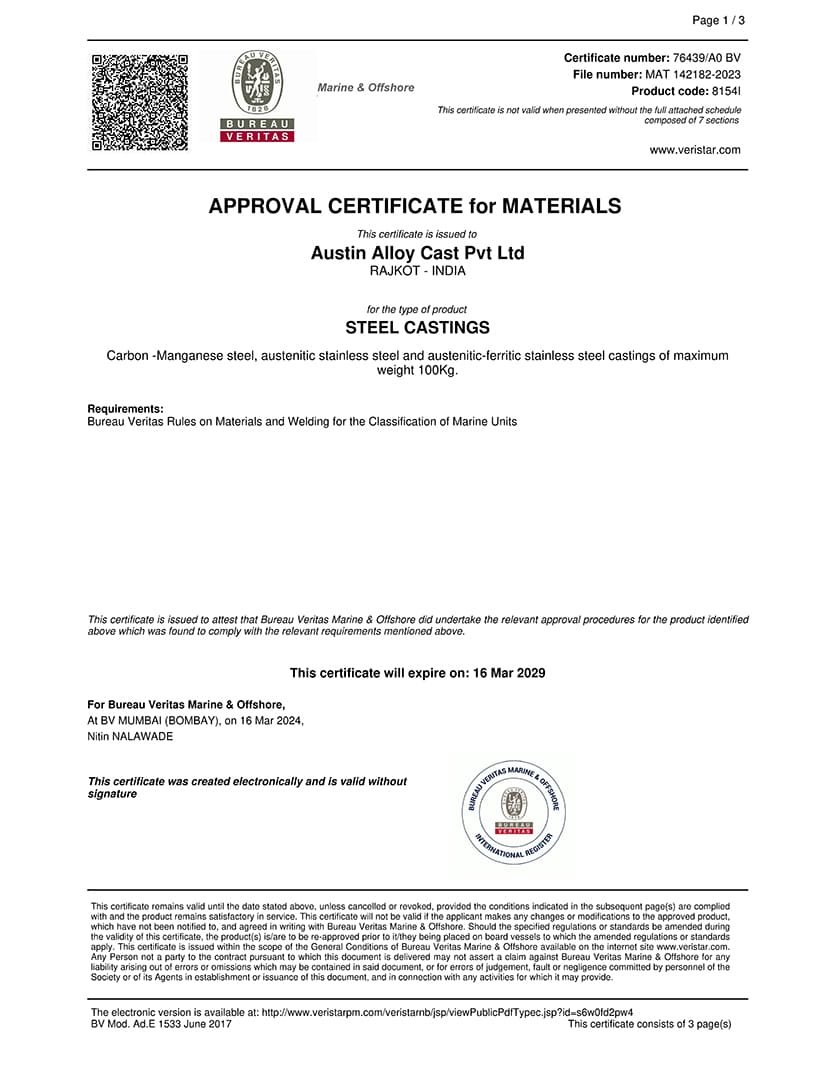
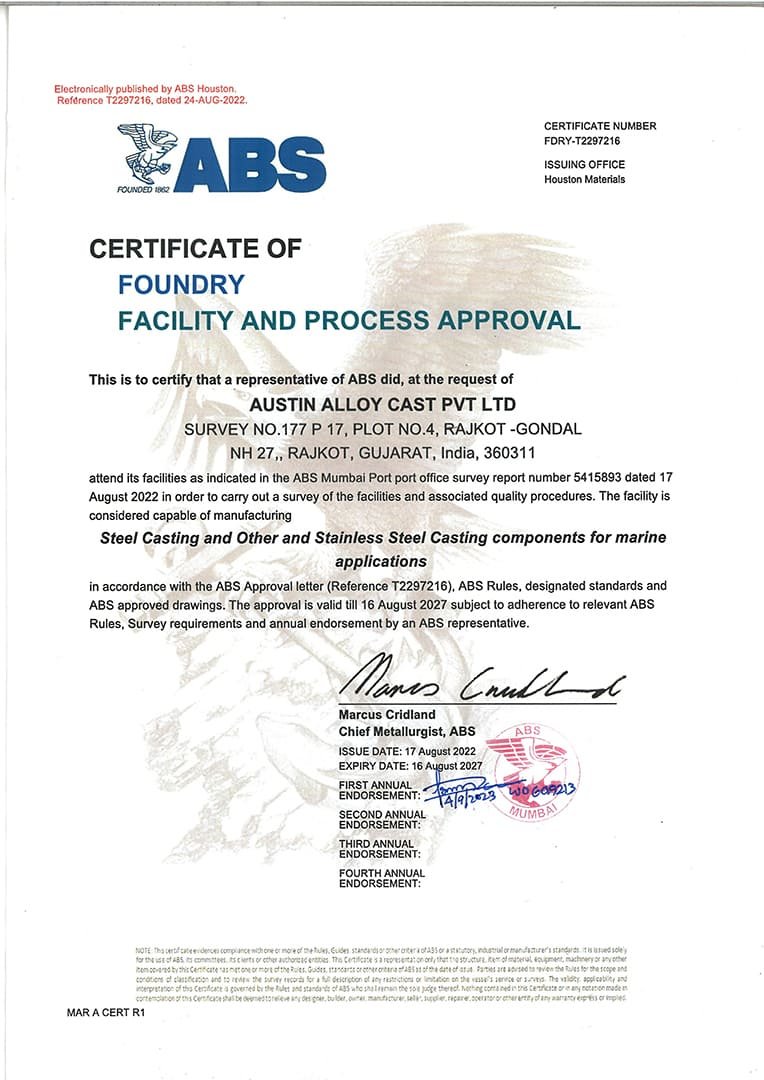
Austin Alloy Cast’s Environmental Management System (EMS) is ISO 14001 certified foundry providing the systematic framework for continual environmental performance improvement, compliance with regulatory requirements, and achievement of sustainability objectives and goals. This form of internationally recognized certification provides concrete evidence of our commitment to environmental performance enhancement while conveying a sense of assurance to customers that their supply chain partners share their sustainability objectives and values.
Austin Alloy Cast has recognized that foundries’ future lies in sustainability. Austin Alloy Casts has overtaken its environmental impact significantly through modern, sustainable processes and practices, while delivering superior castings to various industries.
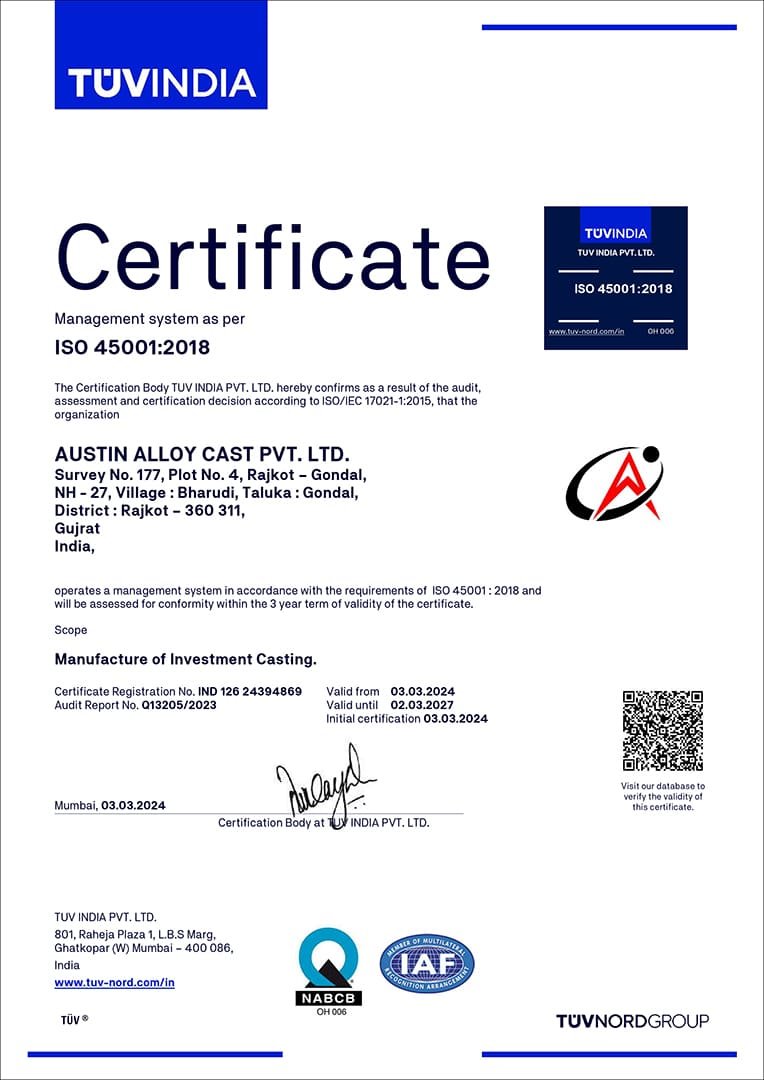
Sustainability relates to more than just what is best for the environment; it pertains to the employee and their welfare, as well as ensuring workplace safety. As an ISO 45001 certified organization, Austin Alloy Cast is committed to providing a safe and healthy workplace, which exemplifies their commitment to sustainability. ISO 45001 certified organizations uphold global occupational health and safety standards, reducing their risk in the workplace and enhancing employee health and welfare.
Energy Efficient Melting Systems
In foundries, melting furnaces are the main energy consuming equipment. Austin has invested in new induction furnaces with high energy efficiency, accurate temperature control and minimal heat loss. This lowered electricity consumption and led to a consistent metallurgical quality.
1. Recycling and reuse of materials
The foundry has a rigorous recycling policy that involves reheating and reusing risers, gating systems, and metal scrap. This lowers both the raw material costs as well as the waste it generates. Shell materials and sand used in investment casting are also reused and reclaimed when possible which minimizes landfill usage.
2. Water Conservation Practices
In casting processes, water is essential, especially for cooling and shell construction. Austin has implemented closed loop water systems and water treatment units, minimizing waste and protecting natural resource contamination.
3. Cleaner Air, Decrease Emissions
To deal with the air quality issue, Austin has installed fume extraction systems and air filtration units at its production facilities. By capturing dust, soot, and harmful gases, these systems safeguard both the workers and the emissions in the atmosphere.
4. Green Energy Initiatives
A number of trend setting foundries are now looking at incorporating and using renewable energy into their operations. To lessen its dependency on non renewable energy, Austin has begun utilizing energy tracking devices and solar energy.
Austin’s 1.5 MW solar photovoltaic facility generates a substantial portion of electricity demand, thus avoiding additional reliance in traditional energy. The energy efficiency measures also incorporated energy efficient lighting systems, smart monitoring devices, and better optimized furnace scheduling to further reduce energy intensity.
5. Sustainable Packaging and Logistics
Being sustainable isn’t just about how we manufacture it also is how we deliver. Austin is committed to eco friendly packaging materials as well as planning efficient logistics with as little wastage as possible while sending out products, so that we can be as sustainble as we can in the supply chain.
Quality and Sustainability Go Hand in Hand
Even more important than it being sustainable is that it is always quality. Austin employs rigorous destructive and non destructive testing on all castings to ensure components meet global standards for precision and performance. By blending process controls and eco-friendly manufacturing practices, the company is able to provide their clients assurance that they are receiving defect free castings that are sustainable and durable.
In today’s global economy, companies sourcing castings are beginning to place an increasing value on manufacturers who can prove responsible production. Austin’s sustainability action plans match to international standards and create an opportunity to enhance Austin’s competitive advantage in markets such as North America, Europe and the Middle East. By positioning Austin as an environmentally responsible foundry, this will not only result in winning work, but it will also create long standing trust with international partners.
Conclusion: Leading Sustainable Manufacturing
Austin Alloy Cast’s holistic approach to sustainability exemplifies how environmental stewardship and quality manufacturing create synergistic value for customers, employees, communities, and the environment. Our comprehensive sustainability programs incorporate all elements of our business while delivering measurable benefits towards environmental stewardship and business performance.
As a sustainability leader, Austin Alloy Cast is well positioned as a preferred partner for clients who appreciate suppliers with like minded environmental values and sustainability goals. The measurable environmental benefits of our sustainability programs allow customers to leverage evidence to support their own efforts for sustainability reporting and demonstrate tangible examples of environmental responsibility in their manufacturing operations.
The achievements of our sustainability initiatives offer a roadmap for transformation within industry showing the practical implications of being environmentally responsible while being largely competitive. Our commitment to sustainability leadership means Austin Alloy Cast will continue towards environmental performance while generating value for the benefit of all stakeholders in the global manufacturing ecosystem.
The movement to improve sustainability in foundries is still maturing, yet some leaders, such as Austin Alloy Cast Pvt. Ltd., have already begun the journey forward. With the expanding use of automation, circular practices for managing waste, and added renewable and regenerative energy, the future of casting in India is looking much greener.