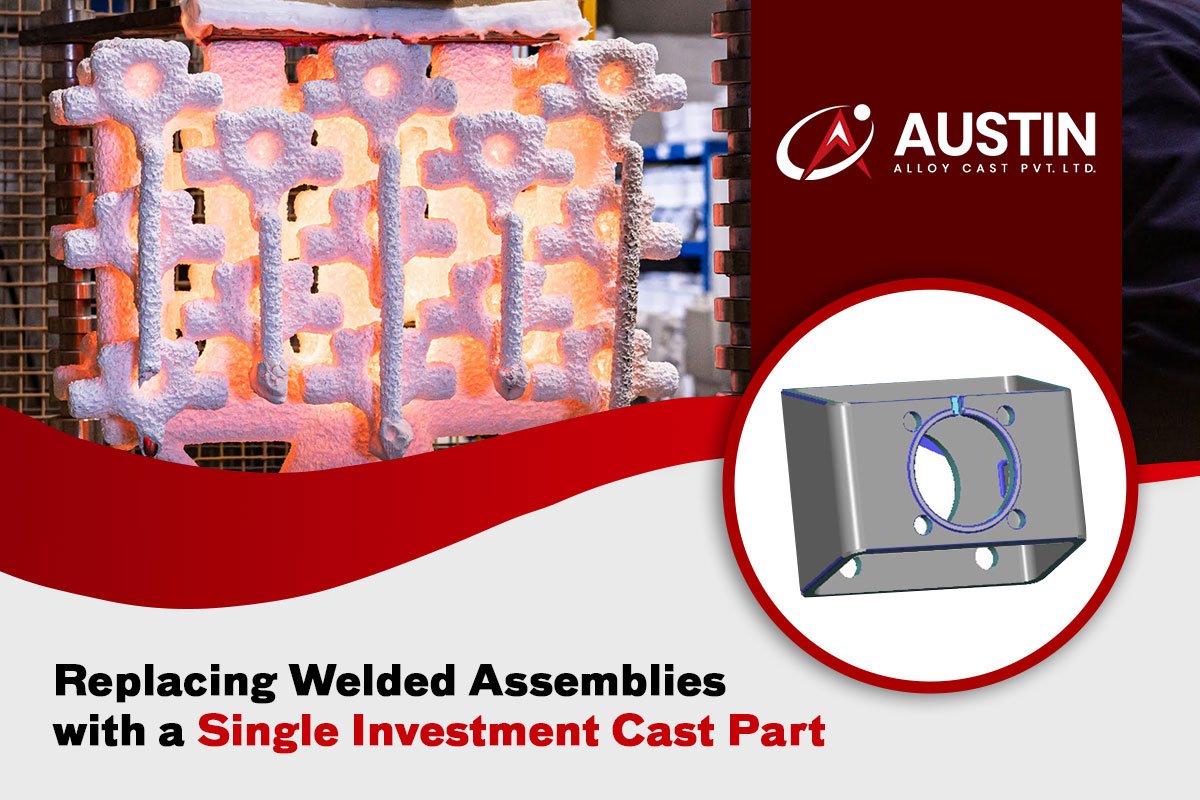
Investment Casting vs. Fabrication: A Better Solution for Paper Industry Components

In the rapidly changing world of industrial production, there is one debate that comes up again and again casting vs fabrication. Both processes have been utilized for decades to produce critical machinery parts, but in industries like paper and pulp, in which machinery is subjected to repeated stress and exposure to water, heat, and chemical treatments, the type of process used can have a direct effect on performance, efficiency, and long term expense.

Here, we look at why investment casting solutions are the way of the future for paper industry cast components, supplanting conventional fabrication techniques. Austin Alloy Cast are already proving how the shift brings actual value to OEMs and end consumers in the paper market.

Understanding the Difference Between Fabrication & Casting

Fabrication tends to include cutting, welding, and construction of raw materials like steel plates or rolled sections into a needed form. Although this is very flexible for small quantities or simple geometries, it has a number of disadvantages when working with complicated shapes or parts that are exposed to high wear and tear.

Investment casting the molten metal is cast into an exact mold. Investment casting is often referred to as lost wax casting when producing the part. This creates the opportunity for manufacturers to make sophisticated designs with high dimensional accuracy. For the paper market, which uses many components such as housings, impellers, and wear parts, near net shape capability is a big benefit.

Weaknesses of Manufactured Parts in Paper Industry Uses

Manufactured parts tend to have difficulty functioning in paper mill plants’ rigorous environments. Some typical weaknesses are:

  • Weld Weaknesses: Welded joints tend to be the initial failure points by way of fatigue, vibration, or corrosion. On high speed paper machines, small weld cracks can lead to catastrophic failure.
  • Material Inconsistency: Fabrication often involves the joining of disparate materials, which can form planes of weakness where properties do not agree.
  • Dimensional Variability: Maintaining close tolerances in fabrication is troublesome. Welding misalignments or warping can create uneven wear or energy losses.
  • Maintenance Costs: The constant repair, rewelding, or replacement of fabricated components raises maintenance costs. For an industry where uptime and never down operation are essential, fabricated components tend to be an expensive trade off.
How Investment Casting Enhances Precision

Precision is among the most determinant aspects of casting vs fabrication. Investment casting solutions for paper industry enable engineers to recreate intricately detailed geometries with low machining demands. In papermaking, precision translates into:

  • Optimized Flow Channels: For parts such as impellers or housings, smooth finishes and precise profiles enhance fluid dynamics, saving energy.
  • Uniform Wall Thickness: Unlike manufacturing, casting provides even thickness, reducing stress concentration areas.
  • Less Secondary Machining: Since the cast component is near net shape, OEMs save time and money on secondary processes.

Accuracy isn’t about tolerance; it’s about making sure each component functions precisely the way it was designed to under the tough conditions of pulp and paper making.

Strength & Durability Advantages of Investment Casting

Strength is where investment casting really excels over fabrication. Cast components provide:

  • Integral Strength: Castings are monolithic, with the material pouring as a single, homogeneous body. This negates typical weak spots.
  • Better Alloy Options: Investment casting enables the utilization of highly specialized alloys like stainless steels and duplex steels that offer corrosion resistance to chemicals used in paper processing.
  • Wear Resistance: Cast components of the paper industry are subjected to continuous mechanical stress, abrasive slurries, and fibrous material. Longer wear life, lower downtime are provided by investment cast parts.

Investment casting eliminates structural weaknesses that are inherent in welding, creating a better solution for the aggressive operating conditions of the paper mill.

The Case for Long Term Cost Savings

At first glance, fabrication may appear to be cheaper than cast, especially for low volume or simple parts. However, OEMs and plant owners are learning quickly about the long term cost savings from investment casting solutions:

  • Lower Maintenance & Replacement Costs: Longer wear life means fewer parts that need to be replaced.
  • Energy Efficiency: Precision engineered cast parts use more energy efficient and less energy overall, thereby reducing its ultimate energy consumption.
  • Less Downtime: Less breakdowns and part failures mean greater productivity for the plant.
  • Increased Lifecycle Value: Although up front costs are a bit higher, investment casting gives you better return on investment over the lifecycle of the equipment.

For an industry that relies on operational production lines to maintain profits, these savings can mean a lot.

Why OEMs of the Paper Industry Are Turning towards Investment Casting

Worldwide OEMs that cater to the paper and pulp industry are gradually moving out of fabricated parts and toward paper industry cast parts. Some of the primary reasons behind this are:

  • Improved Equipment Reliability: Cast components are in line with the industry’s need for trouble free operations.
  • Design Freedom: Investment casting enables OEMs to come up with innovative designs without being limited by weld or assembly restrictions.
  • International Quality Standards: Cast parts can be produced to international standards such as ASTM or ISO to comply with export markets.
  • Scalability: For OEMs that are running in larger quantities, casting is economical in comparison with repeated manufacturing.

Austin Alloy Cast and other companies have been leaders in providing castings precision engineered to paper industry OEMs to assist them in moving away from traditional manufacturing towards superior casting solutions.

Conclusion: Casting vs. Fabrication; The Uncontested Champion in Paper Industry Parts

When considering casting versus fabrication particularly in destructive conditions like the paper industry, investment casting is the undisputed champion. Investment casting clearly has many advantages, including better precision, greater longevity, lower lifecycle costs and better performance.

For OEMs and paper mills that are looking for long term efficiency and reliability, cast components for the paper industry are not just an upgrade, they are a necessity. And with reliable company Austin Alloy Cast leading the way, the adoption of advanced casting technologies in the industry will accelerate in the coming years.

Certifications & Standards That Matter in Global Casting Exports

In the current era of competitive manufacturing, global casting exports are no longer simply a matter of making robust components in volume. Global consumers expect not only accuracy but also demonstration of quality, safety, environmental stewardship, and adherence to well established global standards. For exporters such as Austin Alloy Cast, certifications serve as passports that unlock global markets, allowing customers of all industries to have faith in every shipment.

This blog delves into the reasons why certifications are so important in the field of casting exports, the most important standards of relevance, and how Indian foundries are upping their game to compete at the international level.

Why Certifications Are Important for Casting Exports

When a business ships castings whether for automotive, oil & gas, mining, or heavy machinery applications it enters a highly regulated marketplace. Import countries and OEMs anticipate that suppliers will comply with stringent demands. Certifications are used as:

  • Verification of compliance: Verifying products that are safe, environmentally friendly, and technologically efficient.
  • Risk Reduction: Reducing failures, accidents, or recalls in critical mission environments.
  • Worldwide credibility: Proving that a foundry is as good as global industry leaders.
  • Access to markets: Some certifications are prerequisites to even access tenders or supply chains.

For purchasers, certifications provide confidence to buy from a credible, internationally known supplier.

Common Global Standards for Casting Exports

The casting industry works with varied applications, and certifications differ based on the industry. Some of the most impactful include:

1. ISO Certifications
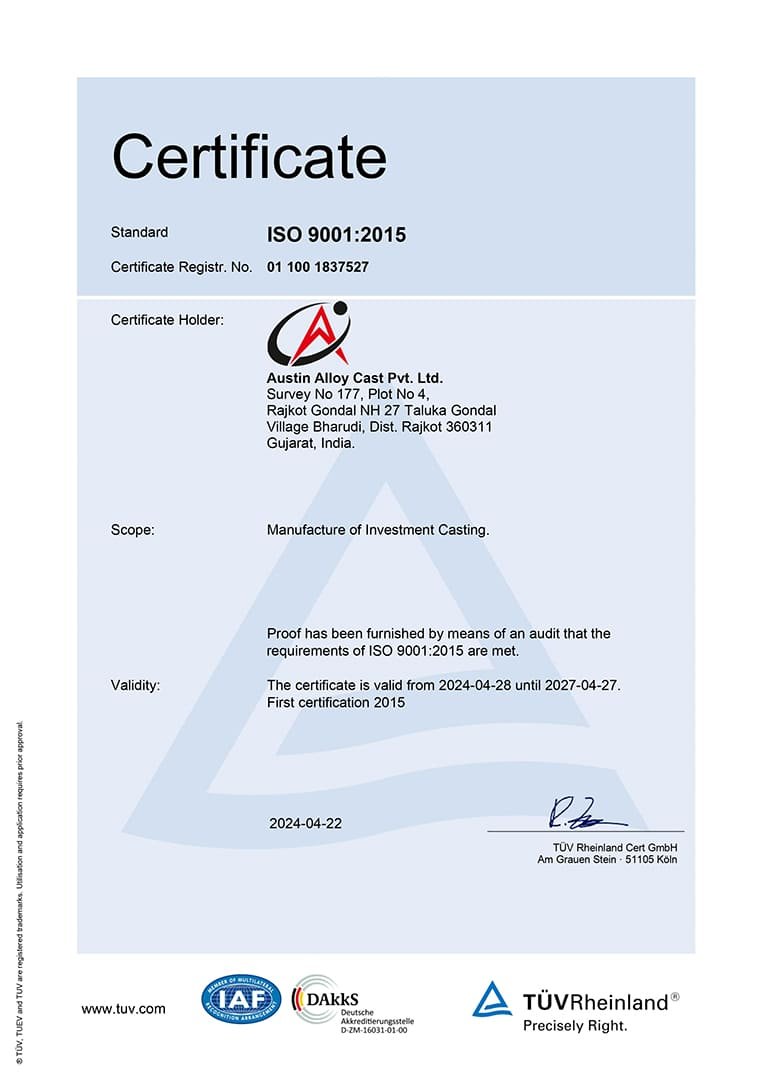
  • ISO 9001 Quality Management System: ensures processes are standardized, controlled and improving always.
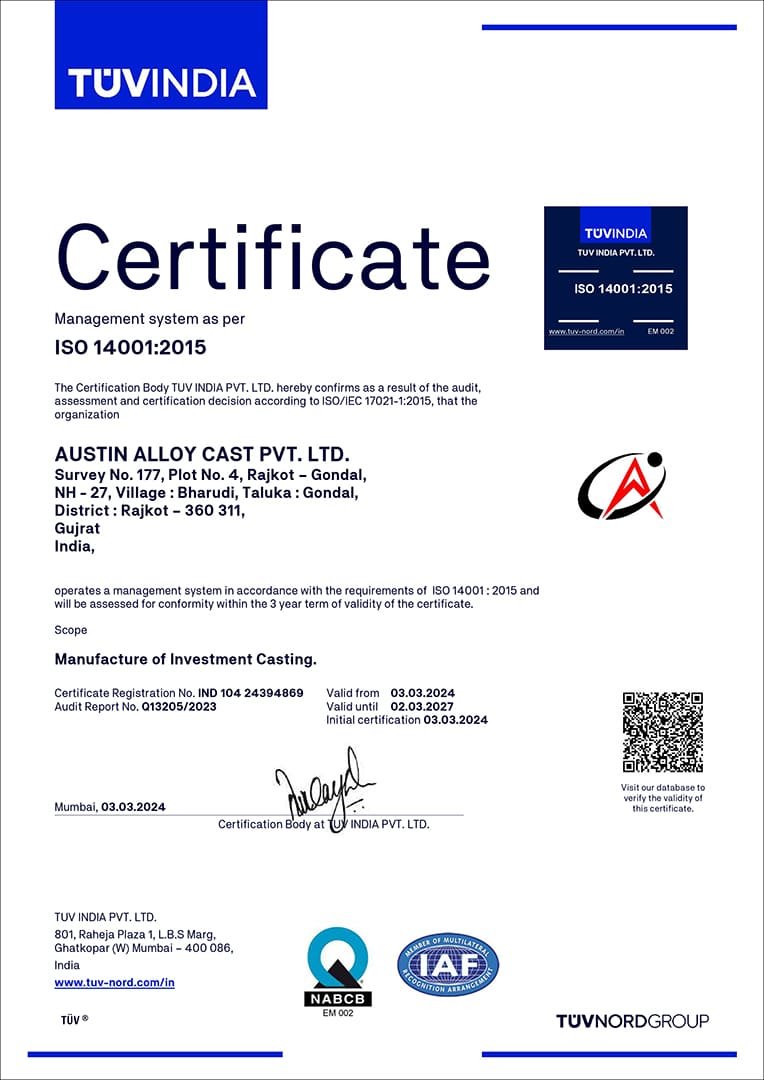
  • ISO 14001 Environmental Management: confirms commitment to environmentally responsible practices, waste reduction, and sustainable operation which are defined for consumers today.
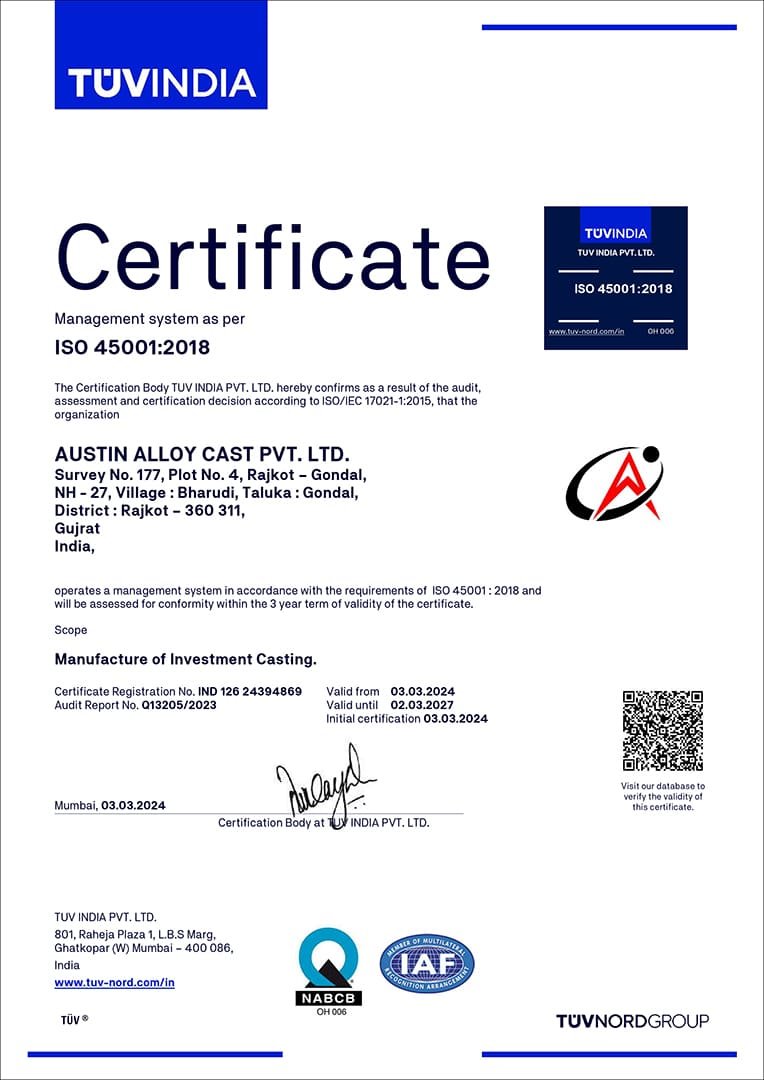
  • ISO 45001 Occupational Health & Safety: Verifies proactive commitment to employee safety and risk management on the floor in the foundry.
2. ASTM

ASTM specifications establish the technical standards of materials chemical composition to mechanical strength. Compliance guarantees purchasers that castings are meeting international standards for resilience and performance.

3. API (American Petroleum Institute)

For oil & gas and petrochemical use, API standards are vital. They ensure valves, pumps, and pressure containing units can perform to demanding specifications of such things as high pressure, temperature swings, and corrosive conditions.

4. IATF 16949 (Automotive Industry Quality Management)

The global automotive industry supports the market and affiliated markets through engine, transmission and structural castings. IATF certified castings keep the automotive industry below tight quality, safety and traceability regulation.

5. Marine Approvals

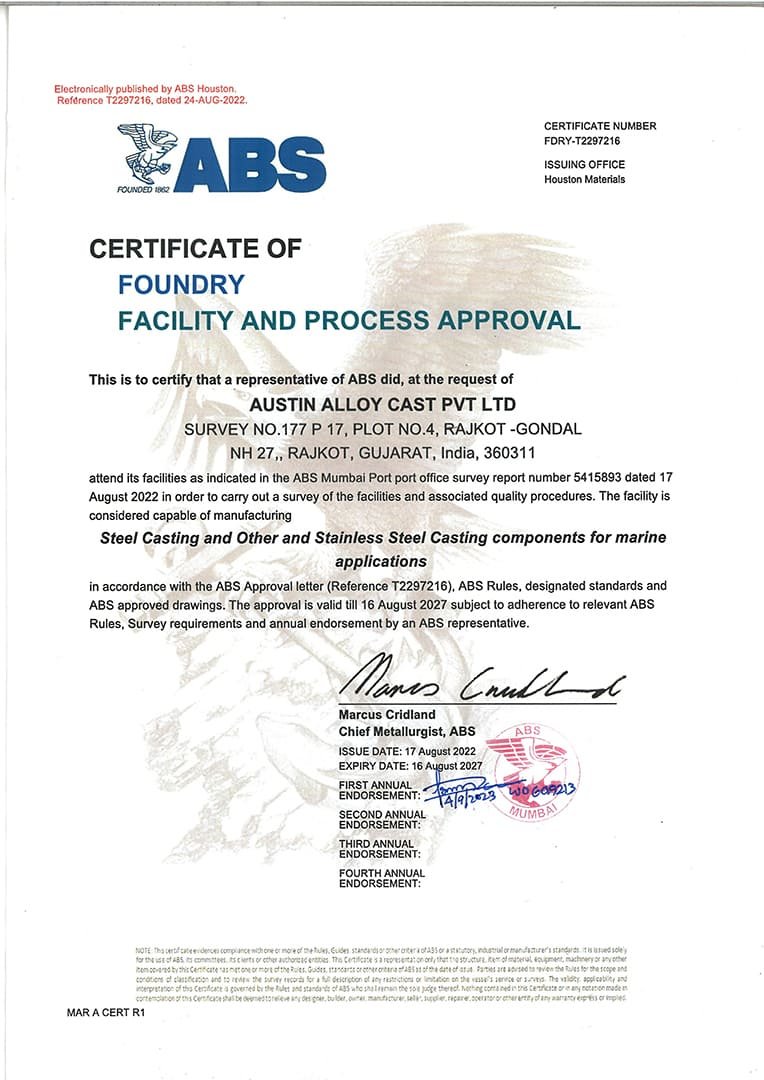
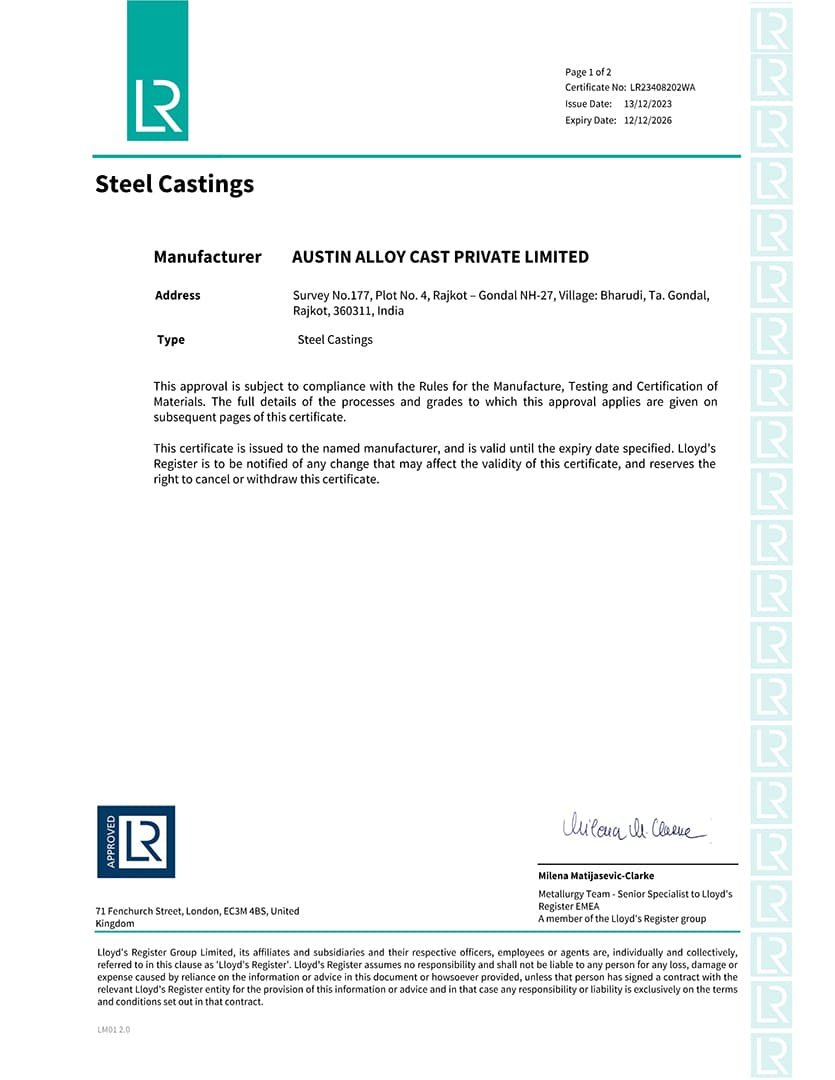
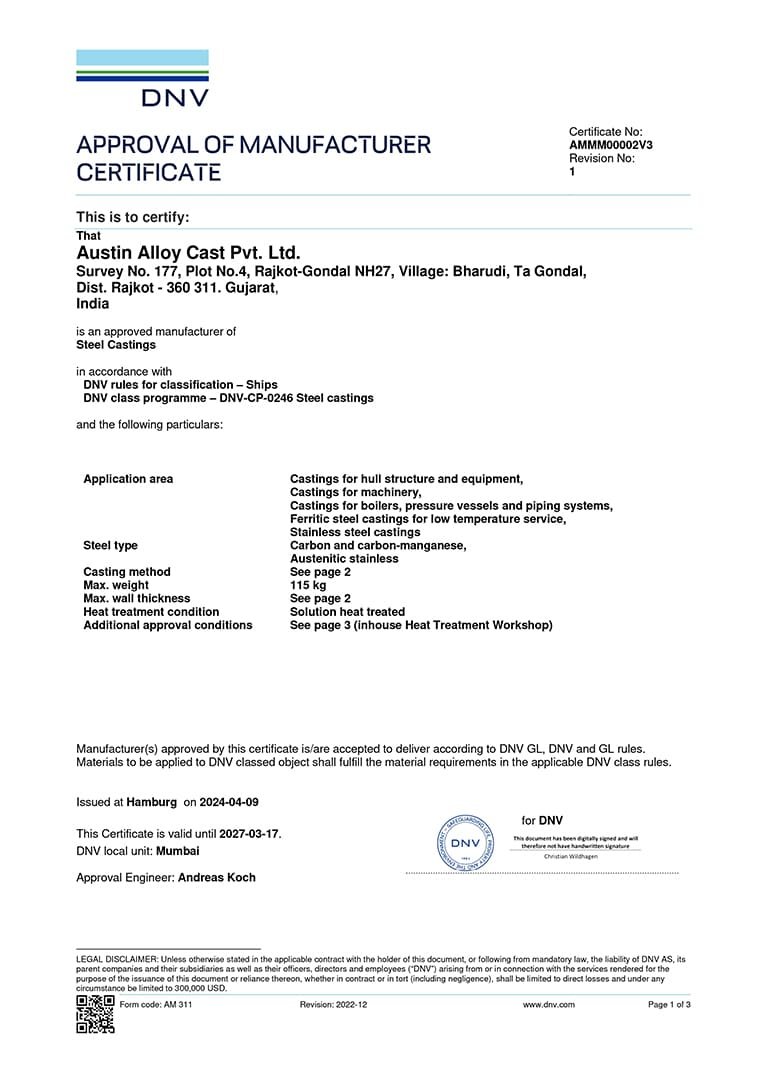
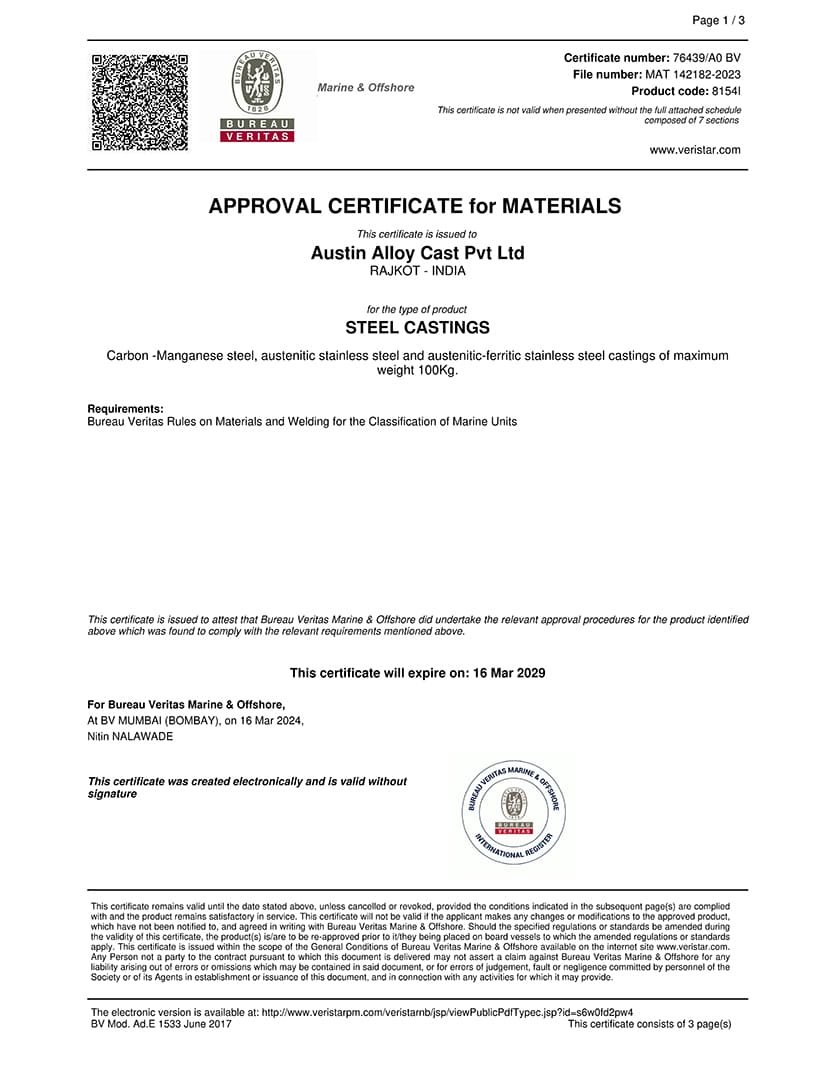
Marine classification society approvals from Lloyd’s Register, DNV-GL, Bureau Veritas, and/or ABS will of course be valuable if you are working for marine related companies as they show that the cast parts can hold up to extreme saltwater environment, extreme corrosion and tough marine application areas. Marine certifications illustrate that foundries such as Austin Alloy Cast is a recognized supplier to the international market naval defence programs, and offshore oil and gas design and manufacturers.

Advantages of Certifications for International Customers

International customers purchasing castings, do not obtain certifications simply for the piece of paper. Rather, the value of a certification is a trust guarantee, and includes the following benefits:

  • Quality consistency: International customers are aware that the quality of each delivery will have the same specifications as all prior deliveries.
  • Lower inspection costs: International customers will spend less money on third party inspection of certified suppliers.
  • Safety commitment: ISO 45001 certifications are in some instances the assurance that the customer can contract a supply chain with a smaller risk of incident, fall back or lapse in safety commitment.
  • Sustainability: adoption of ISO 14001 environmental management certificates allows for international customers to integrate sustainability in purchasing responsibly sourced integrative.

Consistent Quality and Safety Management.

If anything is unacceptable to the worldwide marketplace, it is failure or defects. One casting defect can mean downtime or accidents and lead to losses in the millions. Certifications require:

  • Process discipline: Consistent process discipline means complying with standard operating procedures. In a certified foundry, the process will be followed to ensure the least amount of variability.
  • Traceability: Each casting can be traced by the batch of its material and the process parameters used.
  • Testing protocols: Certified foundries have financial obligations associated with NDT Non Destructive Testing, radiography, and destructive testing to prove integrity.
  • Continuous improvement: A recommended standard requires audits or assessments to ensure follow up on corrective action plans where a root cause issue is identified.

The Importance of Certifications in Building Global Trust

Trust is the currency of global trade. When a Middle Eastern oil major or a European automobile giant enters into a partnership with an Indian foundry or any other entity, certifications are the basis for trust. They signal:

  • Reliability: The foundry can deliver its products in accordance with the international interest standards.
  • Transparency: The procedures are verifiable and have clear documentation.
  • Commitment: The foundry is demonstrating a commitment to longstanding international partnerships.

Indian Foundries Meeting International Standards

In the past 20 years, Indian foundries have accepted and adopted world class certifications and have begun to compete head to head with foundries in Europe, China and the US. This transformation includes:

  • Our ISO 9001 scope includes the in house Machine Shop as well alongside the foundry infrastructure. This means that quality is maintained not only at the time of casting, but also at the time of machining, finishing, and inspection after casting.
  • Upgraded facilities: CNC machining, automated molding, in house testing.
  • Investment in sustainability: ISO 14001 helps an organization nurture the environment while also noticing its green minded customers.
  • An established safety culture among employees: ISO 45001 allows for worry free safety even in a historically hazardous workplace.
  • Industry based certifications API oil & gas, IATF automotive, AS9100 aerospace.

Conclusion

In the fast paced world of International Exporting of castings, certifications are the silent facilitators of success. Certifications provide assurance to buyers in terms of quality and safety, as well as help exporters create new markets with sustainable trust. Whether it be ISO 9001, ISO 45001, ASTM, or API; the world class manufacturers of castings have all set their goals in advancing along these standards and achieving certifications.

For Austin Alloy Cast, certifications are not merely a thing to check off, it is a representation of excellence, a pursuit of sustainability, and a commitment to their customers’ trust and assurance. As Indian foundries begin to follow global standards to obtain certifications, they are not merely exporting castings; they’re exporting trust, confidence, reliability, and world class manufacturing.

Top Cast Parts Used in Crushers, Pumps, and Conveyors in the Mining Industry

When it comes to equipment performance and component longevity, mining is one of the most demanding industries. There is heavy reliance on cast components for mining processes, from crushing the rock to transporting the ore with pumps and conveyors. Mining cast components inherently need to endure challenging conditions. Austin Alloy Cast is a specialist in the mining cast component industry and we deliver durability, accuracy and strength through designs developed to handle today’s mining challenges.

Difficult Conditions in Mining

The exacting environment of mining operations presents one of the most extreme environments for operating machinery and equipment with regards to the tolerances that equipment must endure. In addition to wear and tear on the castings, mining operations are also subject to a high degree of:

• Abrasive rock and mineral handling resulting in continual wear.
• Heavy impact during both crushing and grinding of ore.
• Corrosive environment from chemical exposure, water, and changing mineral characteristics.
• Persistently high loading, where production time is lost due to downtime.

To tackle these situations, castings and consumables must be both very precise and extremely durable. High quality cast components utilized in the mining industry is a vital aspect of sustaining profitable labour 24/7, minimizing maintenance impacts, and extending the sterilization of critical machines.

Heavy Duty Equipment Requiring Cast Components

Crushers, pumps, and conveyors used in mining equipment cannot function without heavy duty castings. Each of these units depends significantly on specialized parts:

Crushers: Need wear resisting liners, hammers, and housings.
Pumps: Rely on heavy impellers, casings, and bearing supports.
Conveyors: Utilize heavy rollers, pulley housings, and support brackets.
These high stress applications necessitate the need to invest in trustworthy crusher casting parts and pump & conveyor castings that ensure prolonged performance. Austin Alloy Cast has come up with solutions that meet these high stress environments, and our customers in the mining sector can rely on their equipment for consistent performance.

Examples of Cast Parts Utilized in Mining

Among the most important components of mining casts are:
Hammers & Crusher Liners: Key to crushing ore into smaller fragments. Alloy steel castings ensure they can resist high impact and abrasive forces.
Pump Housings & Impellers: Constructed to pump slurries, water, and chemicals with efficiency without quick wear and tear.
Conveyor Components: Including rollers, pulley housings, and brackets that are utilized for long distance ore transport.
All these cast components are specifically designed to be equal to the performance requirements of the mining industry. With crusher castings constructed for resistance to impact and pump & conveyor castings designed for wear resilience, Austin promotes optimal performance in all mining applications.

Alloy steel castings’ advantages in mining

When performing cast mining parts, material selection is essential. Alloy steel castings are popular in mining, because they offer a unique balance of strength, hardness and toughness. Alloy steels can be accurately designed with specific chemical compositions to be resistant to: impact, wear and corrosion compared to normal materials. As a result, they offer the best performing materials for all cast parts of conveyor systems, slurry pumps, and crushers.

Another major benefit of alloy steel castings is the versatility. There are several grades of alloy steel depending on operational needs grades of alloy steel can be utilized when high hardness is required, grades of alloy steel with increased ductility can be utilized, or grades of alloy steel that are heat resistant can be used. As an example, “high manganese” steel castings are utilized in crushers for frequent impact loading, “chromium alloyed” steels are selected for pump castings because of their good erosion and corrosion resistance.

Durability and Wear Resistance: The Most Important Requirements

Mining operators understand that downtime is costly. A lost hour of production can equal thousands, at times millions, in lost revenues. Because of this, mining cast parts need to have top priority for durability and wear resistance above all else.

Wear resistance allows crushers to continue crushing rocks without constant liner and hammer replacement. Durability allows pumps to transport abrasive slurries for extended cycles without erosion. And strength allows conveyors to run continuously without roller or housing failure. At Austin Alloy Cast, we engineer our castings with sophisticated metallurgical methods, precise control, and rigorous quality control to ensure that our parts prolong equipment life and minimize downtime for our customers.

The Rising Worldwide Demand for Cast Mining Parts

While worldwide demand for natural resources, metals, and minerals is on the increase, mining operations are expanding on a scale never seen before. Rising demand in developing economies for iron ore, copper, coal, rare earth minerals, and other minerals of strategic importance is driving demand upward. That increased mining activity leads, in turn, to an equally high level of demand for reliable machines and tough cast parts for mining industry.
With an increase in mines being opened in remote and unfriendly territories, the part played by trustworthy castings is more crucial than ever before. Equipment breakdowns in these areas are more challenging to repair due to poor accessibility, and therefore, it is imperative to utilize crusher casting parts, slurry pump castings, and pump & conveyor castings that are engineered for durability. Producers such as Austin Alloy Cast lead this demand, providing castings which not only conform to international specifications but also provide improved reliability in some of the worst mining conditions on the planet.

Conclusion

The mining industry depends on durability, efficiency, and continuous operation and all of those factors greatly depend on quality castings. There are crushers which require hammers, liners, and jaw plates, and pumps that depend on strong impellers and casings to keep operation constant, and there are conveyors that push mountains of material every day. Mining cast parts are the silent foundation of the industry, operating behind the scenes. Alloy steel castings provide an unparalleled combination of strength, wear protection and corrosion resistance, and that is why it is the best material for this industry.

At Austin Alloy Cast, we are proud to be able to support the mining industry with superior quality crusher cast parts, performance precision pump & conveyor castings, and other parts that help to extend life of machinery and minimize downtime. With the ever increasing demand of mining in the world today, we are committed to quality and innovation that will ensure our continued reliability for mining operations around the globe.

Sustainability in Foundries: Austin Alloy Cast’s Approach to Eco-Friendly Manufacturing

The global manufacturing landscape has an unparalleled challenge to find equitable solutions for high rates of industrial growth and providing an operating environment that respects the planet. The foundry industry is the most challenging. Austin Alloy Cast, as a  Sustainable casting manufacturer, understands that environmental responsibility and manufacturing excellence are not mutually exclusive disciplines, but they are a supported basis for long term success. Our holistic approach to sustainable manufacturing includes adopting renewable energy, minimizing waste, conserving resources, and optimizing manufacturing processes. All the while, Austin Alloy Cast provides a manufacturing model that complies with global sustainability agenda while providing the quality and economic competitiveness the customer expects.

The global manufacturing industry is going through a major transition in the pursuit of sustainability, as applied and measured to productivity and cost. Foundries, among the heaviest consumers of energy, are now evaluating their energy use for its effect on sustainability. In India, advanced thinking manufacturers are reimagining the way castings are produced, creating a benchmark for responsible production globally. Austin Alloy Cast is one company from India that has emerged as an example of foundry innovation, quality, and sustainability.

The sustainability journey of Austin Alloy Cast reflects our understanding that environmental leadership generates competitive differentiation in operational efficiencies, expense savings, customer value, and employee buy in. Our holistic approach considers every operational aspect of our business, from energy source and usage, waste management, and water consumption, allowing us to create a full sustainability program with tangible environmental and economic benefits.

Why Sustainability Matters in Foundries

Casting processes investment and sand casting can consume vast amounts of energy, use and waste raw materials, and cause harm to the environment. Casting processes must be managed carefully to avoid the following negative environmental impacts:

  • Greenhouse gas emissions from melting and pouring operations.
  • Water pollution from slurry and shell disposal.
  • Energy, consumed by inefficient furnaces.
  • Excessive use and depletion of raw materials.

Structural adjustment is affecting global customers who now must have green manufacturing partners who provide not only precision and dependability, but can also provide documentation toward acquiescence of International eco standards. Sustainability in foundries is now a business requirement, instead of an option.

For European countries, compliance with the EU’s Carbon Border Adjustment Mechanism (CBAM) has become a significant requirement for exporters. CBAM compliance will require exporters to demonstrate that their manufacturing practices are derived from sustainable, low emission processes to avoid incurring carbon related tariffs when exporting to Europe. By embracing sustainable practices, Austin Alloy Cast helps to ensure that it is compliant with international trade obligations and reinforce its export position in Europe

Eco-Friendly Casting Practices

Austin Alloy Cast’s Environmental Management System (EMS) is ISO 14001 certified foundry providing the systematic framework for continual environmental performance improvement, compliance with regulatory requirements, and achievement of sustainability objectives and goals. This form of internationally recognized certification provides concrete evidence of our commitment to environmental performance enhancement while conveying a sense of assurance to customers that their supply chain partners share their sustainability objectives and values.

Austin Alloy Cast has recognized that foundries’ future lies in sustainability. Austin Alloy Casts has overtaken its environmental impact significantly through modern, sustainable processes and practices, while delivering superior castings to various industries.

Sustainability relates to more than just what is best for the environment; it pertains to the employee and their welfare, as well as ensuring workplace safety. As an ISO 45001 certified organization, Austin Alloy Cast is committed to providing a safe and healthy workplace, which exemplifies their commitment to sustainability. ISO 45001 certified organizations uphold global occupational health and safety standards, reducing their risk in the workplace and enhancing employee health and welfare.

Energy Efficient Melting Systems

In foundries, melting furnaces are the main energy consuming equipment. Austin has invested in new induction furnaces with high energy efficiency, accurate temperature control and minimal heat loss. This lowered electricity consumption and led to a consistent metallurgical quality.

1. Recycling and reuse of materials

The foundry has a rigorous recycling policy that involves reheating and reusing risers, gating systems, and metal scrap. This lowers both the raw material costs as well as the waste it generates. Shell materials and sand used in investment casting are also reused and reclaimed when possible which minimizes landfill usage.

2. Water Conservation Practices

In casting processes, water is essential, especially for cooling and shell construction.  Austin has implemented closed loop water systems and water treatment units, minimizing waste and protecting natural resource contamination.

3. Cleaner Air, Decrease Emissions

To deal with the air quality issue, Austin has installed fume extraction systems and air filtration units at its production facilities. By capturing dust, soot, and harmful gases, these systems safeguard both the workers and the emissions in the atmosphere.

4. Green Energy Initiatives

A number of trend setting foundries are now looking at incorporating and using renewable energy into their operations. To lessen its dependency on non renewable energy, Austin has begun utilizing energy tracking devices and solar energy.

Austin’s 1.5 MW solar photovoltaic facility generates a substantial portion of electricity demand, thus avoiding additional reliance in traditional energy. The energy efficiency measures also incorporated energy efficient lighting systems, smart monitoring devices, and better optimized furnace scheduling to further reduce energy intensity.

5. Sustainable Packaging and Logistics

Being sustainable isn’t just about how we manufacture it also is how we deliver. Austin is committed to eco friendly packaging materials as well as planning efficient logistics with as little wastage as possible while sending out products, so that we can be as sustainble as we can in the supply chain.

Quality and Sustainability Go Hand in Hand

Even more important than it being sustainable is that it is always quality. Austin employs rigorous destructive and non destructive testing on all castings to ensure components meet global standards for precision and performance. By blending process controls and eco-friendly manufacturing practices, the company is able to provide their clients assurance that they are receiving defect free castings that are sustainable and durable.

In today’s global economy, companies sourcing castings are beginning to place an increasing value on manufacturers who can prove responsible production. Austin’s sustainability action plans match to international standards and create an opportunity to enhance Austin’s competitive advantage in markets such as North America, Europe and the Middle East. By positioning Austin as an environmentally responsible foundry, this will not only result in winning work, but it will also create long standing trust with international partners.

Conclusion: Leading Sustainable Manufacturing

Austin Alloy Cast’s holistic approach to sustainability exemplifies how environmental stewardship and quality manufacturing create synergistic value for customers, employees, communities, and the environment. Our comprehensive sustainability programs incorporate all elements of our business while delivering measurable benefits towards environmental stewardship and business performance.

As a sustainability leader, Austin Alloy Cast is well positioned as a preferred partner for clients who appreciate suppliers with like minded environmental values and sustainability goals. The measurable environmental benefits of our sustainability programs allow customers to leverage evidence to support their own efforts for sustainability reporting and demonstrate tangible examples of environmental responsibility in their manufacturing operations.

The achievements of our sustainability initiatives offer a roadmap for transformation within industry showing the practical implications of being environmentally responsible while being largely competitive. Our commitment to sustainability leadership means Austin Alloy Cast will continue towards environmental performance while generating value for the benefit of all stakeholders in the global manufacturing ecosystem.

The movement to improve sustainability in foundries is still maturing, yet some leaders, such as Austin Alloy Cast Pvt. Ltd., have already begun the journey forward. With the expanding use of automation, circular practices for managing waste, and added renewable and regenerative energy, the future of casting in India is looking much greener.

The Importance of Non-Destructive Testing in Investment Castings

Quality and consistency are essential in investment casting since precision parts are utilized in high stakes applications across aerospace, defense, automotive, oil & gas, marine, and heavy engineering. A mishap with a casting, regardless of how minor, can result in significant downtime, dangerous risks, and system failure. Because of this, non-destructive testing (NDT) has been embraced by quality control processes in foundries such as Austin Alloy Cast.

Unlike destructive testing, that damages and destroys the sample in question to test its material properties, NDT allows the manufacturer to test the integrity of castings without any level of destruction. NDT offers the opportunity to assess quality, not only providing monetary savings but also ensuring that all components shipped can be guaranteed to meet the same performance standards.

Examples include turbine blades, pump parts, and medical implants. Investment castings have complex designs, thin sections, and close tolerances, all of which can sometimes lead to hidden defects such as porosity, shrinkage, inclusions, and cracks and lack to fusion. Detection of defects early using NDT for casting ensures that only clean castings go to the customer, and ultimately saves time, money, and reputation in the future.

Common Non Destructive Testing Methods in Investment Casting

Austin Alloy Cast employs a variety of cutting-edge non-destructive testing for Investment Casting :

  • Radiographic testing (RT), also referred to as X-ray testing, provides a trustworthy image of the casting’s internal structure and can reveal whether there are any inclusions, shrinkage cavities, or There is hidden porosity in the casting that is not visible from the outside.
  • Ultrasonic Testing (UT): This technique identifies major flaws in crucial aerospace and defense castings where greater integrity is needed by using high frequency sound waves to find subsurface discontinuities.
  • Magnetic Particle Inspection (MPI) is an NDT technique that finds surface and penetrating flaws in ferrous materials. During MPI, cracks and other discontinuities will be detected using magnetic fields and iron particles.
  • Dye Penetrant Inspection (DPI): A liquid penetrant agent is used to disclose defects and is utilized to identify surface-breaking defects.

The distinctions between bonded and non bonded areas appear visually different when viewed in UV or regular light.

Visual and Dimensional Inspections: Although these inspections are very basic, they are crucial for identifying overall casting accuracy because components are assessed in accordance with drawing specifications prior to the application of complex testing procedures.

With the greatest reliance on guarantees of the dependability of every investment casting, Austin is guaranteeing a multifaceted quality assurance program.

Advantages of NDT in Investment Castings

Non Destructive Testing brings many benefits to the investment casting process:

  • Assurance of Safety and Reliability – NDT assures total safety for industries such as aerospace and transportation, where the products can not fail.
  • Cost Effectiveness – Early detection of defects means we avoid cost for rework, materials lost as waste, and no field failures costs.
  • Builds Customer Confidence – When Austin provides castings that have been accurately tested, customers place their trust in Austin for long-term relationships.
  • Compliance with Industry Standards – NDT is one tool to help comply with stringent industry certifications associated with global markets.
  • Better Production Efficiency – by applying credible testing techniques, defected parts may be sorted out, prior to final machining and assembly.

Quality at Austin Alloy Cast is not a promise, it is a way of life. Our casting plant brings to bear the most modern principles of Non Destructive Testing at every stage of production. From sampling with free radiography to extensive inspections, we address process control and defect free casting at every level. This commitment to NDT allows us to not only deliver precision engineered castings, but also reinforce the vision of providing trusted componentry for global industry.

Through investment in state of the art testing equipment, highly skilled inspectors, and ongoing training, Austin has established itself as a reliable leader in the investment casting industry. Our capability to deliver fully machined, flawless castings of international standards is an indicator of the robustness of our NDT based quality assurance system.

Conclusion

In today’s competitive manufacturing environment, the importance of precision, reliability and safety constantly drives Non Destructive Testing in investment castings. Austin Alloy Cast is again leading the way, this time by bringing together NDT technologies with the best foundry expertise. Austin and its customers can now rely on defect-free, high-performance castings and Austin is a trusted friend to industries around the world.

How Indian Investment Casting Manufacturers Are Adopting Advanced Technologies

The Indian investment casting sector is at the forefront of a technological revolution that could change the landscape of manufacturing excellence and global competitiveness. As the second largest producer of casting in the world, with more than 12 million tonnes of casting produced every year, the foundry sector is committed to embracing Industry 4.0 technologies, automation, and digital transformation initiatives that have positioned India as a leader in advanced manufacturing. This transformation is not just the installation of the latest equipment on the shop floor, but rather a complete reimagining of how precision casting operations leverage technology, data, and human experience to attain previously unattainable levels of effectiveness, quality, and customer value.

The manufacturing situation around the world is shifting at a rapid pace, and Indian investment casting manufacturers are no different. With a growing world wide demand for precision engineered components, Indian foundries and their management have been compelled to invest in new technology and innovations to keep pace with the market. The investment casting industry in India has evolved from conventional setups, to highly automated, digitally enabled companies, with capabilities to produce world class castings. Organizations like Austin Alloy Cast Pvt. Ltd. have helped raise the bar of quality, innovation and technological adoption.

Over the last two decades, the Indian Manufacturing sector has undergone an unmatched transformation. Investment casting, a craft formerly called the lost wax process, has risen up as one of the most innovative and competitive sectors. Investment casting has been the backbone of precision component production, serving high value industries such as automotive, aerospace, oil & gas, defense, and heavy machinery. Today, Indian investment casting manufacturers are not only matching global demand; they are surpassing the level of innovation and competitiveness demonstrated in world markets by continuously fostering advanced technologies engaged in production systems.

The convergence of artificial intelligence, the Internet of Things (IoT), robotics, and advanced materials science brings possibilities of accuracy, consistency and innovation that were unfathomable only 10 years ago. There are companies across India’s foundry clusters from Rajkot and Coimbatore to Pune and Chennai, that are making huge investments into these technologies because their customers ask for it and they face competitive pressure, while they realize that technological leadership equates to success in the market.

3D Printing and Rapid Prototyping: The Game Changers

3D printing wax patterns is one of the most significant advancements in investment casting. Manufacturers now have the ability to create complex patterns entirely through 3D printing rather than wax injection dies. This has decreased tooling expenses significantly, decreased lead time from weeks to days, and increased development iterations.

Foundries in India have adopted 3D printing and are seeing the benefits of shorter lead times, increased design flexibility, and the flexibility to serve clients with low volume specialized work, which is often a requirement internationally. Austin and other leading edge casting producers are also using 3D printing service providers to prototype components for assurance as well as for the final production of complex parts where tooling costs would not be justified.

Simulation and Digital Twin Technology

With modern casting simulation software, foundries can develop a digital twin of the entire casting process. This means metallurgists can predict filling sequences, cooling and solidification rates, and even the locations of potential hot spots within the casting using sophisticated simulation software. For industries where zero defect casting is paramount defense, medical device development, or aerospace the predictability from this modeling provides confidence and trust in Indian suppliers.

Digital twin technology develops digital twins that represent a physical foundry’s operations, which can be visualized, simulated, optimized, or analyzed without impacting the live production process. These digital representations combine real time data from the state of operations with computational models to project performance, simulate scenarios, and optimize operations. Foundries can use digital twins to assess new products, optimize layouts, and train operators without impacting the production process or wasting materials.

Companies like Austin are embracing digital tools like inspection methods in order to guarantee defect free castings, right from the sampling stage, as an example. Austin even offers free radiography testing for all castings in sampling to validate the results of the simulation as well as the simulation accuracy; offering even more trust to customers around the globe.

Automation and Robotics in Foundries

Another milestone in India’s investment casting makers are the use of robotic shell making lines and automated pouring systems. Robotic arms are now replacing the manual dipping and coating and offer not only consistency and uniform layer thickness but also replicability. Automated pouring systems can be controlled with temperature sensors implementing precision control that improves the metallurgical quality.

The use of robotics in Indian investment casting operations advances precision, consistency, and safety and solves existing problems while also creating new opportunities. Robotic applications cover the entire casting process, from pattern handling and mold coating to finishing operations and quality inspection, and offer advantages that go far beyond just replacing labor.

These advancements eliminate or lessen the dependency on manual labor make it also solving the issues with high temperatures when pouring metal. Austin says that automation while allowing a company to scale productions, importantly, and not lose their ability to comply with international standards.

Sustainable and Eco Friendly Practices

Technology adoption in Indian investment casting is not only about efficiency; it’s about sustainability as well. Foundries are implementing energy efficient induction furnaces, recyclable shell materials, and water treatment systems to help reduce their impact on the environment. Suppliers are enhancing their products and aligning with international environmental standards, especially as global customers move to products made using green manufacturing processes.

Integrating renewable energy, part of which includes solar energy, wind energy, and energy storage systems, not only reduces carbon footprints, but offers long term cost advantages. Austin Alloy Cast has realized noteworthy potential savings through utilizing solar power for 50 60% of its production, and, in doing so, demonstrates the real world advantages of adopting renewable energy. All of these investments are putting stable energy costs into place, while allowing for corporate sustainability initiatives and meeting customer environmental requests.

Austin Alloy Cast Pvt. Ltd. has made improvements in its various processes that minimizes waste, optimize energy use, and carry out operations to meet the environmental obligations and requirements in the modern global marketplace. This focus allows Austin to compete with global suppliers, where complying with environmental standards can be as important as the cost and quality of a product.

Conclusion: Leading the Global Transformation

The investment casting manufacturers in India were able to land from a low cost supplier to a precision partner on the world stage with advanced technology. After performing Industry 4.0 practices, processes using automation, 3D printed technology, and supporting simulations in casting process control, Indian foundries now have the ability to compete with the best in the world.

Buyers would benefit aligning with quality, defect free castings with manufacturers like Austin Alloy Cast Pvt.Ltd as a partner. Austin consistently produces casting projects with accuracy and dependability for long term performance by fusing traditional casting techniques with modern innovation.

The Science behind Defect-Free Castings: How We Ensure Quality Every Time

Precision and reliability are paramount in modern engineering. Regardless of whether it is defect free castings for critical components in the oil & gas industry, heavy equipment, or marine applications, the need for defect free castings has never been more important.

At Austin Alloy Cast Pvt. Ltd. we are proud to produce castings with a constant emphasis on excellence, while meeting and exceeding global quality standards. We use a scientific approach to casting production and we assure you that every component is not manufactured but instead engineered for precision and reliability.

To achieve defect free internal and external castings we offer extensive in house destructive and non destructive testing (NDT) methods, all of which provide comprehensive information about the structural integrity of every casting prior to the next operation.

  • Destructive Testing – We can determine an in depth understanding of material performance by examining tensile strength, impact resistance, hardness, and microstructure while also confirming the metallurgical soundness of each batch.
  • Non Destructive Testing (NDT) – non destructive testing in castings is any tester like ultrasonic, dye penetrant, magnetic particle inspection, etc. are used to find surface or subsurface discontinuities without damaging the part.
  • Free Radiography Testing at Sampling – To improve our confidence in our process, Austin also provides radiographic inspection at the sampling phase, free of charge. Thus, satisfactory internal soundness is confirmed before commencing full production runs.
Process Control at Every Stage

Defect free castings are not a coincidence but a matter of proper process control at each step in the process. Every stage, from the purchase of raw materials to the ultimate delivery, is handled efficiently.

  • Pattern and Wax Model Control: The first thing we control it is essential to produce wax models that are dimensionally correct and defect free to be able to even begin the casting process.
  • Shell Building and Mold Control: The quality of ceramic shells is checked for any cracks or weakness as we use melted metal.
  • Melting and Pouring Control: Metallurgical controls continue with pouring, we continually check controls such as accuracy of temperature and alloys in each pour. No tolerance for heat inclusions, shrinkage or porosity.
  • Solidification Control: Finally we keep the properties of the casting on track by monitoring the cooling rates and feeding systems also using scientific method principles. Attaining uniform results means controlling internal stresses.

Ultimately, with all of these checks put in place, every casting moves on it only when it has passed through critical check points with strict parameters. This is what assures they each consistently accurate, reliable and repeatable changed remains in this area.

Fully Machined Supply

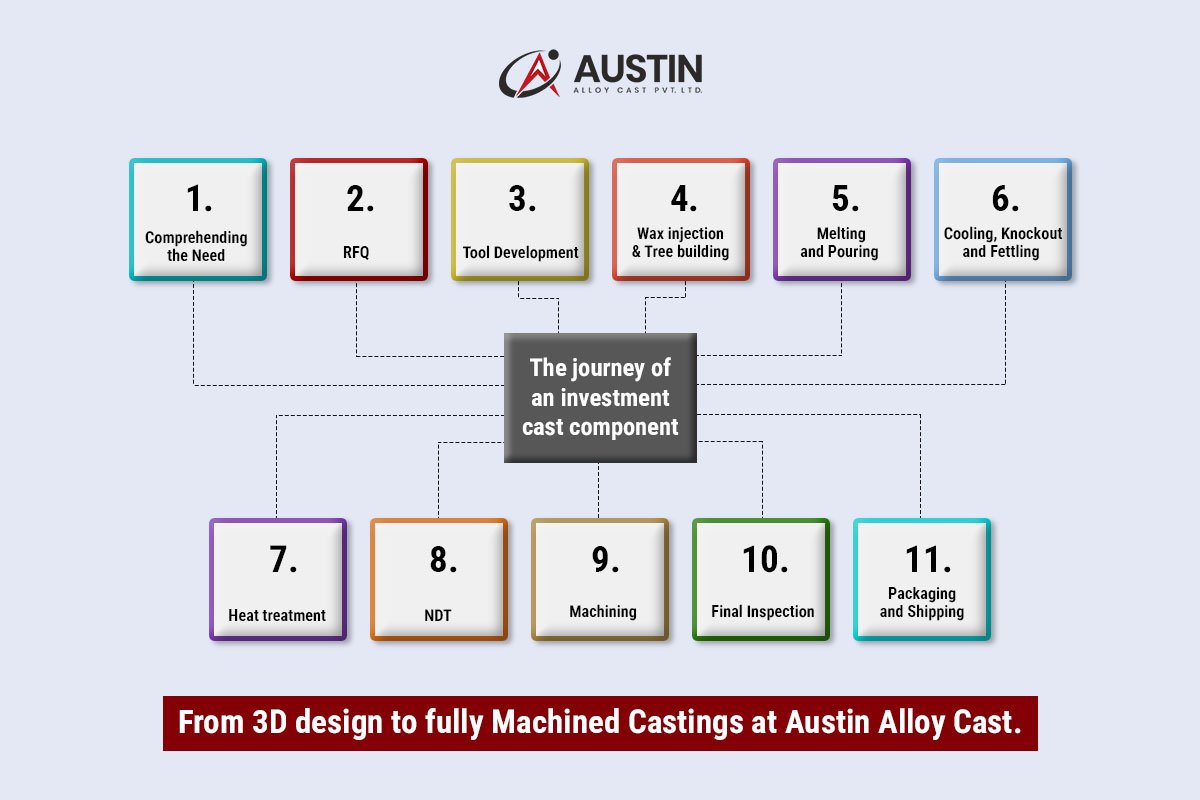
A significant number of customers require not just near net shape castings but fully prepared for direct use. To meet that requirement, we provide fully machined supply; we provide parts that have been machined using the precision of CNC machining to exact tolerances.

This eliminates the customer’s need to outsource additional post process which will save both time and cost. Fully machined, castings go through final inspection to ensure dimensional accuracy, surface finish, and ability to assemble. This approach ensures that potential errors during the third party process are avoided, delivering exact components and enabling the delivery of ready to fit components.

Consistency distinguishes true defect free castings from a single perfect part. A part that is flawless on its own is not enough industries such as defense, marine, automotive, and oil and gas require repeatability in large quantities. With the combination of advanced testing, rigid process controls, and precision machining, we provide the same exceptional quality, consistently.

Conclusion

Defect free castings are a result of science, discipline, and dedication to detail. With robust testing facilities, radiography support, strict process control, and fully machined supply, Austin Alloy Cast Pvt. Ltd. has earned its reputation for components that perform under the most rigorous conditions.

When quality cannot be compromised, the science behind our castings ensures that every product stands as a guarantee of strength, precision, and trust.

High-Quality, Cost-Effective Steel Casting Solutions from Austin Alloy Cast: Proudly Made in India, Delivered Globally

In today’s competitive global manufacturing landscape, Austin Alloy Cast stands as India’s premier steel casting manufacturer, delivering high quality, cost effective solutions that meet the most demanding international standards. Our transformation from a local foundry to a globally recognized partner exemplifiesIndia’s emergence as a manufacturing powerhouse, where traditional craftsmanship meets cutting edge technology to serve customers across continents.

The Growing Global Steel Casting Market

The global steel casting market, exceeding $33billion annually and growing at a 5.6% CAGR, demands that suppliers navigate intricate technical requirements while maintaining rigorous quality and cost standards. Austin Alloy Cast meets this challenge by leveraging India’s manufacturing advantages, skilled workforce, state-of-the-art technology and operational efficiency to deliver casting solutions that set new benchmarks for performance, reliability, and affordability. India is a shining star on the Global map. Austin Alloy Cast remains at the forefront of the Indian Investment Casting Industry. Here are few reasons why:

Dual Process Expertise: Sand Casting & Investment Casting

Austin Alloy Cast, as part of a diversified group, delivers comprehensive manufacturing solutions across sand casting, investment casting, machining, seamless rolled rings, and aluminum investment casting. Being part of this larger ecosystem enables us to combine specialized expertise with group-wide resources, ensuring tailored strategies for every customer requirement with superior flexibility, cost optimization, and engineering insight.

EMPORIA GROUP METAL PROCESSING DIVISION
  • Investment Casting: Using the lost wax process, we manufacture components with outstanding precision and surface finish quality. Our facility, one of the largest in India at 75,000sqft, supports production from prototype to large-scale quantities, with castings ranging from a few grams to 150kg.
  • Sand Casting: Ideal for larger, cost sensitive parts, our sand casting delivers robust mechanical properties and is especially competitive for heavy machinery, construction, and industrial system applications.
  • Machine components: Our flexibility to serve a wide range of industries by employing a variety of metalforming processes like shell mould casting, pressure die casting, closed die forging & bar stock.
  • Seamless Rolled Rings: Specialised in manufacturing of profilering forgings for automotive & non-automotive applications.
  • Aluminium Investment Casting: India’s only foundry exclusively serving the aerospace, defence, electronic, & metal applications. We are Nadcap accredited for multiple special processes & have the capabilities to manufacture investment casting of up to 25 kgs.

Austin Alloy Cast integrates these multiple casting and forging processes under one roof, creating unmatched value for customers. This synergy ensures the right balance of precision, performance, and cost-effectiveness, making us the trusted choice for industries worldwide.

Global Reach with Local Support

With a worldwide client base, Austin Alloy Cast is truly a global partner.

  • North American Support: Our dedicated warehouse in the US ensures rapid inventory access, faster lead times, and responsive local service.
  • Europe & Asia-Pacific: A strategic Singapore office and ongoing participation in key trade events strengthen our engagement with discerning European customers, while proximity to fast-growing Asia-Pacific markets drives logistical efficiency.
  • Trade Shows & Industry Leadership: Regular presence at major events ValveWorld, ACHEMA, CastForge keeps us at the forefront of industry developments.
  • We have a representative network across North America, Europe and APA regions.

Our strategic infrastructure, including warehouses and sales offices across key global regions, ensures proximity to customers with faster delivery, localized support, and responsive service. Strengthened by our EICF (European Investment Casters’ Federation) membership, which reflects our commitment to continuous technical advancement and adherence to global standards, we truly embody the motto ‘Truly Global, Yet Local.

Certified Quality: Industry Accreditation Excellence

Austin Alloy Cast is synonymous with quality assurance, evidenced by an extensive portfolio of globally recognized certifications:

  • ISO 9001:2015 – Robust quality management ensures consistent performance and customer satisfaction.
  • ISO 14001 – Environmental management certification, demonstrating our commitment to sustainable operations and minimizing environmental impact.
  • ISO 45001 – Occupational health & safety certification, ensuring safe working environments and proactive risk management.
  • PED 2014/68/EU & AD 2000 Merkblatt W0 – European compliance for pressure equipment and German pressure vessel standards, opening opportunities in chemical, power, and industrial sectors.
  • Marine & Offshore Approvals – DNV GL, Lloyd’s Register, Bureau Veritas, ABS approvals for demanding marine environments.
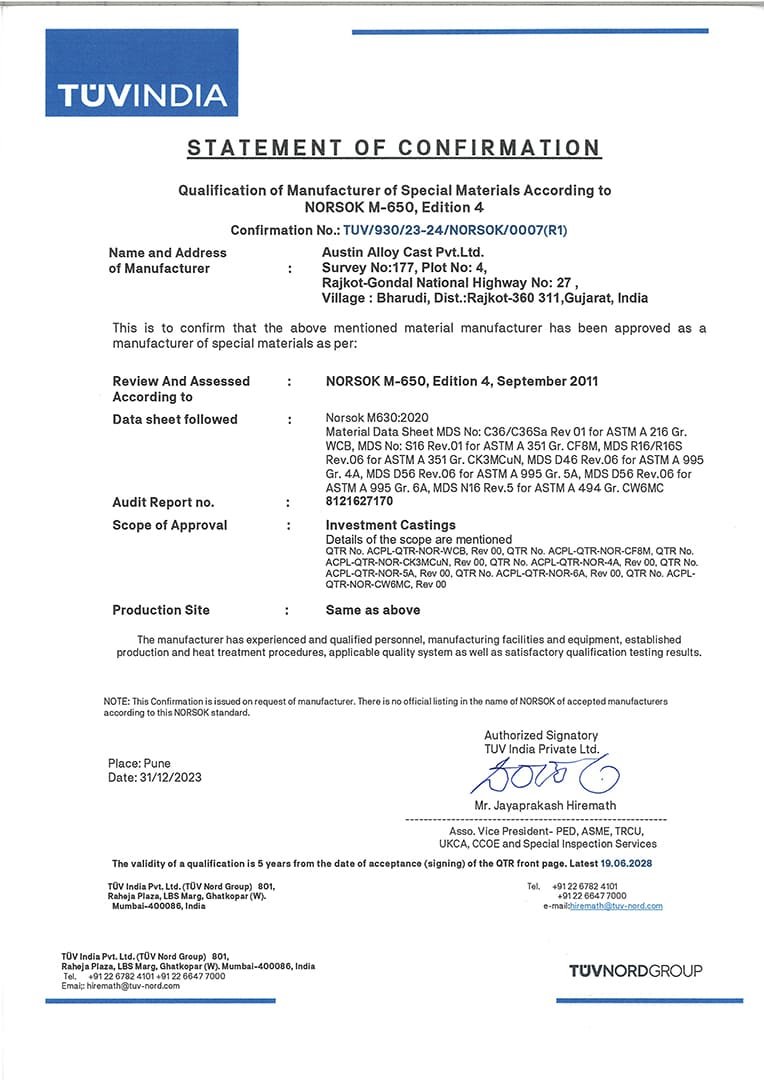
  • NORSOK M-650 – Special materials approval for offshore applications, validating expertise in high-performance alloys.
  • EU CBAM Compliance – Alignment with the European Union’s Carbon Border Adjustment Mechanism, reflecting our commitment to sustainable and responsible global trade practices.

In addition to these certifications, our foundry is audited and approved by global leaders including Siemens, Crane, Emerson, Valmet, and many more, further reinforcing our credibility as a trusted global partner.

Comprehensive In House Testing

Our modern laboratory guarantees end-to-end quality assurance:

  • Non-Destructive Testing (NDT): Radiographic, ultrasonic, magnetic particle, and dye penetrant methods.
  • Destructive Testing (DT): Tensile, impact, hardness assessments, and advanced chemical analysis.
  • Dimensional Inspection: CMM with high precision measurement (±0.005mm) for tight tolerances and intricate geometries.

These integrated capabilities ensure robust certification, complete traceability, and reduced lead times all managed in-house for optimal cost and reliability.

Integrated Machining Solutions

Our machining division, equipped with advanced CNC machines including vertical, horizontal, and turning centers, transforms raw castings into finished, ready-to-install components eliminating the need for multiple suppliers and ensuring total quality control. We operate machines from world class companies like Doosan, which enhances accuracy, streamlines logistics, and delivers consistent quality all backed by comprehensive engineering support.

Material Expertise: Alloys for Any Application

Austin Alloy Cast provides a complete spectrum of steel alloys:

  • Carbon Steel: From economical structural grades to high-carbon, wear-resistant variants.
  • Stainless Steel: Austenitic, martensitic, and PH grades for corrosion resistance and high-temperature performance.
  • Alloy, Duplex & Super Duplex Steel: Superior strength and corrosion resistance for challenging environments.
  • Tool, Nickel, and Cobalt Alloys: Meeting demanding aerospace, power generation, and chemical processing needs.

Our material recommendation and engineering consultation ensure clients always select the most suitable and cost-effective solution.

Conclusion

At Austin Alloy Cast, we go beyond manufacturing. We partner with customers throughout the product lifecycle. Our engineers provide design optimization, material selection, and process consultation to enhance performance and reduce the total cost of ownership. Backed by world class facilities, international certifications, and advanced testing capabilities, we deliver added value at every stage from technical support to quality system development. With diversified manufacturing expertise across investment casting, sand casting, seamless rolled rings, and machining, Austin Alloy Cast offers high-quality, cost-effective solutions tailored to global market needs.

Our philosophy of being “Proudly Made in India & Delivered Globally” reflects our commitment to combining India’s manufacturing advantages with international service standards. By continuously investing in capabilities, facilities, and people, we ensure our customers benefit from innovation, reliability, and long-term value. Austin Alloy Cast stands as the trusted global partner for steel casting excellence, setting the industry benchmark with unmatched quality, customer focus, and global reach. Contact us today to experience the difference of working with India’s leading steel casting manufacturer, proudly serving customers worldwide with innovation and integrity.

Common Alloys Used in Lost Wax Casting and Their Applications

Lost wax casting, or investment casting, is a precision manufacturing process used to produce finished metal components with complex details, precise tolerances, and high surface finishes. The second reason why this process is still being used so broadly across industries is due to its versatility with a vast range of metal alloys since each one is chosen based on the final application’s requirements.

In Austin Alloy Cast Pvt. Ltd., a reputed name in precision castings, the selection of the alloy is an essential aspect of engineering. Depending on the requirement of the end application, if corrosion resistance, high strength, or heat stability is required, Austin employs the requisite alloy to deliver maximum performance under real conditions. The following is a complete overview of most popular alloys used in lost wax casting and where each is best employed.

Nickel Based Alloy

Excellent resistance to heat, oxidation, and corrosion is a characteristic of alloys based on nickel. These qualities make them perfect for parts operating in harsh conditions, such as high temperatures, high pressures, and chemically reactive settings.

Applications include parts for power generation, gas turbines, valves, and chemical processing. At Austin, nickel-based alloys are frequently utilized for oil and gas industry components, especially in subsea and offshore machinery where failure is not an option. Long service life due to their durability reduces maintenance and expensive unscheduled downtime.

Stainless Steel Alloys

Stainless Steel Alloys Because of its strength, resistance to corrosion, and attractive surface finish, stainless steel is the most adaptable alloy for investment castings. Additionally, it comes in a variety of grades, such as duplex, martensitic, and austenitic, each of which was created for a particular performance application.

Austin Alloy Cast Pvt. Ltd. frequently chooses stainless steel castings for robotic systems, industrial automation, marine components, medical equipment, and food processing machines. The synergy of cleanliness, strength, and resistance to environmental conditions renders stainless steel a preferred alloy in performance and cleanliness requiring industries.

Carbon Steel Alloys

Compared to stainless or nickel alloys, carbon steel provides superior wear resistance and strength for a significantly lower cost. Carbon steel is typically used for structural parts, support brackets, gears, and other parts expected to receive high mechanical loads and abusive use.

In Austin style companies, carbon steel continues to be a material of preference for mining and earth moving machinery, and construction grade castings. Since carbon steel can be heat treated and made harder and stronger, Austin can supply parts that are durable and made for severe operating conditions such as impact and abrasive wear.

Applications Across Key Industries

Lost wax cast components made of these alloys find application in many industries:

Industrial Machinery & Robotics:

Precision and material behavior reproducibility is needed for materials like arms, joints, and bases. Alloys made of nickel and stainless steel offer equivalent strength and resistance to corrosion.

Oil and Gas Industry:

Nickel and duplex stainless steel valves, pumps, impellers, and flanges need to be exposed to harsh corrosive and high pressure environments.

Earth-Moving Equipment:

Carbon steel parts are a must in this use because of their resistance to impact and high load carrying capability. Investment casting offers accurate dimensional precision and replicability, which is critical in heavy equipment.

Each application demands a careful match between alloy properties and operational requirements. At Austin Alloy Cast, experienced engineers and metallurgists collaborate to ensure the best material is selected, leading to better performance, longer service life, and reduced total cost of ownership for clients.

Conclusion

Lost wax casting has a strong materials science foundation. From corrosion resistant stainless steels to ultra hard carbon steels and high performance nickel alloys, the metal selected directly affects the strength, life, and safety of the component.

Austin Alloy Cast Pvt. Ltd. is still a reliable partner to industries that need customized casting solutions. With the harmony of alloy expertise and the most advanced casting technology, Austin addresses the evolving demands of industries like oil & gas, automation, heavy machinery, and others, offering components that satisfy the highest standard of quality and performance demands.

Rajkot – An Ideal Hub for High-Quality Casting Manufacturers

The global casting industry has increasingly turned its attention to emerging manufacturing hubs that offer the perfect combination of technical expertise, cost efficiency, and strategic location advantages. Among India’s industrial centers, Rajkot in Gujarat has established itself as a premier destination for high quality casting operations, attracting international buyers seeking reliable manufacturing partners.

Strategic Geographic Advantages

Rajkot’s location in western India provides exceptional connectivity to major international markets. The city’s proximity to JNPT (Jawaharlal Nehru Port Trust) and Mundra port ensures efficient logistics for global exports. We use JNPT for LCL shipment & Mundra port for FCL shipment. Gujarat has the longest coastline, and as compared to China, we have lower lead time, which almost saves 2-3 weeks in transport. This geographic advantage translates to reduced transportation costs and faster delivery times for international clients, making it an economically viable choice for casting requirements.

The region benefits from robust infrastructure development, including dedicated freight corridors and improved connectivity to major industrial centers. For companies importing steel castings, this infrastructure advantage means predictable supply chains and reduced logistical complexities.

Deep-Rooted Industrial Expertise

What sets Rajkot apart is its decades-long heritage in metallurgy and precision manufacturing. The city has cultivated an ecosystem of skilled technicians, engineers, and metallurgical experts who understand the nuances of complex casting processes.

Austin Alloy Cast Pvt. Ltd., established in 2014, exemplifies this expertise. Operating one of India’s largest single-location investment-casting facilities, the company has built its operations on decades of accumulated metallurgical knowledge. Their facility demonstrates how Rajkot-based manufacturers can achieve world-class precision, producing components ranging from few grams to 200 kilograms per piece using advanced lost-wax processes.

In Rajkot, there’s a well-developed ecosystem for casting manufacturing, providing easy access to skilled employees, sources of quality raw materials, and reliable outside vendors for critical special processes such as testing, machining, and many others. This integrated support network empowers manufacturers to maintain high standards and efficiently meet diverse customer requirements.

Quality Standards That Meet Global Expectations

International buyers require more than just competitive pricing; they need assurance of consistent quality and compliance. Rajkot’s casting manufacturers have responded by adopting international certification standards and implementing rigorous quality control systems.

Austin Alloy Cast’s ISO 9001, NORSOK, and various marine approvals such as Lloyd’s Register (LR), Bureau Veritas (BV), DNV GL, and American Bureau of Shipping (ABS) represent the commitment of Rajkot based manufacturers to meet stringent international standards. These certifications are particularly crucial for sectors like oil & gas, food processing, marine, and critical engineering applications where component failure is not an option.

The company’s 75,000 square foot facility, capable of 1,800 MT annual production, showcases the scale and sophistication that Rajkot manufacturers can achieve while maintaining tight quality control standards.

Technical Consultation Capabilities

Modern casting partnerships extend beyond mere supply relationships. International buyers increasingly seek technical partners who can provide metallurgical consultation, alloy selection guidance, and process optimization recommendations.

Rajkot’s manufacturers have evolved to offer comprehensive technical support, helping clients optimize their designs for casting processes and even replace traditional fabrication, forging, or sand casting methods with more efficient investment casting solutions. This consultative approach adds significant value for international buyers looking to improve their product performance while reducing costs.

Sector-Specific Expertise

The diversity of industries served by Rajkot’s casting manufacturers demonstrates the versatility and depth of local expertise. From critical oil & gas components that must withstand extreme conditions to precision parts for food processing equipment that require strict hygiene standards, the city’s manufacturers have developed specialized knowledge across multiple sectors.

Austin Alloy Cast’s experience in oil & gas, food processing, earth moving equipment, and precision engineering illustrates how Rajkot based companies have built domain expertise that matches international requirements. This sector specific knowledge enables them to understand unique material requirements, testing protocols, and application-specific challenges

Global Service Capabilities

International business requires round-the-clock support and communication. Rajkot’s casting manufacturers have adapted to global business practices, providing sales representation and technical support across all time zones. This ensures that international buyers receive consistent service regardless of their geographic location.

The commitment to acting as an extension of customers’ teams rather than merely suppliers reflects the mature business approach that Rajkot manufacturers have adopted to compete in global markets. Austin Alloy lives by the motto “Truly global yet local,” embodying this philosophy through personalized service with global reach.

Cost Effectiveness Without Compromise on Quality

While cost competitiveness initially attracts international buyers to Indian casting manufacturers, sustained partnerships are built on value delivery. Rajkot offers the optimal balance between competitive pricing and uncompromised quality standards.

The city’s manufacturing ecosystem enables economies of scale while maintaining the flexibility to handle diverse requirements. This combination allows international buyers to achieve cost savings without sacrificing the precision and reliability their applications demand.

Future Ready Infrastructure

Rajkot’s casting industry continues to invest in advanced manufacturing technologies and expanded capacities. This forward thinking approach ensures that international buyers partnering with Rajkot based manufacturers are positioned for long-term success as their requirements evolve.

The emphasis on continuous improvement in processes, quality systems, and customer service demonstrates the commitment of Rajkot’s casting industry to maintain its competitive edge in global markets.

The Strategic Choice for International Buyers

For companies seeking reliable, high quality casting partners, Rajkot represents a compelling combination of technical expertise, quality assurance, cost competitiveness, and global service capabilities. The city’s manufacturers have proven their ability to deliver certified, precision engineered castings that meet the most demanding international standards.

Companies like Austin Alloy Cast exemplify how Rajkot based manufacturers can serve as trusted extensions of international customers’ operations, providing not just components but comprehensive solutions that enhance product performance and operational efficiency.

The choice of casting partner significantly impacts project success, delivery timelines, and long-term operational costs. Rajkot’s established ecosystem offers international buyers the confidence that their casting requirements will be met with the precision, reliability, and professional service that global markets demand.

Conclusion

We manufacture castings with pride and precision. If you are looking for a reliable investment casting partner in India, Austin Alloy Cast should be your preferred choice.

With decades of metallurgical expertise, state-of-the-art facilities, and stringent quality standards, Austin Alloy Cast consistently delivers components that meet the highest international requirements. Our commitment to technical consultation, timely delivery, and comprehensive customer support ensures a seamless partnership that drives your project’s success. Choosing Austin Alloy means partnering with a manufacturer dedicated to enhancing your product performance while providing cost-effective, reliable solutions.