17 Sep 2026

BLOG
Why Investment Castings Are Ideal for Pump and Valve Components
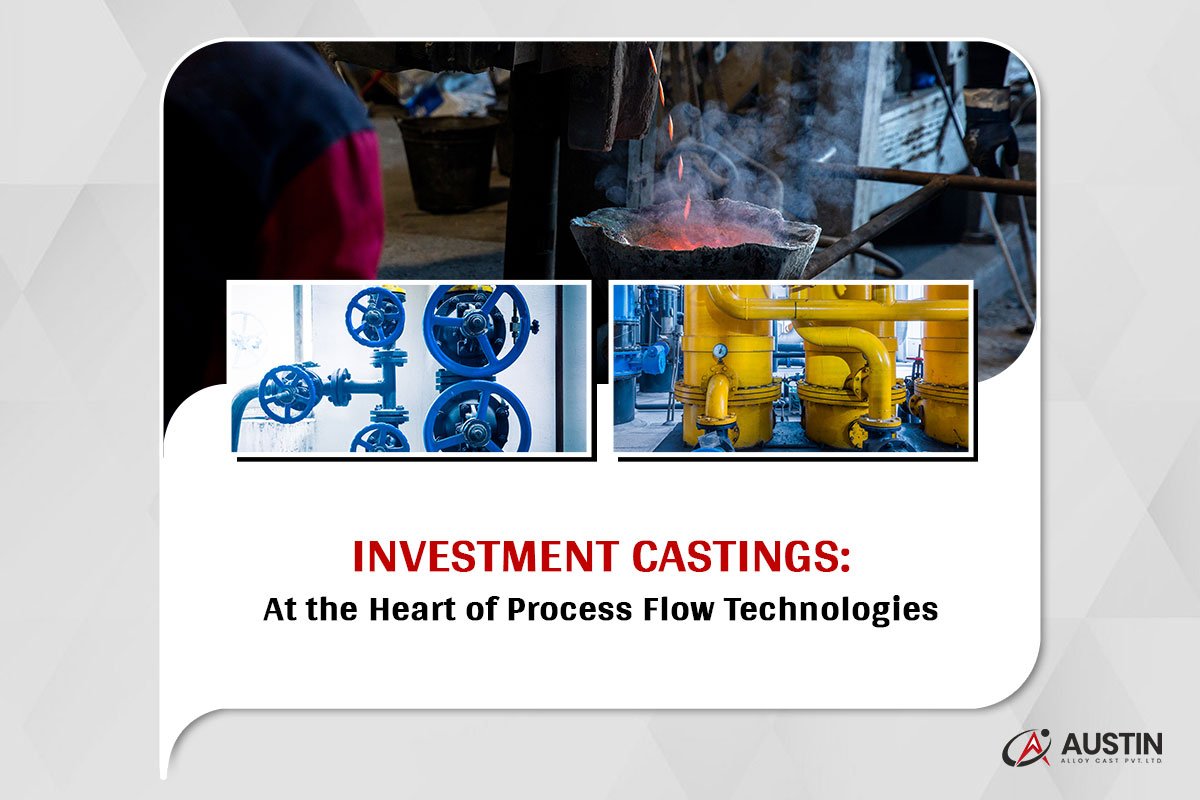
Pumps and valves are of primary importance and yet frequently neglected in the industries that use gases and liquids. They are important for everything from food processing to water treatment and oil refining. In these critical situations, the parts must provide unmatched reliability and optimal performance. The manufacturing of these parts introduces different design and manufacturing obstacles, where strength, performance, and tolerances are uncompromisable factors. Among various production methods for such hardware, investment casting emerges as an outstanding approach for producing superior quality pieces. Austin Alloy Cast. rely on this technique regularly to supply components that fully meet global standards for their overseas partners.
These devices operate nonstop amid relentless strain, varying pressures, and harsh chemicals. Their elements must withstand abrasion, erosion, and exhaustion over time. Even small errors in the production process can result in unnecessary downtime, fluid losses, or the worst case state of functional failure.
With investment casting, manufacturers ensure that pump and valve components are produced with superior tolerances, refined surface quality, and material integrity, all of which are vital to demanding applications.
Key Pump Elements Produced via Investment Casting
For a pump to achieve optimal performance, its internal components must exhibit tight dimensional tolerances and mechanical integrity. This manufacturing approach ensures near net shape accuracy, superior surface finish, and microstructural uniformity, enabling the precise and consistent fabrication of intricate geometries essential for high efficiency pump operation.
- Impeller: Central to a pump’s job of transferring liquids, the Open & Closed impeller drives that action. This casting technique allows for intricate, flowing shapes with polished exteriors, optimizing liquid movement.
- Shaft: It requires steady sizing and robust structural integrity. Using investment casting for shafts yields exact positioning and extended operational duration.
- Bearing Housing: This shields the bearings to support flawless shaft movement. The process delivers precise measurements and strong resistance to wear in the pump’s housing framework.
- Mount: The mounting setup in a pump system bears the load while providing steady support. It calls for sturdy, even material that counters vibrations. Investment casting accomplishes all these goals in a single step.
- Volute Casing: This directs outflow from the impeller toward the exit piping. The casting method guarantees consistent thickness and even load bearing capacity across the casing, minimizing risks of rupture during intense pressure.
Adopting investment casting improves production outcomes for individual pump parts and the overall assembly. It leads to enhanced fluid dynamics, reduced energy use, and dependable long term operation, offering advantages to both the sector and the planet.
Targeted Pump Casting Applications
- Centrifugal Pump Castings: Elements like impellers, Volute casing, and bearing frames require meticulous detail and excellent fluid handling prowess. Centrifugal Pump castings are used in industries like Oil & Gas, Chemical industry, Water & Waste water treatments.
- Lobe Pump Castings: Components such as bearing housing, rotor housing, and base supports demand solid build and true to spec dimensions. Lobe Pump castings are mostly used in Food processing & Diary industry & in industries where highly viscous fluids are transported.
- Split Case Pump Castings: Cast impellers and casings offer resilience against heavy liquid forces. The split case pump castings are used in various industries like Oil & Gas, Chemical industry, & Nuclear industry.
Overall, pump hardware gains from tighter seals, prolonged usability, and heightened productivity through this casting approach.
Essential Valve Parts Created with Investment Casting
Valves manage, guide, or halt liquid passage. They handle countless cycles of activation under parts produced this way include:
- Body: The core vessel holding pressure. Investment casting yields compact, inclusion free structures capable of enduring elevated forces and aggressive settings.
- Bonnet: This seals the body. The method provides snug connections and reliable closure traits.
- Discs: These shift within the body to regulate passage. Cast versions deliver uniform toughness and anti corrosion properties, ensuring extended functionality.
Fabricating these via investment casting equips valves with elite closure efficiency, boosted endurance, and steadfast performance.
Varieties of Pressure relief valve castings
- Butterfly Valve Castings: Bodies and discs call for exact contours to manage even flow. There are 2 types of bodies in butterfly valve i.e., triple offset & double offset, while under triple offset there are two more categories which is slide entry u& Top entry.
- Ball Valve Castings: Bodies, spheres, and bonnets must lack flaws to achieve watertight seals.
- Globe Valve Castings: Rods, discs, and enclosures require fortitude for flow modulation.
- Check Valve Castings: Discs and enclosures prevent reverse movement, necessitating robust construction and precision.
- Gate Valve Castings: Wedge elements, bonnets, and enclosures are formed to handle severe pressure. The method’s precision, uniformity, and material excellence particularly benefit all these valve categories.
Challenges in Pump & Valve Design
These aren’t basic mechanisms; they feature multiple intricate pieces; impellers, shafts, supports, casings, bodies, covers, and regulators; all built to endure intense operational loads, thermal variations, and damaging atmospheres.
The main challenges in their development include:
- Elaborate Forms: Items like impellers and regulators sometimes involve shapes tough to shape through standard tooling.
- Impermeable Operation: The slightest irregularity in a body or contact area might trigger escapes, halts, or outright collapse.
- Material Choices: Elements must resist decay, scouring, and physical demands. Standard approaches such as cutting or hammering often fall short on these issues, especially where fine control and duplication matter most. Investment casting resolves them effectively.
Benefits of Investment Casting for Better Efficiency
Effective containment is arguably the core of pump and valve success. The tiniest irregularity in contact zones can result in material waste, reduced output, or pollution risks. This technique addresses it through:
- Refined Exterior Quality: The wax melt procedure creates components with superior textures, lessening the call for extensive post processing.
- Uniform Fabrication: Identical forms across pieces ensure steady closure results across production runs.
- Tailored Integrations: It permits embedding details like narrow passages, slender sections, or containment channels directly in the mold.
Such ability to craft flawless contact areas positions investment castings as a preferred option for worldwide pump and valve producers.
Reasons Investment Casting Stands Out
Numerous factors make this method the premier option for pump and valve hardware production:
- Form Versatility: It attains fine detail for involved structures, such as blade configurations or slim regulators.
- Size Precision: It trims expenses from excess shaping and maintains uniform allowances.
- Enhanced Exterior: Polished textures elevate fluid performance in pumps and ensure secure containment in valves.
- Material Range: Suitable for options like stainless, carbon, duplex, and nickel variants, ideal for harsh exposures.
- Reduced Scrap: Close to final forming cuts material loss, lowering total expenses.
- Extended Durability and Dependability: Components endure beyond alternatives in demanding scenarios, curbing early breakdowns post minimal use.
Final Thoughts
Developing pumps and valves presents specific obstacles, demanding a production strategy that balances technical needs, abrasion tolerance, and productivity. Investment casting tackles these squarely, yielding superior results in containment, decay resistance, and expense management. Across water purification to petroleum ventures, these cast elements empower global operations to function more effectively and sustainably. Austin Alloy Cast drive this progress, delivering high end castings for pumps and valves that excel in adverse setups.
If reliability, toughness, and productivity are your priorities for such parts, investment casting offers precisely the answers required. Pumps & Valves play a crucial yet hidden role in our daily lives. From water heating to plumbing & HVAC system, we are proud to support these applications by our steel castings. The Flow of energy determines the flow of life & our castings are at the heart of it.
To have a glimpse at our world class facility and products, visit us at www.austinalloycast.com.
For any queries or details contact us at info@austinalloycast.com.
Recent Posts