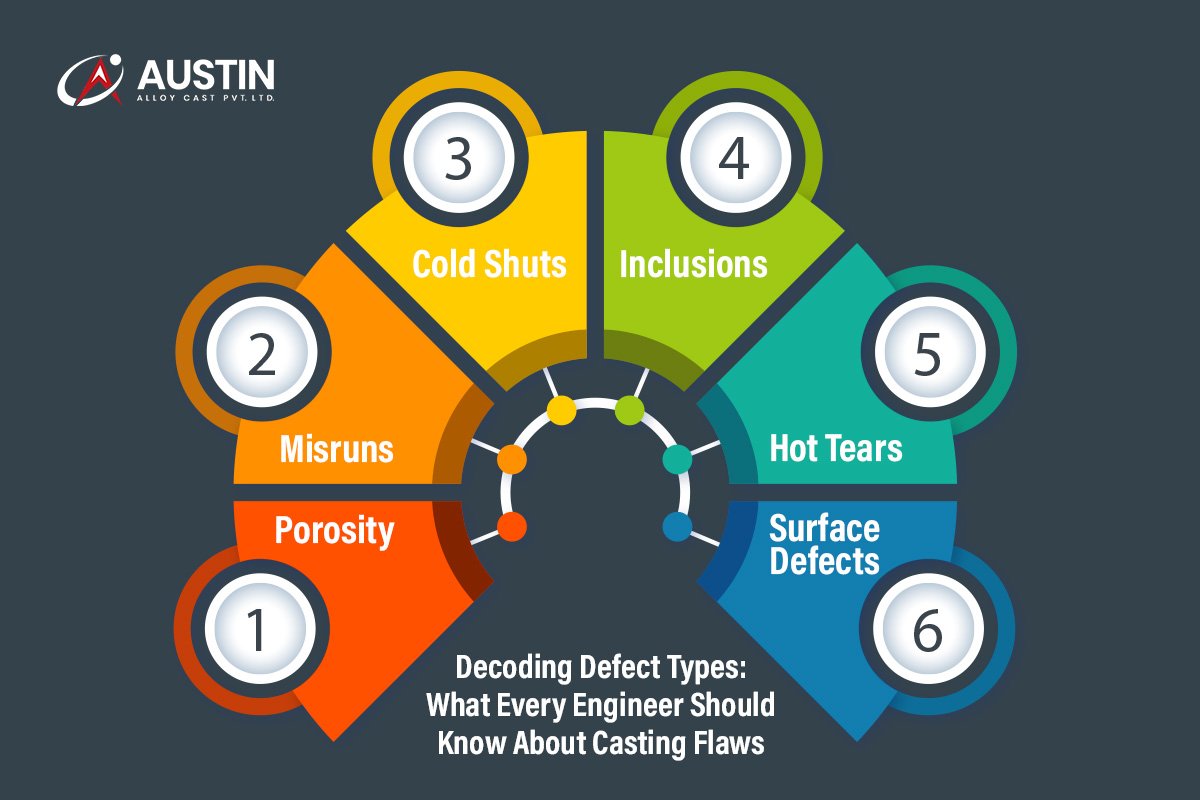
Decoding Defect Types: What Every Engineer Should Know About Casting Flaws

Casting continues to be among the effective manufacturing methods for creating intricate, robust and nearly finished components. However, even the sophisticated foundries must accept a core reality: metal casting is an exercise in managing variables. If any factor such as temperature, mold integrity, metal cleanliness or filling behaviour becomes unregulated flaws may arise. For engineers grasping these imperfections is crucial not for problem solving but also for designing components that are conducive, to casting and establishing achievable quality benchmarks.

At Austin Alloy Cast our experience in sectors has consistently demonstrated one fact: detecting defect patterns early drastically cuts down on rework enhances yield and boosts the dependability of essential parts. This article outlines the frequent casting defects engineers should be aware of the reasons, behind them and the approaches skilled foundries use to address them.

Porosity

Porosity is among the common internal casting flaws frequently concealed below the surface. It usually results from gases being trapped or shrinkage during the solidification process. Gas porosity happens when dissolved gases hydrogen leave the molten metal but become trapped before they can completely escape. Shrinkage porosity develops when sections, within the casting solidify unevenly leading to voids caused by material supply.

Porosity is important to engineers because it influences a parts strength, its ability to withstand pressure and its fatigue durability. At Austin Alloy Cast we manage porosity through process controls like degassing, refined gating along with sophisticated simulations that forecast shrinkage areas prior, to tooling creation. This guarantees components that’re more compact, robust and capable of fulfilling rigorous performance standards.

Misruns

A misrun happens when the liquid metal does not fully occupy the mold cavity. This leads to a component, with areas slender edges lacking material or details that seem only partly shaped.

This issue frequently arises from:

  • Low metal pouring temperature
  • Slow or turbulent filling
  • Restrictive gating design
  • Premature solidification due to thin sections

Misruns hold importance in precision projects as the geometry directly affects both fit and function. Engineers can mitigate misruns by maintaining wall thickness steering clear of excessively thin sections and analysing flow simulations early during the design stage. Utilizing casting simulation software and high quality alloys Austin Alloy Cast reduces misruns by fine tuning flow trajectories and rigorously managing pouring conditions.

Cold Shuts

Cold shuts occur when two flows of molten metal converge but do not merge into one body. This results in a line or joint that forms a fragile area, under mechanical or heat stress.

Cold shuts generally happen because of:

  • Low metal fluidity
  • Inadequate gating design
  • Slow mold filling
  • Corrosion occurring on the metal exterior where currents converge

In parts like pump impellers, turbo housings or structural brackets cold shuts are intolerable. They weaken tensile strength. Jeopardize durability, over time. Austin Alloy Cast avoids shuts by maintaining accurate temperature control ensuring ideal fluidity and optimizing gating designs to encourage smooth laminar metal flow.

Inclusions

Inclusions refer to materials slag, sand, oxide films or debris captured inside the metal as it solidifies. They disturb the homogeneity of the casting serving as stress points that can cause cracks or early failure during use.

Inclusions generally arise from:

  • Improper molten metal filtration
  • Sand erosion from the mold
  • Impure alloy feedstock
  • Oxidation during pouring

Engineers’ ought to recognize that inclusions are frequently microscopic and might not be visible during examination. For this reason, Austin Alloy Cast depends extensively on NDT methods, ceramic filters, antiturbulence gating and high purity alloys to produce flawless castings, for mission critical parts.

Hot Tears

Hot tears sometimes called cracks develop when the casting cools unevenly or faces limited shrinkage during solidification. When the metal is partly solid and partly liquid minor stresses may lead to cracking.

Frequent reasons consist of:

  • Inflexible mold structure that limits shrinkage
  • Sharp internal corners
  • Sudden changes in section thickness
  • High thermal gradients

Hot tears are critical flaws and frequently cause a casting to be rejected outright. Engineers are crucial, in creating parts featuring transitions ample radii and consistent wall thickness. At Austin Alloy Cast our experts utilize solidification simulations to foresee areas experiencing thermal stress and adjust mold configurations to allow the metal to contract freely.

Surface Defects

Surface imperfections represent the noticeable type of casting defects and include rough textures, laps, scabs, veining and surface porosity. These problems mainly result from Mold related issues or changes, in temperature during the pouring process.

Common reasons consist of:

  • Improper mold preparation
  • Sand collapse or erosion
  • Incorrect pouring temperature
  • Moisture in the mold
  • Poor coating application

Although certain superficial imperfections can be eliminated through machining or shot blasting some indicate underlying process problems requiring attention. At Austin Alloy Cast maintaining mold conditioning, regulated preheating and accurate temperature tracking contribute to achieving a consistent surface finish on every casting.

Why Understanding Defects Matters

For engineers understanding these categories goes beyond quality assurance; it involves enhancing the whole product lifecycle. When design and foundry teams work together from the start defects become foreseeable, avoidable and significantly cheaper to manage.

At Austin Alloy Cast, comprehensive defect analysis frameworks, metallurgical expertise, and advanced simulation ensure that potential issues are addressed before they reach production. Whether manufacturing for heavy engineering, automotive, oil & gas, or specialized industrial systems, our focus remains on delivering castings with repeatable quality and long term performance.

How Austin Alloy Cast Masters Complex Geometries in Metal Casting

In the changing environment of today’s manufacturing industry, the capacity to manufacture complex and engineered precision metal components will be a critical differentiator. Austin Alloy Cast is the prominent investment casting manufacturers trusted for their high level of technical capability, experienced foundry knowledge, and commitment to quality. The company’s ability to deliver complex metals casting geometries has created a global customer base across many industries, including automotive, energy, defense, and marine.

Recognizing the Issue: Why Complex Geometries Matter

Modern engineering designs call for components that are lighter, stronger, and more efficient all while holding tight tolerances in complex shapes. Some of these geometries may be thin walls, internal hollows, undercuts, and integrated features that are unsuitable for conventional manufacturing.

Investment casting or the lost wax process is ideal for these designs. While machining and fabrication often require multiple steps to achieve the shape, investment casting produces near net shape parts directly from a wax pattern. This decreases machining, reduces material waste, and yields consistency in dimensions and geometry even with complexity.

Austin Alloy Cast uses process control, advancements in technology, and metallurgic knowledge to recreate such complex components with superior consistency and quality.

Austin Alloy Cast: The Benefits of Engineering Complexity

As a premier investment casting company, Austin Alloy Cast has developed its processes to produce an unparalleled quality product. What makes the company successful in producing complex metal geometries is its operation of integrating modern technology, skilled craftworkers, and a disciplined quality control process.

Your Austin Alloy Cast experiences this by way of,

1.Advanced 3D Modelling and Simulation

Every successful casting starts with an accurate design. Austin Alloy Cast employs 3D CAD modelling, and solidification simulation software to formulate how molten metal will behave to flow, filling and solidifying in the mold. By modeling to simulate casting behavior, the engineers can detect and eliminate potential defects i.e. porosity, shrinkage, and distortion before the mold is made.

This potential validation measures that the delivered product will meet structural intergrity and dimensional accuracy for environmentally produced components that will experience high imposed loads.

2. Precision Wax Pattern Development

The investment casting process relies on the accuracy of the wax pattern which is an exact representation of the final part; whether complex or fragile, Austin Alloy Cast has automated wax injection and assembly systems that promote consistency in shape development. In most cases, the patterns are assembled into some multiple piece grouping called “treeing” to allow for multiple part casting and proven results in shortened operational times. Austin Alloy Cast has talented staff who assist with the overall inspection process that leads to patterns meeting requirement tolerances as even small mistakes matter in final castings achieving high levels of accuracy.

3. Quality Ceramic Shell Construction

It is vital that a durable and dimensionally accurate ceramic shell is created for both the complexity of the geometry being cast as well as the complex shapes. Austin Alloy Cast thoughtfully controls slurry coating, ensuring that the shell is constructed in a way that promotes adhesion of the layers to the wax model.

The shells are built in thin layers in a controlled environment and layering attaching in the drying of each of the layers. This creates a strong shell that holds better to high temperatures, providing the quality surface detail of the wax pattern being used for the investment process.

4. Metal Pouring Management and Alloy Capability

The reputation of the company relies not only on its control processes but also its metallurgy competency. Austin Alloy Cast is capable of producing parts in just about any alloy, specifically stainless steel casting, carbon steel and high temperature alloys.

A very strictly controlled, melting and pouring process including induction furnaces, temperature monitoring, and vacuum equipment ensures that molten metal fills every area of a sophisticated mold, which makes it easier to produce dense, quality castings with ideal engineering characteristics.

5. Machining and Finishing Precision

After the metal solidifies and the shell is taken off, castings have to go through a series of finishing processes, including shot blast, heat treatment, and CNC machining, which ensures that all the dimensional and surface finish requirements are met.

The machining division at Austin Alloy Cast is fully equipped with the latest tooling manufactured to micrometer specs. This leads to fully machined castings capable of being assembled or used in their final state, with reduced customer side processing time and overall lead time.

6. Rigorous Quality Control and Testing

With intricate metal geometries, controlling internal and external quality is critical. Some of the non destructive testing methods that Austin Alloy Cast utilizes include radiography, ultrasonic testing, magnetic particle inspection, and dye penetrant testing.

CMM inspection is also done to ensure dimensions are accurate; the company makes sure that every feature conforms to the 3D design model. It also implements ISO 9001, 14001, and 45001 for added emphasis on quality, safety, and environmental obligation.

Real World Applications: From Design to Delivery

The ability of Austin Alloy Cast to master complicated geometries has converted the company into a dependable partner for a number of industries.

  • Automotive: Lightweight complex parts in fuel systems, turbochargers, and transmissions.
  • Oil & Gas: Corrosion resistant stainless castings for valving, pumping, and flow control applications.
  • Energy & Marine: Components designed to be durable and longer lasting in challenging environments.

In every case, the collaboration that Austin Alloy Cast has with customers during design and prototype development help to guarantee that the resulting product meets above and beyond the technical and economic expectations.

Innovation, Quality and Partnership

At its core, Austin Alloy Cast Pvt. Ltd. is more than just an investment casting manufacturer. It is a technical partner that brings engineering know how, cost effectiveness and metallurgical knowledge to help customers determine the right material and process for their application.

Austin Alloy Cast Pvt. Ltd. will continue to make investments in new technologies, automation and improvements, to push forward with an ever evolving industry. This process will ensure Austin Alloy Cast continues to remain well positioned to be a leader in innovation and a trusted supplier for manufacturers of complex metal components, with customers expecting precision and reliability to meet performance requirements.

Conclusion

When mastering complex geometries in metal casting, it truly is a choice of art and science experience, technology and diligence are only a few of the facts to the process. Austin Alloy Cast has a commitment to precision, process efficiency and partnered with its customers. In a short time, the organisation has been able to establish recognition across Canada as a trusted investment casting manufacturer that is capable of producing complex geometries into high performance stainless steel castings and other alloy components.

How Non-Destructive Testing (NDT) Ensures Casting Integrity

In the realm of precision metal manufacturing, where quality and reliability equal success, Non Destructive Testing (NDT) is crucial to ensuring each component is manufactured according to specifications. As investment casting manufacturer; Austin Alloy Cast Pvt. Ltd., Non Destructive Testing is more than a final check for quality; it is a commitment to quality, safety, and customer satisfaction.

Whether the component is made from stainless steel castings in marine applications or high strength alloy components supplied to energy and engineering customers, casting integrity is paramount. A single defect, even a microscopic one, can reduce casting performance or worse, fail catastrophically. Non Destructive Testing ensures that every casting leaves the foundry with precision and reliability, both uncompromised.

The Importance of Casting Integrity

All castings experience dynamics stresses pumps, valves, turbines, automotive systems; all of them will face dynamic stresses during operation.  Any hidden porosity, micro cracks, or inclusions may reduce the casting structural integrity ultimately leading to fatigue failure or leakage.  Fogging is insufficient to identify these hidden internal or surface defects.

At Austin Alloy Cast Pvt. Ltd. we strive to achieve “zero defect” castings, our team employs an organized and structured inspection strategy in combination with advanced Non Destructive Testing practices around the production cycle.  This ensures every investment casting or stainless steel castings not only ach0ieves dimensional accuracy but passes maximum metallurgical integrity standards.

What is Non Destructive Testing?

Non Destructive Testing (NDT) is a family of scientific methods employed to evaluate materials, components, or assemblies to detect defects or changes in material properties in a manner which does not harm or change the item being tested. In contrast to destructive testing methods such as cutting or breaking a sample, the item can be tested and place into service.

With respect to foundry applications, Non Destructive Testing inspects foundry castings for defects such as cracking, shrinkage, porosity, inclusions, or surface defects to provide assurance of mechanical integrity and reliability.

NDT Methods Commonly Implemented at Austin Alloy Cast
1. Visual Inspection (VI)

Visual inspection is the initial step in any quality assurance program. At Austin Alloy Cast, a certified inspector examines the castings for surface defects, blowholes, or flash. Inspectors use bright light, magnifying glasses, and surface profile gauges to discover some of the smallest defects on surface before succession to advanced testing.

2. Dye Penetrant Testing (DPT)

Dye penetrant testing is a very effective method for assessing surfaces on non magnetic materials such as austenitic stainless steel castings. DPT works using these steps:

  • A penetrant, in liquid form, is applied to the surface.
  • The penetrant can infiltrate surface breaking defects like cracks or pinholes.
  • Once excess penetrant is wiped away, a developer is applied to the surface and it draws the penetrant out to indicate flaws on the surface.

DPT is relatively simplistic, yet it is very effective capable of revealing hairline cracks and other flaws that the naked eye is unable to see.

3. Magnetic Particle Testing (MPT)

The MPT method is used mainly on ferromagnetic alloys but it’s really effective on nonmagnetic alloys. In order to perform the MPT, the component to be inspected is magnetized and fine magnetic particles are applied to the magnetized surface. If a surface or near surface defect is present, it will disrupt the magnetic field in some way which will lead to the collection of the magnetic particles and create a visible indication of the defect.

At Austin Alloy Cast Pvt. Ltd., Magnetic Particle Testing is regularly used on carbon steel and low alloy castings to detect defects like laps, seams, and cracks before machining.

4. Radiographic Testing (RT)

Radiographic Testing, or X ray inspection, is a very reliable method of NDT performed to disclose internal defects. In this technique, X rays or gamma rays are passed through the casting material, and the pattern of radiation on the radiographic film or digital image will indicate whether or not internal defects are present. Commonly detected defects include gas porosity, shrinkage cavities, and the presence of inclusions.

Utilizing the latest state of the art, high resolution radiography systems, Austin Alloy Cast examines the internal integrity of intricate investment castings where high precision and safety are demanded in aerospace, marine, and energy applications.

5. Ultrasonic Testing (UT)

Principle: Ultrasonic Testing (UT) transmits high frequency sound waves into the casting and then analyzes the reflected waves to reveal internal discontinuities and/or changes in material thickness. UT is particularly helpful for large and thick components, where radiography is not practical.

This is the means by which Austin Alloy Cast can ensure that any stainless steel casting or alloy component has no subsurface discontinuities, giving our customer complete confidence in the performance of their product in critical applications.

Integrating Non Destructive Testing into the Manufacturing Process

At Austin Alloy Cast Pvt. Ltd., NDT is not a separate activity but is an integrated part of each and every manufacturing stage:

  • Post Moulding: Initial inspection can locate casting flaws prior to machining.
  • Heat Treatment: Metallurgical properties and integrity should not be affected.
  • Pre Dispatch: A final quality check is done for every component to ensure that the processed components meet the client’s specifications.

This quality loop significantly reduces rework, enhances production efficiency, and builds long term trust with clients in multiple sectors: oil & gas, marine, railway, and defense.

Austin Alloy Cast is distinguished in being continually committed to quality and innovation in the investment castings it manufactures. The NDT team undergoes training and certification to international standards, ensuring consistently high levels of quality traceable in every inspection.

We are certified to meet the requirements of ISO 9001, ISO 14001, and ISO 45001, further indicating our commitment to quality, environmental responsibility, and safety in the workplace. Backed by an extended network of investment casting and sand casting facilities, Austin Alloy Cast offers a total casting solution with a one stop shop.

The Destination: Guaranteed Quality, Guaranteed Confidence

In today’s manufacturing world, expectations are that precision is not optional; precision is expected. NDT ensures that each and every casting is not only visually perfect but structurally sound and ready for its intended use.

At Austin Alloy Cast, we believe quality assurance starts with verification and closes with validation. When assessment is combined with plasma NDT, we ensure castings that meet and excel every customer’s requirements.

Too, whether specialty stainless steel castings are for high performance and corrosive environments, or metal castings as part of complex, multi staged investment castings for assemblies, Austin Alloy Cast can assure quality, reliability, and value.

Conclusion

Non Destructive Testing is beyond a process; it’s the backbone of casting integrity. It ensures that every piece forged in molten metal meets the highest standards of precision and safety. The pursuit of excellence at Austin Alloy Cast is reinforced by a disciplined NDT regime; guarantees the reliability of every component manufactured by us. When you choose Austin Alloy Cast, you choose quality that’s tested, proven, and trusted.

Stainless Steel Casting: The Unsung Hero in Corrosive Environments

Wherever moisture, chemicals, and extreme temperatures are a constant presence, resistance to corrosion is needed not just as a desirable property, but often as a lifeline. Be it offshore oil rigs, marine propulsion systems, or even chemical processing units, whatever is used inside needs to be able to bear the corrosion and the test of time. Stainless steel castings are the unsung hero in this environment because they combine strength, durability, and the ability to withstand very harsh surroundings.

At Austin Alloy Cast, we deal in the supply of world class stainless steel castings through the chamfer investment casting and sand casting processes. Being an investment casting manufacturer in India, we have the required experience in designing, engineering, development, and manufacturing of complex and high performance components for these applications.

The Science of Stainless Steel Castings

Many people are familiar with the high resistance of stainless steel to oxidation and corrosion due to the chromium alloying element, which creates a passive layer on its surface, namely chromium oxide. The formed layer acts like an invisible shield that protects the metal beneath it from attack by moisture, acids, and chemicals.

Various grades of stainless steel, such as austenitic, martensitic, and duplex, are selected according to application and exposure to the environment. Each produces different mechanical and corrosion resistant properties, which are required by industry.

While stainless steel provides corrosion resistance, it gives design flexibility and higher mechanical integrity when fabricated as castings. We at Austin Alloy Cast cast stainless steels with full control on the metallurgical parameters to ensure that the microstructure and batch to batch consistency meet the requirements.

Investment Casting: Where Precision and Performance Collide

For parts of complex geometries, thin walls, and stringent tolerances, the process of choice is investment casting, also known as the lost wax process.

Near net shape items produced in stainless steel are manufactured by Austin Alloy Cast using advanced methods in investment casting. The process provides ideal surface finishes and tolerances, reducing secondary machining while minimizing total manufacturing costs.

To make sure of repeatable quality within a variety of grades, including CF8M, CF3M, and duplex stainless, the investment casting process significantly contributes to serving rigorous requirements of the marine industry, food processing, pharmaceutical, and oil and gas industries, while also addressing commerce and hygiene and corrosion resistant needs.

Sand Casting for Large Heavy Duty Stainless Components

For larger heavy duty components where shape detail is not regarded as critical, sand casting provides the flexibility and cost effectiveness required. Austin Alloy Cast is reasonably unique in Western India as one of the only foundry groups that have sand and investment casting facilities in the same foundry.

Our sand casting facility has the latest modern moulding systems, induction furnaces, incorporated with complete quality testing facilities. From pump casings to more complex valve bodies and impellers, to complex housing, our stainless steel sand castings are designed to provide high strength with corrosion resistance in aggressive service environments.

Why Stainless Steel Castings Are Superior in Corrosive Environments

Corrosion is the gradual destruction of metals by chemical or electrochemical interaction with an environment. In industries that deal with oil and gas, desalination, or marine transportation, corrosion leads to extended and unwanted downtime, high maintenance costs, and safety hazards.

Stainless steel castings provide resistance to indirect attack by corrosion due to their inherent ability to resist:

  • Acidic or alkaline chemical attack
  • Saltwater corrosion, especially in marine applications
  • Oxidation, especially at high temperatures
  • Pitting and crevice corrosion under stagnant or low flow conditions

At Austin Alloy Cast, we design our stainless steel castings with the best alloy compositions available so that the performance of each component is adequate for even the worst conditions. We also maximize corrosion resistance and mechanical integrity by controlling other factors such as heat treatment, cooling time, and surface finish in every cast.

Quality, Testing and Certification

At Austin Alloy Cast, we test every stainless steel casting for dimensional accuracy, structural soundness, and metallurgical specification.

Our testing capabilities include:

  • Non destructive Testing NDT: We carry out dye penetrant, magnetic particle, radiography, and ultrasonic tests for the detection of surface and subsurface defects.
  • Mechanical Testing: We run tensile tests, impact tests, and hardness tests to ascertain strength and toughness.
  • Chemical Analysis: We perform spectrographic analysis to verify alloy composition for each casting.
  • Dimensional Inspection: With our CMM and other precision inspection measuring tools, we can ensure that all components are manufactured to each client’s unique design tolerances.

We are certified according to internationally recognized quality standards: ISO 9001, ISO 14001 and ISO 45001. We support quality, safety, and sustainability in all processes.

Applications Across Verticals

Their versatility has made stainless steel castings indispensable to industries as varied as:

  • Oil & Gas: A valve body, manifolds, and impellers that possess properties resistant to sour gas and brine exposure.
  • Marine: Propeller components, housings, and fittings manufactured for saltwater applications.
  • Food & Beverage: sanitary grade castings resisting high moisture and frequent cleaning.
  • Chemical Processing: Pumps & reactors resistant to acidic/caustic exposures.
  • Power Generation: Products like turbine housings and boiler fittings operating under high temperature conditions.

Austin Alloy Cast serves all of these industries, providing custom stainless steel products engineered for reliability and durability in corrosive environments.

Sustainability in Stainless Steel Casting

Beyond performance, stainless steel is intrinsically sustainable. It is completely recyclable, and its long service life reduces material waste to a minimum. We implement environmentally responsible practices in all the stages of production at Austin Alloy Cast Pvt. Ltd., which includes energy efficient melting, scrap recycling, and resource optimization.

Our sustainable practice reduces not only our ecological footprint but also assures global clients that their environmental goals are in tandem with us towards a greener industrial future.

Closing Remarks

Stainless steel castings are the true unsung heroes of modern engineering, quietly ensuring performance, safety, and reliability in some of the most corrosive environments on the planet. With decades of foundry experience, state of the art technology, and rigorous quality control, Austin Alloy Cast Pvt. Ltd. continues to supply the best in world class cast components.

Whether it be precision investment castings or rugged sand castings, our team will act as your technical partner in selecting the most economical, high performance solution for your application.

When you work with Austin Alloy Cast, you are not just sourcing castings, but investing in reliability, innovation, and excellence in castings, however challenging or harsh the environment.

Investment Casting for Renewable Energy: Wind, Solar & Biomass

In contemporary times of clean energy evolution, precision engineering is crucial for efficiency, reliability, and longevity of renewable power systems. Among the many manufacturing processes that contribute to this progress, investment casting is among the most versatile precision methods for complex metal components.

Austin Alloy Cast is a trusted investment casting manufacturer supporting the migration to sustainable energy systems by providing castings of the highest quality for the wind, solar, and biomass industries. Our specialization in stainless steel casting, alloy steel casting, and advanced materials allows us to manufacture parts that perform flawlessly in the harshest of conditions and help renewable energy systems run at their optimal performance.

1.  The Role of Investment Casting in Sustainable Energy

Investment casting also known as lost wax technology, allows manufacturers to produce complex near net shape products, resulting in excellent tolerances and finishes. Investment casting offers multiple benefits for renewable energy systems, which is paramount for sustainable energy, and includes the role of the durable component and reliability for operation:

  • Complex Geometry Capability: One of the biggest advantages to the process is the ability to fabricate considerably aerodynamic profiles, channels, and people requiring detail typically needed for turbine and panel assemblies.
  • Materials Flexibility: The process allows for several high strength materials such as stainless steels, duplex steels, and heat resistant and super alloys.
  • Consistency and Repeatability: It also affords every part to be produced to the exacting tolerances needed for operation and reliability.
  • Reduced Machining: Using the near net shape complex, we ensure fewer machining operations and material waste while improving sustainability.

In closing, the combination of these characteristics makes investment an ideal solution for renewable energy systems regarding precision and strength.

2.  Precision Cast Components for the Wind Energy Sector

Wind turbines are components subjected to extreme mechanical loads and fluctuating wind loads in corrosive environments. Components must be designed and manufactured to achieve durability, fatigue resistance, and dimensional accuracy over long service cycles.

We provide investment cast solutions for wind energy that include:

  • Turbine hub components and couplings
  • Yaw and pitch control system components
  • Bearing housings and brackets
  • Generator and gearbox housings

By utilizing advanced stainless steel casting and high strength alloy steel, we ensure the components provide exceptional corrosion resistance and mechanical integrity even in offshore back and coastal wind farms. Our in house Non Destructive Testing techniques, including radiography, ultrasonic testing, and dye penetrant inspection, provide defect free products that meet the most rigorous international standards.

3.  High-Accuracy Castings for Solar Energy Related Processes

Solar power systems may look like they come to rest after being on numerous trips. However, the parts that hold these systems in place, as well as the mechanical tracking mechanisms, are made of high precision manufactured parts that experience loading by the sun, rain, and different temperatures.

We make investment cast and machined parts for:

  • Hinge Mounting brackets and hinges
  • Solar tracking components
  • Steel structural connectors and fasteners

Through the use of stainless steel casting, we can make accurately engineered and corrosion resistant cast components with high tensile strength for photovoltaic PV systems, concentrated solar power CSP plants and solar trackers. All parts are designed for maximum service life and weight optimized to minimize maintenance and maximize efficiency.

Additionally, utilizing our CAD CAM based design and simulation capabilities, we can ensure the highest quality in consistent material flow and solidification control for medium to high volume production.

4.  Investment Casting Applications in Biomass Power Systems

Biomass energy plants can generate renewable energy from organic materials by burning, gasifying, or digesting it anaerobically all methods that create high heat, high pressures, and corrosive gases. The components that operate in biomass will be subjected to extreme conditions and need to maintain performance.

We offer casting solutions within a biomass application, including:

  • Burner Nozzles and Diffusers
  • Valve Bodies and Impellers
  • Heat Exchanger and Furnace Components
  • Ash Handling and Boiler

Accessories At the same time, these components are created from heat resistant alloys, stainless steels, and oxidation/wear resistant nickel base alloys. The end result is better service life, less downtime, and more efficient biomass power productions.

5.  Why Austin Alloy Cast Pvt. Ltd. Is the Preferred Partner for Renewable Energy Projects

Austin Alloy Cast is an investment casting manufacturer with decades of metallurgical experience coupled with advanced technology approaches to address the changing demands of renewable sectors. Our complete capabilities include:

  • Complete, In House Capabilities: From wax pattern making through final machining and testing all carried out under demanding control of quality.
  • Material Familiarity: We pour stainless steel, carbon steel, duplex, super duplex, and heat resistant alloys.
  • Certifications and Quality Systems: We operate an ISO 9001, ISO 14001 and ISO 45001 compliant quality management system.
  • World Wide Supply: Supplying solid castings to clients in Europe, the USA and Asia in renewables, oil & gas, marine and industrial sectors.

Every piece of castings leaving our shop represents our commitment to technical excellence, process advancements and sustainability.

6.  Peering Toward the Horizon: Forging the Future of Clean Energy

The transition to renewable energy is rapidly advancing which requires materials and parts that will perform well in challenging environments. Investment casting will remain a key pillar of growth; precise, flexible, and sustainable.

Austin Alloy Cast leads the energy transition with engineered casting solutions for global renewable companies, from wind turbines to solar and biomass systems.

Final Thought

As the renewable energy sector continues to develop, the demand for durable, precision components will continue to grow. With our specialized knowledge of investment and stainless steel casting, Austin Alloy Cast will continue to create new technologies that lead the world towards sustainability through innovation, trust and metallurgical expertise.

If you are looking for a dependable and knowledgeable investment casting manufacturer for your renewable energy project, please contact Austin Alloy Cast, where every casting reflects precision, performance and purpose.

How Investment Casting Reduces Weight Without Compromising Strength in Rail Parts

Modern rail engineering’s view of efficiency and performance is much more comprehensive than just speed. Engineers are looking at rail components that are lighter, stiffer and more sustainable for high speed trains, metro systems and freight locomotives alike. Lightweight components can drive improvements across energy consumption, braking stability and overall lifecycle costs. How do we achieve lightweight components while maintaining structural integrity? This dilemma is an emerging strategic priority in the modern railway industry.

At Austin Alloy Cast, we argue that investment casting is the solution for this type of balanced engineering design. Through precision, material science and advanced process controls, investment casting will ultimately provide lightweight and durable components that can outperform traditionally manufactured rail components.


The Weight Strength Dilemma in Modern Railways

Lowering the weight of a train’s structure results in more fuel efficient trains and reduces the wear on tracks and wheels. However, strength, fatigue performance, and safety are essential criteria. Unlike automotive applications, railways operate in a more demanding environment and experience wheels and rail deformation due to constant vibration, load cycles, and environmental conditions. Mechanical performance is imperative for every component within the rail vehicle, whether it is a bogie frame, brake housing, coupling, or suspension component.

In traditional manufacturing methods, including forging or sand casting, weight is more difficult to control. Traditional manufacturing results in heavier designs due to lower dimensional precision and excessive machining allowances. Investment casting distinguishes itself from conventional manufacturing due to extreme tolerancing, geometrical complexity, and optimized weight to strength ratios.


Why is Investment Casting Suited to Rail Components

Investment casting also referred to as lost wax casting creates near net shapes with excellent dimensional control. To create the desired part, a wax pattern of the part is created, a ceramic shell, or investment, is applied to the pattern, the wax is melted out, and then molten metal is poured into the investment to form the final part.

There are several aspects of this high precision process that provide benefits for rail components:

  • Design of lightweight: Create complicated shapes, hollow sections and thin wall thicknesses without compromising strength.
  • Excellent surface finish: Significantly reduces heavy machining resulting in further weight savings.
  • Dimensional consistency: Perfect fitment for safety critical assemblies like coupling systems and bogie brackets.
  • Optimized material usage: Limit any excess metal, and loads are optimized for strength to weight ratio.

Austin Alloy Cast is proud to customize this processing method to give the exact combination of mechanical performance, weight savings and design flexibility the railway engineer requires.


Creating Strength from Design and Material Selection

Any time in a weight reduction approach, there is more than just subtracting material; it is also about placing material. Austin’s engineering team works closely with rail designers to improve load paths, minimize cross sections and include structural options like ribs, fillets and reinforcing geometry. These minor improvements in geometry through investment casting yields a better strength to weight ratio than forged or machined equivalent.

Material selection is just as essential. At Austin, the best options for each rail application include a variety of optimized carbon steels, stainless steels, and nickel alloys:

  • High carbon and very low alloy steels: The highest strength range in brackets, couplers, or underframe components where maximum toughness is essential.
  • Austenitic stainless steels: The best combination of corrosion resistance, and fatigue strength are essential for rail projects that are exposed or in marine environments.
  • Precipitation hardened and nickel-based alloys: The ultimate combination of toughness, thermal stability, and wear resistant for premium rail systems.

Austin can ensure each alloy is tailored to meet the necessary mechanical and environmental performance of its intended use through precise control of chemical composition, heat treatment and microstructure evaluations.


Case Examples: Strength thru Lightness
  • Brake System Components: Investment cast stainless steel scales and housings reduce mass, without reliant performance characteristics; improving overall system performance responsively.
  • Coupler and Suspension Parts: Cast low alloy steels retain tensile strength, while reducing total component weight resulting in overall improved fuel consumption.
  • Interior and Structural Fittings: Thin walled stainless steel fittings give durability needed in warranty specification, allowing for lighter train interiors and reduced vibration loads.

In all these applications, Austin Alloy Cast is committed to helping rail operators and OEMs achieve a meaningful balance of performance, reliability, and efficiency.


Sustainability and Energy Efficiency Advantages

Lightweight rail components provide reduction of operating costs, as well as directly assist entity goals to benefit the environment. Energy consumption, emissions, and track wear are all lower associated systems of a train’s mass.

Investment casting assists these sustainability metrics through:

  • Reduction in raw material waste through nearing net shape manufacturing.
  • Decreased energy input during machining and post processing.
  • Improvement in longevity of part usage, limiting replacement frequency and overall lifecycle emissions.

The processes that are completed at Austin are designed for efficiency, repeatability, and environmental responsibility from energy efficient furnaces to recyclable wax or recycled ceramic materials.

With decades of expertise in metallurgy and on site capabilities, Austin Alloy Cast has developed the reputation of a leader in precision castings for rail and transport engineering. We incorporate modern simulation models, innovative melting processes, and testing protocols to manufacture cast components that always excel beyond industry standards.

Our philosophy is not just manufacturing it is collaborating. We work closely with customers to optimize part geometries, minimize cost, and design every kilogram of casting to achieve the maximum mechanical return.

With Austin Alloy Cast Pvt. Ltd you are getting more than precision metal you are getting engineering confidence knowing every part is designed and cast to be lighter, stronger, and smarter.


The Future of Lightweight Rail Engineering

The quest for energy efficiency in rail will still count on advanced manufacturing methodologies like investment casting. As trains become faster, smarter, and greener, the desire for preciseness, performance, and lightweight will continuously increase.

At Austin Alloy Cast, we are proud to join in that experience. By adding innovative casting technology with metallurgical design we are assisting our customers rewrite the rails of the future lightweight, durable, and sustainable.

Why Automotive OEMs Are Choosing Investment Casting

The automotive industry is one of the few industries where there is one constant the focus on performance, accuracy, and efficiency. As the designs of vehicles become more complex and lightweight developments become the priority, manufacturing processes need to keep pace. Today, automotive OEM’s globally are looking to investment casting, a proven, yet modern manufacturing process, that provides design flexibility, material versatility, and precision.

At Austin Alloy Cast, we have seen this transformation live. As a reliable investment casting manufacturer, we collaborate with automotive OEMs to produce precision engineered products that Function Better, Weigh Less and Cost Less. Let’s dive into the top reasons why investment casting is the process of choice for the modern automotive industry.

Accuracy and Precision:

Modern automotive systems call for parts that fuse together form and function with extremely accurate precision. From turbocharger housings and fuel system parts to suspension and engine parts, these tight tolerances are not an option; they are a must. Investment casting produces near net shape parts. The ability to create tight tolerances on complex parts is unmatched when compared to other methods of manufacturing. At Austin Alloy Cast, we have tooling that exceeds many competitors, and we can produce parts that have the shape and accuracy of machined parts. This can reduce the time and money spent on secondary processes, and still provide high repeatability for mass production.

Adaptable Materials for Varied Automotive Applications

Another significant factor in OEM selection of investment casting is material adaptability. The process supports various metal alloys such as stainless steels, aluminium, cobalt and nickel alloys, all which are optimized for performance requirements.

  • Stainless steel parts can be used for their corrosion resistance and strength, such as exhaust systems or engine components.
  • Aluminium alloys are great for lightweight and high temperature conductivity for applications such as structural or braking systems.
  • Nickel and cobalt offer performance under severe heat and mechanical loading which are beneficial for components such as turbochargers and high temperature areas.

At Austin Alloy Cast we have the metallurgical knowledge with automotive client to select the most appropriate materials for your needs while still meeting manufacturability and part performance needs.

Lightweight Components:

Global emissions regulations are tightening, and lightweighting has emerged as a key strategy for every OEM. Invest castings allow for weight reduction while maintaining any strength requirement to produce thin walled components that have an acceptable factor of safety.

Being able to design lighter brackets, housings, and powertrain components enables the auto industry to achieve lower fuel consumption and reduced carbon footprints. Austin Alloy Cast works with automotive design teams to provide optimized geometry, mass reductions, and the ability to consolidate multiple components into a single cast component continuously supporting efficiency and sustainability objectives.

Decreased Waste & Expense:

Investment casting is, by nature, an efficient use of resources. Because components are generally cast as net shape or near net shape, both material waste and subsequent processing are limited. Near net shape manufacturing results in:

  • Lower machining costs
  • Less utilized material
  • Shorter time to manufacture spares
  • Higher yield overall

Austin Alloy Cast illustrates this environmentally sensitive efficiency by tightly controlling the entire investment casting process from design and pattern making through to finishing. This would reduce expense and environmental footprint, a definite plus for OEMs that are transitioning towards more sustainable manufacturing processes.

Durability:                                                                                                         

Automotive parts work under extreme conditions from thermal loads in internal combustion engines to vibrations from high performance vehicles. Durability is a must, and investment casting ensures critical components can withstand heavy stress, temperature, and wear. At Austin Alloy Cast, our high temperature alloys and rigorous quality testing prove that every cast part meets or exceeds OEM durability and performance lifecycle standards. Turbine wheels, rocker arms, and valves gain from exceptional metallurgical consistency and fatigue life.

Supporting Innovation:

As we move away from traditional technology toward hybrid vehicles, electrification, and hydrogen fuel systems, the auto industry needs more room for innovation in design and production of original concepts. Investment casting provides design flexibility for creating complex designs that are difficult or impossible to manufacture in traditional ways.

Austin Alloy Cast partners with R&D teams and OEM engineers to help prototype new parts, experiment with advanced materials, and speed the pace of innovation toward new smart and efficient automotive solutions. This gives manufacturers the ability to continue to innovate as they see fit, no matter if that’s a new way to streamline aerodynamic components or create complex internal passages.

The Future of Automotive Manufacturing

The increasing adoption of investment casting within the automotive OEM community recognizes a common theme in manufacturing precision, flexibility, and sustainability. In a manufacturing system characterized by innovative designs and proven metallurgical reliability, investment casting serves as a valuable solution to tackle modern automotive competitiveness.

Here at Austin Alloy Cast, we are continuing to be a player in this transformation by providing quality investment cast components to meet our customers’ needs for performance, efficiency, and sustainability. From design to assembly, we are more than a casting supplier, we are a partner in engineering the next generation of mobility.

Exporting Castings Globally: Why Partnering with an Indian Foundry Makes Sense

In the global manufacturing ecosystem of today, quality, cost, and reliability are key success. As technologies and industries have become more dependent on higher precision metal components such as automotive, agriculture, heavy machinery, etc. the global demand for quality castings will continue to increase. Worldwide, companies seek reliable partners who can provide cast products made to international quality standards; and increasingly, they are looking to India.

At Austin Alloy Cast, we’ve seen this transition firsthand. As a trusted Indian foundry with a strong global presence, we understand why precision, consistency, and innovation have become non negotiable in modern casting solutions.

Global demand for castings

The global casting market is expanding quickly with the rebound of industrial production, infrastructure investment, and the need for lightweight but strong components. Whether it is precision parts in the automotive industry or complex machined enclosures, the need for consistency, reliability, and accuracy is as high, if not higher, as ever. We have adjusted its process to meet the demands of these changes, increased capacity, introduced automatic molding processes, and is changing inspection and quality control processes to deliver castings that will perform reliably.

What Makes India Special

India has become one of the most competitive casting markets in the world. This country’s foundry industry combines old world craftsmanship along with advanced metallurgical science that creates an unmatched blend of skill and innovation.

  • Skilled Workforce: India’s wide variety of technically trained foundry talent guarantees excellence at every turn of the process from pattern design to heat treatment.
  • Technological Excellence: Foundries, like our Austin Alloy Cast, invest in advanced CNC machining, 3D simulation, and spectro analysis instruments; guaranteeing repeatable excellence.
  • International Certifications: Austin Alloy Cast is an ISO certified foundry complying with strict quality norms that satisfy a variety of global OEMs.
Cost Advantage with no Compromise

One of the key aspects that attracts global buyers to India is its cost to value ratio. Lower labor costs and raw material costs allow manufacturers to produce castings of the highest quality for very competitive pricing. Austin Alloy Cast is able to leverage this advantage to provide significant cost savings to a client while maintaining uncompromised quality and performance. This pricing advantage not only creates an economic case; it also creates a longer term strategic.

Assured Quality and Precision

All castings produced at Austin Alloy Cast undergo a strict quality assurance procedure. These processes recognize international inspection standards that include documentation of chemical composition, non-destructive testing, and dimensional tolerancing. These validations minimize variation and allow each part to perform to its exact specifications. The client enjoys a consistent quality batch, reduced rework, and stronger assemblies at the end.

Diverse Range of Products

Austin Alloy Cast serves a large portfolio of industries across the globe. We have developed complex casted items for:

  • Automotive: Engine Parts, brake housings, and structural parts
  • Farm Equipment: Implements, gear housings, and heavy duty wear parts
  • Industrial Equipment: Pump bodies, compressor bodies, and engineered fittings with precision

Whether you are in need of small run prototyping or high volume production, we will have the resolve to deliver what you require by customer volume and specifications.

Reliable export and logistics capabilities

Along with high value manufacturing, Austin Alloy Cast prides itself with strong timeliness in export management. Foreign customers also receive adequate documentation, prompt communication, and timely shipping. Austin Alloy Cast has an export department that fully understands packaging standards, shipping methods, and port logistics to ensure safe shipping of its products to every continent. Austin Alloy Cast’s flexibility in shipping volume and goal of zero delay shipping helps maintain reliability in shipping.

Sustainability Initiatives 

The current landscape of manufacturing places sustainability and environmental responsibility at the heart of every operation. At Austin Alloy Cast, we take this responsibility seriously integrating sustainable melting processes, planned scrap recycling, and the responsible use of molding materials into our daily practices. Our commitment to the environment is further reinforced by our adherence to ISO 14001 (Environmental Management System) and ISO 45001 (Occupational Health and Safety Management System) standards. These certifications reflect our dedication not only to minimizing environmental impact but also to ensuring a safe and healthy workplace for our people.

By continuously improving our processes and adopting greener methods, Austin Alloy Cast aims to reduce its carbon footprint while contributing to the global sustainability goals valued by our international clients. Sustainability, for us, is not just a compliance requirement; it’s a promise to future generations and a key pillar of our operational excellence.

Advantages of Partnership: More than a Supplier

Choosing to partner with an Indian foundry offers more than the traditional vendor or supplier relationship; it is about creating a stable partnership. We support our customers with technical support, design assistance, and material optimization through the life of the product to support their opportunities for better performance from the components we manufacture. Our stability in the supply chain and consistent long-term reliability to reduce stress in procuring components, lead time, and ultimately reduce the cost of production.

Conclusion

At Austin Alloy Cast Pvt. Ltd., we think the future of global casting will be driven by collaboration, innovation, and quality. When you partner with an Indian foundry, you will gain not only the cost advantage, but also a reliable partner capable of producing precision engineered castings to global higher standards. As industries continue to change, those who choose wisely in partnerships today, will lead the market tomorrow, and we are proud to be that trusted partner for our international customers.

Pure, Robust, Dependable: The Performance Benefits of Stainless Castings in Industrial Systems

In industrial engineering, one principle doesn’t change: there is no substitute for strength and dependability. When equipment is exercised beyond its design limits performance failures can be both costly and catastrophic. That is why industries like chemical processing, power generation, oil & gas and food production generally rely on stainless steel castings as a material of choice. At Austin Alloy Cast we know that stainless castings are critical to delivering purity, strength, and reliability to your systems. We are driven by the desire to provide superior quality castings that contribute to solutions in demanding industrial service environments.

The Purity of Stainless Steel Castings

Purity is not merely a term in stainless steel. It signifies a level of resistance and performance. Plenty of metals will corrode, leach, or react based on their environment to become unacceptable. Stainless steel preserves its clean purity, making it necessary for:

  • Food and beverage processing, where equipment must be free from contamination.
  • Pharmaceutical systems, in which nothing can alter sterility and chemical neutralization.
  • Water treatment plants, where durability and safety are equally as important.

At Austin Alloy Cast, each stainless steel casting is produced to the highest metallurgical standards to ensure purity. This philosophy limits inclusions, lowers the risk of contamination, and maximizes functionality in sensitive applications.

Sustained Strength in Difficult Conditions

Industrial processes often require extreme temperatures, high pressure, and corrosive conditions. The most durable materials will withstand the conditions mentioned. Stainless steel castings provide tremendous tensile strength and wear resistance in conditions where all other metals will fail almost immediately.

Consider the following examples:

  • Petrochemical industries where stainless castings are completely submerged in corrosive chemicals.
  • Marine systems where equipment must endure constant saltwater exposure.
  • Components for the energy sector that are exposed to high temperature flows and cyclical stresses.

By utilizing durable metallurgical compositions, including high performance alloys, Austin Alloy Cast is able to provide casting for every application that do their jobs, reducing downtime and enhancing efficiency.

Dependability Creates Trust

For industrial systems, downtime means loss. Dependability is no longer an advantage, but a necessity. Stainless steel castings are known for reliably operating for long service lives. It is not that they operate; it is that they do so consistently.

At Austin Alloy Cast, dependability means:

  • Well engineered designs that integrate into operational systems.
  • Consistent quality control ensuring all pieces fall within the specifications established by industry standards.
  • Durability that extends intervals between repairs and replacement.

We recognize that industries do not depend on materials alone, but depend on dependability that allows them to sleep at night. This is what stainless castings provide, and this is what Austin provides with each order.

How Stainless Castings Drive Industry Performance

The performance benefits of stainless castings go beyond physical properties—they directly translate to operational and financial gains:

  • Extended service life reduces replacement costs.
  • Corrosion resistance lowers maintenance frequency.
  • High strength allows lighter yet stronger components.
  • Excellent machinability provides flexibility in design and innovation.

At Austin Alloy Cast, we take pride in providing castings that keep industries moving forward. From intricate valve bodies to large custom components, our foundry’s ability to deliver tailored stainless steel castings supports industries in maintaining efficiency and profitability.

Austin Alloy Cast has been producing stainless steel castings for the most demanding industrial conditions for decades. Quality, precision engineering, and customer focused solutions are the foundation upon which we have built our reputation. We don’t just sell castings; we sell assurance, innovation, and a partnership that our industries rely on.

When choosing stainless castings, you have chosen purity, strength, and trustworthiness. When you choose Austin Alloy Cast, you are choosing a trusted partner whose mission is to provide performance driven solutions for your industrial needs.

How India Became a Global Hub for Investment Casting in the Last Decade

In the last ten years, India has unquestionably become a top international site for investment casting. Being part of this journey with Austin Alloy Cast has been both enlightening and rewarding, and we have witnessed how India’s capability in precision castings has developed from a modest foundation to a well respected and export driven industry.

In summary, investment casting is fundamentally a matter of precision and quality and meeting the exacting demands of the aerospace, automotive, oil & gas and defence industries. Ten years ago, many international purchasers were not inclined to look towards India as a source and more often than not would source their castings from established markets in Europe, US and East Asia. Today India has created a level playing field and arguably exceeded expectations by not only providing competitive pricing but also world class quality and global certifications and timeframes.

The Rise of Exports from India

One of the most remarkable shifts has been the exponential growth of exports from Indian foundries. Austin Alloy Cast, exports a significant portion of our specialized castings to North America, Europe, and the Middle East. What makes India’s exports thrive is not just lower cost but also our ability to adapt quickly to produce high mix, low quantity or high volume castings based on customer requirements.

For Austin, these exports are not merely transactions but long standing partnerships, where quality, timely delivery, and after sales support build trust. Over the years, we’ve noticed that global customers are no longer hesitant; in fact, many now directly prefer Indian suppliers because of consistent performance.

The Power of Certifications

Another factor shaping India’s position as a hub is our focus on global certifications and quality standards. At Austin Alloy Cast, we understood early on those certifications such as ISO, ABS, LR, RINA, DNV-GL, BV and NORSOK are not optional; they are essential passports to the international market. We have gained entry into heavily regulated sectors fors example, Oil & Gas industry, Marine industry, Heavy-earth Moving industry where there’s no compromise on safety and precision, as a result of these accreditations.

Foundries in India are now regularly aligning to rigorous international testing protocols, standards of material traceability, and auditing requirements. By achieving and maintaining these certifications, Austin Alloy Cast signal to the world that Indian castings are not just cost friendly; they are globally compliant and reliable.

Building Strong Partnerships with OEMs

The third pillar of India’s success in investment casting lies in its ability to form sustainable partnerships with global OEMs (Original Equipment Manufacturers). Large international companies require suppliers who can integrate seamlessly into their supply chain and deliver not just castings, but complete solutions.

At Austin Alloy Cast, we have invested extensively in new age technologies rapid prototyping, simulation software, CNC machining, and advanced testing facilities; so customers see us as more than just a casting supplier. Rather, we are a partner that is knowledgeable about their product life cycle and provides engineering assistance while ensuring castings are delivered in “ready to use” condition.

This proactive mindset has allowed us to develop long term relationships with premier OEMs across the globe. The trust these companies place in Austin’s team reflects both the capability of our people and the confidence global industries now have in Indian foundries as a whole.

Technology and Talent: India’s Advantage

Behind this growth is a quiet but steady advancement in technology adoption and workforce skill development. In the past decade, we’ve seen Indian foundries consistently invest in simulation tools, automation in shell building, robotic handling, induction melting, and faster testing processes. Austin Alloy Cast has kept pace with these changes, upgrading facilities to ensure our output matches global benchmarks.

The significant component is the enormous pool of young, talented individuals in India. India generates engineers and metallurgists and technicians who combine innovative thinking with reliability that you will not find in many other parts of the world. Here at Austin, we take great pride in having the same ethos of continual improvement, which allows us to be flexible with each customer’s unique needs.

The Future of Investment Casting in India

If the last decade has been about proving India’s capabilities, the next decade will be about building leadership in niche and high technology applications. At Austin Alloy Cast, we see growing opportunities in aerospace components, renewable energy, medical implants, and specialized automotive parts as sustainability and precision gain global importance.

India’s cost advantage will remain, but what will truly set us apart is value creation through engineering expertise and the ability to provide complete casting solutions. Customers don’t want just castings; they want smart partners who can anticipate challenges, reduce supply chain risks, and create future ready solutions.

Austin Alloy Cast has had the privilege to observe and participate in the evolution of India into an international marketplace for investment casting. From our position, this has been made possible through the focused determination on exporting, certifications, and OEM relations, as engineered and sustained through the determination and ingenuity of India’s foundry community.

As we look into the future, Austin remains committed to moving forward, and continuing to bring precision, reliability, and innovation to our customers globally. Delivering the investment casting success of India isn’t just about location, it is about; passion, persistence and having the will to be at the front.