High Performance Materials in Investment Casting: A Technical Guide to Superalloys, Duplex Steel, Cobalt-Based Alloys & Monel

Heavy engineering industries such as Power Generation, Marine, Chemical and Oil & Gas demand components with extreme performance capabilities. When choosing a material, the type of material and the type of manufacture method will determine how well the part can perform at the extreme conditions. At Austin Alloy Cast, we believe that using the right high performance alloy and manufacturing technology is the foundation for providing safe, reliable, and long lasting products to our customers.

Information about Austin Alloy Cast, including Precision, Scale, and Trust.

Established in 2012 and operational from 2015, Austin Alloy Cast Pvt. Ltd. is located in Bharudi, next to Rajkot, Gujarat (Western India).

At Austin Alloy Cast, we operate one of the largest investment casting plants in India, backed by a team with more than 20 years of experience.

Over the years, we have also built strong expertise in casting exotic and difficult to handle materials such as Nickel based Alloys, Duplex, Monel, and Stellite. These alloys demand precise melting practices, strict temperature control, and deep metallurgical knowledge that our team has refined through years of hands on experience. This allows us to consistently deliver components where conventional foundries struggle, especially in high temperature, high corrosion, and high wear applications.

Our USPs:
  • Casting Capability — We can cast from a few grams to 200 kg parts.
  • Production Capability — Where up to approximately 1800 metric tons annually will accommodate both prototype and mass volume production.
  • Comprehensive service under one roof — We have casting capabilities plus integrated Machine Shop as well as all kinds of NDT testing in house including Radiography Test.
  • Quality Control —Our process is designed to have the strictest of process control parameters.
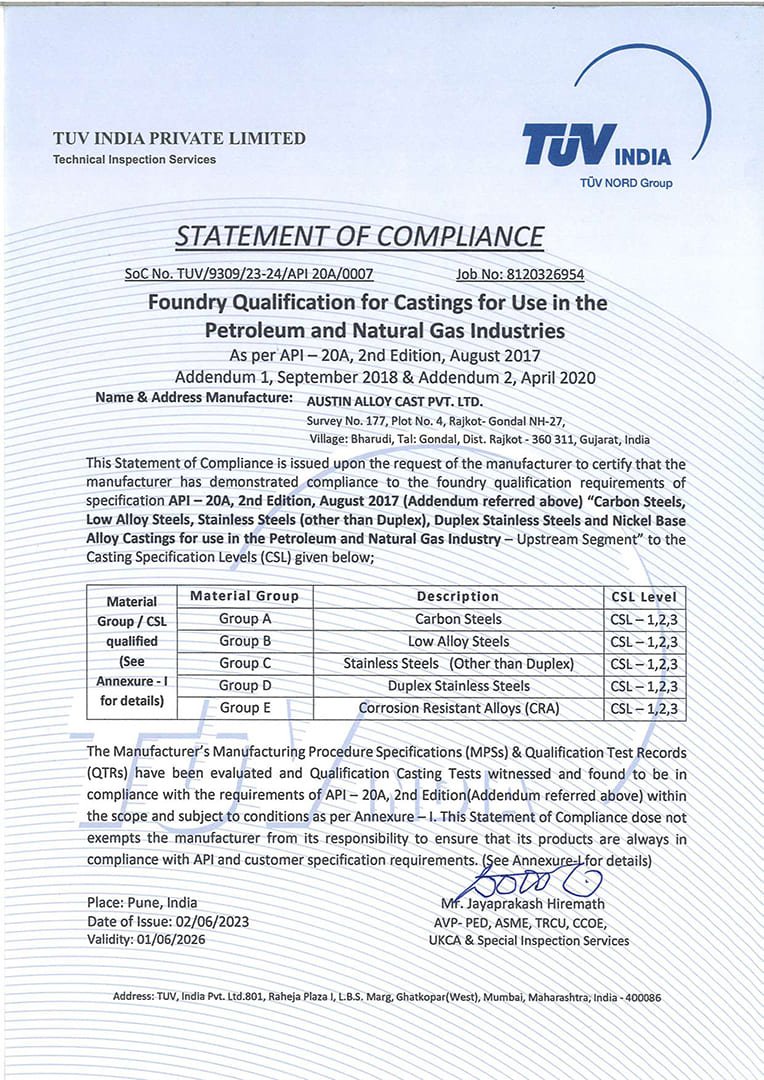
  • Global standard compliance — Our castings meet international standards (ASTM, DIN, ISO), and we hold approvals for critical industries including marine, oil & gas and general engineering.

We have provided our clients with complete end to end service capabilities through the integration of advanced infrastructure, engineering expertise and skilled personnel, from Design; Consultation and Prototype Development to Finished Components ready for installation.

The Importance of Investing in High Performance Alloys

Typical steels or more common types of metal usually don’t hold up when put into the vicinity of high temperatures starting with turbines up to the corrosive and erosive effects of water and chemicals to the extent of using steels for large mechanical systems which have much heavier loads placed on them than both chemical and water applications. Superalloys, duplex alloys, cobalt alloys and heat resistant steels fill the gap of what traditional alloys have failed at.

With the proper alloy, the following characteristics are maintained:

  • Resistance against extreme heat and thermal cycling
  • Resistance against corrosion, abrasions, and erosions
  • Strength and toughness maintained while applying mechanical forces
  • Will operate and perform reliably over the long term with little to no corrosion and a fictitious lifespan

At Austin Alloy Cast, we have a complete line of materials; Carbon Steels, Stainless Steels, Alloy Steels, Duplex and Super Duplex grades, Tool Steels, Nickel Alloys, Cobalt Alloys, Monel and Heat Resisting Steels allowing you the freedom to select a material that’s best suited for your application.

Superalloys; Strength & Stability Under Extreme Heat

For applications involving high temperatures and thermal stresses such as turbines, furnace parts, power plant components and aerospace hardware nickel based superalloys and other heat resistant alloys are the materials of choice.

These alloys:

  • Maintain strength at elevated temperatures
  • Resist creep and deformation under sustained heat
  • Offer oxidation and thermal fatigue resistance

At Austin Alloy Cast, our foundry is fully equipped to cast these superalloys in air-melt condition via the lost wax investment casting process, ensuring fine surface finish, dimensional accuracy, and minimal defects.

Once cast, components are subjected to strict heat treatment, inspection, and quality control guaranteeing performance even in the most demanding thermal environments.

In fact, Nickel based alloys like Inconel 625 are regularly poured at our foundry. We have the capabilities to execute large order in such exotic materials.

Duplex & Super Duplex Steels; Balancing Strength with Corrosion Resistance

For industries like marine, offshore, chemical processing, and petrochemical components often face harsh corrosion, saltwater exposure, acidic media, or chloride rich environments. Simple stainless steel may not suffice here.

Duplex and Super Duplex steels are alloys made with Austenitic and Ferritic phases, and represent the perfect marriage of strength and corrosion resistance due to their:

  • High tension and toughness
  • Resistance to Pitting, Crevice and Stress Corrosion
  • Reliability under cyclic loads and corrosive environments

We’re able to use these alloys in pump housings, valve bodies, subsea components, offshore equipment and chemical processing hardware.

We regularly cast components of duplex grades at our facility, closely monitoring the microstructure to ensure compliance with stringent industry regulations.

Tool and Cobalt Alloys; Designed for Wear, Erosion, and Hardness.

Wherever wear resistance, galling resistance, or sustaining hardness is critical due to an application’s requirement for a combination of high stress TEMPERATURE conditions, Cobalt Based Alloys are outstanding choices.

Cobalt Based Alloys, along with their excellent wear resistance, are also ideal for the following applications:

  • Valve seats, trims and cores
  • Pump components including sleeves, bushings, etc. subject to significant wear
  • Die, Tool, and Wear Plate Applications for Hot Working Application
  • Any component that will be subjected to abrasive/erosive MEDIA.

Cobalt Base Alloys may prove difficult to machine or forge; therefore, investment casting would be a preferred method. At Austin Alloy Cast, we utilize our ability to cast cobalt based alloys to cast complex geometries and intricate parts with a minimum amount of finishing and consistent mechanical properties.

Heat resistant steels/alloys Dealing with thermal cycles and environmental strain

Many industries use heat resistant materials via periodic thermal cycles, oxidising atmospheres, or extended periods of exposing to HIGH TEMPERATURES. For those conditions, heat resistant steels or Specialty Alloy Steels provide you with the durability you need.

These materials withstand the following:

  • Scaling and Oxidation
  • Thermal fatigue and distortion
  • Loss of Mechanical Strength over multiple cycles.

Through precise control in melting, casting, and post casting heat treatment, Austin Alloy Cast ensures that heat resistant steel castings meet design specifications and withstand long term exposure to thermal stress.

Metallurgy, Process Control, and Quality are Important

High performance castings require more than just choosing a good alloy. At Austin Alloy Cast we focus on:

  • Accurate chemistry and composition of the melt,
  • Proper handling of the wax pattern, including controlled shell building,
  • Controlled temperature and time for pouring and solidification,
  • Proven heat treatment cycles that meet the requirements of each alloy,
  • Thorough inspections and tests, including radiographic, dye penetrant, magnetic particle, ultrasonic, microstructure examination and dimensional measuring.

This structured process ensures that the castings supplied to customers are free from any defects, correctly sized, and possess consistent mechanical and chemical characteristics in extreme service environments.

Conclusion

In today’s industrial economy, the requirements for industrial land applications offshore drilling, power generation, chemical processing, heavy equipment, and marine are extremely demanding of component performance. Conventional materials simply cannot meet the required performance criteria. In this regard, high performance alloys and precision investment casting are essential.

Austin Alloy Cast utilizes decades of metallurgical experience and expertise combined with modern facilities, international quality control standards, and an unwavering commitment to customer satisfaction. No matter if you require nickel based superalloys, duplex/super duplex steels, cobalt based alloys, or heat resistant steels, we will provide you with components manufactured to the highest integrity levels of accuracy and consistency to perform in the most severe environments.

If you are a component designer whose applications are subjected to high stress, high corrosive wear intensive environments, contact Austin Alloy Cast today and partner with us. We don’t merely manufacture metal components, we engineer reliability, performance, and confidence.

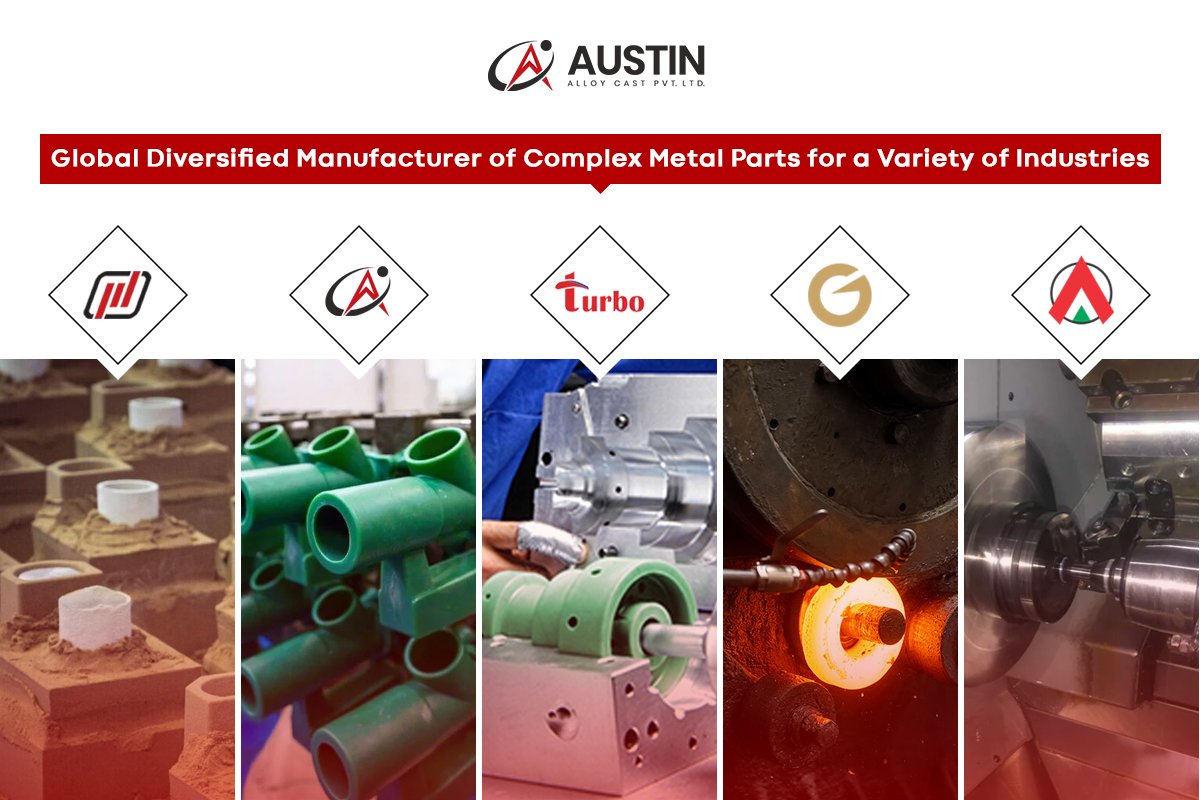
Global Diversified Manufacturer of Complex Metal Parts for a Variety of Industries

In today’s rapidly evolving industrial landscape, companies across the world are searching for reliable manufacturing partners who can deliver precision components, engineering expertise, and global support under one umbrella. Austin Alloy Cast, part of the Emporia Group, stands out as a diversified, globally trusted manufacturer of complex metal parts serving a wide spectrum of industries including automotive, oil & gas, pumps, valves, agriculture, energy, and general engineering, aerospace, electronics.

With a legacy built on engineering excellence and customer first service, Austin Alloy Cast has earned its reputation as a world class investment casting manufacturer specializing in stainless steel castings, alloy steel castings, and highly engineered metal assemblies.

Emporia Group: A Unified Strength of Metal & Non Metal Divisions

As a division of the Emporia Group’s industrial powerhouse, the Metal Processing Division is a group of specialized manufacturing companies, focused on expertise in castings, forgings, or machining. These companies have teamed up to form one of the most diversified and vertically integrated metal component ecosystems in India, focusing on supplying various global industries.

Here is a summary of all the companies within the Metal Division:

METFLOW CAST PVT. LTD. 

Steel Sand Castings

Metflow Cast is one of the Emporia Group’s core strengths in heavy and medium weight steel sand castings. With the capability to produce castings up to 750 kg per piece, Metflow is equipped to handle large, structurally demanding components that require robust metallurgical integrity.

The facility is designed for flexibility across a wide range of steel alloys, making it an ideal partner for industries such as:

  • Valve and pump manufacturing
  • Agriculture and off highway equipment
  • Construction machinery
  • General engineering applications

Its infrastructure is specifically optimized for high quality molding, controlled pouring processes, and post casting treatments ensuring reliable and consistent results even for complex geometries and demanding dimensional requirements.

AUSTIN ALLOY CAST PVT. LTD.

Steel Investment Castings

Austin Alloy Cast is the great precision engineering under the Emporia Group. As one of India’s largest single site manufacturers of steel investment castings, the company is capable to produce to complex near net shape components up to 200 kg per piece.

With expertise in stainless steel, duplex, alloy steel, and high performance metals, Austin Alloy Cast serves the needs of industries requiring high levels of accuracy, surface finish, and engineering materials performance which can include applications in:

As a leading investment casting manufacturer, we deliver near net shape solutions for industries such as:

  • Automotive
  • Pumps & valves
  • Marine
  • Oil & gas
  • Industrial machinery
  • Defence & heavy engineering

With advanced process control, in house NDT, machining, and heat treatment tie ups, Austin Alloy Cast ensures consistent dimensional accuracy, metallurgical reliability, and superior surface finish.

TURBO CAST (INDIA) PVT. LTD.

Aluminum Investment Castings

Turbo Cast operates one of India’s most sophisticated facilities devoted solely to aluminum investment castings. It is the only foundry in India devoted exclusively to aluminum investment castings for aerospace, defense, electronic, and medical use.

The facility is Nadcap accredited for multiple special processes a universally accepted standard for high precision aerospace fabrication and is capable of producing aluminum investment castings up to 25 kg. Turbo Cast provides an unparalleled ability to produce extremely lightweight, high strength components with aerospace grade precision.

Its advanced process controls, alloy handling capabilities, and rigorous inspection systems enable it to meet the demanding certification and reliability standards of mission critical industries.

GALAXY TECHNOFORGE (I) PVT. LTD.

Seamless Rolled Rings

Galaxy Technoforge is the forging division of the Emporia Group with a specialty in seamless rolled rings and profile ring forgings. These rings are critical components for:

  • Automotive
  • Heavy engineering
  • Power transmission
  • Railway and aerospace sub systems

The company produces ring forgings in numerous diameters and cross sections for use in performance critical applications such as bearings, gears, flanges and rotating machinery. Its processes control forge grain flow, giving improved strength and mechanical properties.

With state of the art, sophisticated forming equipment and heat treatment facilities, Galaxy Technoforge meets the needs of both the automotive and non automotive sectors with reliable, high precision forged components.

Ayushi Engineering Pvt Ltd

Machined Components

Ayushi Engineering provides precision machining solutions for castings, forgings, and bar stock components. With multi process machining capabilities including CNC turning, milling, pressure die casting machining, and shell mould machining, the company supports a wide variety of industries.

Ayushi stands out due to:

  • Flexible production from prototypes to mass production
  • World class measurement & testing infrastructure
  • Ability to handle multi material components
  • Strong supply chain collaboration with Group foundries

The company plays a critical role in delivering fully finished, ready to assemble components within the Emporia Group.

Non-Metals Division – Consumer, Industrial & Healthcare Excellence

Apart from metals, Emporia Group has a significant footprint within sectors that support consumer markets, industrial supply chains and healthcare production.

Austin Foods & Beverages Pvt Ltd – Food Processing

This division supports the consumer food sector by contributing processed foods and beverages that meet high production and hygienic standards that the Group also adheres to. This also represents the Groups’ diversification beyond engineering and into one of the fastest growing segments of FMCG. At Austin, we run highly automated canning lines to support our Global clientele.

Tilara Polyplast Pvt Ltd – Plastic Manufacturing

Tilara Polyplast produces Polycarbonate & Acrylic Sheets. Its advanced extrusion machines and processing control technology deliver high quality extruded plastic sheets. It has range of products which includes Polycarbonate Solid Sheets, Polycarbonate Multiwall Sheets, Acrylic Sheets, and General-Purpose Polystyrene Sheets (GPPS).

Alec Enterprise Pvt Ltd – Industrial Chemicals & Solvents

Alec Enterprise serves as the Group’s chemical trading division, trading industrial chemicals for consumption in manufacturing, engineering, agriculture and processing applications. Due to Alec Enterprise’s products serving as the extension of many upstream and downstream production supply chains, it serves as a key enabler for regional industries.

SNJ Lifecare Pvt Ltd – Pharmaceuticals

SNJ Lifecare’s importance in the healthcare market is based on its role as an API Active Pharmaceutical Ingredient. Their commitment to manufacturing pharmaceutical products in audited production facilities and regulated environments provides safe and reliable product, elevating the healthcare ecosystem.

Streamlining Supply Chains with Multiple Capabilities

Global OEMs and industrial manufacturers are attempting to simplify procurement, reduce vendor complexity and enhance supply chain stability. Austin Alloy Cast supports this initiative with its multiple metal part manufacturing capabilities. Our capabilities allow you to consolidate processes and suppliers into a single source you can trust.

Austin Alloy Cast provides investment casting, sand casting, forging, machining, finishing, and assembly preparation in a single group. This eliminates the need for multiple suppliers for each individual process. The benefits of this include:

  • Reduced Procurement Time
  • Reduced Administration and Logistics Costs
  • Consistency in Metallurgical Quality in all Parts
  • Reduced Risk of Part to Part Variation
  • Improved Responsiveness to Design Modifications
  • Shortened New Product Development (NPD) Time

In addition, our metallurgical and process engineering team sponsors the right manufacturing method for you based on the geometry of the part, performance requirements, and cost per part efficiencies, even when this means developing a hybrid solution from investment casting, sand casting, or forging.

International Expertise and Global Services

Austin Alloy Cast has developed a worldwide ecosystem to provide dependable and consistent performance to clients on multiple continents.

Manufacturing Facilities – Western India

Our modern manufacturing hubs in Western India serve to support the group’s manufacturing backbone. Utilizing modern induction furnaces, automated shelling lines, CNC machining centers, dedicated inspection laboratories, heat treatment facilities, and testing capabilities, the facility offers the speed and precision which is demanded and expected from concept to finished product.

Regional Office – Singapore

Our regional office in Singapore continues to enhance communication with customers across Southeast Asia, East Asia, and the Pacific region. This office creates a global bridge offering speed, technical engagement, and customer engagement.

Warehousing Facility – United States

Austin Alloy Cast has a logistics and stocking presence in the United States assuring short lead times and inventory available to North American customers. Customers can rely on just in time (JIT) delivery for OEM and/or resellers and facilitating smoother supply chain planning.

Representative Network

We have well established representative network spanning across Europe, North America, APAC regions. Hence, covering the major sales markets. We work with these techno-commercial agents to maximise customer satisfaction by minimising time zone, linguistic & Cultural differences.

Global Customer Base

With local representatives in major global markets, customers can access fast technical support, commercial support, and shorter response times. Austin Alloy Cast and the Emporia Group currently service customers in over 20 countries and provide added insulation to our brand as a truly global metal component manufacturer.

Conclusion: Your International Partner for Precision Metal Components

As industries evolve and supply chains adapt, Austin Alloy Cast continues to shine as a trusted manufacturing partner, ready for the future, and connected globally. With the strengths of the Emporia Group as our foundation and driving force of engineering superiority, we deliver value through,

  • Precision investment casting
  • Stainless steel and alloy steel casting
  • Sand casting
  • Rolled ring forgings
  • Full scale machining solutions
  • Global logistics and technical support

Austin Alloy Cast consolidates supply chains, unites processes, and provides real “one stop” sourcing, allowing customers to run more efficiently, innovate faster, and achieve more performance in every application.

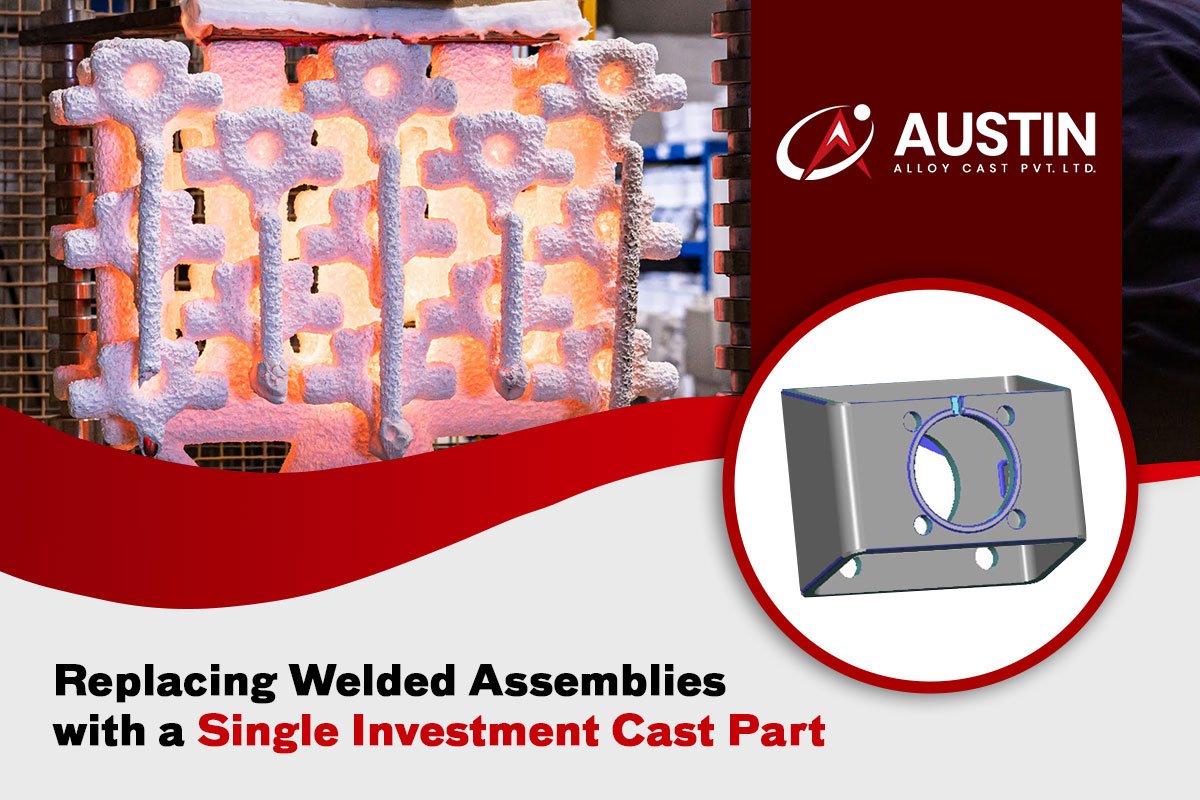
Replacing Welded Assemblies with a Single Investment Cast Part

In the current competitive manufacturing environment, design engineers and procurement groups feel pressure to lower costs, enhance product reliability, and shorten production cycles… without sacrificing quality. At Austin Alloy Cast, a leading investment casting manufacturer whose primary focus is stainless steel casting, we regularly partner with customers to achieve these goals by replacing the conventional welded assembly process with one singular, Robust, cast component.

This case study illustrates how our transformation not only simplified our customer’s manufacturing, but also decreased their cost by nearly 60%, improved product performance, and increased efficiency overall.

Background: The Challenge of a Welded Assembly

Austin Alloy Cast was approached by their client, a well-known Valve manufacturer, because of ongoing issues with one of their critical components a welded stainless steel housing assembly made of multiple components that were assembled together using complicated welding processes.

While the welded design seemed reasonable at first, it started to deteriorate rapidly with significant disadvantages related to:

  • Costly fabrication with multiple subcomponents, welding labour and the potential of rework. In most developed countries, there is shortage of skilled Labours.
  • Difficulties in distortion and alignment as a result of weld heat input.
  • Varied mechanical properties in and around the weld areas.
  • Long manufacturing cycle times due to post weld machining, inspection and testing.
  • Poor surface finish that required expedited machining to meet functional needs.

The customer wanted to keep the same functional design while improving strength and consistency at a lower cost and Austin Alloy Cast had the right answer with investment casting.

Solution: Replace ‘Welded Assemblies’ with a Singular Investment Cast Component.

Following a thorough feasibility study the engineering team recommended changing the welded housing assembly into a one piece, investment cast component made of a WCB/CF8M material.

The advantages of this solution included:

  1. Design Simplification:

The component structure can now be created as one, nearly net shape cast product without any welded joints or assembly operations. Additionally, complex internal passageways and contours that need to be welded can now be produced directly during the investment casting process, as investment castings possess an inherent ability to reproduce complex geometries.

  1. Better Mechanical Properties:

Welded parts often present heat affected zones (HAZ) with different microstructures and residual stresses, but investment cast parts are uniform and have isotropic mechanical properties throughout. The investment casting process offers better fatigue life, greater load capability, and superior resistance to corrosion and cracking.

  1. Better Surface Finish and Dimensional Tolerance:

It follows that investment castings will provide a quality surface finish and tight tolerances. This provided significant machining time savings, as the part will have near net-shape finish.

  1. Lost-wax process offers great repeatability:

Overall production lead time has been significantly reduced. The requirement for numerous welding, alignment, inspection, and subsequent heat treatment steps have all but disappeared, allowing for a much quicker and consistent production flow.

  1. Economic Benefit:

Perhaps most impressive was the cost reduction of nearly 60% of the prior welded assembly. This was realized through material optimization, followed by the absence of multiple manufacturing steps, as well as reduced manpower and inspection time.

How Austin Alloy Cast Made It Happen:

At Austin Alloy Cast, any undertaking begins with a structured, engineering based process.

  1. Design for Casting (DFC):

We worked closely with the customer’s design engineers in order to design the part geometry for casting. The fillet radii, draft angles, and wall thickness were optimized for proper metal flow and sound castings.

  1. Tooling and Wax Pattern Development:

Investment casting tooling was developed to accurately match the redesigned model. Wax patterns were manufactured and assembled into trees, minimizing dimensional instability.

  1. Shell Building and Pouring:

Utilizing a controlled ceramic shell process, a durable mold was created. Molten stainless steel was poured with strict metallurgical controls to achieve a uniform grain structure and density.

  1. Heat Treatment and Finishing Processes:

To improve mechanical properties and corrosion resistance, the castings underwent solution annealing. Operational CNC machining was kept to a minimum to achieve final tolerances. Surface finishing, along with non destructive testing (NDT) assessed the parts for integrity.

  1. Inspection and Validation Processes:

To ensure that each part would fit properly and was dimensionally correct, it was stamped upon validation using a CMM Coordinate Measuring Machine. NDT methods, including dye penetrant and radiography, helped confirm the absence of internal defects and surface defects.

Results: Tangible Gains in Every Metric

The switch from a multi piece welded assembly to a single stainless steel investment cast part resulted in meaningful and substantial improvements in all factors related to both production and performance. The most significant benefit was the significant cost savings a reduction of around 60% all due to not having to perform the several steps of fabrication: cutting, aligning, welding, grinding, and heat treatment. The part could be cast as a single component, so a highly skilled welder, a jig, fixture, and multiple inspections were not required; thus, the labor costs were much lower and the overhead directly associated with these inspections dropped to zero.

In addition, the lead time for manufacturing was less for the same reason. The investment casting process created a predictable and repeatable flow of work that eliminated the need to plan for countless fabrication processes or wait on inspection criteria. Instead, Austin Alloy Cast was able to deliver finished castings in short lead times, increasing customer turns and supply chain efficiency.

From a technical perspective, the new investment cast design exhibited better mechanical integrity and reliability. The previous welded joints were typical weak points that sometimes formed microcracking or stress concentrations with cyclic loads and thermal shifts. The investment cast component had consistent mechanical properties and performance throughout the entire component, with no weld weak points due to cracking, hardness variations, or strength.

The resulting part had better tensile and fatigue resistance and improved corrosion resistance, as well as less dimensional changes during operation. Additionally, the investment cast surface finish and dimensions from an assembly standpoint were improved over welded assembly. Also, the investment cast parts near net shape quality minimizes fabrication and tooling time, and material savings enable consistent and predictable performance/consistency.

In conclusion

This case study has shown how Austin Alloy Cast a trusted investment casting manufacturer facilitates the transition from complex welded assemblies to cost effective high strength stainless steel castings.

By leveraging our knowledge in investment casting and stainless steel castings we help industries achieve optimized designs, reduced costs, better reliability, and faster turnaround.

Whether automotive, pump, or process equipment our focus is to continue to provide precision, performance, and perfection by leveraging world class investment casting solutions. We play a role of a technical consultant for your Metal components requirements. Turns out, that is the greatest value addition we provided to our customers.

Investment Casting vs. Sand Casting: We Act as Your Technical Consultant to Choose the Most Cost-Effective Process Best Suited to the Component Application

In today’s competitive world of manufacturing, the choice of how to cast components can be the difference between a cost effective, proven, and reliable component versus one that has a challenge to perform. Both investment casting and sand casting are time tested processes for producing metal parts with different characteristics and suitability depending on design complexity, volume, and application.

At Austin Alloy Cast, we do not simply cast your parts we become your technical consultant and assist you in your choices of processes to provide the most economical and sound technical solution for the intended use of your component.

What sets us apart is that we are one of the few foundry groups in Western India with both steel investment casting and sand casting capabilities in house, both are backed by our group company Metflow, which specializes in sand castings of high quality.

Getting to Know the Two Casting Methods

Investment Casting i.e Redefined Precision

Investment casting also known as the lost wax process. A wax pattern is created and then coated with a ceramic material. The ceramic will harden, and then the wax is melted out, and molten metal is poured into that cavity. Once cooled, the shell is broken away revealing a near net shape metal part.

The investment casting process is a good option for:

  • Intricate shapes and complex geometrics
  • Tight dimensional tolerances
  • Smooth surface finishes
  • Thin walled and lightweight parts

At Austin Alloy Cast we manufacture stainless steel casting, alloy steel casting, duplex and super duplex steel castings, for parts requiring precision, reliability, and performance.

Sand Casting — Strong and Affordable

In sand casting, a pattern is pressed into sand to form a mold. Afterward, molten metal is poured into the cavity of the mold, allowed to solidify, and the sand mold is broken to retrieve the casting.

This method is favoured for:

  • Large castings
  • Low tooling costs
  • Moderate tolerances
  • Low to moderate annual volumes

Metflow, our group company, has years of experience producing sand castings in steel. Metflow has modern molding lines, induction melting furnaces, and finishing capabilities. Together, Austin Alloy Cast and Metflow provide customers with the ultimate flexibility in choosing from fine detail investment castings or large, heavy duty sand cast items.

Choosing Between Investment Casting and Sand Casting

The process of selecting the appropriate casting method is dependent on a delicate equilibrium of technical, functional, and economic considerations. We start at Austin Alloy Cast by understanding the end use of the part, including its size, geometry, surface finish requirements, and production volumes. Investment casting is usually the best choice for complex, high precision components that require superior dimensional accuracy and surface finish. Investment casting is well suited for small to medium parts with complex geometries requiring thicker walls and tighter tolerances, where the ability to achieve near net shape accuracy can effectively eliminate machining and finishing operations.

On the other hand, sand casting, with the support our group company Metflow, is typically the preferred process for larger, more robust components where investment casting does not make economic sense due to the weight and size of the component. Sand casting allows for flexibility with lower to medium production quantities coupled with reasonable tooling costs and reduced mold preparation time. The surface finish and dimensional tolerances are not as fine as investment casting but it provides excellent cost savings for heavier duty industrial applications like housings, brackets, and structural parts.

Leveraging our technical expertise and dual process capabilities, we assist customers in identifying the process that provides the best trade off among cost, accuracy and performance. Austin Alloy Cast carefully analyzes the part design, anticipated load conditions and manufacturing logistics to verify that each component is produced using the most technically efficient and economical process whether it be precision investment casting or heavy duty sand casting through Metflow.

Our Two-Pronged Process: Investment Casting + Sand Casting.

Austin Alloy Cast two pronged process streamlines the customer’s experience, as it allows a client to select the best overall solution for their project without fear of any one process not being technically available.

Advantages of our Investment Casting division:
  • Sophisticated wax injection systems and ceramic shell systems.
  • CNC based dimensional checks.
  • Materials include: stainless steels, duplexes, alloy steels, and nickel based alloys.
  • Capability with small to medium complexities/tolerances.
  • Full in house machining, NDT, and heat treating capabilities included.
Advantages of our Sand Casting division (Metflow):
  • Automated no bake molding lines.
  • Medium to large steel casting capability.
  • Tips from experienced metallurgist improving overall quality consistency.
  • All NDT including Radiography and Machining in house.
  • Demonstrated capabilities in the industrial, energy, and heavy engineering sectors.

Overall, we provide a single point source for casting and foundry solutions to a variety of sectors including renewable energy, oil & gas, marine, pumps & valves, and general engineering.

Serving as Your Technical Advisor

All of our projects start with us understanding your design, function, and operating parameters. Our engineering team will assess the following:

  • The geometry of the component and any associated loading.
  • The strength of the material and any requirements for resistance to corrosion.
  • The tolerances or requirements for surface finish.
  • The expected production volumes.
  • Cost per part analysis.

Once we have established these parameters, we will propose the process that provides the best value with regard to cost and technical feasibility, whether that be utilizing precision investment casting, or durable sand casting using Metflow.

With our knowledge of both processes, we can also hybridize the approaches. For example, we could prototype the design using sand casting and produce using investment casting once the design has been validated.

Providing Quality, Accuracy, and Sustainability

The mechanism we leverage with our investment and sand casting methods at Austin Alloy Cast and Metflow is backed by cutting edge melting, testing and inspection facilities that include new:

  • Induction furnaces that enhance melting controlling,
  • Spectrochemical analysis for alloy testing.
  • Non destructive testing (Dye Penetrant, Magnetic Particle, Radiography, UT)
  • Dimensional measuring with CMM.
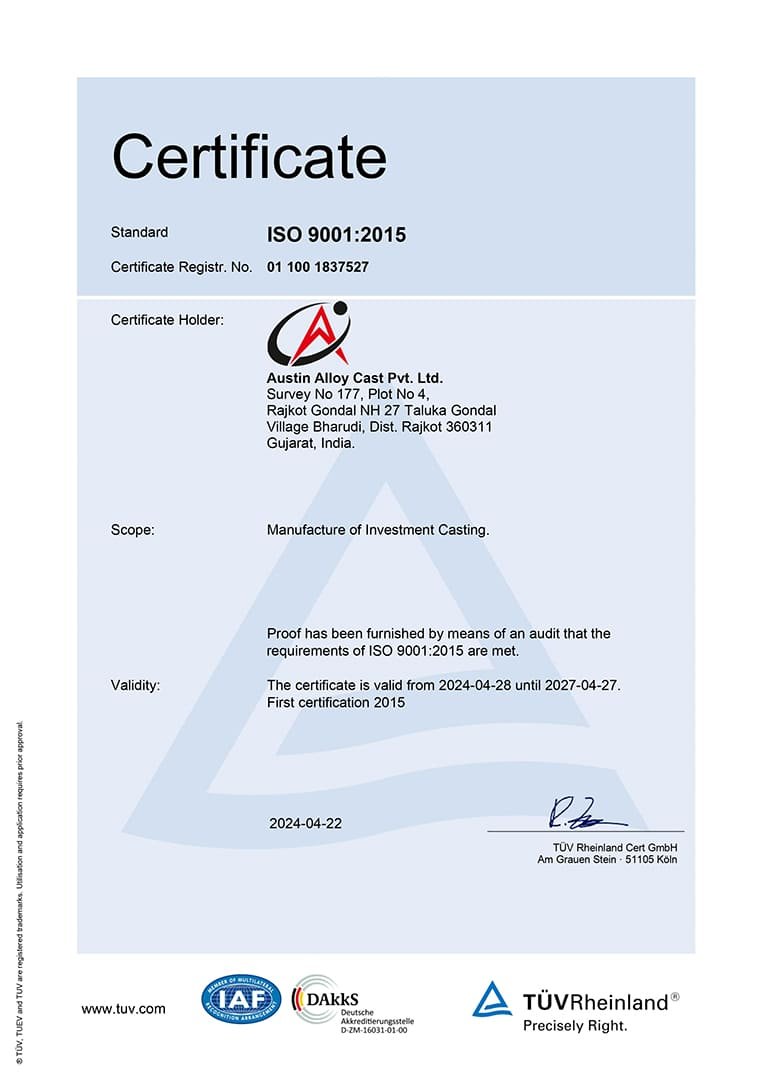
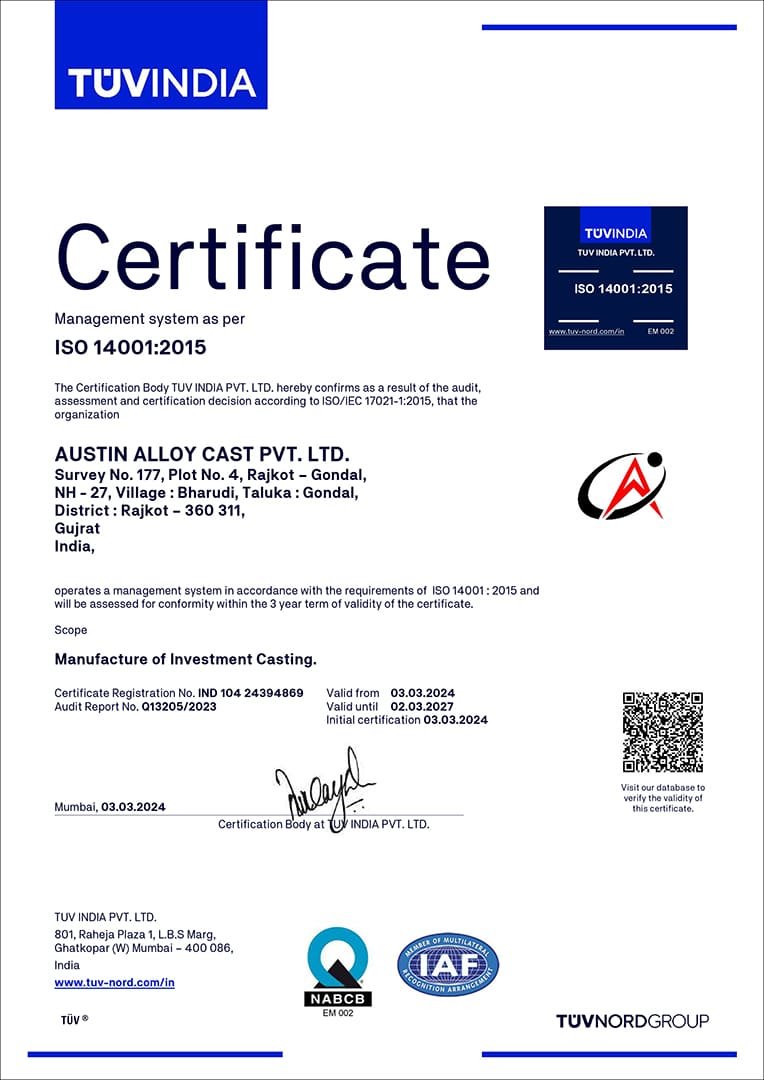
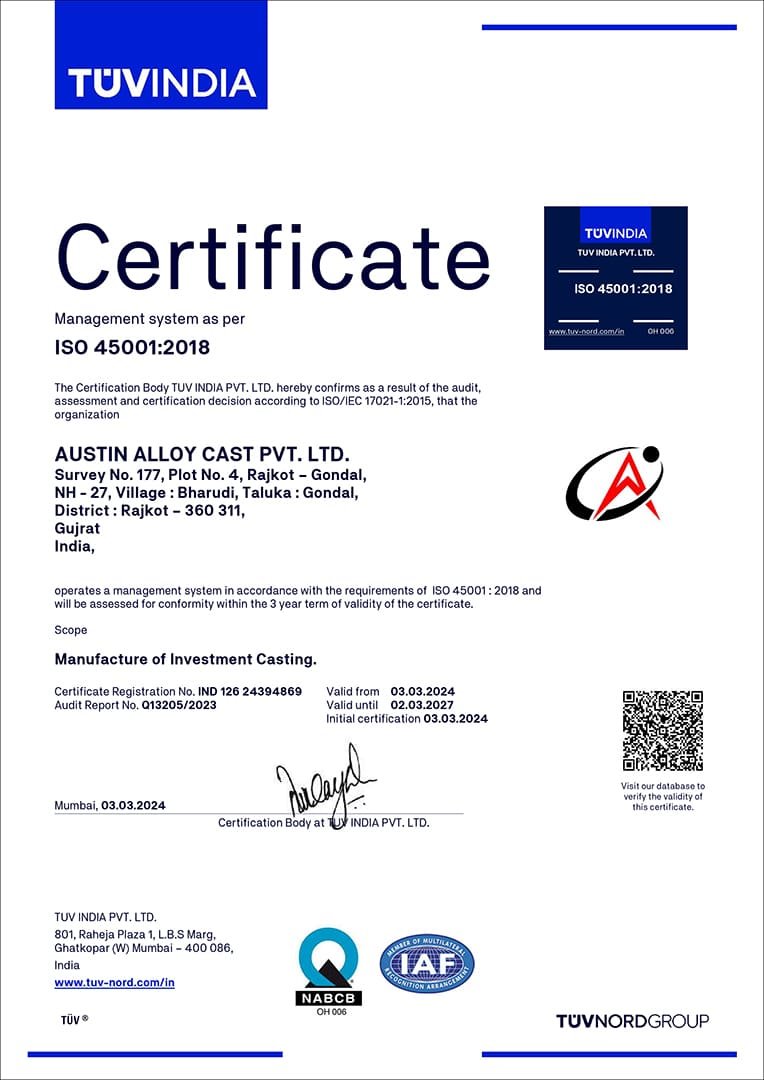
  • Management systems certified to ISO 9001, 14001 and 45001.

In addition to the non destructive testing and inspection, we further focus on sustainability in our operations which include optimizing material usage, our recycling of foundry sand and waste generation in each of our casting divisions.

Conclusion: Two Processes, One Commitment to Excellence

With the complementary capabilities of Austin Alloy Cast and Metflow, we offer customers a unique value proposition complete technical expertise with totally in house production for both Investment and Sand Casting.

Whether your project requires fine detail stainless steel castings or or heavy duty sand cast steel components, we ensure that the selected process meets and exceeds your operational needs and budget objectives.

At Austin Alloy Cast we are more than a manufacturer, we are your casting consultant, helping you navigate selecting the right process, right material, and right value for every component application.

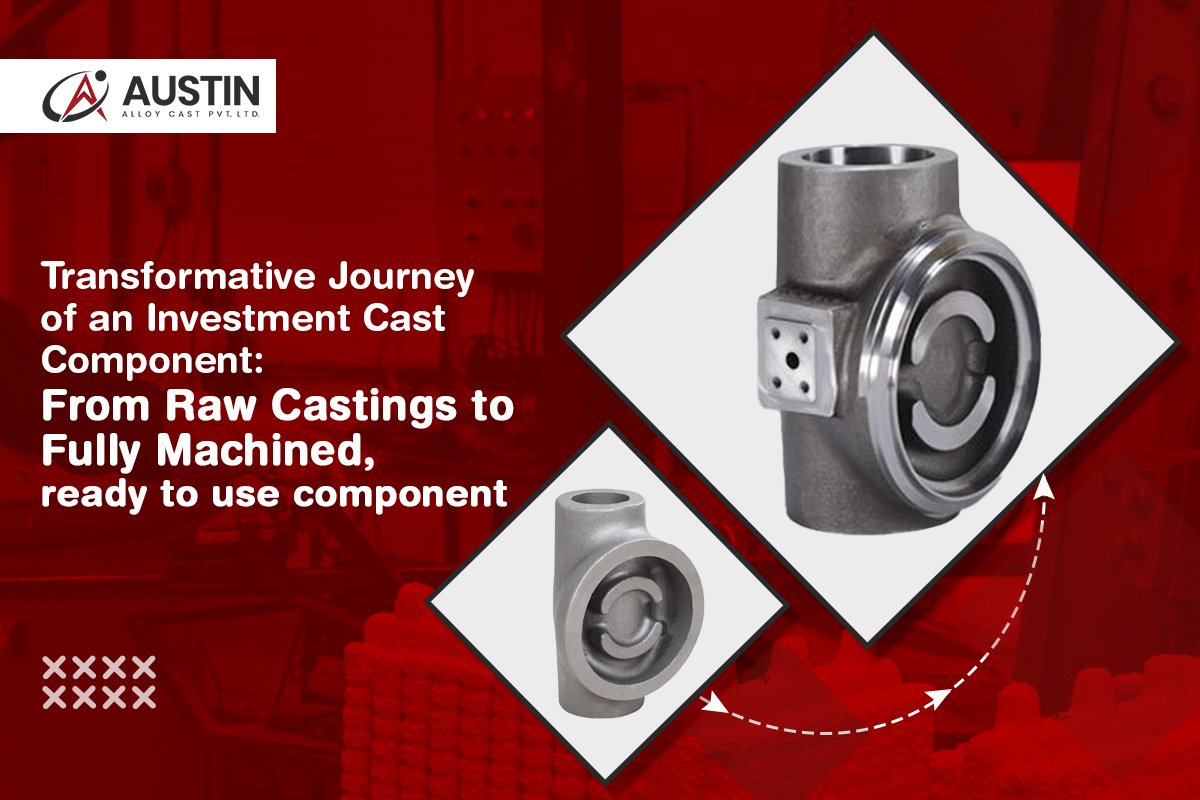
The journey of an investment cast component: From 3D design to fully Machined Castings at Austin Alloy Cast.

Each casting carries a narrative, a story of design, metallurgical achievement, and accuracy of execution. At Austin Alloy Cast Pvt. Ltd., we don’t just produce castings, we create engineering solutions to satisfy the most demanding requirements of our customers. The journey of custom casting consists of collaboration, creativity and quality. A process we have honed over the past 25 years, to guarantee that every piece we produce stands for the finest in performance and precision.

From the first digital blueprint to the last machined finish, every phase of our casting journey displays our skill set, advanced technology and dedication to excellence.

At Austin Alloy Cast investment casting process goes through below stages:

Step 1: Comprehending the Need

All journeys begin with an understanding. No casting is the same as another casting. Each has specific dimensional standards, specific strength requirements, and other application considerations. At Austin Alloy Cast, our process starts with a dedicated discussion with the design or engineering team from our client.  We take time to analyze and understand the application, environment, points of stress, and performance expectations.

By working collaboratively, we outline and define the very first inputs from alloy selection to tolerance specifications before the design work ever begins. Establishing this baseline starts the process of maintaining precision through to the end of the process.

Stage 2: Concept and 3D Design

After finalizing the customer’s design, our engineers take those concepts to create them digitally, using advanced 3D simulation software. This 3D design is more than just an image; it is a functional simulation that assesses metal flow to verify our methoding, factors like shrinkage and the distribution of stresses within the design, before the first mold is cut. The 3D design features provide an action plan to improve gating systems, yield and reduce wastage of metal. Everything just to provide cost effective solution to customers.

Additionally, it is the 3D design stage where we at Austin Alloy Cast begin to combine practicality and innovation. Utilizing CAD, pattern simulation and other tools, our engineering team can develop highly precise representations allowing customers to visualized the designed end component. These CAD representations allow for the change of designs at this stage proving cost and time savings from expensive physical iterations later on.

Stage 3: Tool Development with Precision

The next step is where design literally meets function tool making. The die is the basis of the casting, it’s what defines the dimensions and shape of the end product.

Tool development is an outsourced activity at Austin. We propose to our customer manual or automatic tooling based on the volume requirements. Using CNC machining technology, we make high quality patterns using wood, metal, or aluminium. Each is customized to suit the size, complexity, and production run of the casting. That ensures greater dimensional accuracy and repeatability that is required to maintain quality of the final pieces in large production runs.

The pattern development process is closely monitored by our experienced pattern makers and design engineers who collaborate to ensure the pattern matches the approved 3D model.

Stage 4: Wax injection & Tree building

Once the pattern is completed, we move to molding. Our team employs the right molding techniques to generate a cavity that captures the design of the component, depending on the desired alloy and design specifics.

Through complex internal geometries we manufacture precise sand cores that shape the inner cavities of the casting. These cores are made from high performance bonding materials to maintain their rigidity under high temperatures while keeping precise control of dimensions.

Stage 5: Melting and Pouring

Welcome to the realm of metallurgy and accuracy. During this phase, an alloy is melted in a controlled environment, whether it be stainless steel, or carbon steel, or a unique alloy. Chemical composition and melting temperature are monitored within strict parameters to produce a material that adheres to the customer’s specifications.

Every step is carried out within Austin Alloy Cast’s internal safety and quality control protocols, ensuring both operator safety and metallurgical excellence. The result is a precisely cast component that meets rigorous international standards of durability and performance.

For each melt, a heat record is kept on the charge composition, furnace number, melt time, pouring temperature, and deoxidation additions. These records serve as a means of traceable documents to assure processes are repeatable and materials conform to production batches.

Prior to pouring metal, the ceramic shell mold is coated with a predetermined number of primary and secondary coats under strictly controlled temperature and humidity conditions. It is important to control the ambient conditions as they avoid dimensional changes to the wax pattern and avoid cracking or distortion of the shell. The number of coats is dictated by the geometry of the casting, surface area, and in total weight, to provide optimum shell permeability and mechanical strength for the solidification of liquid metal and flowing into a mold cavity.

Stage 6: Cooling, Knockout, and Fettling

Once the molten metal is solidified in the mold, the casting is allowed to cool on its own before the mold is broken open. The result is a rough shape of the part and is still a perfect shape.

We perform shakeout operations to remove the sand and then continue to fettling to cut off any excess metal or risers. This stage prepares the casting for finishing and machining in the ground state to ensure the surface is smooth and free of defects.

Step 7: Heat treatment

For specific alloy requirements or application reasons, castings are heat treated to enhance mechanical properties, including toughness, strength, and ductility. We have an in house heat treating facility that allows for uniform heating and controlled cooling cycles, achieving the best possible performance to the original material.

Once the heat treat is complete, the casting is sand blasted or shot blasted to clean the surface, which is another important operation that leads to the smooth texture and finish desired by our customers. These operations are performed using automated systems to ensure consistency from batch to batch.

Stage 8: Non Destructive Testing (NDT)

Non Destructive Testing (NDT) forms an essential stage in the investment casting process, ensuring the detection of surface and subsurface discontinuities without impairing the integrity of the casting. At this stage, components undergo a series of standardized NDT evaluations to verify compliance with mechanical integrity and customer specific acceptance criteria.

The selection of NDT methods is determined by casting material, geometry, criticality of the application, and defect sensitivity requirements.

Stage 9: Machining

Prior to leaving our facility, every casting is subjected to extensive examination and testing. Our quality assurance department performs Non Destructive Tests, dimensional inspections, and chemical mechanical testing and inspections to confirm every product meets the international standards.

We believe quality is developed, not inspected. Therefore, we document and monitor each step of the manufacturing process. From spectroscopic analysis through to the radiograph inspection, our team works to assure that the final casting meets or exceeds expectations.

Step 10: Final Inspection

In the final inspection stage, each casting undergoes thorough visual and dimensional verification to ensure compliance with customer specifications and quality standards. Visual inspection identifies surface defects such as cracks, laps, or inclusions, while dimensional accuracy is confirmed using precision instruments like CMM, Vernier calipers, micrometers, height gauges, and dedicated fixtures. Measurements are taken against approved drawings and CAD models, ensuring tight tolerances and geometric accuracy. All inspection tools are periodically calibrated to maintain measurement reliability. Inspection findings are documented in the Final Inspection Report, ensuring full traceability, quality conformity, and approval before the casting is cleared for packing and dispatch.

We believe quality is developed, not inspected. Therefore, we document and monitor each step of the manufacturing process. From spectroscopic analysis through to the radiograph inspection, our team works to assure that the final casting meets or exceeds expectations.

Stage 11: Packaging and Shipping

The last stop on the casting journey is packaging and shipping. We recognize the importance of protecting our products during delivery, and we use specially designed packaging to protect them from corrosion, abrasion, and deformation. All shipments from Austin Alloy Cast come with degree inspection and test reports to demonstrate our transparency and reliability.

A Heritage of Accuracy and Reliability

Each casting produced here at Austin Alloy Cast is the culmination of our human skills, technology, and unwavering commitment to quality. From the RFQ stage through to the fully machined casting, each step of the process reflects the love we have for achieving perfect outcomes, while enhancing customer satisfaction.

Our commitment to our customers is to do just that make their every concept a high performing reality. The journey from concept to metal can be a long one, however, at Austin Alloy Cast we have the ability, the world’s most advanced facility and a strong commitment to quality, allowing us to define and deliver every custom casting project to excellence, in movement.

Things That Make Austin Alloy Cast a Trusted Name in the Casting Industry

The industry of casting does not build trust in short spam; it is developed with careful dedication to consistency, quality and precision over the years.  Austin Alloy Cast Pvt. Ltd. is proud to be one of the most trusted names in the casting industry. Over the course of time, we have cultivated an emphasis on quality assurance of engineering, and customer service satisfaction as accepted in the preferred practice with OEMs, exporters and other industrial partners.

Strong Foundation Leads to Trust Backed by Certifications

One of the foundational elements of trust in our industry is credibility and credibility begins with certifications. Austin Alloy Cast holds multiple meaningful certifications that are professionally recognized, and comply with industry standards, that validates not only our processes but also our systems of quality. Austin certifications are not just pieces of paper or diplomas, they also represent our rigid choreography to compliance, safety and standards of internationally recognized manufacturing standards.

Some of our key certifications include:
  • ISO 9001 — the global benchmark for quality management systems
  • ISO 14001 — for effective environmental management and sustainability practices
  • ISO 45001 — for occupational health and safety management systems
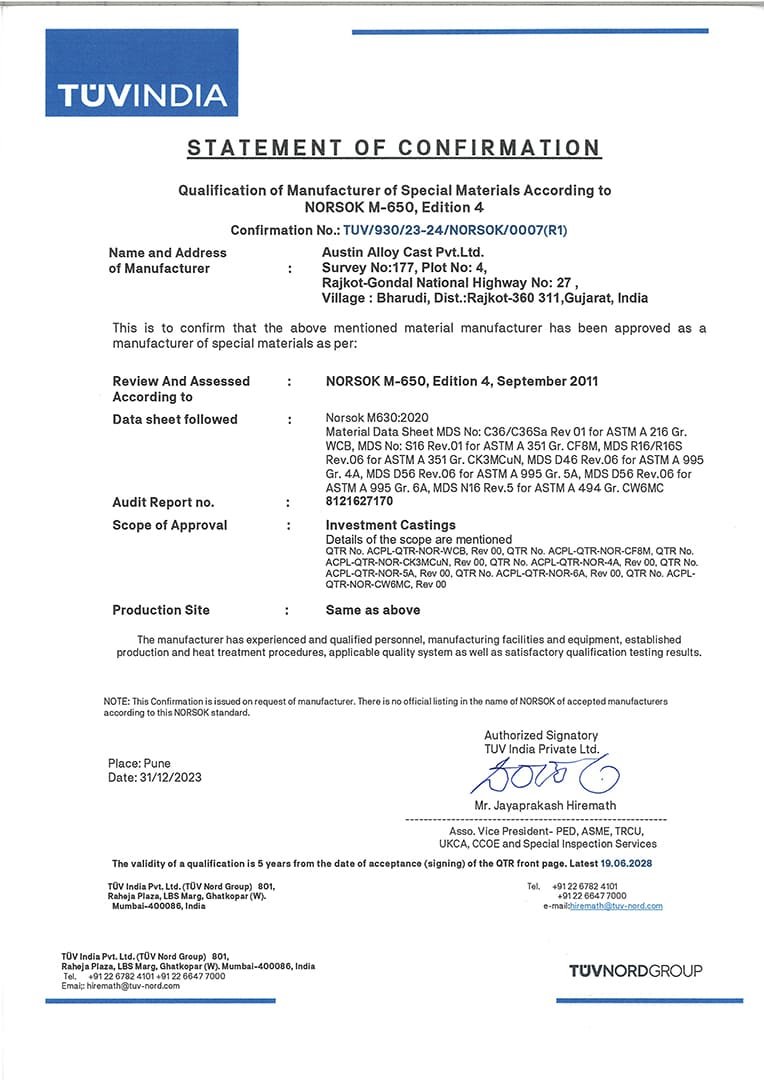
  • NORSOK – meeting standards specific to the Norwegian oil & gas industry
  • ABS – for shipbuilding / marine applications
  • LR (Lloyd’s Register) –for marine and industrial compliance
  • RINA – Italian Marine approval for quality, conformity assurance
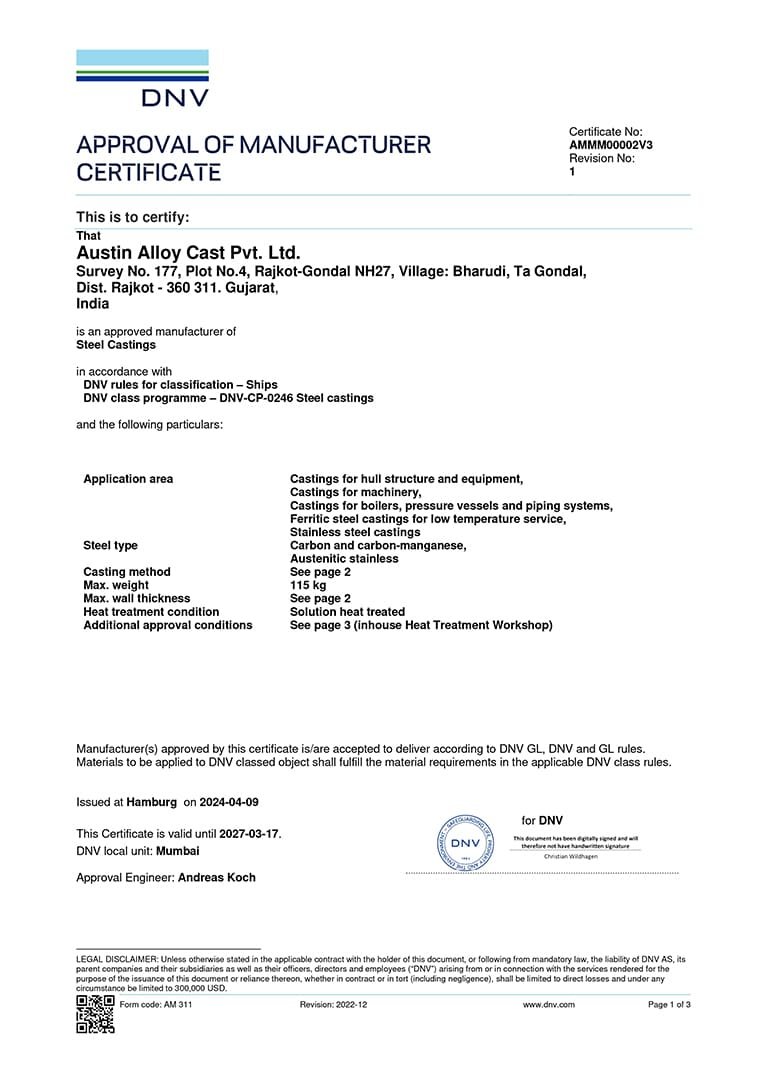
  • DNV-GL–for safety and reliability certification
  • BV (Bureau Veritas) –for global quality and safety standard

Our certified operations guarantee that each phase from design to shipment is monitored closely regardless of whether it is tracking the consistency of material composition or the global standards of dimensional accuracy. Our certifications enhance the reliability that customers have come to associate with the Austin Alloy Cast name.

Expert Team and Technical Expertise

At Austin Alloy Cast, we are driven by a technically sound and highly experienced management team with over 25 years of expertise in precision investment casting. Our leadership and core engineering team bring global exposure across mission critical sectors such as oil & gas,defense, energy, and heavy engineering, having successfully executed many complex projects worldwide. Backed by skilled metallurgists, process engineers, foundry technologists, and quality specialists, our team ensures every project is executed with deep technical insight, reliability, and long term performance assurance for our customers. We have specialized experience in cobalt, iridium, nickel, and stainless steel castings, and we consistently deliver high precision, safety critical components that meet international standards.

Our professionals adhere to the prescribed processes step by step; as a result, every casting is produced to the exact specification of the product. Continual training, exposure to new foundry technology and attention to process improvement allows us to produce castings that outperform expectations and last longer. We believe that individuals are truly the pillar of our consistent quality and expanding reputation.

State of the Art In House Facilities

For true precision casting, we maintain exhaustive in house facilities incorporating cutting edge machinery and quality control systems. Our facilities include precision machining units, integrated machining facilities, in-house radiography for both Cobalt and Iridium alloys, as well as sand blasting and shot blasting systems, which provide clean, smooth, and consistently detailed casting surfaces; ready to finish or assemble.

Having a complete spectrum of in house operations provides us two advantages: control of lead times and control of quality. It also minimizes third party reliance, while still allowing us to deliver promptly within tolerances. Responsible for every part of the operation, from melting raw materials to final finishing and packaging, we ensure every part of the process keeps consistency and reliability for our customers.

Multi Layer Testing for Total Confidence

At Austin Alloy Cast, we recognize testing is more than an event, it is a philosophy. Each casting is subject to multi layer testing, designed to find the tiniest defect prior to the product being sent to our customers.

Our tests include Non Destructive Tests, such as ultrasonic testing, magnetic particle inspection, and radiography to find any internal discontinuities without compromising the component integrity. Combined with our chemical and mechanical tests, we verify that our castings satisfy the appropriate chemical composition, tensile strength, hardness, and impact strength.

This multi-layer testing rigor is what allows us to guarantee that the products from Austin Alloy Cast not only meet but typically exceed customer expectations, one of the hallmarks of Austin Alloy Cast.

Global Network & Strong Financial Backing

With a strong global footprint and robust financial foundation, Austin Alloy Cast proudly operates its advanced manufacturing facility in Western India, serving as the core of our international operations. Our overseas sales office in Singapore strengthens our presence across Asia and facilitates seamless coordination with clients and partners worldwide. Today, Austin supplies high quality metal castings to customers in more than 20 countries, supported by a dedicated network of agents spanning the key markets of North America, Europe, and the APAC region. To better serve our global clientele, we also maintain a strategically located warehouse in Pittsburgh, ensuring prompt deliveries and local support. As part of a diversified corporate group, Austin offers comprehensive one stop solutions for a wide range of metal components combining design, engineering, and manufacturing capabilities under one roof. Our active participation in major international trade fairs reinforces our commitment to innovation, customer engagement, and a truly global vision for precision casting excellence.

Dedication to Innovation and Customer Satisfaction

At Austin Alloy Cast, we’re built on a culture of innovation and partnership with our customers. We don’t just provide castings, we provide solutions. Understanding each customer’s operational needs and maintaining a healthful attention to the details allows us to customize both the design of the casting as well as the alloy selected for manufacture in order to maximize performance and service life.

Whether we are providing precision components for heavy equipment, pumps, valves, or automotive parts, every cast component we provide is a combination of practical engineering thought and a commitment to functional service life. This customer first mentality is among the primary reasons our clients consider us for repeat business and lasting relationships.

We maximise customer satisfaction by minimising cultural, linguistic & time zone differences by working with a network of global representative networks.

Cultivating Trust through Transparency

For us, trust is not just a goal of business; it is a value that runs through the fabric of who we are. We are transparent with clients throughout the entire process from inquiry to delivery. We feel that we are working in partnership, rather than in transaction through upfront communication, technical collaboration, and follow up sales support.

The number of repeat clients and increasing global presence speaks to that trust and confidence in us. We are expanding in the number of industries we serve but our attention to detail and passion for perfection has remained the same.

The Austin Alloy Cast Commitment

The Austin Alloy Cast name is a guarantee of precision, long life and integrity in every cast part that leaves our doors. With our mix of quality certified systems, professional manpower, modern facilities and high end testing methods we lead the industry in setting the bar higher in casting.

Looking ahead, Austin Alloy Cast promises to continue to push beyond the boundaries of innovation, responsibility and offering castings for our customers that they can be assured are casted with integrity every time.

Why Investment Castings Are Ideal for Pump and Valve Components

Pumps and valves are of primary importance and yet frequently neglected in the industries that use gases and liquids. They are important for everything from food processing to water treatment and oil refining. In these critical situations, the parts must provide unmatched reliability and optimal performance. The manufacturing of these parts introduces different design and manufacturing obstacles, where strength, performance, and tolerances are uncompromisable factors. Among various production methods for such hardware, investment casting emerges as an outstanding approach for producing superior quality pieces. Austin Alloy Cast. rely on this technique regularly to supply components that fully meet global standards for their overseas partners.

These devices operate nonstop amid relentless strain, varying pressures, and harsh chemicals. Their elements must withstand abrasion, erosion, and exhaustion over time. Even small errors in the production process can result in unnecessary downtime, fluid losses, or the worst case state of functional failure.

With investment casting, manufacturers ensure that pump and valve components are produced with superior tolerances, refined surface quality, and material integrity, all of which are vital to demanding applications.

Key Pump Elements Produced via Investment Casting

For a pump to achieve optimal performance, its internal components must exhibit tight dimensional tolerances and mechanical integrity. This manufacturing approach ensures near net shape accuracy, superior surface finish, and microstructural uniformity, enabling the precise and consistent fabrication of intricate geometries essential for high efficiency pump operation.

  • Impeller:  Central to a pump’s job of transferring liquids, the Open & Closed impeller drives that action. This casting technique allows for intricate, flowing shapes with polished exteriors, optimizing liquid movement.
  • Shaft: It requires steady sizing and robust structural integrity. Using investment casting for shafts yields exact positioning and extended operational duration.
  • Bearing Housing: This shields the bearings to support flawless shaft movement. The process delivers precise measurements and strong resistance to wear in the pump’s housing framework.
  • Mount: The mounting setup in a pump system bears the load while providing steady support. It calls for sturdy, even material that counters vibrations. Investment casting accomplishes all these goals in a single step.
  • Volute Casing: This directs outflow from the impeller toward the exit piping. The casting method guarantees consistent thickness and even load bearing capacity across the casing, minimizing risks of rupture during intense pressure.

Adopting investment casting improves production outcomes for individual pump parts and the overall assembly. It leads to enhanced fluid dynamics, reduced energy use, and dependable long term operation, offering advantages to both the sector and the planet.

Targeted Pump Casting Applications
  • Centrifugal Pump Castings: Elements like impellers, Volute casing, and bearing frames require meticulous detail and excellent fluid handling prowess. Centrifugal Pump castings are used in industries like Oil & Gas, Chemical industry, Water & Waste water treatments.
  • Lobe Pump Castings: Components such as bearing housing, rotor housing, and base supports demand solid build and true to spec dimensions. Lobe Pump castings are mostly used in Food processing & Diary industry & in industries where highly viscous fluids are transported.
  • Split Case Pump Castings: Cast impellers and casings offer resilience against heavy liquid forces. The split case pump castings are used in various industries like Oil & Gas, Chemical industry, & Nuclear industry.

Overall, pump hardware gains from tighter seals, prolonged usability, and heightened productivity through this casting approach.

Essential Valve Parts Created with Investment Casting

Valves manage, guide, or halt liquid passage. They handle countless cycles of activation under parts produced this way include:

  • Body: The core vessel holding pressure. Investment casting yields compact, inclusion free structures capable of enduring elevated forces and aggressive settings.
  • Bonnet: This seals the body. The method provides snug connections and reliable closure traits.
  • Discs: These shift within the body to regulate passage. Cast versions deliver uniform toughness and anti corrosion properties, ensuring extended functionality.

Fabricating these via investment casting equips valves with elite closure efficiency, boosted endurance, and steadfast performance.

Varieties of Pressure relief valve castings
  • Butterfly Valve Castings: Bodies and discs call for exact contours to manage even flow. There are 2 types of bodies in butterfly valve i.e., triple offset & double offset, while under triple offset there are two more categories which is slide entry u& Top entry.
  • Ball Valve Castings: Bodies, spheres, and bonnets must lack flaws to achieve watertight seals.
  • Globe Valve Castings: Rods, discs, and enclosures require fortitude for flow modulation.
  • Check Valve Castings: Discs and enclosures prevent reverse movement, necessitating robust construction and precision.
  • Gate Valve Castings: Wedge elements, bonnets, and enclosures are formed to handle severe pressure. The method’s precision, uniformity, and material excellence particularly benefit all these valve categories.
Challenges in Pump & Valve Design

These aren’t basic mechanisms; they feature multiple intricate pieces; impellers, shafts, supports, casings, bodies, covers, and regulators; all built to endure intense operational loads, thermal variations, and damaging atmospheres.

The main challenges in their development include:

  • Elaborate Forms: Items like impellers and regulators sometimes involve shapes tough to shape through standard tooling.
  • Impermeable Operation: The slightest irregularity in a body or contact area might trigger escapes, halts, or outright collapse.
  • Material Choices: Elements must resist decay, scouring, and physical demands. Standard approaches such as cutting or hammering often fall short on these issues, especially where fine control and duplication matter most. Investment casting resolves them effectively.
Benefits of Investment Casting for Better Efficiency

Effective containment is arguably the core of pump and valve success. The tiniest irregularity in contact zones can result in material waste, reduced output, or pollution risks. This technique addresses it through:

  • Refined Exterior Quality: The wax melt procedure creates components with superior textures, lessening the call for extensive post processing.
  • Uniform Fabrication: Identical forms across pieces ensure steady closure results across production runs.
  • Tailored Integrations: It permits embedding details like narrow passages, slender sections, or containment channels directly in the mold.

Such ability to craft flawless contact areas positions investment castings as a preferred option for worldwide pump and valve producers.

Reasons Investment Casting Stands Out

Numerous factors make this method the premier option for pump and valve hardware production:

  • Form Versatility: It attains fine detail for involved structures, such as blade configurations or slim regulators.
  • Size Precision: It trims expenses from excess shaping and maintains uniform allowances.
  • Enhanced Exterior: Polished textures elevate fluid performance in pumps and ensure secure containment in valves.
  • Material Range: Suitable for options like stainless, carbon, duplex, and nickel variants, ideal for harsh exposures.
  • Reduced Scrap: Close to final forming cuts material loss, lowering total expenses.
  • Extended Durability and Dependability: Components endure beyond alternatives in demanding scenarios, curbing early breakdowns post minimal use.
Final Thoughts

Developing pumps and valves presents specific obstacles, demanding a production strategy that balances technical needs, abrasion tolerance, and productivity. Investment casting tackles these squarely, yielding superior results in containment, decay resistance, and expense management. Across water purification to petroleum ventures, these cast elements empower global operations to function more effectively and sustainably. Austin Alloy Cast drive this progress, delivering high end castings for pumps and valves that excel in adverse setups.

If reliability, toughness, and productivity are your priorities for such parts, investment casting offers precisely the answers required. Pumps & Valves play a crucial yet hidden role in our daily lives. From water heating to plumbing & HVAC system, we are proud to support these applications by our steel castings. The Flow of energy determines the flow of life & our castings are at the heart of it.

Why Investment Casting Is Preferred for Precision Parts in Food Processing Industry.

Where food processing equipment manufacturing is concerned, precision is not only about efficiency but also about hygiene, safety, and adherence to stringent industry regulations. Unlike general engineering or heavy machinery, food processing equipment requires a level of surface finish and dimensional accuracy far beyond standard requirements. For this reason, when it comes to manufacturing pumps, valves, and other precision parts used in sanitary applications, lost wax investment casting solutions are preferred.

Austin Alloy Cast have been providing investment casting solutions that meet the strict demands of food processing, ensuring precision, hygiene, and reliability in pumps, valves, and other critical components. We have built a reputation for providing reliable hygienic parts for today’s high standards of industry. Our Hygienic parts portfolio solutions includes Lost-wax investments castings for circumferential piston pumps and rotary pumps that are built for maximum functioning, economy, durability, and maintenance free cleanliness for food processing industry. These represent just a few examples from our wider portfolio of our investment castings. Each investment casting part manufactured by us is made with the utmost care and attention to detail to successfully function in the critical applications where hygiene and reliability are paramount. From complex pump housings to rugged casting assemblies, every part manufactured by us demonstrates our commitment to innovation, quality, and excellence in engineering.

Weaknesses of Fictitious Parts in Food Manufacturing

In the paper production cast parts or heavy duty machinery, small weld marks or small pores might not generate operational issues. But in food production, those deficiencies can be severe:

  • Surface Porosity – Even the smallest dents or pores can capture food particles and cause bacterial growth and contamination hazards.
  • Assembly Misalignment – Welded parts tend to experience minute distortions, which have the tendency of resulting in fitment problems in pumps and valves.
  • Prohibitive Maintenance Costs – Fabricated parts tend to have higher polishing, cleaning, and maintenance needs in order to maintain food grade compliance.

OEMs in the food industry increasingly rely on investment casting manufacturer like Austin Alloy Cast to supply precision components that meet hygienic standards.

The Importance of Inner Surface Quality

Surfaces in contact with food should be smooth, flush, and without seams. Any defect in the surface, such as a micro fracture, void, crevice, dent, or rough surface, is going to trap residue. Once contaminated, insidious bacteria can be harbored, posing a food safety risk and a challenge to compliance with rigid regulations like FDA and EHEDG.

Investment casting will provide:

  • Better surface finish, which will eliminate any micro traps.
  • Uniform inner surfaces in pumps, valves and housings.
  • Accurate tolerances enabling proper operating assembly and tolerances.

Positive Displacement Pumps: Lobe Pumps, Piston Pumps & More

Among the most commonly utilized food processing equipment are positive displacement pumps, which may be lobe pumps or piston pumps.

  • Lobe Pumps Admired for their gentle treatment of thick food materials such as dairy, sauces, and syrups, lobe pumps demand cast housings and rotors with a perfect finish. A minute blemish can cause flow to be disrupted or create a fertile breeding ground for bacteria.
  • Piston Pumps – These pumps require immaculate bore alignment and close tolerances for efficient operation. Anything other than this may cause leakage or contamination.

Investment casting in food processing enables the production of pumps with hygienic-grade inner finishes and close machining tolerances, ensuring flawless performance even under challenging conditions. We proudly support several industry leaders in the positive displacement pump segment. To learn more about our customer success stories and product references, reach out to our marketing specialist at info@austinalloycast.com.

Valve Portfolio in Hygienic Applications

Another key component in food processing systems is valves, as they regulate the movement of liquids, slurries, and semi solids. Investment cast valve parts are what is needed for hygienic applications due to the durability and ease of cleanability that they offer. Some examples include:

  • Butterfly Valves – Best for fast shut off and easy cleaning.
  • Ball Valves – Cast for accuracy in sealing and low risks of contamination.
  • Globe Valves – Providing fine control in processing lines.
  • Check Valves – Providing single way flow without leaking.

Through investment casting, manufacturers gain consistent surfaces, close fitment, and long lasting corrosion resistance, thus rendering these valves dependable in constant, food grade operations.

With expertise in stainless steel and high grade alloys, Austin Alloy Cast ensures that lobe pumps, piston pumps, and valve castings achieve the smooth inner surfaces required for food safety compliance.

Conclusion

An additional critical reason why investment casting solutions prevail in this industry is the capability to achieve high tolerances in machining. In food grade equipment, slight misfits can lead to: Gaps where bacteria thrive. Leakage problems during running. Recurring downtime for maintenance.

Investment casting continues to stand out as the preferred choice for precision parts in food processing machinery. Austin Alloy Cast play a vital role by delivering components with superior surface finish, dimensional accuracy, and hygiene compliance, ensuring that pumps, valves, and other equipment meet the highest global standards.

Precision castings provide smooth assembly and fitment, eliminating such risks and increasing operational dependability.

Certifications & Standards That Matter in Global Casting Exports

In the current era of competitive manufacturing, global casting exports are no longer simply a matter of making robust components in volume. Global consumers expect not only accuracy but also demonstration of quality, safety, environmental stewardship, and adherence to well established global standards. For exporters such as Austin Alloy Cast, certifications serve as passports that unlock global markets, allowing customers of all industries to have faith in every shipment.

This blog delves into the reasons why certifications are so important in the field of casting exports, the most important standards of relevance, and how Indian foundries are upping their game to compete at the international level.

Why Certifications Are Important for Casting Exports

When a business ships castings whether for automotive, oil & gas, mining, or heavy machinery applications it enters a highly regulated marketplace. Import countries and OEMs anticipate that suppliers will comply with stringent demands. Certifications are used as:

  • Verification of compliance: Verifying products that are safe, environmentally friendly, and technologically efficient.
  • Risk Reduction: Reducing failures, accidents, or recalls in critical mission environments.
  • Worldwide credibility: Proving that a foundry is as good as global industry leaders.
  • Access to markets: Some certifications are prerequisites to even access tenders or supply chains.

For purchasers, certifications provide confidence to buy from a credible, internationally known supplier.

Common Global Standards for Casting Exports

The casting industry works with varied applications, and certifications differ based on the industry. Some of the most impactful include:

1. ISO Certifications
  • ISO 9001 Quality Management System: ensures processes are standardized, controlled and improving always.
  • ISO 14001 Environmental Management: confirms commitment to environmentally responsible practices, waste reduction, and sustainable operation which are defined for consumers today.
  • ISO 45001 Occupational Health & Safety: Verifies proactive commitment to employee safety and risk management on the floor in the foundry.
2. ASTM

ASTM specifications establish the technical standards of materials chemical composition to mechanical strength. Compliance guarantees purchasers that castings are meeting international standards for resilience and performance.

3. API (American Petroleum Institute)

For oil & gas and petrochemical use, API standards are vital. They ensure valves, pumps, and pressure containing units can perform to demanding specifications of such things as high pressure, temperature swings, and corrosive conditions.

4. IATF 16949 (Automotive Industry Quality Management)

The global automotive industry supports the market and affiliated markets through engine, transmission and structural castings. IATF certified castings keep the automotive industry below tight quality, safety and traceability regulation.

5. Marine Approvals

Marine classification society approvals from Lloyd’s Register, DNV-GL, Bureau Veritas, and/or ABS will of course be valuable if you are working for marine related companies as they show that the cast parts can hold up to extreme saltwater environment, extreme corrosion and tough marine application areas. Marine certifications illustrate that foundries such as Austin Alloy Cast is a recognized supplier to the international market naval defence programs, and offshore oil and gas design and manufacturers.

Advantages of Certifications for International Customers

International customers purchasing castings, do not obtain certifications simply for the piece of paper. Rather, the value of a certification is a trust guarantee, and includes the following benefits:

  • Quality consistency: International customers are aware that the quality of each delivery will have the same specifications as all prior deliveries.
  • Lower inspection costs: International customers will spend less money on third party inspection of certified suppliers.
  • Safety commitment: ISO 45001 certifications are in some instances the assurance that the customer can contract a supply chain with a smaller risk of incident, fall back or lapse in safety commitment.
  • Sustainability: adoption of ISO 14001 environmental management certificates allows for international customers to integrate sustainability in purchasing responsibly sourced integrative.

Consistent Quality and Safety Management.

If anything is unacceptable to the worldwide marketplace, it is failure or defects. One casting defect can mean downtime or accidents and lead to losses in the millions. Certifications require:

  • Process discipline: Consistent process discipline means complying with standard operating procedures. In a certified foundry, the process will be followed to ensure the least amount of variability.
  • Traceability: Each casting can be traced by the batch of its material and the process parameters used.
  • Testing protocols: Certified foundries have financial obligations associated with NDT Non Destructive Testing, radiography, and destructive testing to prove integrity.
  • Continuous improvement: A recommended standard requires audits or assessments to ensure follow up on corrective action plans where a root cause issue is identified.

The Importance of Certifications in Building Global Trust

Trust is the currency of global trade. When a Middle Eastern oil major or a European automobile giant enters into a partnership with an Indian foundry or any other entity, certifications are the basis for trust. They signal:

  • Reliability: The foundry can deliver its products in accordance with the international interest standards.
  • Transparency: The procedures are verifiable and have clear documentation.
  • Commitment: The foundry is demonstrating a commitment to longstanding international partnerships.

Indian Foundries Meeting International Standards

In the past 20 years, Indian foundries have accepted and adopted world class certifications and have begun to compete head to head with foundries in Europe, China and the US. This transformation includes:

  • Our ISO 9001 scope includes the in house Machine Shop as well alongside the foundry infrastructure. This means that quality is maintained not only at the time of casting, but also at the time of machining, finishing, and inspection after casting.
  • Upgraded facilities: CNC machining, automated molding, in house testing.
  • Investment in sustainability: ISO 14001 helps an organization nurture the environment while also noticing its green minded customers.
  • An established safety culture among employees: ISO 45001 allows for worry free safety even in a historically hazardous workplace.
  • Industry based certifications API oil & gas, IATF automotive, AS9100 aerospace.

Conclusion

In the fast paced world of International Exporting of castings, certifications are the silent facilitators of success. Certifications provide assurance to buyers in terms of quality and safety, as well as help exporters create new markets with sustainable trust. Whether it be ISO 9001, ISO 45001, ASTM, or API; the world class manufacturers of castings have all set their goals in advancing along these standards and achieving certifications.

For Austin Alloy Cast, certifications are not merely a thing to check off, it is a representation of excellence, a pursuit of sustainability, and a commitment to their customers’ trust and assurance. As Indian foundries begin to follow global standards to obtain certifications, they are not merely exporting castings; they’re exporting trust, confidence, reliability, and world class manufacturing.

Sustainability in Foundries: Austin Alloy Cast’s Approach to Eco-Friendly Manufacturing

The global manufacturing landscape has an unparalleled challenge to find equitable solutions for high rates of industrial growth and providing an operating environment that respects the planet. The foundry industry is the most challenging. Austin Alloy Cast, as a  Sustainable casting manufacturer, understands that environmental responsibility and manufacturing excellence are not mutually exclusive disciplines, but they are a supported basis for long term success. Our holistic approach to sustainable manufacturing includes adopting renewable energy, minimizing waste, conserving resources, and optimizing manufacturing processes. All the while, Austin Alloy Cast provides a manufacturing model that complies with global sustainability agenda while providing the quality and economic competitiveness the customer expects.

The global manufacturing industry is going through a major transition in the pursuit of sustainability, as applied and measured to productivity and cost. Foundries, among the heaviest consumers of energy, are now evaluating their energy use for its effect on sustainability. In India, advanced thinking manufacturers are reimagining the way castings are produced, creating a benchmark for responsible production globally. Austin Alloy Cast is one company from India that has emerged as an example of foundry innovation, quality, and sustainability.

The sustainability journey of Austin Alloy Cast reflects our understanding that environmental leadership generates competitive differentiation in operational efficiencies, expense savings, customer value, and employee buy in. Our holistic approach considers every operational aspect of our business, from energy source and usage, waste management, and water consumption, allowing us to create a full sustainability program with tangible environmental and economic benefits.

Why Sustainability Matters in Foundries

Casting processes investment and sand casting can consume vast amounts of energy, use and waste raw materials, and cause harm to the environment. Casting processes must be managed carefully to avoid the following negative environmental impacts:

  • Greenhouse gas emissions from melting and pouring operations.
  • Water pollution from slurry and shell disposal.
  • Energy, consumed by inefficient furnaces.
  • Excessive use and depletion of raw materials.

Structural adjustment is affecting global customers who now must have green manufacturing partners who provide not only precision and dependability, but can also provide documentation toward acquiescence of International eco standards. Sustainability in foundries is now a business requirement, instead of an option.

For European countries, compliance with the EU’s Carbon Border Adjustment Mechanism (CBAM) has become a significant requirement for exporters. CBAM compliance will require exporters to demonstrate that their manufacturing practices are derived from sustainable, low emission processes to avoid incurring carbon related tariffs when exporting to Europe. By embracing sustainable practices, Austin Alloy Cast helps to ensure that it is compliant with international trade obligations and reinforce its export position in Europe

Eco-Friendly Casting Practices

Austin Alloy Cast’s Environmental Management System (EMS) is ISO 14001 certified foundry providing the systematic framework for continual environmental performance improvement, compliance with regulatory requirements, and achievement of sustainability objectives and goals. This form of internationally recognized certification provides concrete evidence of our commitment to environmental performance enhancement while conveying a sense of assurance to customers that their supply chain partners share their sustainability objectives and values.

Austin Alloy Cast has recognized that foundries’ future lies in sustainability. Austin Alloy Casts has overtaken its environmental impact significantly through modern, sustainable processes and practices, while delivering superior castings to various industries.

Sustainability relates to more than just what is best for the environment; it pertains to the employee and their welfare, as well as ensuring workplace safety. As an ISO 45001 certified organization, Austin Alloy Cast is committed to providing a safe and healthy workplace, which exemplifies their commitment to sustainability. ISO 45001 certified organizations uphold global occupational health and safety standards, reducing their risk in the workplace and enhancing employee health and welfare.

Energy Efficient Melting Systems

In foundries, melting furnaces are the main energy consuming equipment. Austin has invested in new induction furnaces with high energy efficiency, accurate temperature control and minimal heat loss. This lowered electricity consumption and led to a consistent metallurgical quality.

1. Recycling and reuse of materials

The foundry has a rigorous recycling policy that involves reheating and reusing risers, gating systems, and metal scrap. This lowers both the raw material costs as well as the waste it generates. Shell materials and sand used in investment casting are also reused and reclaimed when possible which minimizes landfill usage.

2. Water Conservation Practices

In casting processes, water is essential, especially for cooling and shell construction.  Austin has implemented closed loop water systems and water treatment units, minimizing waste and protecting natural resource contamination.

3. Cleaner Air, Decrease Emissions

To deal with the air quality issue, Austin has installed fume extraction systems and air filtration units at its production facilities. By capturing dust, soot, and harmful gases, these systems safeguard both the workers and the emissions in the atmosphere.

4. Green Energy Initiatives

A number of trend setting foundries are now looking at incorporating and using renewable energy into their operations. To lessen its dependency on non renewable energy, Austin has begun utilizing energy tracking devices and solar energy.

Austin’s 1.5 MW solar photovoltaic facility generates a substantial portion of electricity demand, thus avoiding additional reliance in traditional energy. The energy efficiency measures also incorporated energy efficient lighting systems, smart monitoring devices, and better optimized furnace scheduling to further reduce energy intensity.

5. Sustainable Packaging and Logistics

Being sustainable isn’t just about how we manufacture it also is how we deliver. Austin is committed to eco friendly packaging materials as well as planning efficient logistics with as little wastage as possible while sending out products, so that we can be as sustainble as we can in the supply chain.

Quality and Sustainability Go Hand in Hand

Even more important than it being sustainable is that it is always quality. Austin employs rigorous destructive and non destructive testing on all castings to ensure components meet global standards for precision and performance. By blending process controls and eco-friendly manufacturing practices, the company is able to provide their clients assurance that they are receiving defect free castings that are sustainable and durable.

In today’s global economy, companies sourcing castings are beginning to place an increasing value on manufacturers who can prove responsible production. Austin’s sustainability action plans match to international standards and create an opportunity to enhance Austin’s competitive advantage in markets such as North America, Europe and the Middle East. By positioning Austin as an environmentally responsible foundry, this will not only result in winning work, but it will also create long standing trust with international partners.

Conclusion: Leading Sustainable Manufacturing

Austin Alloy Cast’s holistic approach to sustainability exemplifies how environmental stewardship and quality manufacturing create synergistic value for customers, employees, communities, and the environment. Our comprehensive sustainability programs incorporate all elements of our business while delivering measurable benefits towards environmental stewardship and business performance.

As a sustainability leader, Austin Alloy Cast is well positioned as a preferred partner for clients who appreciate suppliers with like minded environmental values and sustainability goals. The measurable environmental benefits of our sustainability programs allow customers to leverage evidence to support their own efforts for sustainability reporting and demonstrate tangible examples of environmental responsibility in their manufacturing operations.

The achievements of our sustainability initiatives offer a roadmap for transformation within industry showing the practical implications of being environmentally responsible while being largely competitive. Our commitment to sustainability leadership means Austin Alloy Cast will continue towards environmental performance while generating value for the benefit of all stakeholders in the global manufacturing ecosystem.

The movement to improve sustainability in foundries is still maturing, yet some leaders, such as Austin Alloy Cast Pvt. Ltd., have already begun the journey forward. With the expanding use of automation, circular practices for managing waste, and added renewable and regenerative energy, the future of casting in India is looking much greener.