15 Oct 2026

BLOG
Why Certified Foundries Are Preferred by Global Engineering Companies
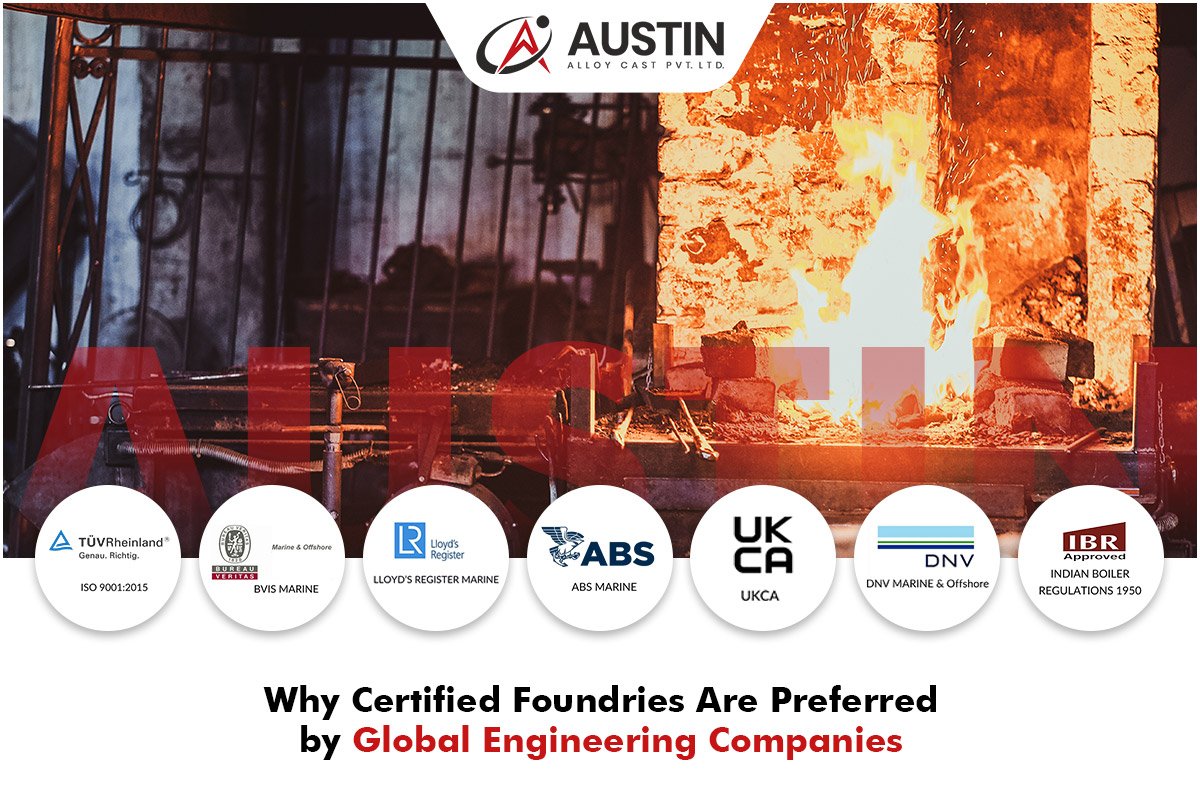
In today’s competitive manufacturing environment, global engineering companies cannot afford uncertainty in their supply chain. Whether producing equipment for power generation, mining, oil and gas, marine, transportation, or industrial processing, they depend on components that consistently meet strict quality, safety, and performance requirements. Certification is one of the main parameters influencing the choice of supplier.
Certified foundries have become the preferred choice for engineering companies worldwide because certifications provide assurance that products are manufactured under controlled processes, verified quality systems, and internationally recognized standards. Beyond compliance, certifications demonstrate a foundry’s commitment to continuous improvement, reliability, and customer satisfaction.
The Importance of Trust in Engineering Supply Chains
Engineering projects often involve significant investments, long operating lifecycles, and demanding service conditions. A single casting failure can lead to production shutdowns, costly repairs, safety incidents, or reputational damage.
For this reason, procurement teams and engineers look beyond price when selecting a casting supplier. They seek partners capable of delivering consistent quality over the long term. Certifications serve as independent validation that a foundry follows established procedures and maintains effective quality controls throughout the manufacturing process.
Customers feel more confident when they see third-party audits and accepted standards, rather than just the supplier’s word on the matter.
Consistent Quality Through Standardized Processes
One of the biggest advantages of working with a certified foundry is process consistency.
International standards such as ISO 9001 require documented procedures, quality monitoring systems, corrective action processes, and continuous improvement practices. These requirements help ensure that every stage of production is carefully managed, from raw material inspection and pattern development to melting, casting, heat treatment, machining, and final inspection.
This structured approach minimizes variations between production batches and reduces the likelihood of defects reaching customers.
For global engineering companies managing large projects, consistency is often more valuable than occasional excellence. They need confidence that the thousandth casting will perform as reliably as the first.
Improved Traceability and Documentation
Modern engineering projects demand complete traceability.
Certified foundries maintain detailed production records that allow materials, process parameters, inspections, and testing results to be tracked throughout manufacturing. This level of documentation is especially important in industries where regulatory compliance and product accountability are critical.
If a customer requires material certificates, inspection reports, heat treatment records, or mechanical testing results, a certified foundry can provide the necessary documentation quickly and accurately.
This transparency helps customers meet their own quality obligations while simplifying audits and project approvals.
Compliance with Industry Requirements
Many industries have strict standards governing the components used in critical applications.
Marine, offshore, energy, defense, and industrial processing sectors often require castings produced under recognized certification systems. Engineering companies working in these industries prefer certified suppliers because compliance requirements are already integrated into their manufacturing processes.
Specialized certifications and approvals demonstrate that a foundry has the technical capability and quality systems needed to produce castings for demanding operating environments.
This reduces qualification time and lowers the risk associated with introducing new suppliers.
Better Risk Management
Supply chain risk has become a major concern for global manufacturers.
Choosing an uncertified supplier may initially appear cost-effective, but the hidden risks can be substantial. Poor quality, inconsistent performance, inadequate documentation, delayed deliveries, and product failures can create significant financial consequences.
Certified foundries help reduce these risks through structured management systems and preventive quality controls. Problems are identified earlier, corrective actions are documented, and continuous improvement initiatives help prevent recurring issues.
As a result, engineering companies experience fewer disruptions and greater confidence in their supply chain.
Stronger Focus on Continuous Improvement
Certification is not a one-time achievement. Maintaining compliance requires regular audits, performance reviews, and ongoing improvements.
This culture of continuous improvement benefits customers directly.
Certified foundries continually evaluate production efficiency, defect rates, process capabilities, and customer feedback. Opportunities for improvement are identified and implemented systematically rather than reactively.
Over time, this leads to higher-quality castings, improved delivery performance, and more reliable manufacturing outcomes.
Global engineering companies value suppliers that actively invest in becoming better rather than simply maintaining the status quo.
Environmental and Workplace Responsibility
Many international organizations now evaluate suppliers based not only on product quality but also on environmental and workplace practices.
Certifications such as ISO 14001 for environmental management and ISO 45001 for occupational health and safety demonstrate a foundry’s commitment to responsible operations.
These standards help ensure that manufacturing activities are conducted with greater attention to environmental impact, employee safety, and regulatory compliance.
For multinational engineering companies with sustainability goals and corporate responsibility commitments, partnering with certified suppliers supports broader organizational objectives.
Supporting Global Market Expectations
Engineering companies serving international markets must meet customer expectations across multiple regions and industries. Certification provides a common language of quality that is recognized worldwide.
Whether a project is located in North America, Europe, the Middle East, or Asia-Pacific, customers often view certified foundries as lower-risk suppliers capable of meeting international requirements.
This international recognition enables the approval of suppliers and long-term business partnerships.
Why Certification Matters More Than Ever
The more demanding engineering applications and the more complex supply chains the more important supplier reliability becomes. Certifications offer tangible evidence that a foundry operates with discipline, accountability, and a commitment to quality.
For global engineering companies, the benefits are clear: consistent products, improved traceability, reduced risk, regulatory compliance, and confidence in long-term performance.
At Austin Alloy Cast, certifications are more than framed certificates on a wall. They reflect the systems, processes, and culture that support every casting we produce. By maintaining internationally recognized standards and focusing on continuous improvement, we help customers around the world secure dependable casting solutions for their most demanding engineering applications.
To have a glimpse at our world class facility and products, visit us at www.austinalloycast.com.
For any queries or details contact us at info@austinalloycast.com.
Recent Posts