Stainless Steel Grades Used in Investment Casting: Selection Guide for Corrosive & High Stress Applications

Material selection will thus be an important engineering decision in industries where components are bound to corrosive environments, high temperatures, or continuous mechanical stress. Stainless steel investment casting is highly preferred in such demanding applications because it marries excellent corrosion resistance, mechanical strength, and design flexibility. Yet, not all grades of stainless steel perform identically. The proper grade must be chosen to ensure long service life with safety and cost efficiency.

The following guide explains the most commonly used stainless steel grades in investment casting, their properties, and how the OEMs can select the proper material for operating conditions that are corrosive and of high stress.

Why Stainless Steel Is Ideal for Investment Casting

Investment casting enables the production of complex shapes, thin walls, and tight tolerances with a minimum of machining. Coupled with stainless steel, the process produces components that are:

Highly resistant to corrosion and oxidation

  • Strong against mechanical and thermal stress
  • Applicable to aggressive chemical, marine, and high temperature environments
  • Can achieve excellent surface finish

Stainless steel investment castings have been in wide circulation within such industries as oil and gas, food processing, marine, chemical processing, and heavy engineering at Austin Alloy Cast, where failure is not an option.

Important Factors for Choosing Grades of Stainless Steel

Before selecting a grade of stainless steel for investment casting, the OEMs should assess:

Type of corrosion exposure: Chemical, chloride, seawater, acidic, and so on

Operating temperature

The following applies in particular to the:

  • Mechanical load and stress conditions
  • Weldability and machinability requirements
  • Cost performance balance

Matching these factors with the right grade ensures that there is optimal performance without over engineering.

Austenitic Grades (Most Common)

The Austenitic grades represent the largest proportion of corrosion resistant steel casting items utilized because of their really good corrosion resistance and good toughness.

CF8 (Equivalent to SS 304)

CF8 is a standard austenitic stainless steel casting grade available that offers good general corrosion resistance.

Key properties:

  • Inherent good resistance to mild corrosive environments
  • Excellent ductility and toughness
  • Easy to cast and machine

Typical applications:

Food processing equipment, pump casings, valve bodies, fittings, and structural parts.

The operational stresses that would not be extreme along with the conditions of corrosion being moderate, call for the use of CF8.

Casting CF8M, Equivalent to SS 316

CF8M casting is the most preferred grades for corrosive environment applications. The addition of molybdenum elevates resistance to chlorides and pitting corrosion phenomenally.

Key properties:

  • Better resistance to corrosion than CF8
  • Excellent performance in chloride and marine environments
  • It has good strength at high temperatures.

Typical applications:

Components for oil and gas, hardware for marine use, equipment used in the processing of chemicals, pumps, valves, and pharmaceutical machinery.

For OEMs that face aggressive atmospheres, CF8M stainless steel investment casting has proven a good balance between durability and cost.

Martensitic Grades Stainless Steels High Strength

Martensitic grades are chosen when mechanical strength and wear resistance are more critical than corrosion resistance.

CA6NM

CA6NM is a low carbon martensitic stainless steel used in most high stress applications.

Key features:

High Tensile Strength and Toughness

  • Good corrosion resistance compared to standard martensitic grades
  • Outstanding performance against cyclic loads

Typical applications:

Components of turbines, impellers of pumps, parts of valve trim, and power generation equipment.

The motive for this grade is that such components go through high pressure, impact, and mechanical stress.

Duplex Stainless Steel Grades

It combine the benefits of both an austenitic and ferritic structure, offering superior strength and corrosion resistance.

Duplex Stainless Steel [e.g., CD4MCu]

Key properties:

  • High resistance to stress corrosion cracking
  • Excellent strength, about twice of the austenitic grades

Performance of good sea water and chemical environments

Typical applications:

Offshore oil & gas equipment, desalination plants, chemical pumps, and pressure vessels.

The Duplex grades are ideal for those conditions where both high stress and severe corrosion are present.

Ferritic Stainless Steel Grades

Ferritic grades offer a good balance between moderate corrosion resistance and good thermal stability at lower cost.

Key features:

Good resistance to oxidation

  • Lower nickel content, reducing material cost
  • Limited toughness especially when compared to the austenitic grades

Typical applications:

Car parts, exhaust systems, and noncritical industrial parts.

These grades are applicable to applications that have controlled environments and lower mechanical stresses.

Choosing the Right Grade: Some Practical Guidelines

The following general rules may be followed by OEMs to simplify selection:

  • Mild corrosion + standard load: CF8
  • Chemical, chloride, or marine exposure: CF8M
  • High stress or pressure: CA6NM or duplex stainless steel
  • Extreme corrosion + high strength: Duplex stainless steel grades

Early collaboration with an experienced foundry will optimize both material choice and casting design.

Why Foundry Expertise Matters

Even the best grade of stainless steel will fail if melting, pouring, heat treatment, or quality control are not correctly treated. At Austin Alloy Cast, rigorous process control, metallurgical expertise, and advanced inspection ensure that every stainless steel investment casting meets international quality standards for service reliability.

From material selection to final machining, working with a knowledgeable investment casting partner reduces risk, improves component life, and lowers total ownership cost.

Conclusion

The selection of a suitable grade of stainless steel is a strategic decision for an OEM operating in corrosive and high stress environments. Understanding the strengths and limitations of grades such as CF8, CF8M casting, martensitic, and duplex stainless steels allows the engineer to balance performance, durability, and cost.

With the right material choice and a trusted investment casting manufacturer, stainless steel components can reliably perform even in the most unforgiving industrial environments.
Designing Components for Investment Casting: 10 Mistakes OEMs Still Make

Investment casting is renowned for producing complex, high precision metal components with excellent surface finish and material integrity. Nevertheless, despite the many merits of this casting method, too many OEMs encounter avoidable problems in manufacturing. In most instances, the fault does not lie with the casting process itself, but with design decisions made prior to actual manufacturing.

Understanding and following proper investment casting design guidelines can go a long way in improving part quality, reducing lead time, and controlling better overall cost. Based on numerous real world project experiences, here are ten common casting design mistakes which OEMs are continuing to make and how they can be avoided.

1. Designing Without Considering the Casting Process

The most common errors are designing a part as if it is going to be machined or forged and then decide to investment cast it. Investment casting has unique strengths and limitations that must be taken into consideration at the design stage.

Ignoring these factors usually leads to unnecessary complication, higher scrap rates, and longer development cycles. Early involvement by an experienced foundry such as Austin Alloy Cast allows design adjustment to suit the casting process without compromising function.

2. Excessively Thick or Uneven Wall Sections

Investment casting can support very thin walls; however, a wall thickness that is too inconsistent leads to potential solidification issues and internal stresses that may cause porosity. Thick sections cool more slowly, while thin areas cool quicker, promoting defects.

These factors contribute to good metal flow and a uniform mechanical property. Whenever it is not possible to avoid wall thickness variation, gradual transitions should be used instead of abrupt changes.

3. Sharp Corners and Edges

One of the most common design oversights involves sharp internal and external corners. Such areas can have a stress concentrating effect and impede the smooth flow of metals in the casting process.

The use of fillets and radii enhances castability, part strength, and fatigue resistance of the component. Basic investment casting design recommendations for corner radii can greatly reduce rejection rates.

4. Unnecessary Tight Tolerances

OEMs generally specify extremely tight tolerances throughout the whole component where they are often not functionally required. This generally increases the complexity of inspection with greater cost and further secondary machining.

Smarter really is to apply tight tolerances only on critical functional surfaces. Clear communication between design engineers and casting suppliers helps in the definition of realistic, application driven tolerances.

5. Poor Feature Orientation

Features like holes, slots, and bosses have to be oriented in a manner that will facilitate the smooth flow of metals and strength to the shell. Improper orientation could lead to incomplete filling during casting or even distortion of the casting.

Only expert investment casting suppliers will be in a position to advise minor design modifications that will favour orientation without compromising the performance of the part. Early collaboration avoids corrections by trial and error later.

6. Draft and Parting Considerations Can Be Ignored

Although investment casting requires less draft than most casting methods, completely ignoring draft angles can still pose problems in pattern removal and shell integrity.

Designs that respect basic draft requirements reduce tooling issues and improve consistency. This aspect is usually overlooked by the OEMs due to unfamiliarity with practical aspects of the casting process.

7. Designing Internal Complex Cavities Without Feasibility Review

Investment casting supports complex internal features, but not all cavities are workable without cores or special techniques. When designs push these limits without feasibility checks, the result may be a high tooling cost or production risk.

A detailed design for casting review helps determine what is practical and cost effective. At Austin Alloy Cast, a feasibility analysis is a key step before finalizing the tooling.

8. Ignoring machining allowances

Another common design mistake in casting is not allowing ample material for critical surfaces to be machined. This can result in undersized features or rejected parts during finishing operations.

The proper machining allowances must be planned considering part size, material, and tolerance requirements of the component for maintaining consistency between casting and final component dimensions.

9. Application of Wrong Alloy

Selection of material often is given on a basis of availability or former applications rather than the proper service conditions. Unsuitable alloy selection could result in early failure, corrosion problems, or overengineering.

With investment casting, access is provided to a large range of alloys, including but not limited to stainless steels, duplex grades, and high performance alloys. Selecting the right material early in the process improves performance and lifecycle cost.

10. Not treating the foundry as a partner, but just as a vendor

Of all the mistakes that are made, perhaps the most forgotten involves bringing in the foundry too late in the design process. When suppliers are considered only as part producers, engineering input is wasted.

The collaborative approach enables geometry optimization, weight reduction, and improved manufacturability. OEMs using a collaborative approach with partners such as Austin Alloy Cast enjoy fewer revisions, faster approvals, and more reliable production.

Why Investment Casting Design Matters

Designing correctly for investment casting is not simply a matter of avoiding defects, it is about maximising the value of the process. Well designed components result in a better surface finish, reduced machining, improved mechanical properties, and lower overall cost.

By understanding common casting design mistakes, applying proven investment casting design guidelines allows OEMs to move from reactive problem solving to proactive engineering success.

Conclusion

Investment casting is a powerful manufacturing process, but its full potential is realized only when components are designed with the process in mind. Many of the challenges faced by OEMs can be traced to early design decisions that ignore the realities of casting.

With proper guidance and collaboration upfront, these errors can be completely avoided. Austin Alloy Cast treats design support as a vital part of the manufacturing journey, ensuring the business partner gets reliable, high quality components from the first production run.

Smart design begets better castings and better outcomes for OEMs.

How European & US OEMs Can Reduce Supply Chain Risk by Partnering with Indian Investment Casting Foundries

In recent years, global supply chains have faced disruption on an unprecedented scale. Delays, cost volatility, geopolitical uncertainty, and overdependence on single sourcing regions have been the issues that European and US OEMs must reckon with. Forcing manufacturers to start thinking where and how critical components are sourced has been one of these challenges. One strategic shift that is gaining strong momentum is partnering with a reliable India investment casting supplier as part of a broader China+1 manufacturing approach.

Indian investment casting foundries are no longer perceived to be low cost alternatives alone. They are increasingly viewed as long term, risk mitigating partners capable of meeting global quality, compliance, and delivery expectations.

Why Supply Chain Risk Has Become a Strategic Concern for OEMs

OEMs today operate in a highly competitive and regulated environment. Delays in component supply can quickly shut down production lines, impact customer commitments, and erode brand trust. The list of risks is long and no longer contains only logistics disruption but also trade restrictions, currency fluctuations, rising labour costs, and capacity constraints in traditional sourcing regions.

Up until now, many European and US manufacturers relied heavily on a single country for metal components. The model worked fine in a period of stability; yet the global events of the last few years have shown just how unstable such models are. Diversification stops being optional; it’s a must.

The China+1 manufacturing strategy explained

The China+1 manufacturing strategy takes the canter stage in mitigating risks related to dependency on one country by introducing an alternate, capable sourcing location. In such a context, India has emerged as the most practical and scalable option for this strategy, especially for precision metal components and investment castings.

In India, cost efficiency rarely comes in a combination with skilled engineering talent, strong expertise in metallurgy, and improving infrastructure. To the OEMs, this translates to supply continuity without compromising quality or performance.

Why India Is a Strong Investment Casting Partner for Global OEMs

Mature Investment Casting Capabilities

Indian foundries have state of the art investment casting facilities, including automatic shell building, melting practices under control, and in house testing laboratories. Many manufacturers specialize in stainless steel, alloy steel, duplex, super duplex, and nickel based alloys materials that find extensive use by European and the US OEMs.

Because of their maturity, Indian suppliers are able to handle challenging geometries, strict tolerances, stringent requirements and harsh service conditions in the oil and gas industry, general engineering equipment, valves, pumps, food processing, and engineering applications.

Cost Stability Without Quality Trade Offs

Rising production costs in traditional sourcing regions have driven OEMs to seek out cost stable alternatives. India offers an enabling balance of competitively priced labour, access to locally available raw materials, and efficient scaling of production without compromise on either metallurgical integrity or dimensional accuracy.

For OEMs, this means predictable pricing models and less exposure to sudden cost escalations.

Powerful Engineering & Process Support

One of the major strengths of the Indian OEM sourcing is access to engineering driven manufacturing. Indian investment casting suppliers work very closely with customers at various stages like design optimization, selection of alloys, and manufacturability improvement.

It’s a collaborative approach that will help the OEMs reduce weight, improve performance, and lower total landed cost rather than just focusing on part pricing.

Compliance, Quality, and Global Standards

One major concern of global OEMs is whether Indian suppliers can consistently deliver international levels of quality and compliance. Leading Indian investment casting foundries have ISO certified quality systems and adhere to global inspection standards.

Most suppliers support full traceability, material test certificates, dimensional inspection reports, and third party testing as required by European and US customers. This transparency plays a critical role in building long term trust.

At Austin Alloy Cast, quality is treated as a process discipline rather than a checkpoint. All the stages from the sourcing of raw material down to the final inspection are controlled in such a way that customer and application specific standards are met or exceeded.

Reduced Risk of Lead Time Through Control of Supply Chain

Supply chain risk is not just about geography; it is also about process control. Indian investment casting suppliers offer integrated capabilities, including casting, heat treatment, machining coordination, and surface finishing support.

This reduces dependency on a number of vendors and minimizes delays caused by handoffs. Fewer touchpoints mean better delivery reliability and improved planning accuracy for OEMs.

India as a Long term Strategic Manufacturing Partner

Unlike short term sourcing decisions, partnering with an Indian investment casting supplier is best approached as a long term strategy. Indian manufacturers are well on course, investing heavily in capacity expansion, automation, and skill development to keep pace with growing global demand.

This commitment aligns well with OEMs who seek sustainable supply chains rather than transactional vendors.

For instance, Austin Alloy Cast focuses on building long term partnerships by understanding customer applications, service environments, and lifecycle expectations. This approach helps OEMs move from risk management to value creation.

Trust, Communication, and Cultural Alignment

Other factors contributing to OEM confidence in India include better communication and project management. Today, Indian suppliers work across time zones, adhere to structured project timelines, and engage in regular customer communication.

English proficiency coupled with clarity of technical documentation, and responsiveness further reduce coordination risk for European and US buyers.

Overview

With global manufacturing in a state of continuous evolution, for both European and US OEMs, the watchwords for supply chains have to be resilience, flexibility, and trust. A capable Indian investment casting supplier offers a time tested route to de-risking dependence while maintaining quality, cost control, and delivery reliability.

By adopting a China+1 manufacturing strategy and investing in long term partnerships, OEMs can futureproof their sourcing models. No longer emerging players, Indian Investment Casting foundries are established contributors to Global Manufacturing Ecosystems.

With the right partner, like Austin Alloy Cast, OEMs can take supply chain challenges and make them into a strategic advantage that’s built upon reliability, strength in engineering, and mutual growth.

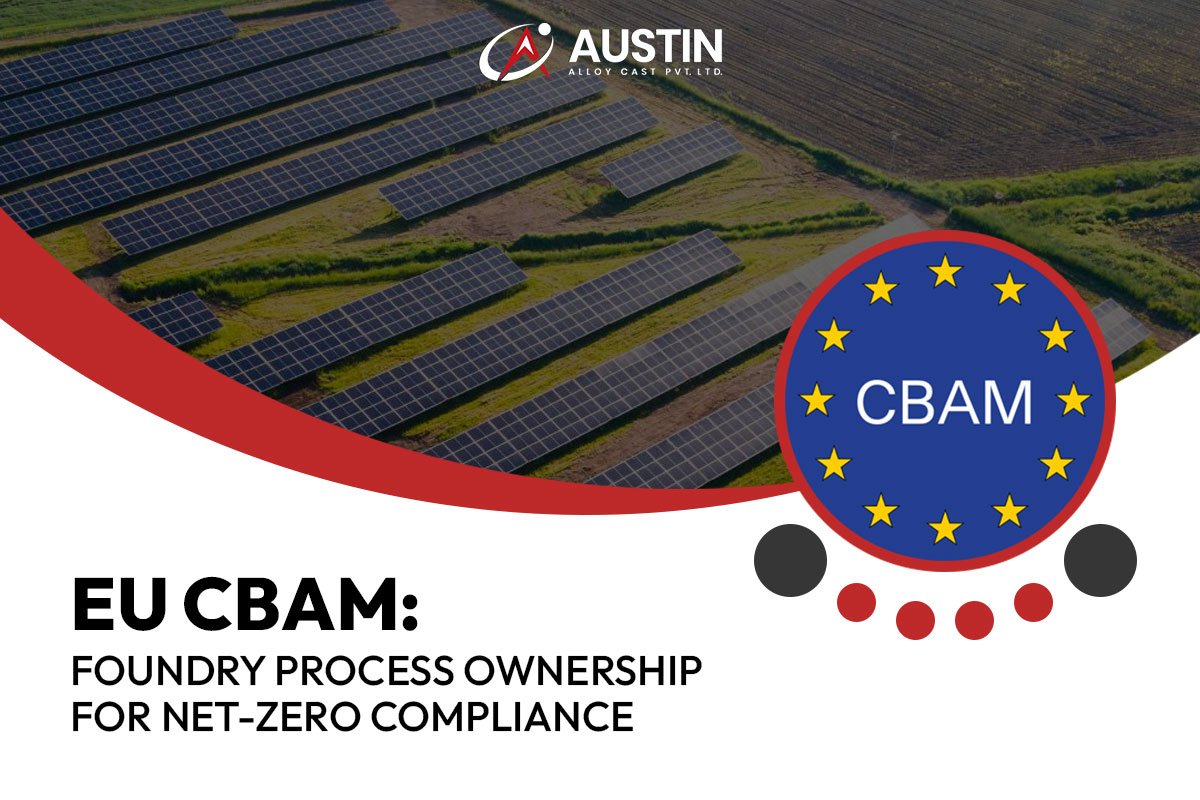
EU CBAM: Foundry Process Ownership for Net-Zero Compliance

The EU’s Carbon Border Adjustment Mechanism (CBAM) imposes carbon pricing on imports like steel and aluminium, targeting high emission sectors to prevent carbon leakage and level the playing field for EU producers. For Indian foundries exporting cast components, CBAM demands rigorous process ownership in sustainability spanning energy use and production efficiency to avoid duties up to €173 per tonne on steel. At Austin Alloy Cast, we navigate CBAM through disciplined environmental management, while partners like Metflow Foundry exemplify net zero leadership.

Understanding CBAM’s Foundry Impact

CBAM, effective from October 2023 with full enforcement in 2026, requires EU importers to report embedded emissions in goods like iron, steel, aluminium, cement, fertilizers, electricity, and hydrogen. Foundries face direct pressure as steel and aluminium castings trigger quarterly reports during transition, then annual declarations with certificate purchases based on verified emissions.

Non-EU producers like Indian foundries must supply accurate emission data direct (fuel combustion) and indirect (electricity) or importers default to higher EU values, inflating costs. Indian steel exports to Europe could decline due to high emission intensity, prompting foundries to own decarbonization processes proactively.

Sustainability in Foundry Energy Management

Foundry energy sustainability under CBAM focuses on Scope 1 and 2 emissions from melting furnaces, induction units, and power intensive operations. Process ownership means auditing furnace efficiency, switching to electric arc furnaces over coal based ones, and integrating renewables to cut indirect emissions. ​

Key strategies include real time energy monitoring via IoT sensors and waste heat recovery systems, reducing consumption by 20-30% as seen in net zero facilities. Austin Alloy Cast optimizes induction melting with variable frequency drives, slashing energy per tonne while maintaining alloy integrity for automotive and energy castings. ​

Production Sustainability: Beyond the Melt Shop 

Sustainability at Austin Alloy Cast extends well beyond the melt shop through direct investment in renewable energy generation. To significantly reduce Scope 2 emissions and strengthen CBAM compliance, the company operates a 1.5 MW solar power plant, supplying clean energy directly to foundry and production operations.

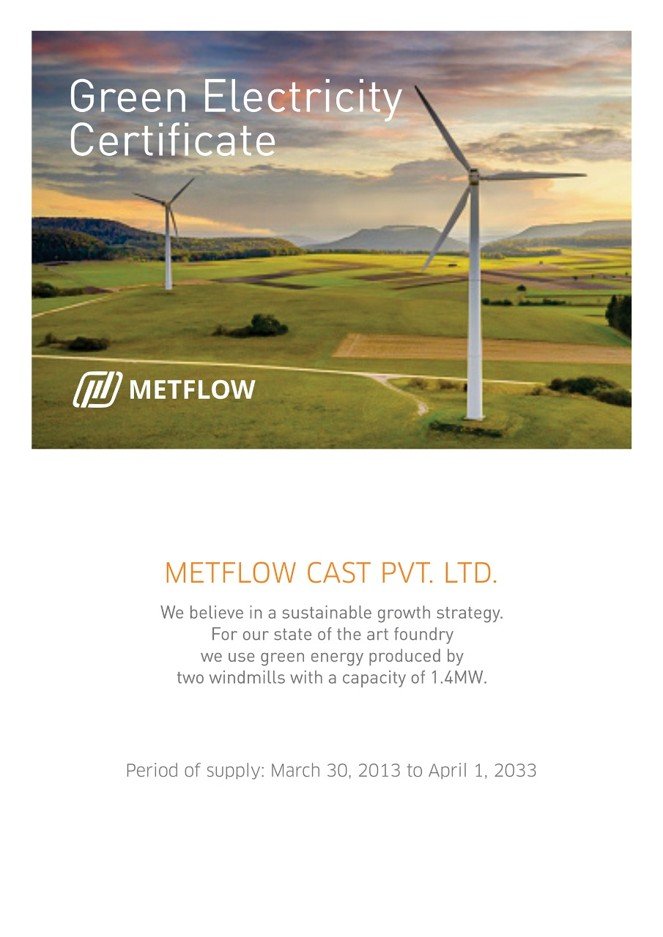
In parallel, Austin Alloy Cast’s sister company, Metflow Cast, further strengthens the group’s renewable energy footprint with two windmills totaling 1.5 MW of wind power generation. This integrated solar and wind energy strategy reduces dependence on grid electricity, stabilizes long-term energy costs, and lowers the carbon intensity of precision cast components supplied to global OEMs.

By combining energy efficient melting technologies, smart energy management systems, and captive renewable power generation, Austin Alloy Cast and Metflow Cast demonstrate a practical, scalable approach to sustainable foundry operations aligned with global decarbonization and CBAM requirements.

ISO 14001: Environmental Management Foundation

CBAM preparation is achieved via an ISO 14001 certification that implements an Environmental Management System (EMS) to continually improve how resources are utilized and stay compliant with regulations. It is necessary to complete a gap analysis, monitor performance regularly, hold internal audits and perform management reviews. In order to monitor emissions and pollutants generated from operations.

For foundries, ISO 14001 integrates CBAM reporting via KPIs on energy intensity and emission factors, verified through accredited bodies. Austin Alloy Cast’s ISO 14001 framework conducts quarterly EMS audits, aligning melt shop data with EU default value avoidance.​

ISO 45001: Safety Synergy with Sustainability

With ISO 45001 you can manage OHS, which is the area that includes the Worker Hazards that result from working in a high heat foundry environment and helps to reduce downtime from incidents that create additional spikes in our GHG emissions. The structure of the two standards are based on the same PDCA Cycle, and therefore share similar elements in relation to the ownership of risk based processes.

Dual certification streamlines CBAM prep: safety audits reveal energy inefficiencies, like poor ventilation increasing auxiliary power draw. Austin Alloy Cast leverages ISO 45001 for hazard identification in pouring areas, enhancing overall process discipline.

Standard CBAM Relevance for Foundries Key Integration Benefits
ISO 14001 Emission tracking & EMS audits ​ Default value avoidance; verified reporting
ISO 45001 OHS risk reduction Lower indirect emissions via uptime gains
Combined Process ownership loop 20-30% sustainability uplift
Process Ownership: Foundry Leadership in CBAM

True CBAM navigation demands foundries own end to end processes data collection, verification, and optimization rather than delegating to importers. This includes third party emission audits from 2026 and blockchain for immutable records.

Austin Alloy Cast exemplifies ownership with digital twins linking melt chemistry to carbon footprints, enabling proactive EU declarations. Partnering with net zero innovators like Metflow amplifies supply chain resilience.

  • Emission calculators tailored to casting alloys.
  • Supplier audits for upstream scrap carbon content.
  • Annual decarbonization roadmaps shared with OEMs.
Strategic Roadmap for Indian Foundries

CBAM compliance roadmap starts with pre verification to sidestep non-compliance costs like default values or lost contracts. Indian exporters must diversify markets while greening operations green steel taxonomies aid competitiveness. ​

Austin Alloy Cast advises:

  • Baseline emission inventories by product line.
  •  ISO 14001/45001 upgrades for audit trails.
  • Renewable PPAs for indirect emission cuts.
  • Collaboration with net zero peers like Metflow.
Future Proofing Foundry Exports

CBAM accelerates global decarbonization, pressuring foundries to evolve beyond compliance into sustainability leaders. US and UK OEMs increasingly mirror EU standards, making net zero processes a competitive edge.

Austin Alloy Cast and Metflow Cast demonstrate that process ownership fuelled by ISO standards and energy/production discipline turns CBAM from threat to opportunity. Net zero casting isn’t optional; it’s the export lifeline for tomorrow’s markets.

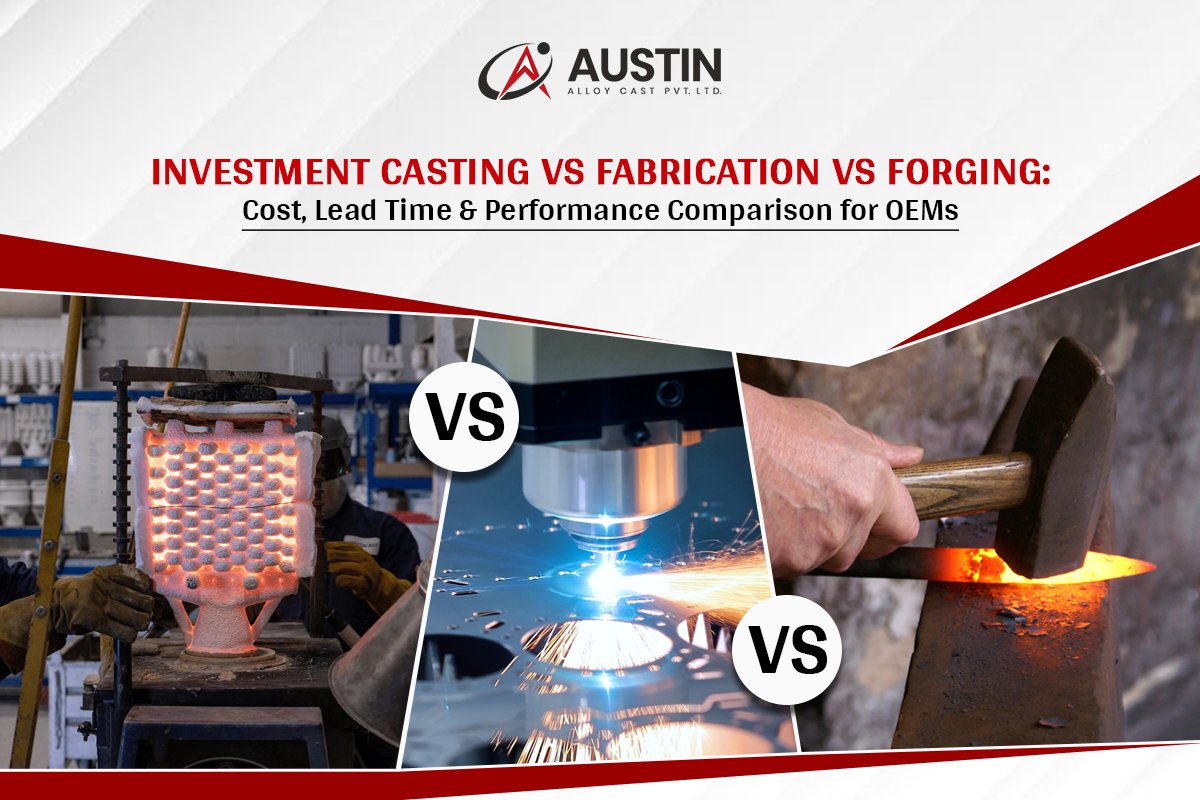
Investment Casting vs Fabrication vs Forging: Cost, Lead Time & Performance Comparison for OEMs

For an OEM, the selection of the right metal manufacturing process is not just a technical decision; it directly impacts product cost, delivery timelines, performance, and long term reliability. Austin Alloy Cast, work closely with OEMs across industries, often see how early process selection influences overall project success. Among the most commonly evaluated processes are investment casting, fabrication, and forging, each with its own strengths, limitations, and ideal use cases.

This comparison becomes particularly relevant at the decision stage, as OEMs must balance design complexity against volume requirements, material performance, and total cost of ownership. This article separates fact from fiction to highlight the real differences between investment casting vs. forging and investment casting vs. fabrication, helping OEMs choose the best metal manufacturing process for their specific application.

Understanding the Three Processes

Before making a comparison for cost, lead time, and performance, each process has to be understood at a basic level.

Certain investment casting processes produce parts by means of a wax pattern, a ceramic coating applied thereto, and then the pouring of molten metal into the cavity. It is a process noted for very good dimensional accuracy and complex shapes.

Fabrication refers to the process that concerns cutting, bending, welding, or assembling a metal plate, bar, or tube to a structure of its final shape. It is typically done with large assemblies or when production volume is low.

The process of forging shapes metal by applying compressive force, normally hammering or pressing, to improve strength and grain structure.

Each of these methods serves a different design and performance need listing them  side by side, will make this clearer.

Comparison of Costs Tooling vs Total Manufacturing Cost

Cost is often the first concern when comparing investment casting vs forging or fabrication, but the investment needs to be viewed holistically.

Due to Mold and pattern development, investment casting typically requires higher initial tooling costs. Once this tooling is in place, however, the cost per part becomes highly competitive, mostly for medium to high quantities. In fact, this near net shape capability contributes to reduced machining, material waste, and secondary operations, which in turn reduces the overall cost.

Fabrication typically has lower upfront costs because it does not depend on tooling. This makes it attractive for prototypes or very low production volumes. But as the level of complexity increases, fabrication becomes expensive due to welding labour, inspection requirements, rework, and material waste. Over time, fabricated parts often have higher lifecycle costs.

Most forging involves very expensive dies and equipment, particularly for closed die forging. Although the cost of forged parts can be relatively low in very large quantities, secondary machining is often very extensive. This adds to the cost, particularly for parts with complex geometries.

With investment casting, from a total cost standpoint, it can generally offer the best balance between investment in tooling and long term cost efficiency for OEMs in the production of precision components.

Lead Time Comparison: Speed from Design to Delivery

In fact, lead time is the critical element for production planning and supply chain reliability.

Investment casting requires time to develop tooling, but once approved, it provides consistent and predictable lead times. The process allows multiple components to be cast in a single run, further reducing overall production cycles. Lead times for repeat orders are generally shorter than fabrication and forging.

Fabrication may appear quicker initially because it bypasses tooling, but lead times can extend due to manual processes, welding schedules, quality checks, and rework. Complex fabrication assemblies are often the ones that experience further delays in skilled labour availability.

Forging typically exhibits longer lead times, especially within the stages of tooling and die development. In some cases, limited forging press availability may affect production scheduling. This makes forging less flexible to changes in demand from OEMs.

Investment casting offers a great advantage in regard to lead time consistency for OEMs searching for reliability and scalability.

Performance Comparison

The requirements of performance vary greatly between industries, and herein come the main differences.

The process is well known for excellent mechanical strength due to refined grain flow. Forgings work very well in applications involving high impact or high load. However, generally, such strengths come at the expense of design flexibility and precision.

The quality of the welds plays a great role in fabricated parts. Fabrication works for structural applications, although the welded joints may become stress points, especially under cyclic loads or corrosive environments.

Investment casting shows a balanced performance profile: While it does not always provide the raw impact strength as forging can, it does contribute much better dimensional accuracy and uniformity in material properties, with the ability to integrate multiple features into one component. This reduces weak points and improves overall reliability.

When tight tolerances, smooth surfaces, and consistent performance are required of an OEM, the process of choice is often investment casting.

Design Freedom & Complexity

One of the major deciding factors in selecting the best metal manufacturing process is design flexibility.

The technique of investment casting offers some quite superior geometry: complex shapes, internal passages, thin walls, and fine details unattainable or cumbersome by forging or fabrication. Several parts are often combined into one casting, reducing assembly and improving product reliability.

Fabrication is restricted by limitations in cutting and welding. Complex shapes involve a lot of welds, which increases the chance for inspection and failure. Of the forging processes, it offers the least design flexibility. Design iterations are often not accomplished inexpensively because small changes in geometry result in the need for new dies.

For the more imaginative OEMs looking to shave a few millimetres off their designs, investment casting is clearly the way to go.

Material Versatility

The investment casting technique supports a wide ferrous and non-ferrous alloys range, including stainless steels, alloy steels, duplex steels, nickel based alloys, and cobalt based alloys.

The availability of the required material form limits fabrication, forging limits alloy choices because of forgeability problems.

This flexibility in materials makes investment casting appropriate for use by OEMs operating in oil & gas, medical, food processing, and heavy engineering., Marine Industry, Pulp & Paper Industry.

Choosing the Best Metal Manufacturing Process

There is no one size fits all answer, but when comparing investment casting vs forging and investment casting vs fabrication, some clear patterns do emerge.

Investment casting is best suited for OEMs needing:

  • Complex, precision components
  • Reduced machining and fewer assembling

High quality productions at scale. Optimized overall cost and lead time. Fabrication was appropriate for large, simple structures or for one off projects, whereas forging remained suitable for applications that required very high strength with simple geometries. At Austin Alloy Cast, OEMs are supported in evaluating these trade offs and selecting the most efficient manufacturing route, based on application, volume, and performance needs. With deep expertise in investment casting, the focus remains reliably and precisely on the delivery of parts that align with real world production and business goals.