How Austin Alloy Cast Masters Complex Geometries in Metal Casting

In the changing environment of today’s manufacturing industry, the capacity to manufacture complex and engineered precision metal components will be a critical differentiator. Austin Alloy Cast is the prominent investment casting manufacturers trusted for their high level of technical capability, experienced foundry knowledge, and commitment to quality. The company’s ability to deliver complex metals casting geometries has created a global customer base across many industries, including automotive, energy, defense, and marine.

Recognizing the Issue: Why Complex Geometries Matter

Modern engineering designs call for components that are lighter, stronger, and more efficient all while holding tight tolerances in complex shapes. Some of these geometries may be thin walls, internal hollows, undercuts, and integrated features that are unsuitable for conventional manufacturing.

Investment casting or the lost wax process is ideal for these designs. While machining and fabrication often require multiple steps to achieve the shape, investment casting produces near net shape parts directly from a wax pattern. This decreases machining, reduces material waste, and yields consistency in dimensions and geometry even with complexity.

Austin Alloy Cast uses process control, advancements in technology, and metallurgic knowledge to recreate such complex components with superior consistency and quality.

Austin Alloy Cast: The Benefits of Engineering Complexity

As a premier investment casting company, Austin Alloy Cast has developed its processes to produce an unparalleled quality product. What makes the company successful in producing complex metal geometries is its operation of integrating modern technology, skilled craftworkers, and a disciplined quality control process.

Your Austin Alloy Cast experiences this by way of,

1.Advanced 3D Modelling and Simulation

Every successful casting starts with an accurate design. Austin Alloy Cast employs 3D CAD modelling, and solidification simulation software to formulate how molten metal will behave to flow, filling and solidifying in the mold. By modeling to simulate casting behavior, the engineers can detect and eliminate potential defects i.e. porosity, shrinkage, and distortion before the mold is made.

This potential validation measures that the delivered product will meet structural intergrity and dimensional accuracy for environmentally produced components that will experience high imposed loads.

2. Precision Wax Pattern Development

The investment casting process relies on the accuracy of the wax pattern which is an exact representation of the final part; whether complex or fragile, Austin Alloy Cast has automated wax injection and assembly systems that promote consistency in shape development. In most cases, the patterns are assembled into some multiple piece grouping called “treeing” to allow for multiple part casting and proven results in shortened operational times. Austin Alloy Cast has talented staff who assist with the overall inspection process that leads to patterns meeting requirement tolerances as even small mistakes matter in final castings achieving high levels of accuracy.

3. Quality Ceramic Shell Construction

It is vital that a durable and dimensionally accurate ceramic shell is created for both the complexity of the geometry being cast as well as the complex shapes. Austin Alloy Cast thoughtfully controls slurry coating, ensuring that the shell is constructed in a way that promotes adhesion of the layers to the wax model.

The shells are built in thin layers in a controlled environment and layering attaching in the drying of each of the layers. This creates a strong shell that holds better to high temperatures, providing the quality surface detail of the wax pattern being used for the investment process.

4. Metal Pouring Management and Alloy Capability

The reputation of the company relies not only on its control processes but also its metallurgy competency. Austin Alloy Cast is capable of producing parts in just about any alloy, specifically stainless steel casting, carbon steel and high temperature alloys.

A very strictly controlled, melting and pouring process including induction furnaces, temperature monitoring, and vacuum equipment ensures that molten metal fills every area of a sophisticated mold, which makes it easier to produce dense, quality castings with ideal engineering characteristics.

5. Machining and Finishing Precision

After the metal solidifies and the shell is taken off, castings have to go through a series of finishing processes, including shot blast, heat treatment, and CNC machining, which ensures that all the dimensional and surface finish requirements are met.

The machining division at Austin Alloy Cast is fully equipped with the latest tooling manufactured to micrometer specs. This leads to fully machined castings capable of being assembled or used in their final state, with reduced customer side processing time and overall lead time.

6. Rigorous Quality Control and Testing

With intricate metal geometries, controlling internal and external quality is critical. Some of the non destructive testing methods that Austin Alloy Cast utilizes include radiography, ultrasonic testing, magnetic particle inspection, and dye penetrant testing.

CMM inspection is also done to ensure dimensions are accurate; the company makes sure that every feature conforms to the 3D design model. It also implements ISO 9001, 14001, and 45001 for added emphasis on quality, safety, and environmental obligation.

Real World Applications: From Design to Delivery

The ability of Austin Alloy Cast to master complicated geometries has converted the company into a dependable partner for a number of industries.

  • Automotive: Lightweight complex parts in fuel systems, turbochargers, and transmissions.
  • Oil & Gas: Corrosion resistant stainless castings for valving, pumping, and flow control applications.
  • Energy & Marine: Components designed to be durable and longer lasting in challenging environments.

In every case, the collaboration that Austin Alloy Cast has with customers during design and prototype development help to guarantee that the resulting product meets above and beyond the technical and economic expectations.

Innovation, Quality and Partnership

At its core, Austin Alloy Cast Pvt. Ltd. is more than just an investment casting manufacturer. It is a technical partner that brings engineering know how, cost effectiveness and metallurgical knowledge to help customers determine the right material and process for their application.

Austin Alloy Cast Pvt. Ltd. will continue to make investments in new technologies, automation and improvements, to push forward with an ever evolving industry. This process will ensure Austin Alloy Cast continues to remain well positioned to be a leader in innovation and a trusted supplier for manufacturers of complex metal components, with customers expecting precision and reliability to meet performance requirements.

Conclusion

When mastering complex geometries in metal casting, it truly is a choice of art and science experience, technology and diligence are only a few of the facts to the process. Austin Alloy Cast has a commitment to precision, process efficiency and partnered with its customers. In a short time, the organisation has been able to establish recognition across Canada as a trusted investment casting manufacturer that is capable of producing complex geometries into high performance stainless steel castings and other alloy components.
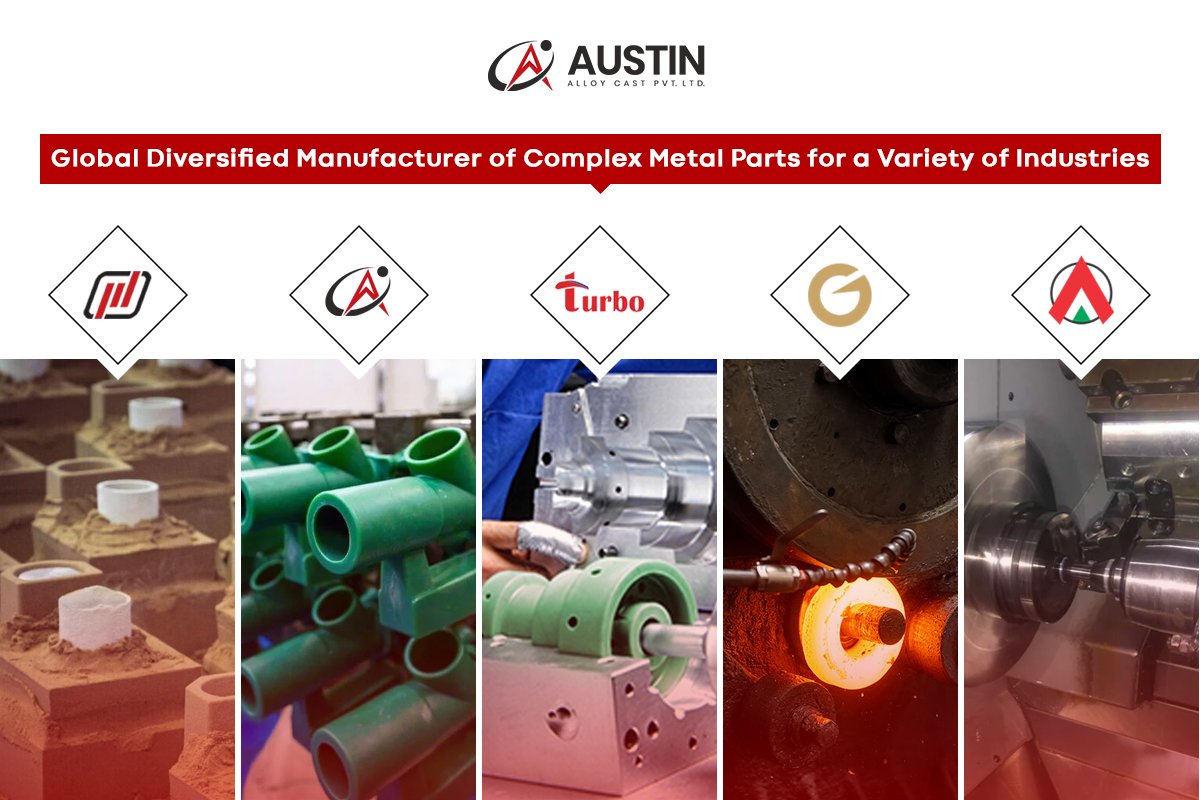
Global Diversified Manufacturer of Complex Metal Parts for a Variety of Industries

In today’s rapidly evolving industrial landscape, companies across the world are searching for reliable manufacturing partners who can deliver precision components, engineering expertise, and global support under one umbrella. Austin Alloy Cast, part of the Emporia Group, stands out as a diversified, globally trusted manufacturer of complex metal parts serving a wide spectrum of industries including automotive, oil & gas, pumps, valves, agriculture, energy, and general engineering, aerospace, electronics.

With a legacy built on engineering excellence and customer first service, Austin Alloy Cast has earned its reputation as a world class investment casting manufacturer specializing in stainless steel castings, alloy steel castings, and highly engineered metal assemblies.

Emporia Group: A Unified Strength of Metal & Non Metal Divisions

As a division of the Emporia Group’s industrial powerhouse, the Metal Processing Division is a group of specialized manufacturing companies, focused on expertise in castings, forgings, or machining. These companies have teamed up to form one of the most diversified and vertically integrated metal component ecosystems in India, focusing on supplying various global industries.

Here is a summary of all the companies within the Metal Division:

METFLOW CAST PVT. LTD. 

Steel Sand Castings

Metflow Cast is one of the Emporia Group’s core strengths in heavy and medium weight steel sand castings. With the capability to produce castings up to 750 kg per piece, Metflow is equipped to handle large, structurally demanding components that require robust metallurgical integrity.

The facility is designed for flexibility across a wide range of steel alloys, making it an ideal partner for industries such as:

  • Valve and pump manufacturing
  • Agriculture and off highway equipment
  • Construction machinery
  • General engineering applications

Its infrastructure is specifically optimized for high quality molding, controlled pouring processes, and post casting treatments ensuring reliable and consistent results even for complex geometries and demanding dimensional requirements.

AUSTIN ALLOY CAST PVT. LTD.

Steel Investment Castings

Austin Alloy Cast is the great precision engineering under the Emporia Group. As one of India’s largest single site manufacturers of steel investment castings, the company is capable to produce to complex near net shape components up to 200 kg per piece.

With expertise in stainless steel, duplex, alloy steel, and high performance metals, Austin Alloy Cast serves the needs of industries requiring high levels of accuracy, surface finish, and engineering materials performance which can include applications in:

As a leading investment casting manufacturer, we deliver near net shape solutions for industries such as:

  • Automotive
  • Pumps & valves
  • Marine
  • Oil & gas
  • Industrial machinery
  • Defence & heavy engineering

With advanced process control, in house NDT, machining, and heat treatment tie ups, Austin Alloy Cast ensures consistent dimensional accuracy, metallurgical reliability, and superior surface finish.

TURBO CAST (INDIA) PVT. LTD.

Aluminum Investment Castings

Turbo Cast operates one of India’s most sophisticated facilities devoted solely to aluminum investment castings. It is the only foundry in India devoted exclusively to aluminum investment castings for aerospace, defense, electronic, and medical use.

The facility is Nadcap accredited for multiple special processes a universally accepted standard for high precision aerospace fabrication and is capable of producing aluminum investment castings up to 25 kg. Turbo Cast provides an unparalleled ability to produce extremely lightweight, high strength components with aerospace grade precision.

Its advanced process controls, alloy handling capabilities, and rigorous inspection systems enable it to meet the demanding certification and reliability standards of mission critical industries.

GALAXY TECHNOFORGE (I) PVT. LTD.

Seamless Rolled Rings

Galaxy Technoforge is the forging division of the Emporia Group with a specialty in seamless rolled rings and profile ring forgings. These rings are critical components for:

  • Automotive
  • Heavy engineering
  • Power transmission
  • Railway and aerospace sub systems

The company produces ring forgings in numerous diameters and cross sections for use in performance critical applications such as bearings, gears, flanges and rotating machinery. Its processes control forge grain flow, giving improved strength and mechanical properties.

With state of the art, sophisticated forming equipment and heat treatment facilities, Galaxy Technoforge meets the needs of both the automotive and non automotive sectors with reliable, high precision forged components.

Ayushi Engineering Pvt Ltd

Machined Components

Ayushi Engineering provides precision machining solutions for castings, forgings, and bar stock components. With multi process machining capabilities including CNC turning, milling, pressure die casting machining, and shell mould machining, the company supports a wide variety of industries.

Ayushi stands out due to:

  • Flexible production from prototypes to mass production
  • World class measurement & testing infrastructure
  • Ability to handle multi material components
  • Strong supply chain collaboration with Group foundries

The company plays a critical role in delivering fully finished, ready to assemble components within the Emporia Group.

Non-Metals Division – Consumer, Industrial & Healthcare Excellence

Apart from metals, Emporia Group has a significant footprint within sectors that support consumer markets, industrial supply chains and healthcare production.

Austin Foods & Beverages Pvt Ltd – Food Processing

This division supports the consumer food sector by contributing processed foods and beverages that meet high production and hygienic standards that the Group also adheres to. This also represents the Groups’ diversification beyond engineering and into one of the fastest growing segments of FMCG. At Austin, we run highly automated canning lines to support our Global clientele.

Tilara Polyplast Pvt Ltd – Plastic Manufacturing

Tilara Polyplast produces Polycarbonate & Acrylic Sheets. Its advanced extrusion machines and processing control technology deliver high quality extruded plastic sheets. It has range of products which includes Polycarbonate Solid Sheets, Polycarbonate Multiwall Sheets, Acrylic Sheets, and General-Purpose Polystyrene Sheets (GPPS).

Alec Enterprise Pvt Ltd – Industrial Chemicals & Solvents

Alec Enterprise serves as the Group’s chemical trading division, trading industrial chemicals for consumption in manufacturing, engineering, agriculture and processing applications. Due to Alec Enterprise’s products serving as the extension of many upstream and downstream production supply chains, it serves as a key enabler for regional industries.

SNJ Lifecare Pvt Ltd – Pharmaceuticals

SNJ Lifecare’s importance in the healthcare market is based on its role as an API Active Pharmaceutical Ingredient. Their commitment to manufacturing pharmaceutical products in audited production facilities and regulated environments provides safe and reliable product, elevating the healthcare ecosystem.

Streamlining Supply Chains with Multiple Capabilities

Global OEMs and industrial manufacturers are attempting to simplify procurement, reduce vendor complexity and enhance supply chain stability. Austin Alloy Cast supports this initiative with its multiple metal part manufacturing capabilities. Our capabilities allow you to consolidate processes and suppliers into a single source you can trust.

Austin Alloy Cast provides investment casting, sand casting, forging, machining, finishing, and assembly preparation in a single group. This eliminates the need for multiple suppliers for each individual process. The benefits of this include:

  • Reduced Procurement Time
  • Reduced Administration and Logistics Costs
  • Consistency in Metallurgical Quality in all Parts
  • Reduced Risk of Part to Part Variation
  • Improved Responsiveness to Design Modifications
  • Shortened New Product Development (NPD) Time

In addition, our metallurgical and process engineering team sponsors the right manufacturing method for you based on the geometry of the part, performance requirements, and cost per part efficiencies, even when this means developing a hybrid solution from investment casting, sand casting, or forging.

International Expertise and Global Services

Austin Alloy Cast has developed a worldwide ecosystem to provide dependable and consistent performance to clients on multiple continents.

Manufacturing Facilities – Western India

Our modern manufacturing hubs in Western India serve to support the group’s manufacturing backbone. Utilizing modern induction furnaces, automated shelling lines, CNC machining centers, dedicated inspection laboratories, heat treatment facilities, and testing capabilities, the facility offers the speed and precision which is demanded and expected from concept to finished product.

Regional Office – Singapore

Our regional office in Singapore continues to enhance communication with customers across Southeast Asia, East Asia, and the Pacific region. This office creates a global bridge offering speed, technical engagement, and customer engagement.

Warehousing Facility – United States

Austin Alloy Cast has a logistics and stocking presence in the United States assuring short lead times and inventory available to North American customers. Customers can rely on just in time (JIT) delivery for OEM and/or resellers and facilitating smoother supply chain planning.

Representative Network

We have well established representative network spanning across Europe, North America, APAC regions. Hence, covering the major sales markets. We work with these techno-commercial agents to maximise customer satisfaction by minimising time zone, linguistic & Cultural differences.

Global Customer Base

With local representatives in major global markets, customers can access fast technical support, commercial support, and shorter response times. Austin Alloy Cast and the Emporia Group currently service customers in over 20 countries and provide added insulation to our brand as a truly global metal component manufacturer.

Conclusion: Your International Partner for Precision Metal Components

As industries evolve and supply chains adapt, Austin Alloy Cast continues to shine as a trusted manufacturing partner, ready for the future, and connected globally. With the strengths of the Emporia Group as our foundation and driving force of engineering superiority, we deliver value through,

  • Precision investment casting
  • Stainless steel and alloy steel casting
  • Sand casting
  • Rolled ring forgings
  • Full scale machining solutions
  • Global logistics and technical support

Austin Alloy Cast consolidates supply chains, unites processes, and provides real “one stop” sourcing, allowing customers to run more efficiently, innovate faster, and achieve more performance in every application.

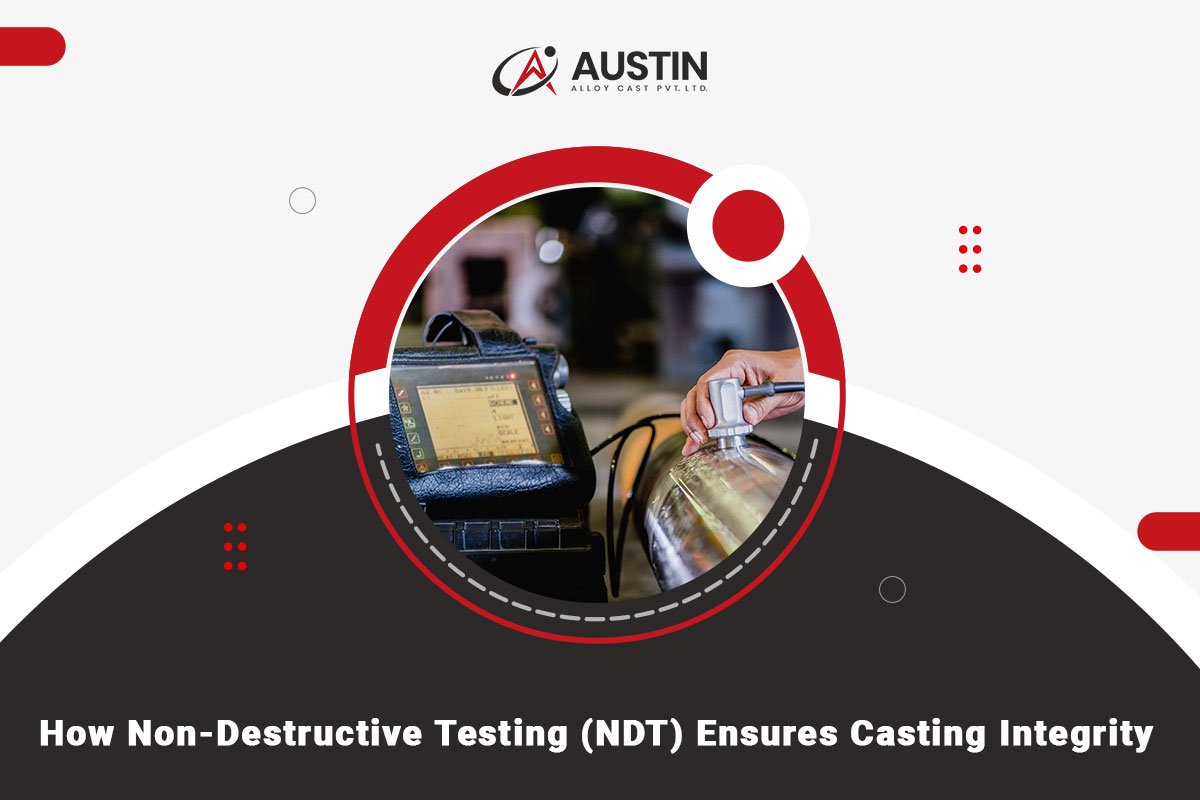
How Non-Destructive Testing (NDT) Ensures Casting Integrity

In the realm of precision metal manufacturing, where quality and reliability equal success, Non Destructive Testing (NDT) is crucial to ensuring each component is manufactured according to specifications. As investment casting manufacturer; Austin Alloy Cast Pvt. Ltd., Non Destructive Testing is more than a final check for quality; it is a commitment to quality, safety, and customer satisfaction.

Whether the component is made from stainless steel castings in marine applications or high strength alloy components supplied to energy and engineering customers, casting integrity is paramount. A single defect, even a microscopic one, can reduce casting performance or worse, fail catastrophically. Non Destructive Testing ensures that every casting leaves the foundry with precision and reliability, both uncompromised.

The Importance of Casting Integrity

All castings experience dynamics stresses pumps, valves, turbines, automotive systems; all of them will face dynamic stresses during operation.  Any hidden porosity, micro cracks, or inclusions may reduce the casting structural integrity ultimately leading to fatigue failure or leakage.  Fogging is insufficient to identify these hidden internal or surface defects.

At Austin Alloy Cast Pvt. Ltd. we strive to achieve “zero defect” castings, our team employs an organized and structured inspection strategy in combination with advanced Non Destructive Testing practices around the production cycle.  This ensures every investment casting or stainless steel castings not only ach0ieves dimensional accuracy but passes maximum metallurgical integrity standards.

What is Non Destructive Testing?

Non Destructive Testing (NDT) is a family of scientific methods employed to evaluate materials, components, or assemblies to detect defects or changes in material properties in a manner which does not harm or change the item being tested. In contrast to destructive testing methods such as cutting or breaking a sample, the item can be tested and place into service.

With respect to foundry applications, Non Destructive Testing inspects foundry castings for defects such as cracking, shrinkage, porosity, inclusions, or surface defects to provide assurance of mechanical integrity and reliability.

NDT Methods Commonly Implemented at Austin Alloy Cast
1. Visual Inspection (VI)

Visual inspection is the initial step in any quality assurance program. At Austin Alloy Cast, a certified inspector examines the castings for surface defects, blowholes, or flash. Inspectors use bright light, magnifying glasses, and surface profile gauges to discover some of the smallest defects on surface before succession to advanced testing.

2. Dye Penetrant Testing (DPT)

Dye penetrant testing is a very effective method for assessing surfaces on non magnetic materials such as austenitic stainless steel castings. DPT works using these steps:

  • A penetrant, in liquid form, is applied to the surface.
  • The penetrant can infiltrate surface breaking defects like cracks or pinholes.
  • Once excess penetrant is wiped away, a developer is applied to the surface and it draws the penetrant out to indicate flaws on the surface.

DPT is relatively simplistic, yet it is very effective capable of revealing hairline cracks and other flaws that the naked eye is unable to see.

3. Magnetic Particle Testing (MPT)

The MPT method is used mainly on ferromagnetic alloys but it’s really effective on nonmagnetic alloys. In order to perform the MPT, the component to be inspected is magnetized and fine magnetic particles are applied to the magnetized surface. If a surface or near surface defect is present, it will disrupt the magnetic field in some way which will lead to the collection of the magnetic particles and create a visible indication of the defect.

At Austin Alloy Cast Pvt. Ltd., Magnetic Particle Testing is regularly used on carbon steel and low alloy castings to detect defects like laps, seams, and cracks before machining.

4. Radiographic Testing (RT)

Radiographic Testing, or X ray inspection, is a very reliable method of NDT performed to disclose internal defects. In this technique, X rays or gamma rays are passed through the casting material, and the pattern of radiation on the radiographic film or digital image will indicate whether or not internal defects are present. Commonly detected defects include gas porosity, shrinkage cavities, and the presence of inclusions.

Utilizing the latest state of the art, high resolution radiography systems, Austin Alloy Cast examines the internal integrity of intricate investment castings where high precision and safety are demanded in aerospace, marine, and energy applications.

5. Ultrasonic Testing (UT)

Principle: Ultrasonic Testing (UT) transmits high frequency sound waves into the casting and then analyzes the reflected waves to reveal internal discontinuities and/or changes in material thickness. UT is particularly helpful for large and thick components, where radiography is not practical.

This is the means by which Austin Alloy Cast can ensure that any stainless steel casting or alloy component has no subsurface discontinuities, giving our customer complete confidence in the performance of their product in critical applications.

Integrating Non Destructive Testing into the Manufacturing Process

At Austin Alloy Cast Pvt. Ltd., NDT is not a separate activity but is an integrated part of each and every manufacturing stage:

  • Post Moulding: Initial inspection can locate casting flaws prior to machining.
  • Heat Treatment: Metallurgical properties and integrity should not be affected.
  • Pre Dispatch: A final quality check is done for every component to ensure that the processed components meet the client’s specifications.

This quality loop significantly reduces rework, enhances production efficiency, and builds long term trust with clients in multiple sectors: oil & gas, marine, railway, and defense.

Austin Alloy Cast is distinguished in being continually committed to quality and innovation in the investment castings it manufactures. The NDT team undergoes training and certification to international standards, ensuring consistently high levels of quality traceable in every inspection.

We are certified to meet the requirements of ISO 9001, ISO 14001, and ISO 45001, further indicating our commitment to quality, environmental responsibility, and safety in the workplace. Backed by an extended network of investment casting and sand casting facilities, Austin Alloy Cast offers a total casting solution with a one stop shop.

The Destination: Guaranteed Quality, Guaranteed Confidence

In today’s manufacturing world, expectations are that precision is not optional; precision is expected. NDT ensures that each and every casting is not only visually perfect but structurally sound and ready for its intended use.

At Austin Alloy Cast, we believe quality assurance starts with verification and closes with validation. When assessment is combined with plasma NDT, we ensure castings that meet and excel every customer’s requirements.

Too, whether specialty stainless steel castings are for high performance and corrosive environments, or metal castings as part of complex, multi staged investment castings for assemblies, Austin Alloy Cast can assure quality, reliability, and value.

Conclusion

Non Destructive Testing is beyond a process; it’s the backbone of casting integrity. It ensures that every piece forged in molten metal meets the highest standards of precision and safety. The pursuit of excellence at Austin Alloy Cast is reinforced by a disciplined NDT regime; guarantees the reliability of every component manufactured by us. When you choose Austin Alloy Cast, you choose quality that’s tested, proven, and trusted.

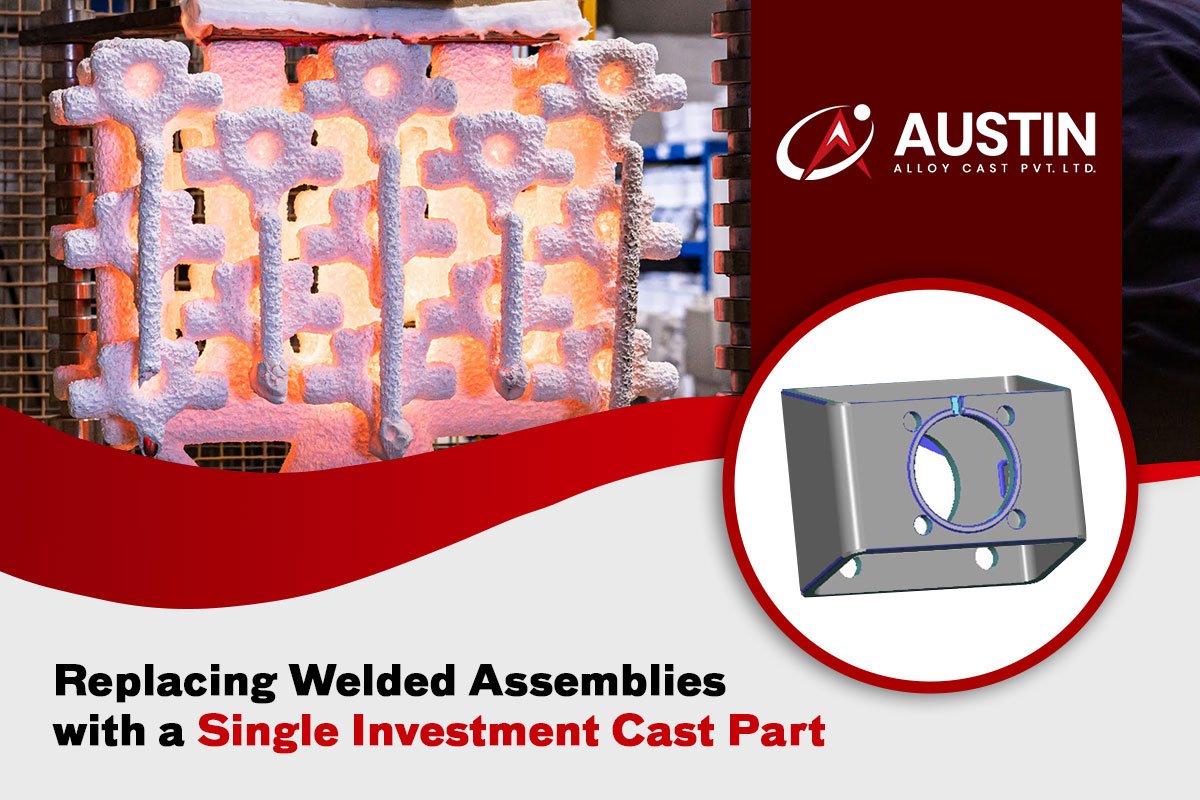
Replacing Welded Assemblies with a Single Investment Cast Part

In the current competitive manufacturing environment, design engineers and procurement groups feel pressure to lower costs, enhance product reliability, and shorten production cycles… without sacrificing quality. At Austin Alloy Cast, a leading investment casting manufacturer whose primary focus is stainless steel casting, we regularly partner with customers to achieve these goals by replacing the conventional welded assembly process with one singular, Robust, cast component.

This case study illustrates how our transformation not only simplified our customer’s manufacturing, but also decreased their cost by nearly 60%, improved product performance, and increased efficiency overall.

Background: The Challenge of a Welded Assembly

Austin Alloy Cast was approached by their client, a well-known Valve manufacturer, because of ongoing issues with one of their critical components a welded stainless steel housing assembly made of multiple components that were assembled together using complicated welding processes.

While the welded design seemed reasonable at first, it started to deteriorate rapidly with significant disadvantages related to:

  • Costly fabrication with multiple subcomponents, welding labour and the potential of rework. In most developed countries, there is shortage of skilled Labours.
  • Difficulties in distortion and alignment as a result of weld heat input.
  • Varied mechanical properties in and around the weld areas.
  • Long manufacturing cycle times due to post weld machining, inspection and testing.
  • Poor surface finish that required expedited machining to meet functional needs.

The customer wanted to keep the same functional design while improving strength and consistency at a lower cost and Austin Alloy Cast had the right answer with investment casting.

Solution: Replace ‘Welded Assemblies’ with a Singular Investment Cast Component.

Following a thorough feasibility study the engineering team recommended changing the welded housing assembly into a one piece, investment cast component made of a WCB/CF8M material.

The advantages of this solution included:

  1. Design Simplification:

The component structure can now be created as one, nearly net shape cast product without any welded joints or assembly operations. Additionally, complex internal passageways and contours that need to be welded can now be produced directly during the investment casting process, as investment castings possess an inherent ability to reproduce complex geometries.

  1. Better Mechanical Properties:

Welded parts often present heat affected zones (HAZ) with different microstructures and residual stresses, but investment cast parts are uniform and have isotropic mechanical properties throughout. The investment casting process offers better fatigue life, greater load capability, and superior resistance to corrosion and cracking.

  1. Better Surface Finish and Dimensional Tolerance:

It follows that investment castings will provide a quality surface finish and tight tolerances. This provided significant machining time savings, as the part will have near net-shape finish.

  1. Lost-wax process offers great repeatability:

Overall production lead time has been significantly reduced. The requirement for numerous welding, alignment, inspection, and subsequent heat treatment steps have all but disappeared, allowing for a much quicker and consistent production flow.

  1. Economic Benefit:

Perhaps most impressive was the cost reduction of nearly 60% of the prior welded assembly. This was realized through material optimization, followed by the absence of multiple manufacturing steps, as well as reduced manpower and inspection time.

How Austin Alloy Cast Made It Happen:

At Austin Alloy Cast, any undertaking begins with a structured, engineering based process.

  1. Design for Casting (DFC):

We worked closely with the customer’s design engineers in order to design the part geometry for casting. The fillet radii, draft angles, and wall thickness were optimized for proper metal flow and sound castings.

  1. Tooling and Wax Pattern Development:

Investment casting tooling was developed to accurately match the redesigned model. Wax patterns were manufactured and assembled into trees, minimizing dimensional instability.

  1. Shell Building and Pouring:

Utilizing a controlled ceramic shell process, a durable mold was created. Molten stainless steel was poured with strict metallurgical controls to achieve a uniform grain structure and density.

  1. Heat Treatment and Finishing Processes:

To improve mechanical properties and corrosion resistance, the castings underwent solution annealing. Operational CNC machining was kept to a minimum to achieve final tolerances. Surface finishing, along with non destructive testing (NDT) assessed the parts for integrity.

  1. Inspection and Validation Processes:

To ensure that each part would fit properly and was dimensionally correct, it was stamped upon validation using a CMM Coordinate Measuring Machine. NDT methods, including dye penetrant and radiography, helped confirm the absence of internal defects and surface defects.

Results: Tangible Gains in Every Metric

The switch from a multi piece welded assembly to a single stainless steel investment cast part resulted in meaningful and substantial improvements in all factors related to both production and performance. The most significant benefit was the significant cost savings a reduction of around 60% all due to not having to perform the several steps of fabrication: cutting, aligning, welding, grinding, and heat treatment. The part could be cast as a single component, so a highly skilled welder, a jig, fixture, and multiple inspections were not required; thus, the labor costs were much lower and the overhead directly associated with these inspections dropped to zero.

In addition, the lead time for manufacturing was less for the same reason. The investment casting process created a predictable and repeatable flow of work that eliminated the need to plan for countless fabrication processes or wait on inspection criteria. Instead, Austin Alloy Cast was able to deliver finished castings in short lead times, increasing customer turns and supply chain efficiency.

From a technical perspective, the new investment cast design exhibited better mechanical integrity and reliability. The previous welded joints were typical weak points that sometimes formed microcracking or stress concentrations with cyclic loads and thermal shifts. The investment cast component had consistent mechanical properties and performance throughout the entire component, with no weld weak points due to cracking, hardness variations, or strength.

The resulting part had better tensile and fatigue resistance and improved corrosion resistance, as well as less dimensional changes during operation. Additionally, the investment cast surface finish and dimensions from an assembly standpoint were improved over welded assembly. Also, the investment cast parts near net shape quality minimizes fabrication and tooling time, and material savings enable consistent and predictable performance/consistency.

In conclusion

This case study has shown how Austin Alloy Cast a trusted investment casting manufacturer facilitates the transition from complex welded assemblies to cost effective high strength stainless steel castings.

By leveraging our knowledge in investment casting and stainless steel castings we help industries achieve optimized designs, reduced costs, better reliability, and faster turnaround.

Whether automotive, pump, or process equipment our focus is to continue to provide precision, performance, and perfection by leveraging world class investment casting solutions. We play a role of a technical consultant for your Metal components requirements. Turns out, that is the greatest value addition we provided to our customers.

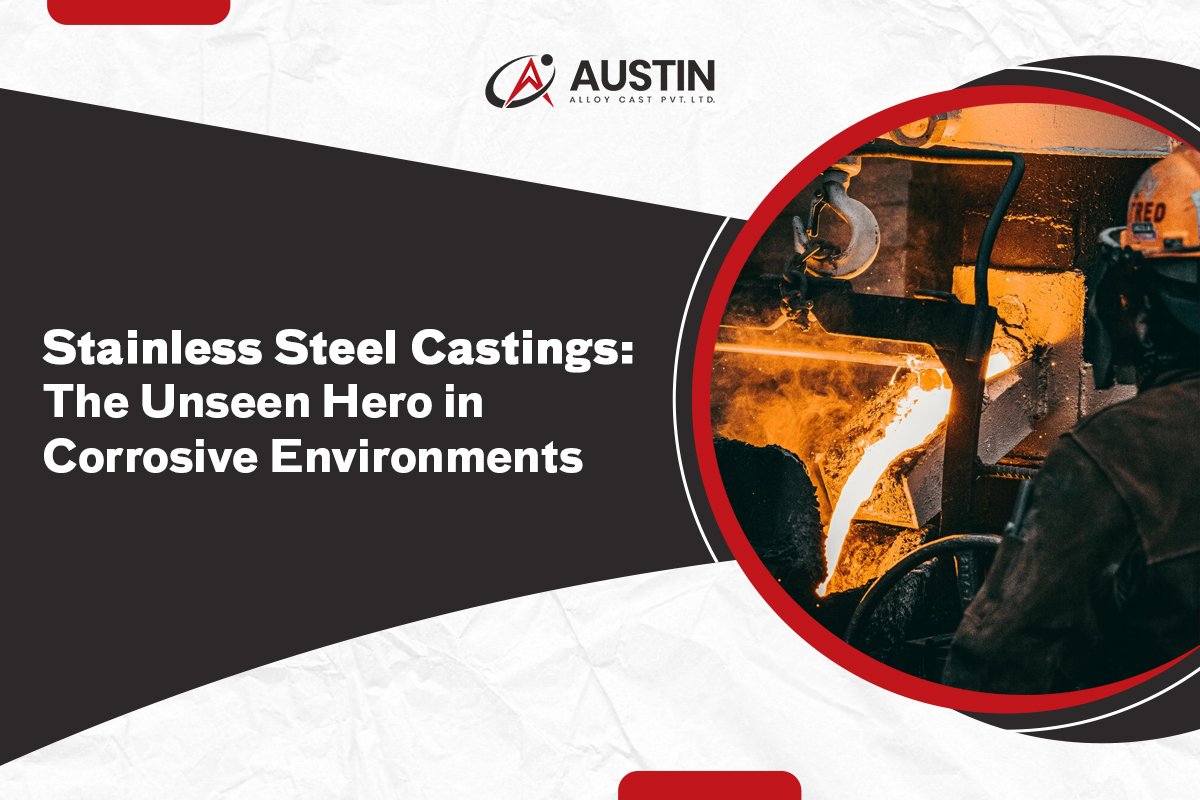
Stainless Steel Casting: The Unsung Hero in Corrosive Environments

Wherever moisture, chemicals, and extreme temperatures are a constant presence, resistance to corrosion is needed not just as a desirable property, but often as a lifeline. Be it offshore oil rigs, marine propulsion systems, or even chemical processing units, whatever is used inside needs to be able to bear the corrosion and the test of time. Stainless steel castings are the unsung hero in this environment because they combine strength, durability, and the ability to withstand very harsh surroundings.

At Austin Alloy Cast, we deal in the supply of world class stainless steel castings through the chamfer investment casting and sand casting processes. Being an investment casting manufacturer in India, we have the required experience in designing, engineering, development, and manufacturing of complex and high performance components for these applications.

The Science of Stainless Steel Castings

Many people are familiar with the high resistance of stainless steel to oxidation and corrosion due to the chromium alloying element, which creates a passive layer on its surface, namely chromium oxide. The formed layer acts like an invisible shield that protects the metal beneath it from attack by moisture, acids, and chemicals.

Various grades of stainless steel, such as austenitic, martensitic, and duplex, are selected according to application and exposure to the environment. Each produces different mechanical and corrosion resistant properties, which are required by industry.

While stainless steel provides corrosion resistance, it gives design flexibility and higher mechanical integrity when fabricated as castings. We at Austin Alloy Cast cast stainless steels with full control on the metallurgical parameters to ensure that the microstructure and batch to batch consistency meet the requirements.

Investment Casting: Where Precision and Performance Collide

For parts of complex geometries, thin walls, and stringent tolerances, the process of choice is investment casting, also known as the lost wax process.

Near net shape items produced in stainless steel are manufactured by Austin Alloy Cast using advanced methods in investment casting. The process provides ideal surface finishes and tolerances, reducing secondary machining while minimizing total manufacturing costs.

To make sure of repeatable quality within a variety of grades, including CF8M, CF3M, and duplex stainless, the investment casting process significantly contributes to serving rigorous requirements of the marine industry, food processing, pharmaceutical, and oil and gas industries, while also addressing commerce and hygiene and corrosion resistant needs.

Sand Casting for Large Heavy Duty Stainless Components

For larger heavy duty components where shape detail is not regarded as critical, sand casting provides the flexibility and cost effectiveness required. Austin Alloy Cast is reasonably unique in Western India as one of the only foundry groups that have sand and investment casting facilities in the same foundry.

Our sand casting facility has the latest modern moulding systems, induction furnaces, incorporated with complete quality testing facilities. From pump casings to more complex valve bodies and impellers, to complex housing, our stainless steel sand castings are designed to provide high strength with corrosion resistance in aggressive service environments.

Why Stainless Steel Castings Are Superior in Corrosive Environments

Corrosion is the gradual destruction of metals by chemical or electrochemical interaction with an environment. In industries that deal with oil and gas, desalination, or marine transportation, corrosion leads to extended and unwanted downtime, high maintenance costs, and safety hazards.

Stainless steel castings provide resistance to indirect attack by corrosion due to their inherent ability to resist:

  • Acidic or alkaline chemical attack
  • Saltwater corrosion, especially in marine applications
  • Oxidation, especially at high temperatures
  • Pitting and crevice corrosion under stagnant or low flow conditions

At Austin Alloy Cast, we design our stainless steel castings with the best alloy compositions available so that the performance of each component is adequate for even the worst conditions. We also maximize corrosion resistance and mechanical integrity by controlling other factors such as heat treatment, cooling time, and surface finish in every cast.

Quality, Testing and Certification

At Austin Alloy Cast, we test every stainless steel casting for dimensional accuracy, structural soundness, and metallurgical specification.

Our testing capabilities include:

  • Non destructive Testing NDT: We carry out dye penetrant, magnetic particle, radiography, and ultrasonic tests for the detection of surface and subsurface defects.
  • Mechanical Testing: We run tensile tests, impact tests, and hardness tests to ascertain strength and toughness.
  • Chemical Analysis: We perform spectrographic analysis to verify alloy composition for each casting.
  • Dimensional Inspection: With our CMM and other precision inspection measuring tools, we can ensure that all components are manufactured to each client’s unique design tolerances.

We are certified according to internationally recognized quality standards: ISO 9001, ISO 14001 and ISO 45001. We support quality, safety, and sustainability in all processes.

Applications Across Verticals

Their versatility has made stainless steel castings indispensable to industries as varied as:

  • Oil & Gas: A valve body, manifolds, and impellers that possess properties resistant to sour gas and brine exposure.
  • Marine: Propeller components, housings, and fittings manufactured for saltwater applications.
  • Food & Beverage: sanitary grade castings resisting high moisture and frequent cleaning.
  • Chemical Processing: Pumps & reactors resistant to acidic/caustic exposures.
  • Power Generation: Products like turbine housings and boiler fittings operating under high temperature conditions.

Austin Alloy Cast serves all of these industries, providing custom stainless steel products engineered for reliability and durability in corrosive environments.

Sustainability in Stainless Steel Casting

Beyond performance, stainless steel is intrinsically sustainable. It is completely recyclable, and its long service life reduces material waste to a minimum. We implement environmentally responsible practices in all the stages of production at Austin Alloy Cast Pvt. Ltd., which includes energy efficient melting, scrap recycling, and resource optimization.

Our sustainable practice reduces not only our ecological footprint but also assures global clients that their environmental goals are in tandem with us towards a greener industrial future.

Closing Remarks

Stainless steel castings are the true unsung heroes of modern engineering, quietly ensuring performance, safety, and reliability in some of the most corrosive environments on the planet. With decades of foundry experience, state of the art technology, and rigorous quality control, Austin Alloy Cast Pvt. Ltd. continues to supply the best in world class cast components.

Whether it be precision investment castings or rugged sand castings, our team will act as your technical partner in selecting the most economical, high performance solution for your application.

When you work with Austin Alloy Cast, you are not just sourcing castings, but investing in reliability, innovation, and excellence in castings, however challenging or harsh the environment.

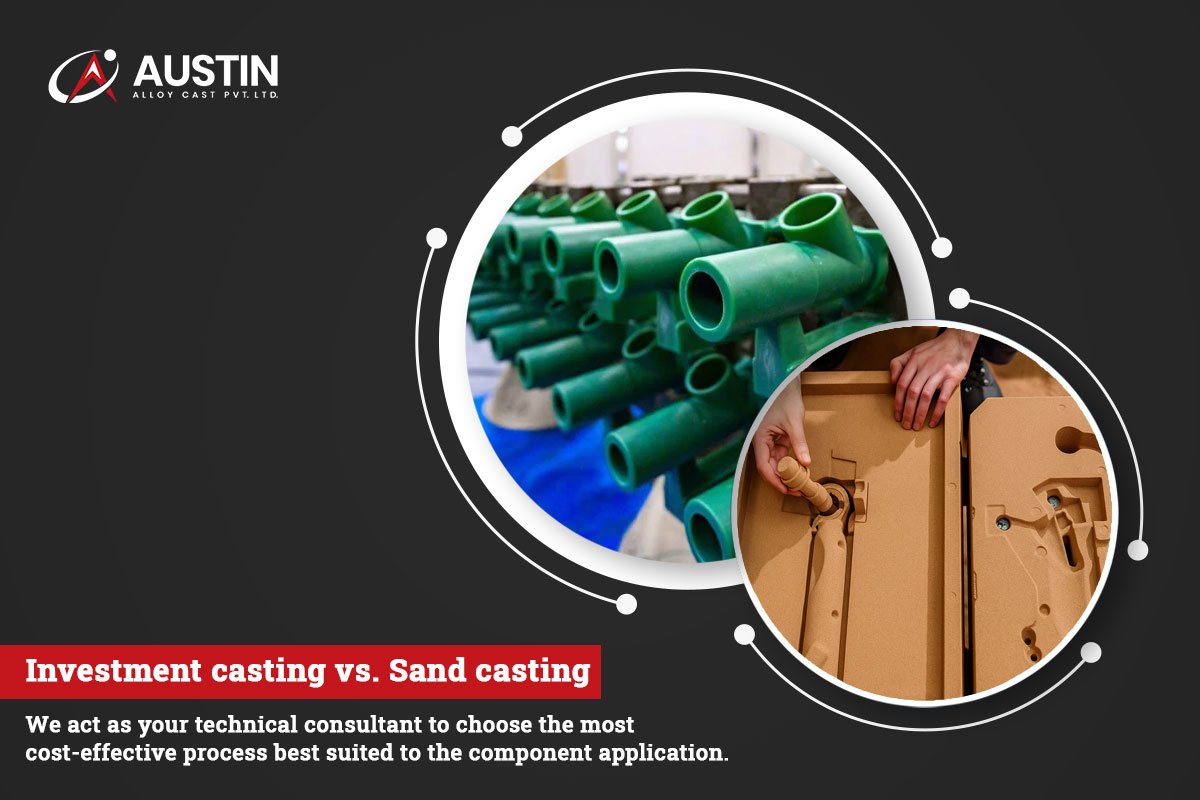
Investment Casting vs. Sand Casting: We Act as Your Technical Consultant to Choose the Most Cost-Effective Process Best Suited to the Component Application

In today’s competitive world of manufacturing, the choice of how to cast components can be the difference between a cost effective, proven, and reliable component versus one that has a challenge to perform. Both investment casting and sand casting are time tested processes for producing metal parts with different characteristics and suitability depending on design complexity, volume, and application.

At Austin Alloy Cast, we do not simply cast your parts we become your technical consultant and assist you in your choices of processes to provide the most economical and sound technical solution for the intended use of your component.

What sets us apart is that we are one of the few foundry groups in Western India with both steel investment casting and sand casting capabilities in house, both are backed by our group company Metflow, which specializes in sand castings of high quality.

Getting to Know the Two Casting Methods

Investment Casting i.e Redefined Precision

Investment casting also known as the lost wax process. A wax pattern is created and then coated with a ceramic material. The ceramic will harden, and then the wax is melted out, and molten metal is poured into that cavity. Once cooled, the shell is broken away revealing a near net shape metal part.

The investment casting process is a good option for:

  • Intricate shapes and complex geometrics
  • Tight dimensional tolerances
  • Smooth surface finishes
  • Thin walled and lightweight parts

At Austin Alloy Cast we manufacture stainless steel casting, alloy steel casting, duplex and super duplex steel castings, for parts requiring precision, reliability, and performance.

Sand Casting — Strong and Affordable

In sand casting, a pattern is pressed into sand to form a mold. Afterward, molten metal is poured into the cavity of the mold, allowed to solidify, and the sand mold is broken to retrieve the casting.

This method is favoured for:

  • Large castings
  • Low tooling costs
  • Moderate tolerances
  • Low to moderate annual volumes

Metflow, our group company, has years of experience producing sand castings in steel. Metflow has modern molding lines, induction melting furnaces, and finishing capabilities. Together, Austin Alloy Cast and Metflow provide customers with the ultimate flexibility in choosing from fine detail investment castings or large, heavy duty sand cast items.

Choosing Between Investment Casting and Sand Casting

The process of selecting the appropriate casting method is dependent on a delicate equilibrium of technical, functional, and economic considerations. We start at Austin Alloy Cast by understanding the end use of the part, including its size, geometry, surface finish requirements, and production volumes. Investment casting is usually the best choice for complex, high precision components that require superior dimensional accuracy and surface finish. Investment casting is well suited for small to medium parts with complex geometries requiring thicker walls and tighter tolerances, where the ability to achieve near net shape accuracy can effectively eliminate machining and finishing operations.

On the other hand, sand casting, with the support our group company Metflow, is typically the preferred process for larger, more robust components where investment casting does not make economic sense due to the weight and size of the component. Sand casting allows for flexibility with lower to medium production quantities coupled with reasonable tooling costs and reduced mold preparation time. The surface finish and dimensional tolerances are not as fine as investment casting but it provides excellent cost savings for heavier duty industrial applications like housings, brackets, and structural parts.

Leveraging our technical expertise and dual process capabilities, we assist customers in identifying the process that provides the best trade off among cost, accuracy and performance. Austin Alloy Cast carefully analyzes the part design, anticipated load conditions and manufacturing logistics to verify that each component is produced using the most technically efficient and economical process whether it be precision investment casting or heavy duty sand casting through Metflow.

Our Two-Pronged Process: Investment Casting + Sand Casting.

Austin Alloy Cast two pronged process streamlines the customer’s experience, as it allows a client to select the best overall solution for their project without fear of any one process not being technically available.

Advantages of our Investment Casting division:
  • Sophisticated wax injection systems and ceramic shell systems.
  • CNC based dimensional checks.
  • Materials include: stainless steels, duplexes, alloy steels, and nickel based alloys.
  • Capability with small to medium complexities/tolerances.
  • Full in house machining, NDT, and heat treating capabilities included.
Advantages of our Sand Casting division (Metflow):
  • Automated no bake molding lines.
  • Medium to large steel casting capability.
  • Tips from experienced metallurgist improving overall quality consistency.
  • All NDT including Radiography and Machining in house.
  • Demonstrated capabilities in the industrial, energy, and heavy engineering sectors.

Overall, we provide a single point source for casting and foundry solutions to a variety of sectors including renewable energy, oil & gas, marine, pumps & valves, and general engineering.

Serving as Your Technical Advisor

All of our projects start with us understanding your design, function, and operating parameters. Our engineering team will assess the following:

  • The geometry of the component and any associated loading.
  • The strength of the material and any requirements for resistance to corrosion.
  • The tolerances or requirements for surface finish.
  • The expected production volumes.
  • Cost per part analysis.

Once we have established these parameters, we will propose the process that provides the best value with regard to cost and technical feasibility, whether that be utilizing precision investment casting, or durable sand casting using Metflow.

With our knowledge of both processes, we can also hybridize the approaches. For example, we could prototype the design using sand casting and produce using investment casting once the design has been validated.

Providing Quality, Accuracy, and Sustainability

The mechanism we leverage with our investment and sand casting methods at Austin Alloy Cast and Metflow is backed by cutting edge melting, testing and inspection facilities that include new:

  • Induction furnaces that enhance melting controlling,
  • Spectrochemical analysis for alloy testing.
  • Non destructive testing (Dye Penetrant, Magnetic Particle, Radiography, UT)
  • Dimensional measuring with CMM.
  • Management systems certified to ISO 9001, 14001 and 45001.

In addition to the non destructive testing and inspection, we further focus on sustainability in our operations which include optimizing material usage, our recycling of foundry sand and waste generation in each of our casting divisions.

Conclusion: Two Processes, One Commitment to Excellence

With the complementary capabilities of Austin Alloy Cast and Metflow, we offer customers a unique value proposition complete technical expertise with totally in house production for both Investment and Sand Casting.

Whether your project requires fine detail stainless steel castings or or heavy duty sand cast steel components, we ensure that the selected process meets and exceeds your operational needs and budget objectives.

At Austin Alloy Cast we are more than a manufacturer, we are your casting consultant, helping you navigate selecting the right process, right material, and right value for every component application.

Investment Casting for Renewable Energy: Wind, Solar & Biomass

In contemporary times of clean energy evolution, precision engineering is crucial for efficiency, reliability, and longevity of renewable power systems. Among the many manufacturing processes that contribute to this progress, investment casting is among the most versatile precision methods for complex metal components.

Austin Alloy Cast is a trusted investment casting manufacturer supporting the migration to sustainable energy systems by providing castings of the highest quality for the wind, solar, and biomass industries. Our specialization in stainless steel casting, alloy steel casting, and advanced materials allows us to manufacture parts that perform flawlessly in the harshest of conditions and help renewable energy systems run at their optimal performance.

1.  The Role of Investment Casting in Sustainable Energy

Investment casting also known as lost wax technology, allows manufacturers to produce complex near net shape products, resulting in excellent tolerances and finishes. Investment casting offers multiple benefits for renewable energy systems, which is paramount for sustainable energy, and includes the role of the durable component and reliability for operation:

  • Complex Geometry Capability: One of the biggest advantages to the process is the ability to fabricate considerably aerodynamic profiles, channels, and people requiring detail typically needed for turbine and panel assemblies.
  • Materials Flexibility: The process allows for several high strength materials such as stainless steels, duplex steels, and heat resistant and super alloys.
  • Consistency and Repeatability: It also affords every part to be produced to the exacting tolerances needed for operation and reliability.
  • Reduced Machining: Using the near net shape complex, we ensure fewer machining operations and material waste while improving sustainability.

In closing, the combination of these characteristics makes investment an ideal solution for renewable energy systems regarding precision and strength.

2.  Precision Cast Components for the Wind Energy Sector

Wind turbines are components subjected to extreme mechanical loads and fluctuating wind loads in corrosive environments. Components must be designed and manufactured to achieve durability, fatigue resistance, and dimensional accuracy over long service cycles.

We provide investment cast solutions for wind energy that include:

  • Turbine hub components and couplings
  • Yaw and pitch control system components
  • Bearing housings and brackets
  • Generator and gearbox housings

By utilizing advanced stainless steel casting and high strength alloy steel, we ensure the components provide exceptional corrosion resistance and mechanical integrity even in offshore back and coastal wind farms. Our in house Non Destructive Testing techniques, including radiography, ultrasonic testing, and dye penetrant inspection, provide defect free products that meet the most rigorous international standards.

3.  High-Accuracy Castings for Solar Energy Related Processes

Solar power systems may look like they come to rest after being on numerous trips. However, the parts that hold these systems in place, as well as the mechanical tracking mechanisms, are made of high precision manufactured parts that experience loading by the sun, rain, and different temperatures.

We make investment cast and machined parts for:

  • Hinge Mounting brackets and hinges
  • Solar tracking components
  • Steel structural connectors and fasteners

Through the use of stainless steel casting, we can make accurately engineered and corrosion resistant cast components with high tensile strength for photovoltaic PV systems, concentrated solar power CSP plants and solar trackers. All parts are designed for maximum service life and weight optimized to minimize maintenance and maximize efficiency.

Additionally, utilizing our CAD CAM based design and simulation capabilities, we can ensure the highest quality in consistent material flow and solidification control for medium to high volume production.

4.  Investment Casting Applications in Biomass Power Systems

Biomass energy plants can generate renewable energy from organic materials by burning, gasifying, or digesting it anaerobically all methods that create high heat, high pressures, and corrosive gases. The components that operate in biomass will be subjected to extreme conditions and need to maintain performance.

We offer casting solutions within a biomass application, including:

  • Burner Nozzles and Diffusers
  • Valve Bodies and Impellers
  • Heat Exchanger and Furnace Components
  • Ash Handling and Boiler

Accessories At the same time, these components are created from heat resistant alloys, stainless steels, and oxidation/wear resistant nickel base alloys. The end result is better service life, less downtime, and more efficient biomass power productions.

5.  Why Austin Alloy Cast Pvt. Ltd. Is the Preferred Partner for Renewable Energy Projects

Austin Alloy Cast is an investment casting manufacturer with decades of metallurgical experience coupled with advanced technology approaches to address the changing demands of renewable sectors. Our complete capabilities include:

  • Complete, In House Capabilities: From wax pattern making through final machining and testing all carried out under demanding control of quality.
  • Material Familiarity: We pour stainless steel, carbon steel, duplex, super duplex, and heat resistant alloys.
  • Certifications and Quality Systems: We operate an ISO 9001, ISO 14001 and ISO 45001 compliant quality management system.
  • World Wide Supply: Supplying solid castings to clients in Europe, the USA and Asia in renewables, oil & gas, marine and industrial sectors.

Every piece of castings leaving our shop represents our commitment to technical excellence, process advancements and sustainability.

6.  Peering Toward the Horizon: Forging the Future of Clean Energy

The transition to renewable energy is rapidly advancing which requires materials and parts that will perform well in challenging environments. Investment casting will remain a key pillar of growth; precise, flexible, and sustainable.

Austin Alloy Cast leads the energy transition with engineered casting solutions for global renewable companies, from wind turbines to solar and biomass systems.

Final Thought

As the renewable energy sector continues to develop, the demand for durable, precision components will continue to grow. With our specialized knowledge of investment and stainless steel casting, Austin Alloy Cast will continue to create new technologies that lead the world towards sustainability through innovation, trust and metallurgical expertise.

If you are looking for a dependable and knowledgeable investment casting manufacturer for your renewable energy project, please contact Austin Alloy Cast, where every casting reflects precision, performance and purpose.

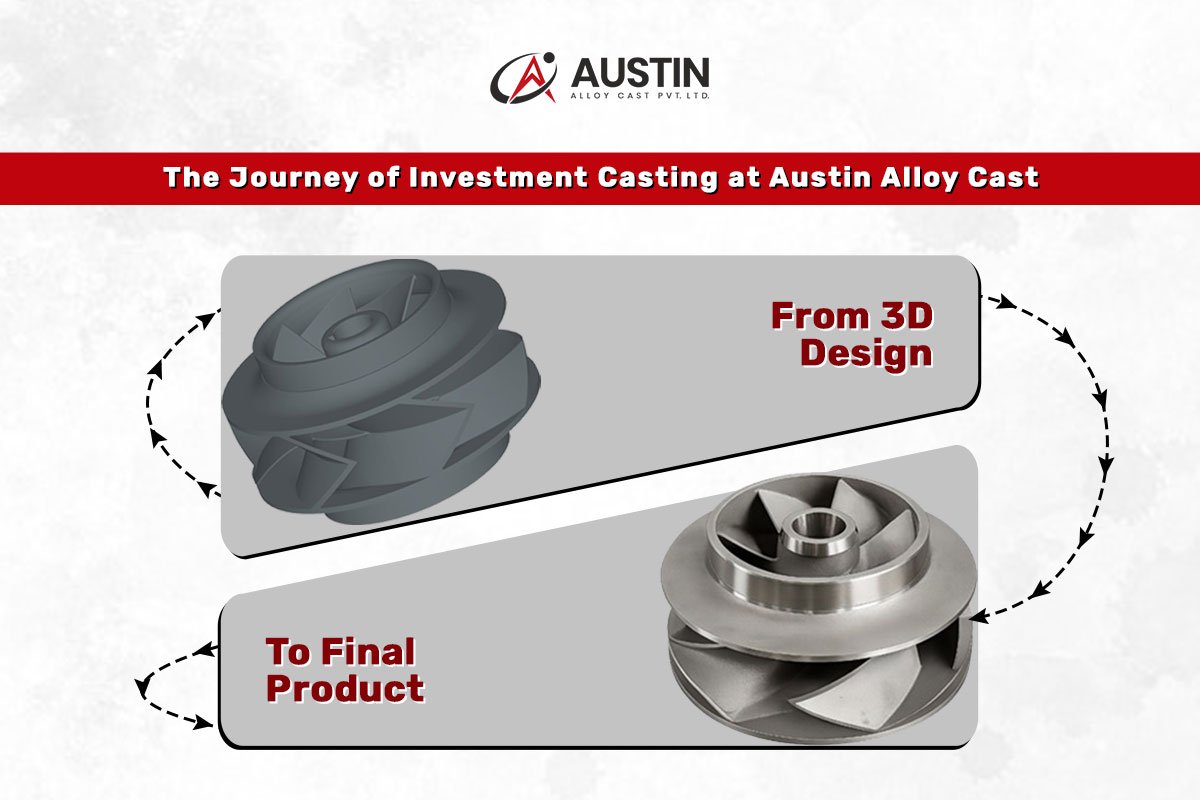
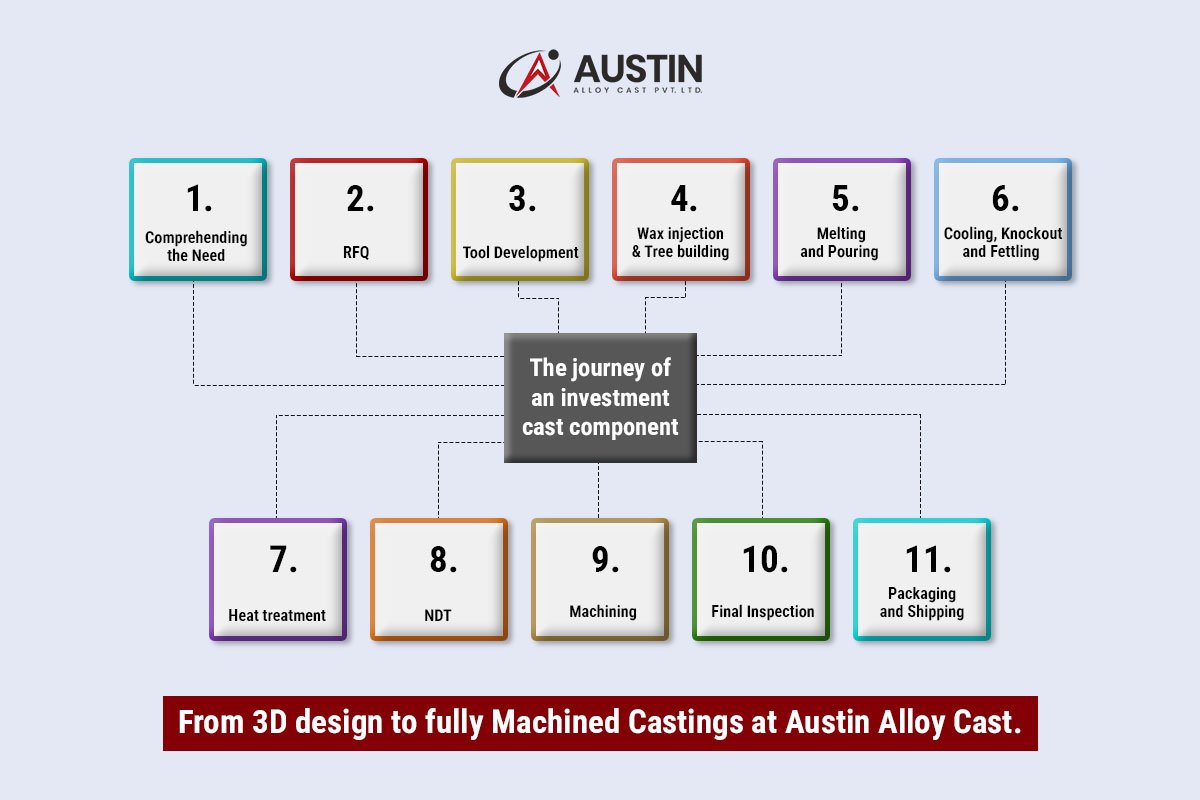
The journey of an investment cast component: From 3D design to fully Machined Castings at Austin Alloy Cast.

Each casting carries a narrative, a story of design, metallurgical achievement, and accuracy of execution. At Austin Alloy Cast Pvt. Ltd., we don’t just produce castings, we create engineering solutions to satisfy the most demanding requirements of our customers. The journey of custom casting consists of collaboration, creativity and quality. A process we have honed over the past 25 years, to guarantee that every piece we produce stands for the finest in performance and precision.

From the first digital blueprint to the last machined finish, every phase of our casting journey displays our skill set, advanced technology and dedication to excellence.

At Austin Alloy Cast investment casting process goes through below stages:

Step 1: Comprehending the Need

All journeys begin with an understanding. No casting is the same as another casting. Each has specific dimensional standards, specific strength requirements, and other application considerations. At Austin Alloy Cast, our process starts with a dedicated discussion with the design or engineering team from our client.  We take time to analyze and understand the application, environment, points of stress, and performance expectations.

By working collaboratively, we outline and define the very first inputs from alloy selection to tolerance specifications before the design work ever begins. Establishing this baseline starts the process of maintaining precision through to the end of the process.

Stage 2: Concept and 3D Design

After finalizing the customer’s design, our engineers take those concepts to create them digitally, using advanced 3D simulation software. This 3D design is more than just an image; it is a functional simulation that assesses metal flow to verify our methoding, factors like shrinkage and the distribution of stresses within the design, before the first mold is cut. The 3D design features provide an action plan to improve gating systems, yield and reduce wastage of metal. Everything just to provide cost effective solution to customers.

Additionally, it is the 3D design stage where we at Austin Alloy Cast begin to combine practicality and innovation. Utilizing CAD, pattern simulation and other tools, our engineering team can develop highly precise representations allowing customers to visualized the designed end component. These CAD representations allow for the change of designs at this stage proving cost and time savings from expensive physical iterations later on.

Stage 3: Tool Development with Precision

The next step is where design literally meets function tool making. The die is the basis of the casting, it’s what defines the dimensions and shape of the end product.

Tool development is an outsourced activity at Austin. We propose to our customer manual or automatic tooling based on the volume requirements. Using CNC machining technology, we make high quality patterns using wood, metal, or aluminium. Each is customized to suit the size, complexity, and production run of the casting. That ensures greater dimensional accuracy and repeatability that is required to maintain quality of the final pieces in large production runs.

The pattern development process is closely monitored by our experienced pattern makers and design engineers who collaborate to ensure the pattern matches the approved 3D model.

Stage 4: Wax injection & Tree building

Once the pattern is completed, we move to molding. Our team employs the right molding techniques to generate a cavity that captures the design of the component, depending on the desired alloy and design specifics.

Through complex internal geometries we manufacture precise sand cores that shape the inner cavities of the casting. These cores are made from high performance bonding materials to maintain their rigidity under high temperatures while keeping precise control of dimensions.

Stage 5: Melting and Pouring

Welcome to the realm of metallurgy and accuracy. During this phase, an alloy is melted in a controlled environment, whether it be stainless steel, or carbon steel, or a unique alloy. Chemical composition and melting temperature are monitored within strict parameters to produce a material that adheres to the customer’s specifications.

Every step is carried out within Austin Alloy Cast’s internal safety and quality control protocols, ensuring both operator safety and metallurgical excellence. The result is a precisely cast component that meets rigorous international standards of durability and performance.

For each melt, a heat record is kept on the charge composition, furnace number, melt time, pouring temperature, and deoxidation additions. These records serve as a means of traceable documents to assure processes are repeatable and materials conform to production batches.

Prior to pouring metal, the ceramic shell mold is coated with a predetermined number of primary and secondary coats under strictly controlled temperature and humidity conditions. It is important to control the ambient conditions as they avoid dimensional changes to the wax pattern and avoid cracking or distortion of the shell. The number of coats is dictated by the geometry of the casting, surface area, and in total weight, to provide optimum shell permeability and mechanical strength for the solidification of liquid metal and flowing into a mold cavity.

Stage 6: Cooling, Knockout, and Fettling

Once the molten metal is solidified in the mold, the casting is allowed to cool on its own before the mold is broken open. The result is a rough shape of the part and is still a perfect shape.

We perform shakeout operations to remove the sand and then continue to fettling to cut off any excess metal or risers. This stage prepares the casting for finishing and machining in the ground state to ensure the surface is smooth and free of defects.

Step 7: Heat treatment

For specific alloy requirements or application reasons, castings are heat treated to enhance mechanical properties, including toughness, strength, and ductility. We have an in house heat treating facility that allows for uniform heating and controlled cooling cycles, achieving the best possible performance to the original material.

Once the heat treat is complete, the casting is sand blasted or shot blasted to clean the surface, which is another important operation that leads to the smooth texture and finish desired by our customers. These operations are performed using automated systems to ensure consistency from batch to batch.

Stage 8: Non Destructive Testing (NDT)

Non Destructive Testing (NDT) forms an essential stage in the investment casting process, ensuring the detection of surface and subsurface discontinuities without impairing the integrity of the casting. At this stage, components undergo a series of standardized NDT evaluations to verify compliance with mechanical integrity and customer specific acceptance criteria.

The selection of NDT methods is determined by casting material, geometry, criticality of the application, and defect sensitivity requirements.

Stage 9: Machining

Prior to leaving our facility, every casting is subjected to extensive examination and testing. Our quality assurance department performs Non Destructive Tests, dimensional inspections, and chemical mechanical testing and inspections to confirm every product meets the international standards.

We believe quality is developed, not inspected. Therefore, we document and monitor each step of the manufacturing process. From spectroscopic analysis through to the radiograph inspection, our team works to assure that the final casting meets or exceeds expectations.

Step 10: Final Inspection

In the final inspection stage, each casting undergoes thorough visual and dimensional verification to ensure compliance with customer specifications and quality standards. Visual inspection identifies surface defects such as cracks, laps, or inclusions, while dimensional accuracy is confirmed using precision instruments like CMM, Vernier calipers, micrometers, height gauges, and dedicated fixtures. Measurements are taken against approved drawings and CAD models, ensuring tight tolerances and geometric accuracy. All inspection tools are periodically calibrated to maintain measurement reliability. Inspection findings are documented in the Final Inspection Report, ensuring full traceability, quality conformity, and approval before the casting is cleared for packing and dispatch.

We believe quality is developed, not inspected. Therefore, we document and monitor each step of the manufacturing process. From spectroscopic analysis through to the radiograph inspection, our team works to assure that the final casting meets or exceeds expectations.

Stage 11: Packaging and Shipping

The last stop on the casting journey is packaging and shipping. We recognize the importance of protecting our products during delivery, and we use specially designed packaging to protect them from corrosion, abrasion, and deformation. All shipments from Austin Alloy Cast come with degree inspection and test reports to demonstrate our transparency and reliability.

A Heritage of Accuracy and Reliability

Each casting produced here at Austin Alloy Cast is the culmination of our human skills, technology, and unwavering commitment to quality. From the RFQ stage through to the fully machined casting, each step of the process reflects the love we have for achieving perfect outcomes, while enhancing customer satisfaction.

Our commitment to our customers is to do just that make their every concept a high performing reality. The journey from concept to metal can be a long one, however, at Austin Alloy Cast we have the ability, the world’s most advanced facility and a strong commitment to quality, allowing us to define and deliver every custom casting project to excellence, in movement.