15 Oct 2026

BLOG
Common Challenges in Steel Investment Casting and How to Overcome Them
Steel Investment Casting has become one of the most reliable manufacturing methods for producing high precision industrial components. Industries such as oil and gas, power generation, food processing, marine engineering, and heavy machinery depend on investment castings because they offer excellent dimensional accuracy, superior surface finish, and the ability to create complex shapes.
From intricate industrial parts to critical Pump and Valve Components, investment casting helps manufacturers achieve consistent quality while reducing machining requirements. However, despite its many advantages, steel investment casting is a highly technical process that comes with several manufacturing challenges.
At Austin Alloy Cast, we understand that producing reliable castings requires strict process control, material expertise, and advanced inspection systems. Overcoming casting challenges is essential for ensuring product performance, durability, and customer satisfaction.
Understanding the Complexity of Investment Casting
Investment Casting, also known as the lost wax casting process, involves multiple stages including wax pattern making, shell building, dewaxing, metal pouring, cooling, finishing, and inspection.
Because every stage affects the final product, even small process variations can create casting defects or dimensional inconsistencies. Achieving defect free castings requires careful monitoring of materials, temperatures, tooling, and quality control procedures.
For industries using critical Pump and Valve Components, maintaining precision and material integrity is especially important because these components often operate under pressure, corrosive conditions, and high mechanical stress.
Porosity and Gas Defects
One of the most common challenges in steel Investment Casting is porosity. Porosity occurs when gas becomes trapped inside the molten metal during solidification, creating small voids or cavities within the casting.
Porosity can reduce the strength and pressure resistance of cast components, which is a major concern for industrial applications such as valves, pumps, and flow control systems.
How to Overcome Porosity
Controlling porosity requires proper melt handling and process management. Manufacturers reduce gas related defects by:
- Using clean raw materials
- Controlling pouring temperatures
- Improving mold venting systems
- Maintaining proper shell quality
- Preventing contamination during melting
At Austin Alloy Cast, advanced inspection techniques such as radiography and ultrasonic testing help identify internal defects before components move into final production stages.
Shrinkage Defects During Solidification
Steel naturally shrinks as it cools and solidifies. If the casting process is not properly controlled, shrinkage cavities can form inside the component. These defects weaken structural integrity and may lead to part failure under pressure or mechanical load.
Shrinkage is especially problematic in thick section industrial castings and heavy duty Pump and Valve Components where material soundness is critical.
How to Reduce Shrinkage Problems
Manufacturers overcome shrinkage issues by carefully designing gating and feeding systems that allow molten metal to flow correctly during solidification.
Additional preventive measures include:
- Optimizing riser placement
- Controlling cooling rates
- Using simulation software for mold design
- Maintaining uniform wall thickness where possible
Scientific solidification control helps improve casting density and reduce internal void formation.
Surface Defects and Rough Finish
Surface quality is extremely important in steel Investment Casting, particularly for parts requiring sealing surfaces or smooth fluid flow.
Common surface related issues include:
- Rough surface finish
- Sand inclusions
- Slag inclusions
- Surface cracks
- Cold shuts
These defects can affect both appearance and performance, especially in valves, pump impellers, and flow control equipment.
How Surface Defects Are Controlled
High quality shell materials and proper mold preparation are essential for achieving smooth casting surfaces.
Manufacturers improve surface quality by:
- Using controlled ceramic shell processes
- Maintaining proper dewaxing conditions
- Monitoring pouring temperatures
- Using clean molten metal
- Performing finishing and fettling operations carefully
At Austin Alloy Cast, process consistency and dimensional inspections help ensure improved surface finish and tighter tolerances across production batches.
Dimensional Inaccuracy and Warping
Another challenge in Investment Casting is maintaining dimensional accuracy throughout the production cycle. Variations in wax patterns, shell expansion, cooling rates, or alloy behavior can lead to warping and dimensional distortion.
For precision Pump and Valve Components, even minor inaccuracies may cause leakage, alignment issues, or improper assembly.
How Manufacturers Improve Accuracy
Precision tooling and process calibration play a major role in dimensional control.
Manufacturers improve casting accuracy through:
- Advanced CAD and simulation software
- Controlled wax injection processes
- Accurate tooling design
- Temperature monitoring during pouring and cooling
- Dimensional inspection using CMM equipment
Austin Alloy Cast utilizes advanced measuring systems and strict dimensional inspection procedures to maintain consistency and meet customer specifications.
Cracking and Thermal Stress
Steel castings experience thermal stress during cooling and solidification. If cooling occurs unevenly, cracks may form either on the surface or internally. Hot cracking is particularly common in complex geometries or areas with uneven wall thickness.
Cracks reduce the mechanical reliability of the casting and can make components unsuitable for industrial service.
Preventing Cracks in Steel Investment Casting
Reducing thermal stress requires proper casting design and controlled cooling methods.
Manufacturers minimize cracking risks by:
- Designing balanced wall sections
- Managing cooling rates carefully
- Using suitable alloy compositions
- Improving mold and gating design
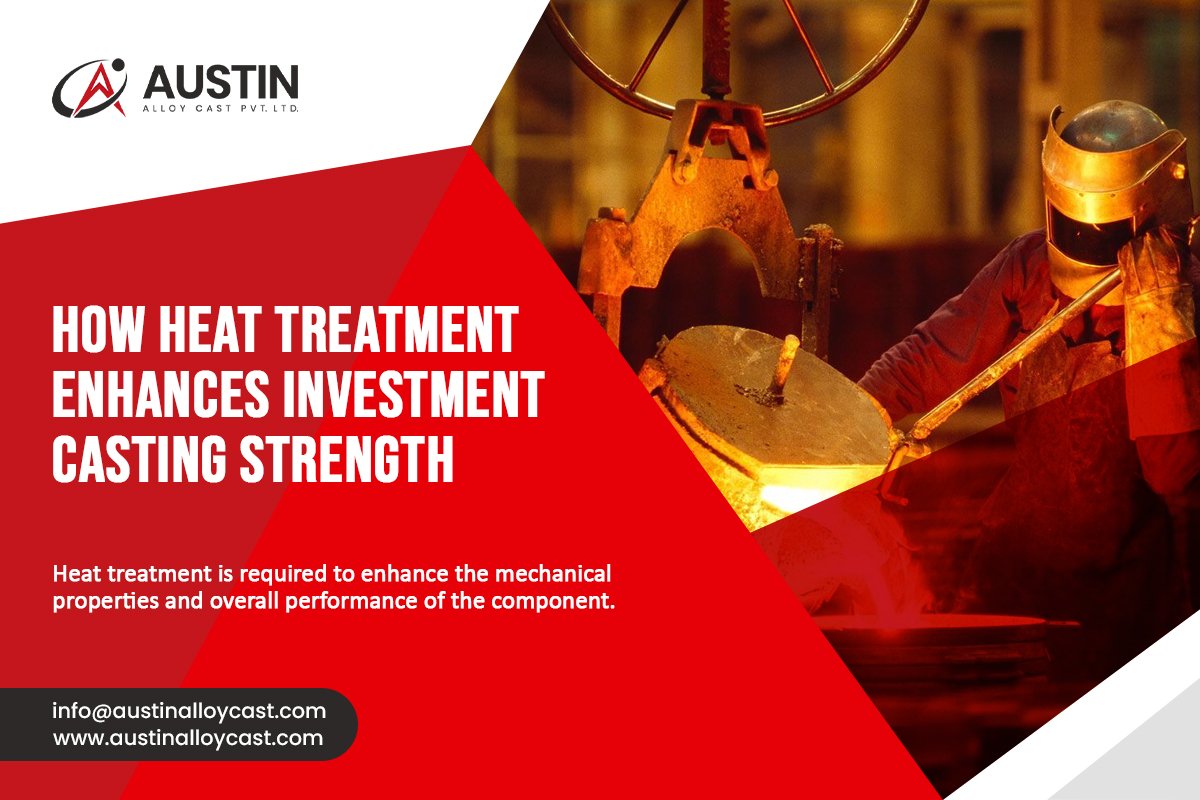
- Applying heat treatment when necessary
Careful process planning significantly improves the structural integrity of finished castings.
Maintaining Consistent Quality
One of the biggest challenges in steel Investment Casting is achieving repeatable quality across large production runs. Variations in raw materials, environmental conditions, or process parameters can lead to inconsistent results.
For industries relying on critical Pump and Valve Components, consistency is essential for operational reliability and maintenance planning.
Quality Control Measures That Make a Difference
Modern foundries use strict quality control systems to improve consistency and reduce defects.
Important quality practices include:
- Spectrometer analysis for material verification
- Non destructive testing (NDT)
- Radiographic inspection
- Ultrasonic testing
- Magnetic particle inspection
- Process monitoring at every production stage
At Austin Alloy Cast, comprehensive testing and inspection systems help ensure that every casting meets industrial quality standards before delivery.
The Importance of an Experienced Casting Partner
Overcoming challenges in steel Investment Casting requires more than advanced equipment. It requires technical expertise, process discipline, metallurgical knowledge, and continuous quality improvement.
At Austin Alloy Cast, we focus on producing high quality investment castings designed for demanding industrial applications. From complex geometries to critical Pump and Valve Components, our manufacturing processes are built around precision, consistency, and reliability.
By combining advanced technology with strict quality control practices, we help customers reduce production risks and improve long term component performance.
Conclusion
Steel Investment Casting offers exceptional advantages in terms of precision, design flexibility, and material performance. However, challenges such as porosity, shrinkage, cracking, dimensional inaccuracies, and surface defects must be carefully managed to achieve reliable results.
Through advanced process control, quality inspection, proper tooling, and experienced manufacturing practices, these challenges can be successfully overcome.
At Austin Alloy Cast, we believe that solving casting challenges is the key to delivering durable, high performance components for industries worldwide. High quality investment castings not only improve product reliability but also help industrial systems operate more efficiently and safely over the long term.
To have a glimpse at our world class facility and products, visit us at www.austinalloycast.com.
For any queries or details contact us at info@austinalloycast.com.
Recent Posts