26 Feb 2026

BLOG
Ferrous Casting Vs Non-Ferrous Casting: Differences, Advantages, and Industrial Applications
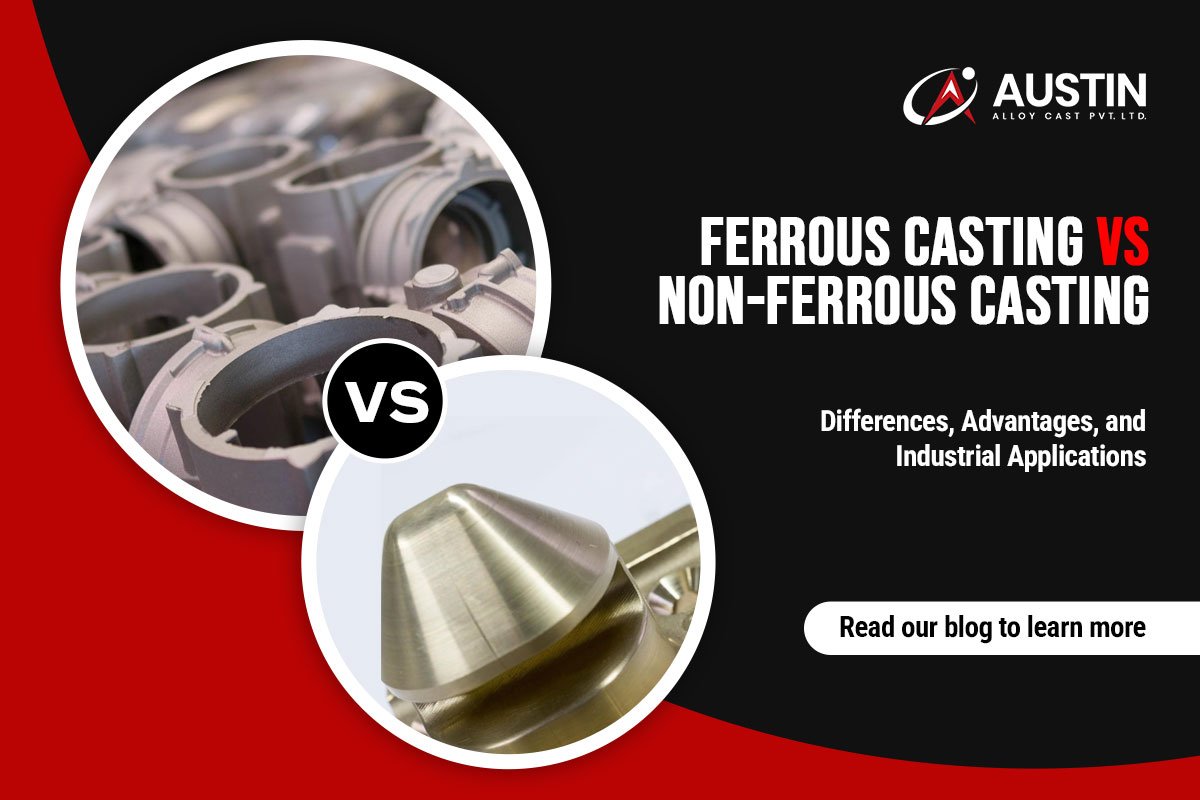
Metal casting is a good way to make complicated parts that are very strong. These parts are used in different fields. When we talk about cast metals we can put them into two groups. The difference, between ferrous and non-ferrous castings is very important. Ferrous castings and non-ferrous castings are not the same. Knowing what sets them apart is helpful. It helps metal casting engineers, designers and people who buy metal parts choose the metal for the job. They need to think about how the metal will work how much it costs and how long it will last. Metal casting engineers and designers who work with ferrous castings and non-ferrous castings to make sure they pick the right one.
This article tells you about ferrous and non-ferrous casting. It talks about the things that make them different the good things about each one and where you usually find them. The article goes into detail about ferrous castings because they are used a lot, in many industries and that is why ferrous castings are so important.
What Is Ferrous Casting?
Ferrous castings are basically metal castings that have iron in them. Iron is the thing in ferrous castings. These ferrous castings are really important, for engineering and industrial manufacturing. The reason is that ferrous castings are strong and tough. They are also not too expensive to make which is a plus. Ferrous castings are a part of these industries because of these good qualities.
Some common kinds of castings include:
- ferrous castings like steel
- ferrous castings such, as iron
These are the most common types of ferrous castings that people use. Ferrous castings are really useful in:
- Carbon steel castings
- Alloy steel castings
- Stainless steel castings
- Low alloy and high alloy steel castings
Ferrous materials are usually the choice for parts that have to handle a lot of stress, pressure or rough handling. When we talk about materials, we know they are strong. New ways of working with metal and casting techniques have made ferrous materials even better at resisting damage from the environment easier to shape and more consistent. This is especially true for materials that are used in tough situations. Ferrous materials are very good at withstanding conditions and ferrous materials are still a popular choice, for many applications.
What Is Non-Ferrous Casting?
Non-ferrous castings are made from metals that do not have iron as the part. People like to use these metals because they’re not heavy. Non-ferrous castings are also good at resisting damage, from water and air. Sometimes non-ferrous castings are used because they can carry electricity and heat well. Non-ferrous castings have a lot of qualities that make them useful.
Some materials that are often used for casting and do not have iron in them include:
- Aluminum alloys
- Copper and bronze alloys
- Brass
- Magnesium alloys
- Nickel based alloys
Non-ferrous castings are used a lot in things where we need to make them lighter or where they will not rust easily or where we need them to be very precise. This is more important than making them extremely strong. Non-ferrous castings are really good, for these kinds of things because they can be made to be lighter and can be made to last without rusting.
Key Differences Between Ferrous and Non-Ferrous Castings
Casting types are important. They are really different. The properties of one type of casting are not, like the properties of the type of casting. Casting types have properties that make them unique and that is what makes them special.
- Strength and Load Bearing Capability
Ferrous castings are really strong. They can handle a lot of stress. Ferrous castings have tensile strength and they can resist impact and fatigue better than non-ferrous metals. This is why ferrous castings are perfect for things that need to hold a lot of weight or pressure like components and pressure-bearing components. Ferrous castings are the choice, for these kinds of things because of their strength.
Non-ferrous castings are really good for how much they weigh. People usually do not use them when they have to handle a lot of force or pressure. This is because non-ferrous castings are not strong enough on their own. However non-ferrous castings can be used in these situations if they are made to be stronger, by design. Non-ferrous castings are a choice when you need something that is light and strong but non-ferrous castings have to be designed carefully to handle really tough jobs.
- Weight Considerations
Aluminum and magnesium are a lot lighter than metals. This is really important for things, like airplanes and cars and electronics. Aluminum and magnesium are lighter. That is what makes them so useful. When we use aluminum and magnesium in these things it helps them work better because they are lighter.
Ferrous castings are really heavy. The weight of ferrous castings is actually a good thing. The weight of castings helps with stability. It also helps to stop vibrations. The weight of ferrous castings makes industrial machinery last longer. The weight of castings is important for industrial machinery to work well.
- Corrosion Resistance
Metals like copper and bronze do not rust easily. They can stay in condition even when they are outside in the air or in the ocean. Iron and steel can also last a long time without rusting if they are mixed with other metals in the right way. For example, stainless steel is really good, at resisting corrosion. Stainless steel is an example of a metal that can withstand corrosion.
When you choose the materials and do the right things to the surface of ferrous castings they work really well. They can even handle being, in places that’re very corrosive or very hot. Ferrous castings are pretty strong when they are made with the stuff and taken care of properly.
- Cost and Availability
Ferrous castings are usually cheaper to make because there is a lot of iron and people have been doing this for a long time. This means they have a system, in place to get the iron they need. Ferrous castings are often the choice when you need to make something big or when you need to make a lot of something. People like to use castings for these kinds of jobs because they are a good option.
Non-ferrous metals are usually more costly. They cost more to get the materials and more because process. The good things about non-ferrous metals can make them worth the extra money, for certain uses. Non-ferrous metals do a job in these situations.
Benefits of Ferrous Casting (Key Focus)
Ferrous casting is still the number one choice for a lot of industries. This is because ferrous casting has good things going for it. Ferrous casting is liked by people who work in these industries. The main reason for this is that ferrous casting has advantages. People, like casting because of these advantages. Ferrous casting is used a lot in industrial sectors because of this.
- High Mechanical Strength
Ferrous castings are really strong. They can handle pressures and heavy loads. Ferrous castings can also deal with repeated stress. This makes ferrous castings a good choice for places that’re very tough on equipment. Ferrous castings are suitable, for demanding environments where other materials might not work.
- Versatility in Alloy Design
Steel and iron alloys can be made to fit the needs of a job. This means they can be made to be very hard or very tough. They can also be made to resist corrosion and heat. Steel and iron alloys are really good at resisting corrosion and heat because they can be tailored to meet requirements, like corrosion resistance and heat resistance. Steel and iron alloys are very useful.
- Excellent Machinability
People make castings these days to work well with machines that shape them. This means ferrous castings can be made with precise measurements and they look really good too. Ferrous castings are made to be machined so they turn out just right.
- Long Service Life
Components that are made from materials can last for a very long time. They do a job even when they are used in really tough conditions like when things are rubbing against them or when it is very hot. Ferrous materials are really good, at helping components work well for a time.
- Cost Efficiency for Industrial Scale
When you are working with equipment and big infrastructure projects ferrous castings are the way to go because they work really well and do not cost too much. Ferrous castings are a choice, for these kinds of projects because they give you the best of both worlds: they perform well and are affordable. You get performance from ferrous castings and you also save money.
Benefits of Non-Ferrous Casting
Non-ferrous castings also offer unique advantages that make them indispensable in certain industries:
- Lightweight construction for improved efficiency
- Superior resistance to rust and oxidation
- High thermal and electrical conductivity
- Easier casting of thin walled and intricate designs
These benefits make non-ferrous metals ideal for precision components, decorative parts, and corrosion sensitive environments.
Industrial Applications of Ferrous Castings
Ferrous castings are used a lot in different industries where you really need something to be strong and work well. Ferrous castings are very important in these industries because they have to be reliable. You cannot have things breaking or failing when you need them to work. Ferrous castings are the choice, for people because of this.
- Valves, pumps, and flow control components
- Power generation and energy equipment
- Automotive and rail components
- Mining and construction machinery
- Oil and gas equipment
- Industrial gearboxes and housings
Ferrous materials can really handle situations. This makes ferrous materials very important for things like bridges and big construction projects that need to be strong. Ferrous materials are also necessary, for heavy engineering applications.
Industrial Applications of Non-Ferrous Castings
Non-ferrous castings find use in industries that prioritize weight, corrosion resistance, or aesthetics:
- Automotive engine and transmission components
- Aerospace structures and housings
- Electrical and electronic enclosures
- Marine hardware
- Heat exchangers and cooling systems
When you are trying to decide between ferrous casting and non-ferrous casting you have to think about few things.
The decision to use ferrous casting or non-ferrous casting depends on:
- Load and stress requirements
- Operating temperature and environment
- Weight constraints
- Corrosion exposure
- Budget and lifecycle cost
Ferrous castings continue to be the preferred choice for many industrial applications because they offer high strength, reliability, and cost efficiency. Non-ferrous materials are used in specific situations where ferrous castings may not meet certain requirements and specialized properties are needed. Ferrous castings are valued for their ability to handle heavy duty applications and deliver long service life, which is why they remain widely used across industries. At Austin Alloy Cast, the core focus is on ferrous casting, particularly steel castings, where durability and performance are critical. While non-ferrous materials provide advantages such as lighter weight and corrosion resistance in certain environments, ferrous castings remain essential for industries that demand strength and long term reliability.
Both ferrous and non-ferrous castings play an important role in modern manufacturing. Non-ferrous materials are well suited for applications where weight reduction and resistance to moisture are important, whereas ferrous castings are ideal for heavy industrial use where components must withstand high loads and operate reliably over time. Understanding the differences, benefits, and industrial uses of these materials supports better design decisions, improved component performance, and more efficient manufacturing outcomes.
To have a glimpse at our world class facility and products, visit us at www.austinalloycast.com.
For any queries or details contact us at info@austinalloycast.com.
Recent Posts