26 Feb 2026

BLOG
EU CBAM: Foundry Process Ownership for Net-Zero Compliance
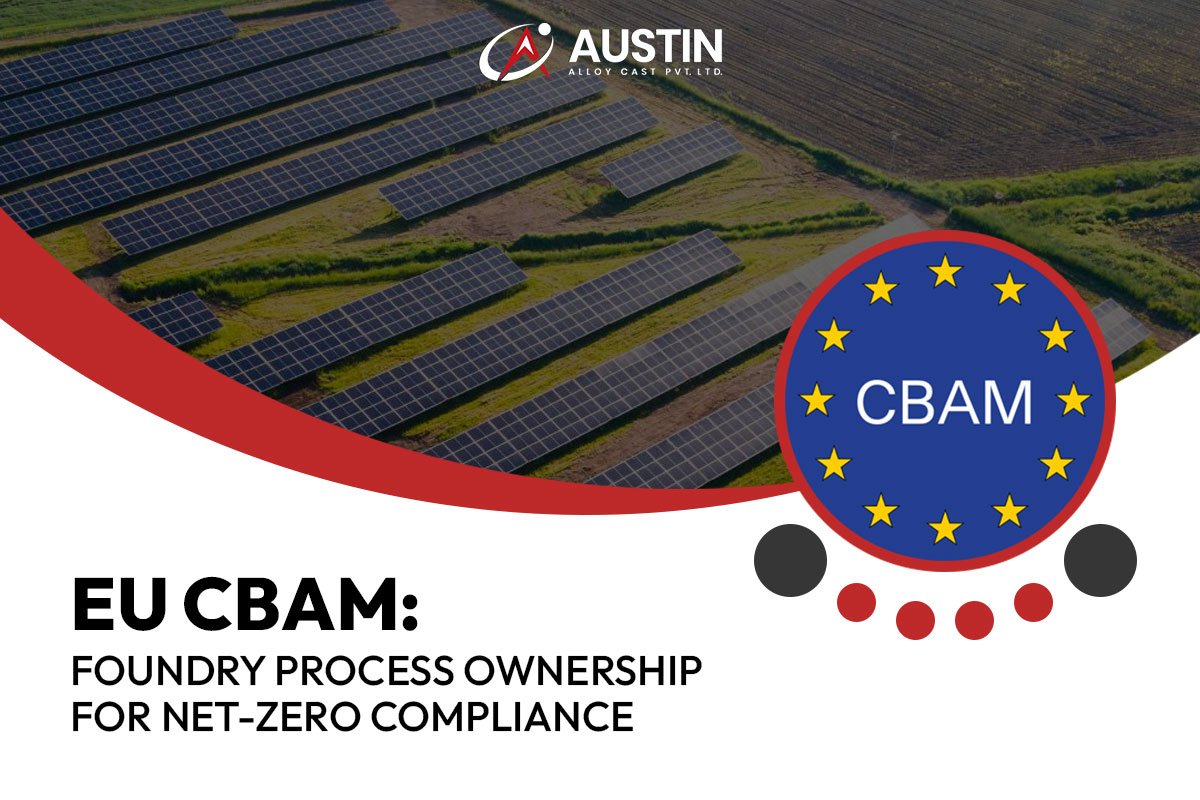
The EU’s Carbon Border Adjustment Mechanism (CBAM) imposes carbon pricing on imports like steel and aluminium, targeting high emission sectors to prevent carbon leakage and level the playing field for EU producers. For Indian foundries exporting cast components, CBAM demands rigorous process ownership in sustainability spanning energy use and production efficiency to avoid duties up to €173 per tonne on steel. At Austin Alloy Cast, we navigate CBAM through disciplined environmental management, while partners like Metflow Foundry exemplify net zero leadership.
Understanding CBAM’s Foundry Impact
CBAM, effective from October 2023 with full enforcement in 2026, requires EU importers to report embedded emissions in goods like iron, steel, aluminium, cement, fertilizers, electricity, and hydrogen. Foundries face direct pressure as steel and aluminium castings trigger quarterly reports during transition, then annual declarations with certificate purchases based on verified emissions.
Non-EU producers like Indian foundries must supply accurate emission data direct (fuel combustion) and indirect (electricity) or importers default to higher EU values, inflating costs. Indian steel exports to Europe could decline due to high emission intensity, prompting foundries to own decarbonization processes proactively.
Sustainability in Foundry Energy Management
Foundry energy sustainability under CBAM focuses on Scope 1 and 2 emissions from melting furnaces, induction units, and power intensive operations. Process ownership means auditing furnace efficiency, switching to electric arc furnaces over coal based ones, and integrating renewables to cut indirect emissions.
Key strategies include real time energy monitoring via IoT sensors and waste heat recovery systems, reducing consumption by 20-30% as seen in net zero facilities. Austin Alloy Cast optimizes induction melting with variable frequency drives, slashing energy per tonne while maintaining alloy integrity for automotive and energy castings.
Production Sustainability: Beyond the Melt Shop
Sustainability at Austin Alloy Cast extends well beyond the melt shop through direct investment in renewable energy generation. To significantly reduce Scope 2 emissions and strengthen CBAM compliance, the company operates a 1.5 MW solar power plant, supplying clean energy directly to foundry and production operations.
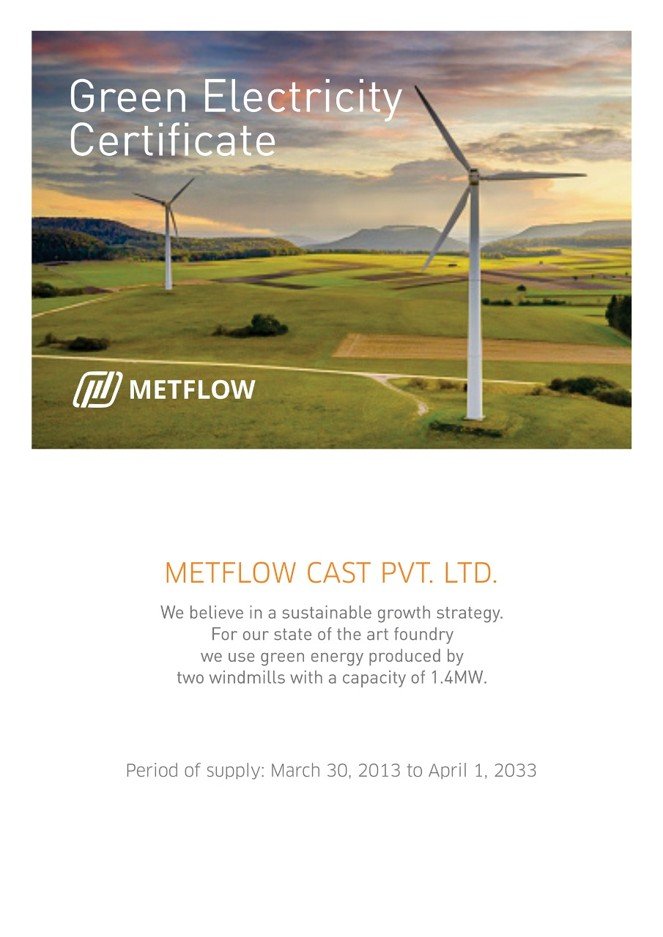
In parallel, Austin Alloy Cast’s sister company, Metflow Cast, further strengthens the group’s renewable energy footprint with two windmills totaling 1.5 MW of wind power generation. This integrated solar and wind energy strategy reduces dependence on grid electricity, stabilizes long-term energy costs, and lowers the carbon intensity of precision cast components supplied to global OEMs.
By combining energy efficient melting technologies, smart energy management systems, and captive renewable power generation, Austin Alloy Cast and Metflow Cast demonstrate a practical, scalable approach to sustainable foundry operations aligned with global decarbonization and CBAM requirements.
ISO 14001: Environmental Management Foundation
CBAM preparation is achieved via an ISO 14001 certification that implements an Environmental Management System (EMS) to continually improve how resources are utilized and stay compliant with regulations. It is necessary to complete a gap analysis, monitor performance regularly, hold internal audits and perform management reviews. In order to monitor emissions and pollutants generated from operations.
For foundries, ISO 14001 integrates CBAM reporting via KPIs on energy intensity and emission factors, verified through accredited bodies. Austin Alloy Cast’s ISO 14001 framework conducts quarterly EMS audits, aligning melt shop data with EU default value avoidance.
ISO 45001: Safety Synergy with Sustainability
With ISO 45001 you can manage OHS, which is the area that includes the Worker Hazards that result from working in a high heat foundry environment and helps to reduce downtime from incidents that create additional spikes in our GHG emissions. The structure of the two standards are based on the same PDCA Cycle, and therefore share similar elements in relation to the ownership of risk based processes.
Dual certification streamlines CBAM prep: safety audits reveal energy inefficiencies, like poor ventilation increasing auxiliary power draw. Austin Alloy Cast leverages ISO 45001 for hazard identification in pouring areas, enhancing overall process discipline.
| Standard | CBAM Relevance for Foundries | Key Integration Benefits |
| ISO 14001 | Emission tracking & EMS audits | Default value avoidance; verified reporting |
| ISO 45001 | OHS risk reduction | Lower indirect emissions via uptime gains |
| Combined | Process ownership loop | 20-30% sustainability uplift |
Process Ownership: Foundry Leadership in CBAM
True CBAM navigation demands foundries own end to end processes data collection, verification, and optimization rather than delegating to importers. This includes third party emission audits from 2026 and blockchain for immutable records.
Austin Alloy Cast exemplifies ownership with digital twins linking melt chemistry to carbon footprints, enabling proactive EU declarations. Partnering with net zero innovators like Metflow amplifies supply chain resilience.
- Emission calculators tailored to casting alloys.
- Supplier audits for upstream scrap carbon content.
- Annual decarbonization roadmaps shared with OEMs.
Strategic Roadmap for Indian Foundries
CBAM compliance roadmap starts with pre verification to sidestep non-compliance costs like default values or lost contracts. Indian exporters must diversify markets while greening operations green steel taxonomies aid competitiveness.
Austin Alloy Cast advises:
- Baseline emission inventories by product line.
- ISO 14001/45001 upgrades for audit trails.
- Renewable PPAs for indirect emission cuts.
- Collaboration with net zero peers like Metflow.
Future Proofing Foundry Exports
CBAM accelerates global decarbonization, pressuring foundries to evolve beyond compliance into sustainability leaders. US and UK OEMs increasingly mirror EU standards, making net zero processes a competitive edge.
Austin Alloy Cast and Metflow Cast demonstrate that process ownership fuelled by ISO standards and energy/production discipline turns CBAM from threat to opportunity. Net zero casting isn’t optional; it’s the export lifeline for tomorrow’s markets.
To have a glimpse at our world class facility and products, visit us at www.austinalloycast.com.
For any queries or details contact us at info@austinalloycast.com.
Recent Posts