15 Oct 2026

BLOG
Steel Casting Requirements in Mining & Earthmoving Equipment Applications
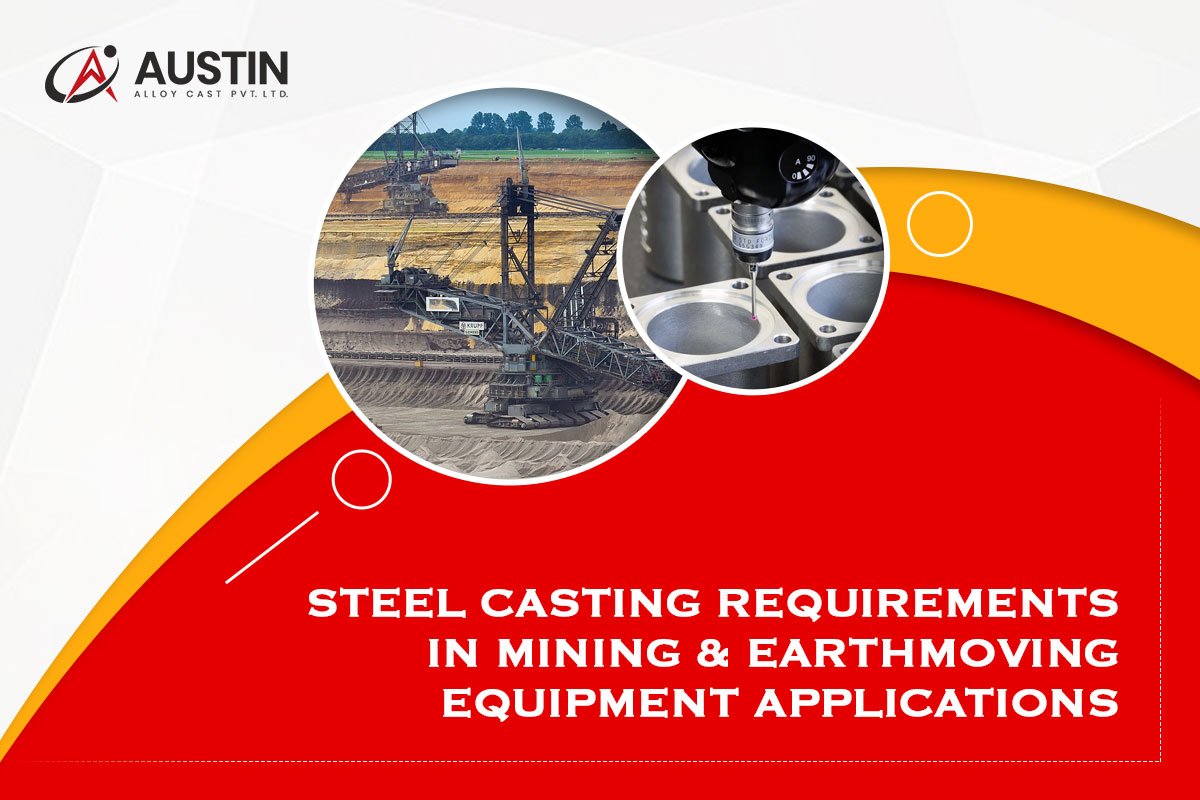
Mining and earthmoving equipment live in one of the harshest environments a steel casting will ever see. Abrasive ore, impact loading, mud, shock, and constant vibration mean that “standard” casting quality is simply not enough. For OEMs, getting the steel casting requirements right is the difference between predictable uptime and expensive, unplanned rebuilds.
Where steel castings are used on mining & earthmoving equipment
On modern mining and earthmoving machines, steel castings are embedded deep into the load path and hydraulic system. Typical applications include:
- Hydraulic cylinder components such as cap end covers and related high pressure housings, which must withstand continuous pressure cycling and shock loads.
- Structural and powertrain parts associated with high horsepower diesel engines and drivetrains in loaders, dump trucks, excavators, and dozers, where casting integrity directly affects fatigue life.
- Brackets, links, and mounting interfaces that connect ground engaging tools (GET), buckets, and booms to the main structure, often subject to combined bending, torsion, and impact.
These parts are rarely “cosmetic”; a single failure can stop a fleet, delay production, and put operator safety at risk.
Core performance requirements for mining grade steel castings
Because of this risk profile, steel castings for mining and earthmoving must meet a tighter set of requirements than general engineering castings.
Key expectations from serious OEMs include:
- High integrity steel: Low porosity, controlled inclusions, and sound feeding to avoid shrinkage cavities, backed by radiography and ultrasonic inspection were critical.
- Toughness and fatigue resistance: Not just minimum tensile strength, but adequate impact values and fine, uniform microstructure to survive cyclic bending, pressure pulsations, and shock events.
- Dimensional stability: Castings must hold geometry through heat treatment and machining so hydraulic seals, bearing fits, and mating surfaces remain within tight tolerances.
- Repeatability: Every production batch must align with the same mechanical and NDT criteria, so one “weak” lot does not enter a demanding mining site.
In short, the casting can’t simply pass a drawing once; it must deliver the same performance season after season in a very dirty, unforgiving workplace.
NDT and test requirements: proving integrity, not just chemistry
For mining and earthmoving components, surface finish and basic visual inspection are nowhere near enough. OEMs expect the foundry to verify what cannot be seen.
Austin Alloy Cast supports this by integrating:
- X-ray (radiographic) testing to reveal internal shrinkage, gas holes, and structural discontinuities in highly stressed regions.
- Crack detection using magnetic particle or dye penetrant testing on critical surfaces such as sealing faces, fillets, and transition radii.
- Ultrasonic testing to pick up sub surface defects and laminations that could grow under repeated loading.
- Full chemical and mechanical analysis so every heat is tracked for composition and verified for tensile, yield, elongation, and, where required, impact properties.
This multi layer test approach allows mining and earthmoving OEMs to sign off castings against global standards and internal risk criteria, not just supplier claims.
Material and process discipline behind reliable castings
Behind every robust mining grade casting is a disciplined combination of alloy selection, process control, and heat treatment.
Typical requirements include:
- Alloy choice matched to duty: Medium and low alloy steels with balanced strength and toughness for structural parts; more wear resistant steels or alloy combinations where abrasion dominates.
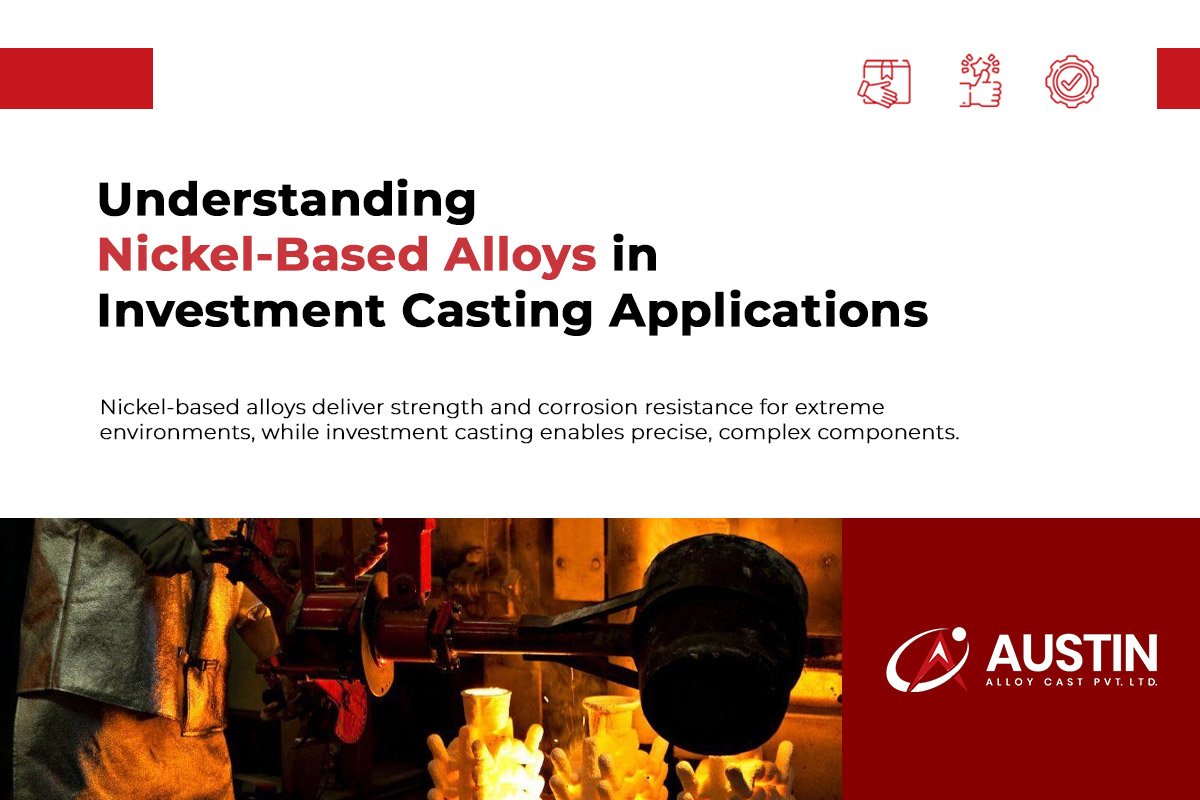
- Controlled investment casting process: For complex shapes and tight tolerances, Austin Alloy Cast uses the lost wax investment casting route, benefiting from precise dimensional control and better surface quality.
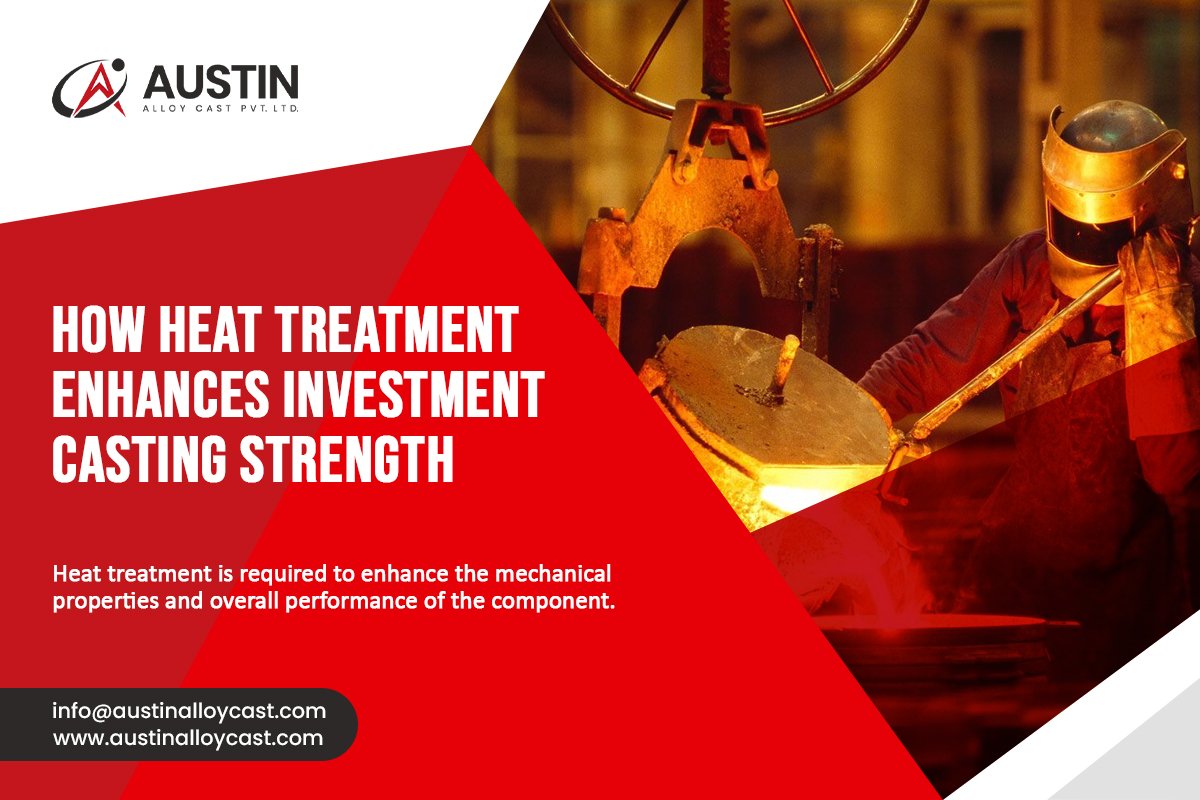
- Heat treatment tuned to section size: Normalizing, quenching, and tempering cycles defined for each casting family so the core and surface achieve consistent properties, especially important in thick section hydraulic and structural parts.
- Process traceability: Linking melt data, molding, heat treatment cycles, and NDT results to each batch so OEMs can audit and investigate any issue confidently.
This level of process ownership is what allows a casting to behave like a machined forging in service, without losing the design freedom and cost benefits of casting.
How Austin Alloy Cast supports mining & earthmoving OEMs
Austin Alloy Cast positions itself as a partner to global OEMs rather than a simple part supplier. For heavy and earthmoving equipment manufacturers, the company brings a combination of capacity, technical depth, and testing capability that matches mining sector expectations.
Key points that matter to buyers:
- High integrity focus: The heavy & earthmoving segment is explicitly served with “high integrity steel castings”, backed by in house x ray, UT, crack detection, and chemical/mechanical analysis.
- Experience with high horsepower engines: Austin’s castings already go into high performance and diesel engines for major tier 1 and OE customers, indicating familiarity with fatigue critical, high load applications.
- One stop solution: With one of the largest single site investment casting facilities in India and the ability to support machining and other value added processes, Austin can deliver ready to assemble components for complex mining and earthmoving systems.
- Consistent quality and delivery: The company explicitly frames late delivery and quality issues as “worth millions of dollars” for customers and aligns its internal culture around protecting customer reputation.
For mining and earthmoving OEMs, this combination reduces the number of suppliers to manage, simplifies audits, and lowers the risk of costly field failures.
What serious buyers should specify
When sourcing steel castings for mining and earthmoving equipment, buyers can significantly de risk programms by being explicit about requirements. Practical steps include:
- Defining critical sections and weld repair policies clearly, with mandatory NDT levels for each area.
- Calling out minimum impact values, hardness ranges, and heat treatment conditions appropriate for the working environment.
- Requiring full NDT, chemistry, and mechanical test reports for initial samples and critical production lots.
- Partnering with Austin Alloy Cast, that already has heavy & earthmoving experience and can participate early in design for manufacturability and reliability.
Done well, this turns the casting from a perceived risk into a controlled, predictable element of the mining equipment value chain supporting uptime, safety, and long term cost control on some of the toughest sites in the world.
To have a glimpse at our world class facility and products, visit us at www.austinalloycast.com.
For any queries or details contact us at info@austinalloycast.com.
Recent Posts