08 Oct 2026

BLOG
Certifications & Standards That Matter in Global Casting Exports

In the current era of competitive manufacturing, global casting exports are no longer simply a matter of making robust components in volume. Global consumers expect not only accuracy but also demonstration of quality, safety, environmental stewardship, and adherence to well established global standards. For exporters such as Austin Alloy Cast, certifications serve as passports that unlock global markets, allowing customers of all industries to have faith in every shipment.
This blog delves into the reasons why certifications are so important in the field of casting exports, the most important standards of relevance, and how Indian foundries are upping their game to compete at the international level.
Why Certifications Are Important for Casting Exports
When a business ships castings whether for automotive, oil & gas, mining, or heavy machinery applications it enters a highly regulated marketplace. Import countries and OEMs anticipate that suppliers will comply with stringent demands. Certifications are used as:
- Verification of compliance: Verifying products that are safe, environmentally friendly, and technologically efficient.
- Risk Reduction: Reducing failures, accidents, or recalls in critical mission environments.
- Worldwide credibility: Proving that a foundry is as good as global industry leaders.
- Access to markets: Some certifications are prerequisites to even access tenders or supply chains.
For purchasers, certifications provide confidence to buy from a credible, internationally known supplier.
Common Global Standards for Casting Exports
The casting industry works with varied applications, and certifications differ based on the industry. Some of the most impactful include:
1. ISO Certifications
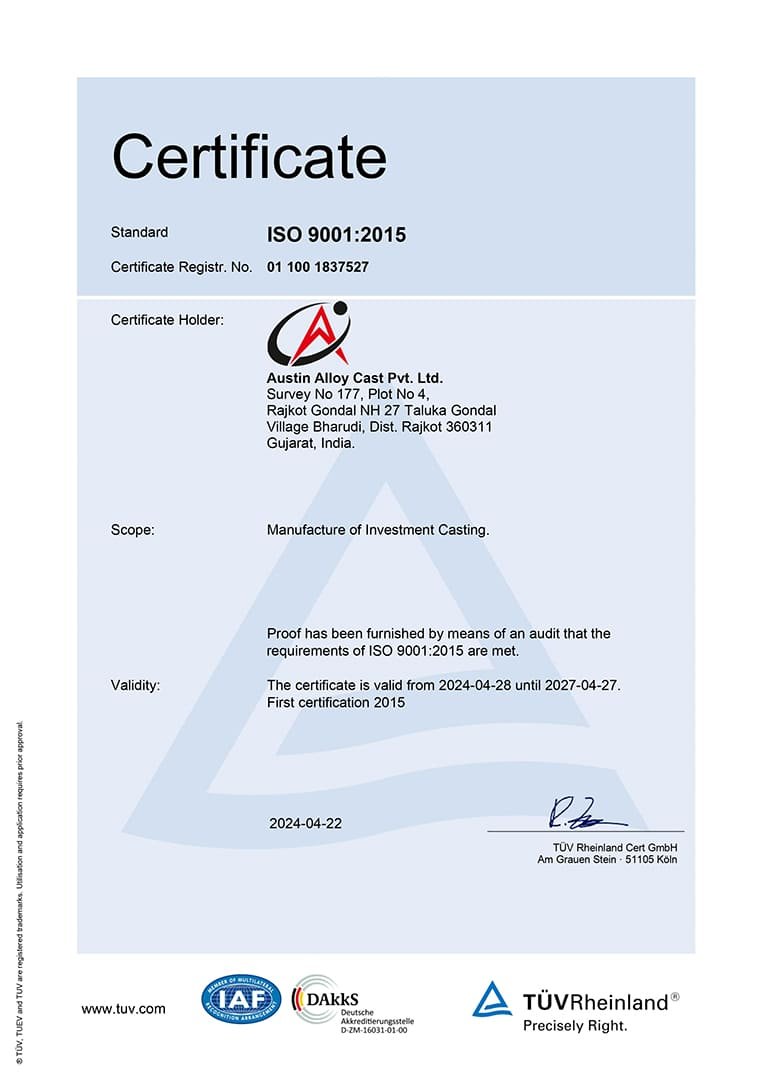
- ISO 9001 Quality Management System: ensures processes are standardized, controlled and improving always.
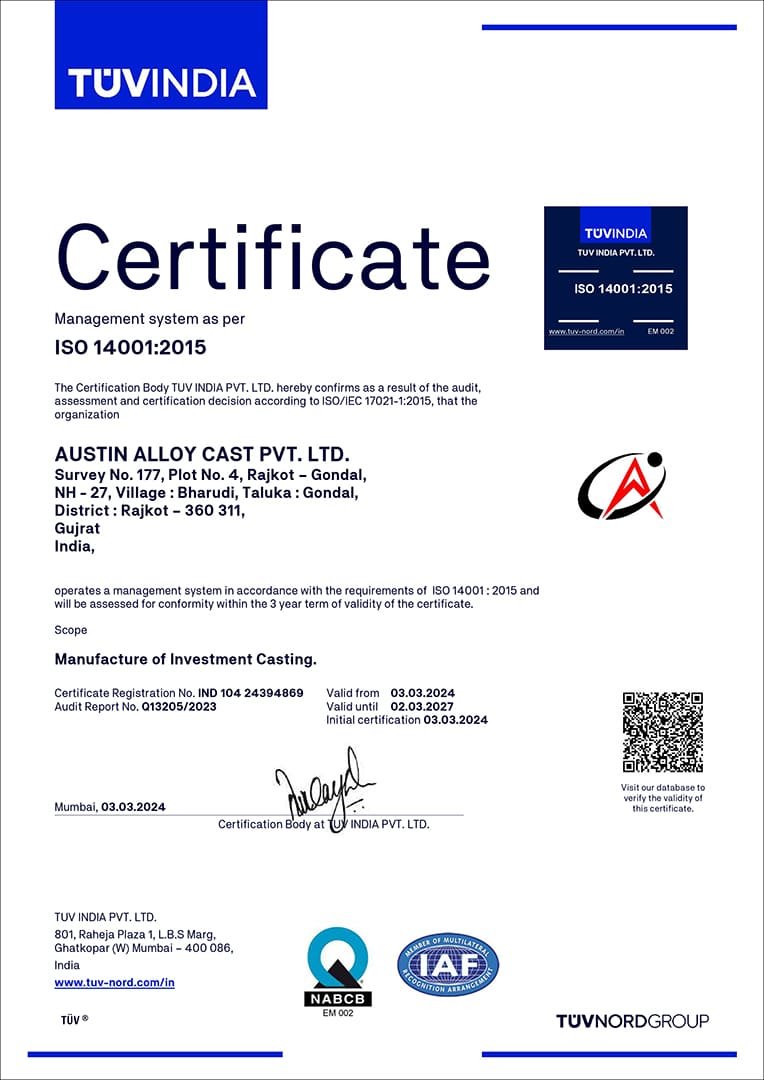
- ISO 14001 Environmental Management: confirms commitment to environmentally responsible practices, waste reduction, and sustainable operation which are defined for consumers today.
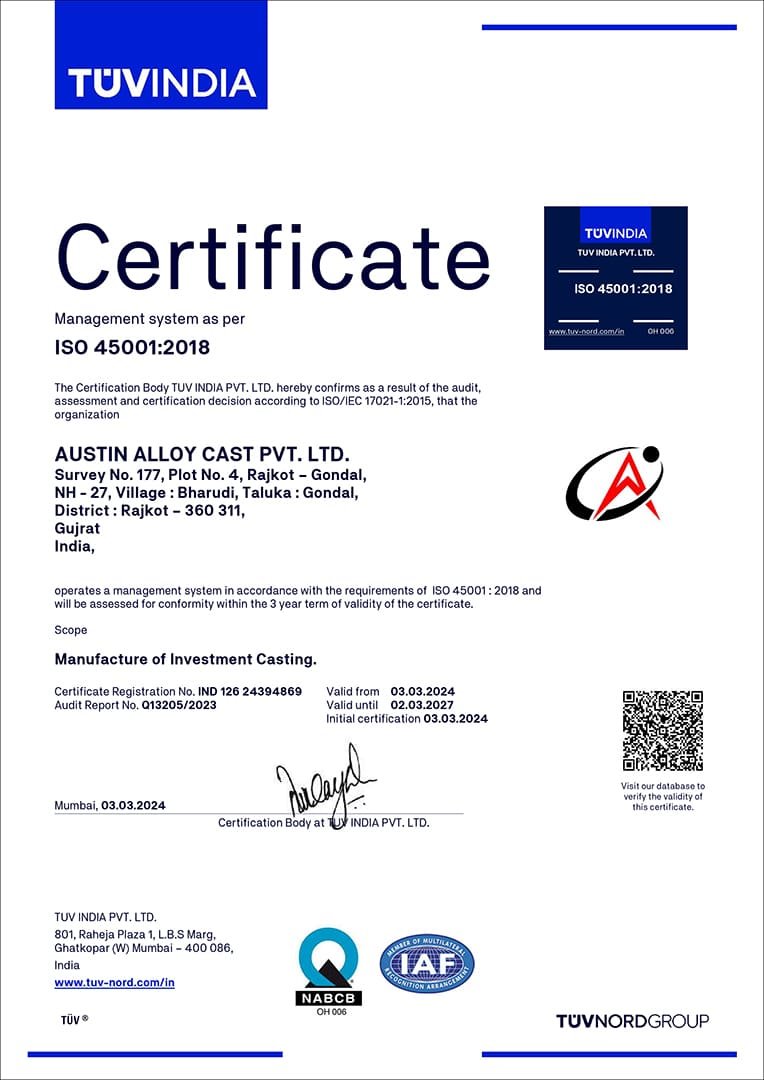
- ISO 45001 Occupational Health & Safety: Verifies proactive commitment to employee safety and risk management on the floor in the foundry.
2. ASTM
ASTM specifications establish the technical standards of materials chemical composition to mechanical strength. Compliance guarantees purchasers that castings are meeting international standards for resilience and performance.
3. API (American Petroleum Institute)
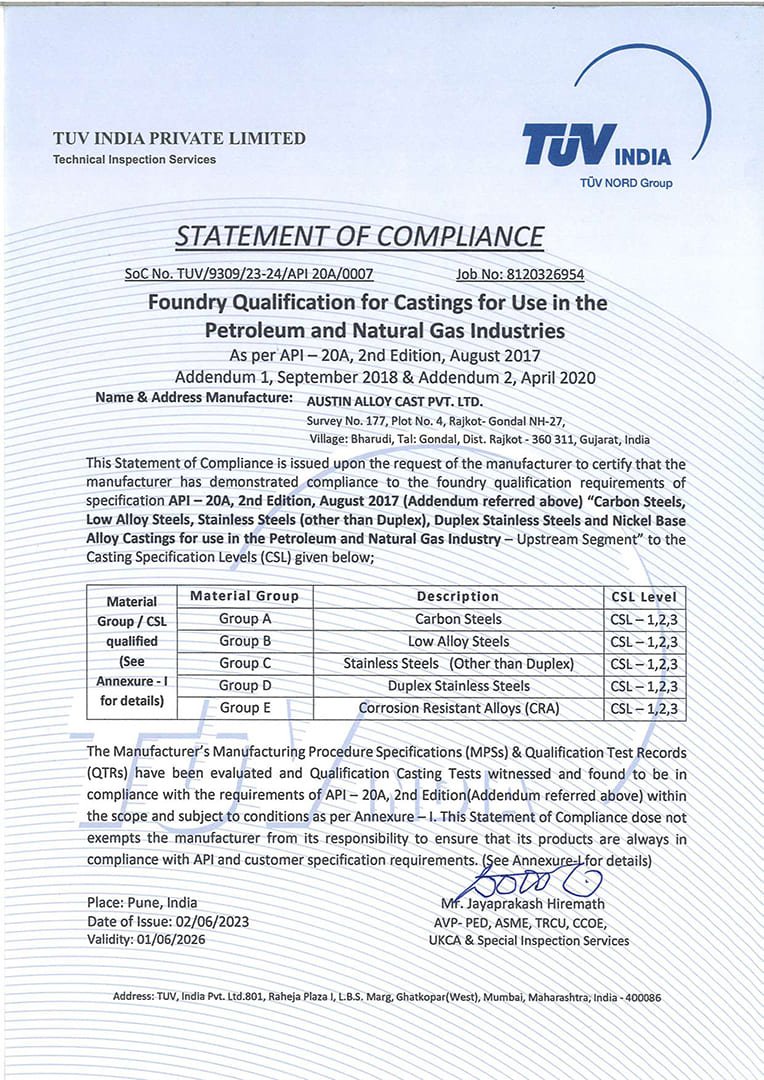
For oil & gas and petrochemical use, API standards are vital. They ensure valves, pumps, and pressure containing units can perform to demanding specifications of such things as high pressure, temperature swings, and corrosive conditions.
4. IATF 16949 (Automotive Industry Quality Management)
The global automotive industry supports the market and affiliated markets through engine, transmission and structural castings. IATF certified castings keep the automotive industry below tight quality, safety and traceability regulation.
5. Marine Approvals
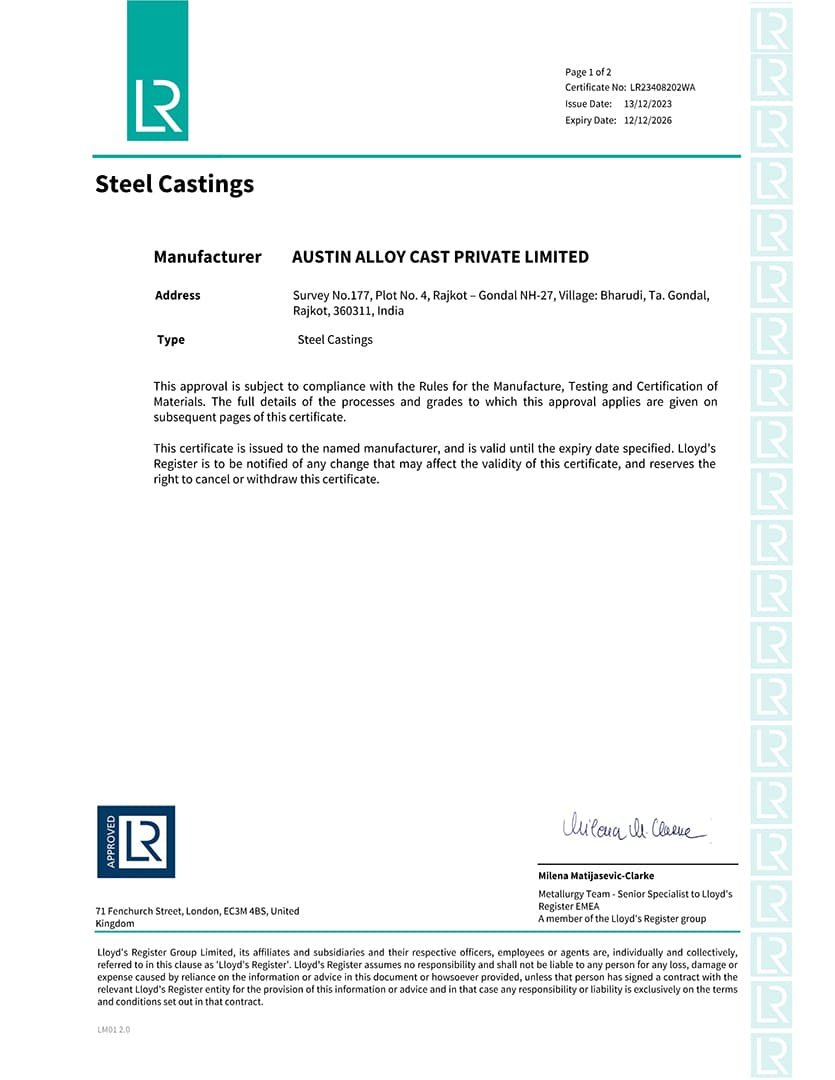
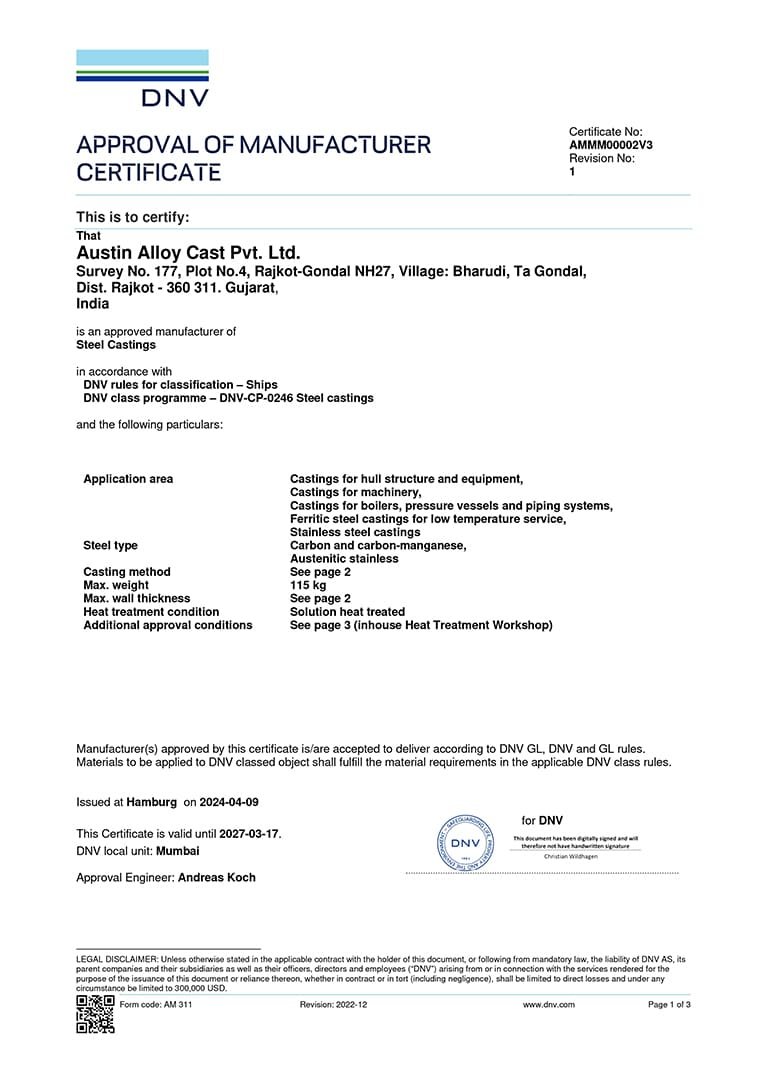
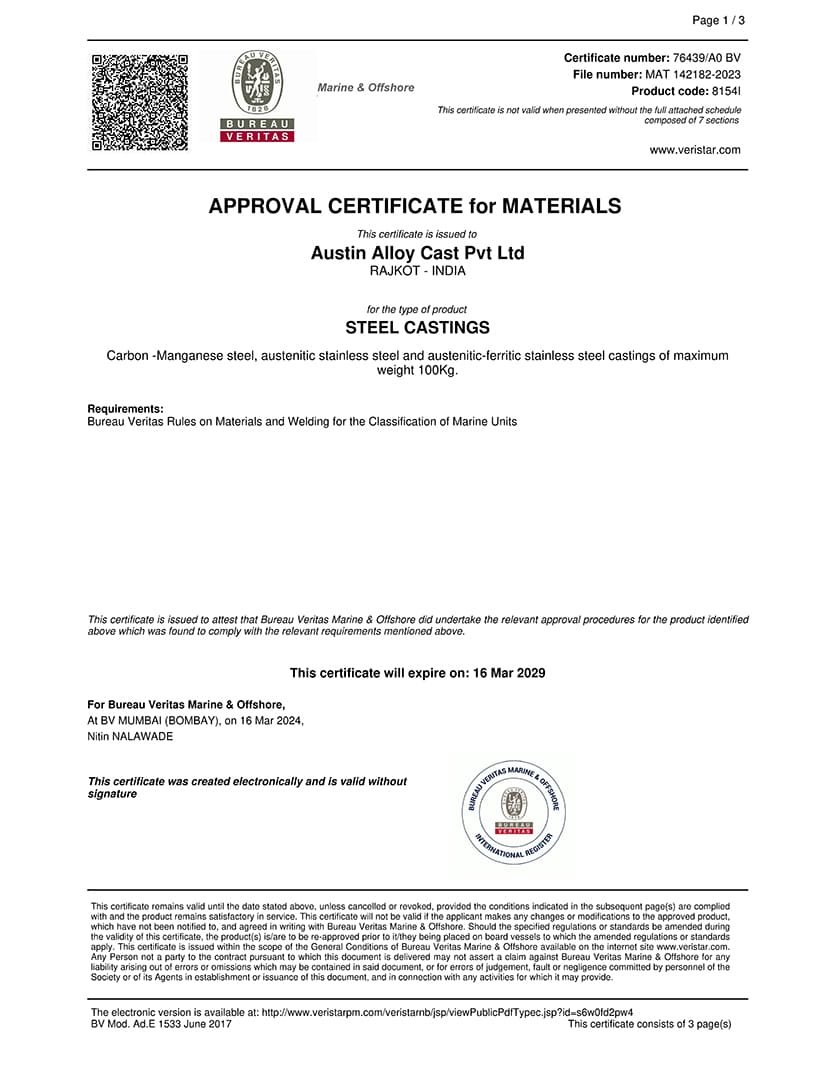
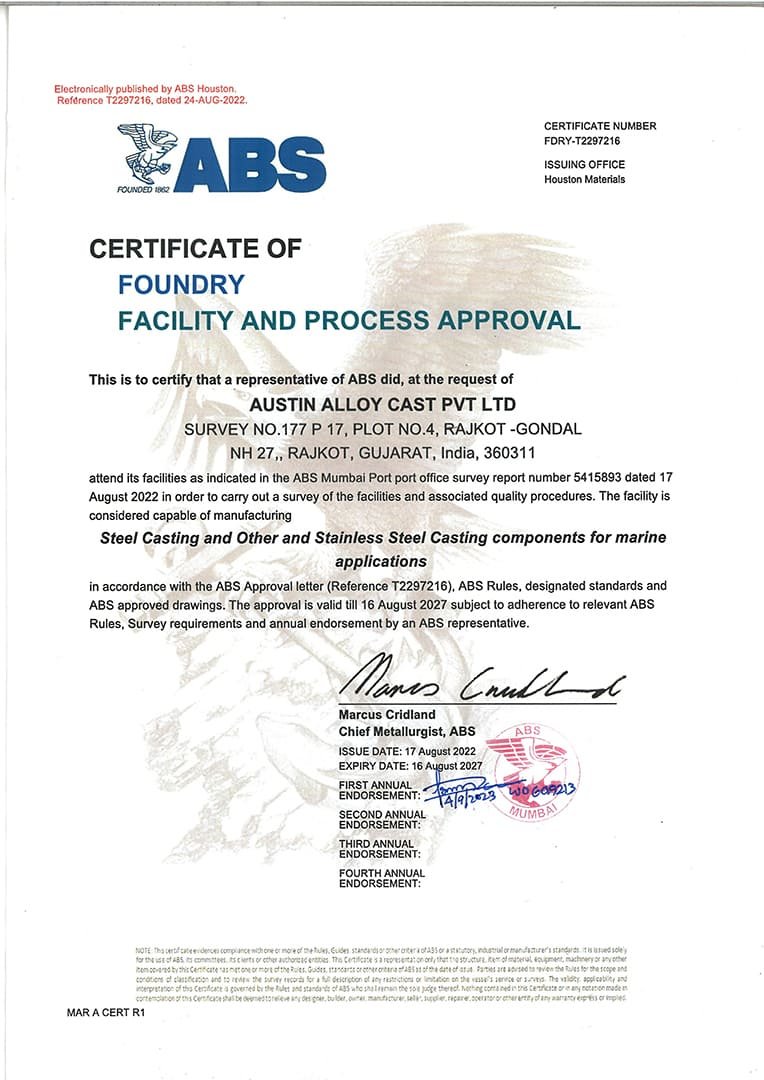
Marine classification society approvals from Lloyd’s Register, DNV-GL, Bureau Veritas, and/or ABS will of course be valuable if you are working for marine related companies as they show that the cast parts can hold up to extreme saltwater environment, extreme corrosion and tough marine application areas. Marine certifications illustrate that foundries such as Austin Alloy Cast is a recognized supplier to the international market naval defence programs, and offshore oil and gas design and manufacturers.
Advantages of Certifications for International Customers
International customers purchasing castings, do not obtain certifications simply for the piece of paper. Rather, the value of a certification is a trust guarantee, and includes the following benefits:
- Quality consistency: International customers are aware that the quality of each delivery will have the same specifications as all prior deliveries.
- Lower inspection costs: International customers will spend less money on third party inspection of certified suppliers.
- Safety commitment: ISO 45001 certifications are in some instances the assurance that the customer can contract a supply chain with a smaller risk of incident, fall back or lapse in safety commitment.
- Sustainability: adoption of ISO 14001 environmental management certificates allows for international customers to integrate sustainability in purchasing responsibly sourced integrative.
Consistent Quality and Safety Management.
If anything is unacceptable to the worldwide marketplace, it is failure or defects. One casting defect can mean downtime or accidents and lead to losses in the millions. Certifications require:
- Process discipline: Consistent process discipline means complying with standard operating procedures. In a certified foundry, the process will be followed to ensure the least amount of variability.
- Traceability: Each casting can be traced by the batch of its material and the process parameters used.
- Testing protocols: Certified foundries have financial obligations associated with NDT Non Destructive Testing, radiography, and destructive testing to prove integrity.
- Continuous improvement: A recommended standard requires audits or assessments to ensure follow up on corrective action plans where a root cause issue is identified.
The Importance of Certifications in Building Global Trust
Trust is the currency of global trade. When a Middle Eastern oil major or a European automobile giant enters into a partnership with an Indian foundry or any other entity, certifications are the basis for trust. They signal:
- Reliability: The foundry can deliver its products in accordance with the international interest standards.
- Transparency: The procedures are verifiable and have clear documentation.
- Commitment: The foundry is demonstrating a commitment to longstanding international partnerships.
Indian Foundries Meeting International Standards
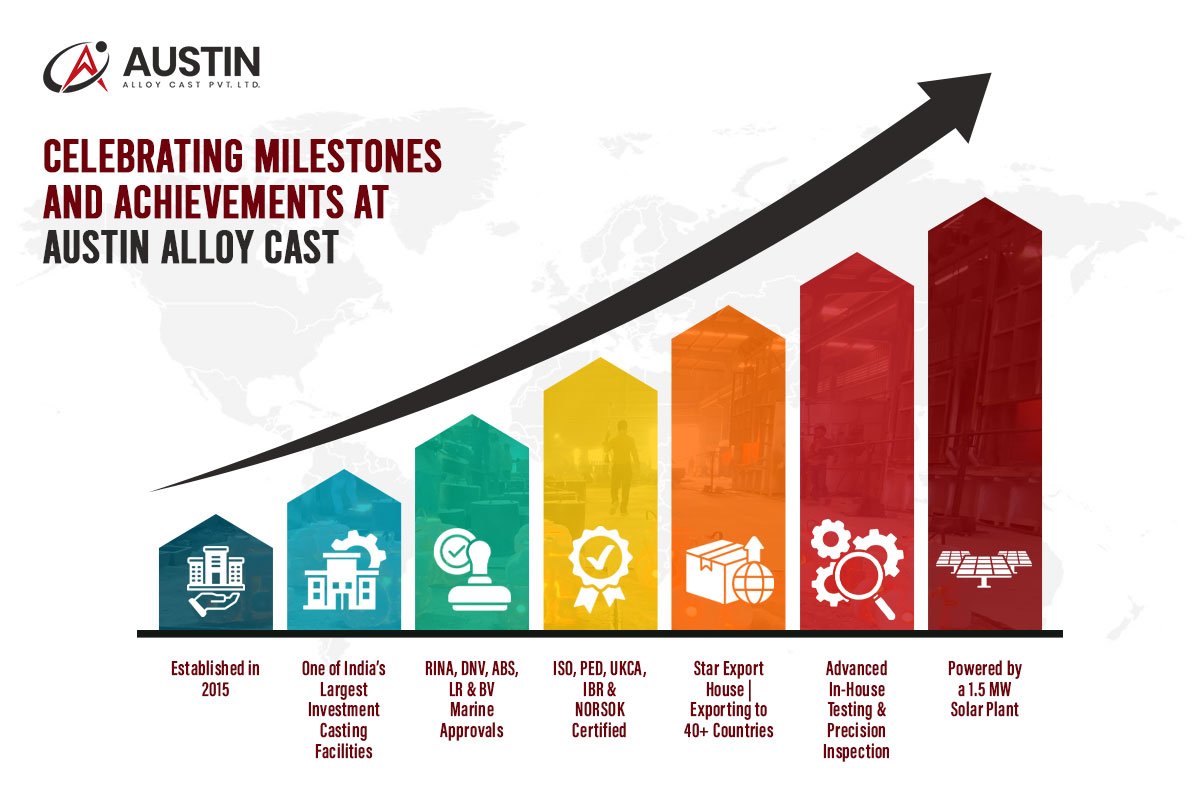
In the past 20 years, Indian foundries have accepted and adopted world class certifications and have begun to compete head to head with foundries in Europe, China and the US. This transformation includes:
- Our ISO 9001 scope includes the in house Machine Shop as well alongside the foundry infrastructure. This means that quality is maintained not only at the time of casting, but also at the time of machining, finishing, and inspection after casting.
- Upgraded facilities: CNC machining, automated molding, in house testing.
- Investment in sustainability: ISO 14001 helps an organization nurture the environment while also noticing its green minded customers.
- An established safety culture among employees: ISO 45001 allows for worry free safety even in a historically hazardous workplace.
- Industry based certifications API oil & gas, IATF automotive, AS9100 aerospace.
Conclusion
In the fast paced world of International Exporting of castings, certifications are the silent facilitators of success. Certifications provide assurance to buyers in terms of quality and safety, as well as help exporters create new markets with sustainable trust. Whether it be ISO 9001, ISO 45001, ASTM, or API; the world class manufacturers of castings have all set their goals in advancing along these standards and achieving certifications.
For Austin Alloy Cast, certifications are not merely a thing to check off, it is a representation of excellence, a pursuit of sustainability, and a commitment to their customers’ trust and assurance. As Indian foundries begin to follow global standards to obtain certifications, they are not merely exporting castings; they’re exporting trust, confidence, reliability, and world class manufacturing.
To have a glimpse at our world class facility and products, visit us at www.austinalloycast.com.
For any queries or details contact us at info@austinalloycast.com.
Recent Posts